Recurrent & non-recurrent copy number variants in Native Americans and a cosmopolitan sample in relation to Alcohol Use Disorder and other psychiatric diseases
Salma M Wakil, Keita Morisaki, Pei-Hong Shen, Dylan G Sucich, Melanie Schwandt, Fielding Hejtmancik, Cheryl Marietta, Qiaoping Yuan, Nancy Diazgranados, Colin A Hodgkinson, David Goldman

TL;DR
The study explores how copy number variants in Native American populations may be linked to psychiatric disorders like alcohol use disorder.
Contribution
The study identifies specific recurrent CNVs in Native Americans that may increase psychiatric disease risk, despite overall CNV burden not predicting these conditions.
Findings
Recurrent CNVs are common in Native Americans and some span multiple tribes.
A specific CNV in the 22q11.2 region is associated with higher odds of alcohol use disorder and psychiatric diagnoses.
Ancient CNVs persist in Native American populations for hundreds of generations.
Abstract
Copy Number Variants (CNVs) can alter disease susceptibility by gene deletion, duplication and other mechanisms. CNVs are implicated in neuropsychiatric diseases. However, their rarity or de novo nature impedes linkage analysis. Therefore, we identified recurrent CNVs (rCNVs) in Native Americans with low genetic admixture and high prevalence of Alcohol Use Disorder (AUD) and other psychiatric disorders. Large (> 200 kb) rCNVs were abundant in PI and SWI, almost all carrying at least one rCNV, and with some CNVs found in both geographically and linguistically distinct tribes. In patients carrying rCNVs, gene deletions led to haploinsufficiency, and duplications overexpression. Haplotype analysis revealed a common chromosome 6p21.33 rCNV that persisted in Native Americans for at least 750 generations, leading to haploinsufficiency of at least two genes. Gene-based CNV burden did not…
Genes, proteins, chemicals, diseases, species, mutations and cell lines named across the full text — each resolved to its canonical identifier and authoritative record.
Click any figure to enlarge with its caption.
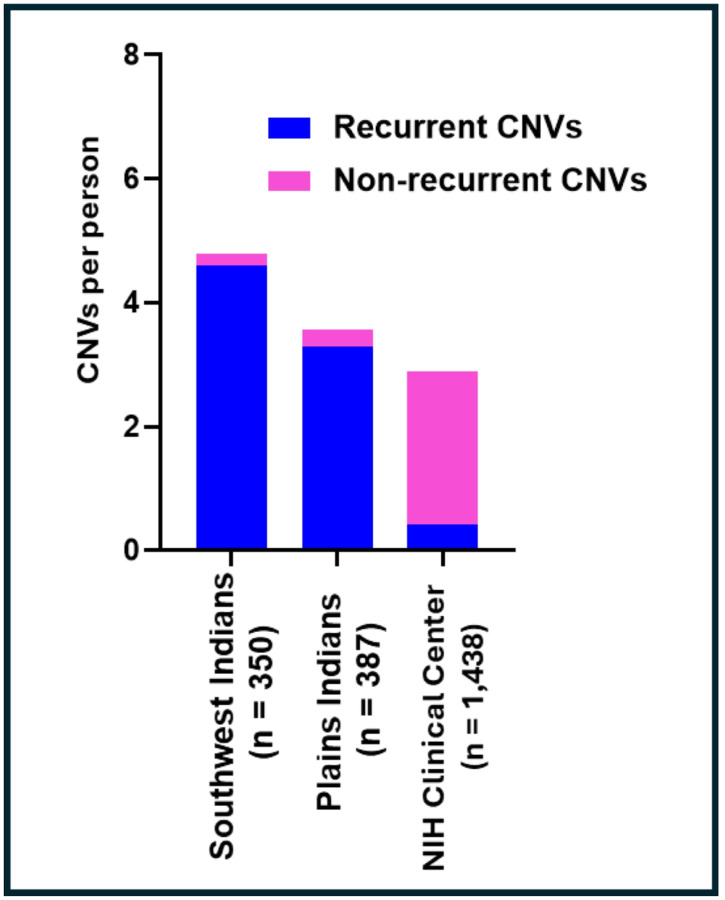 Figure 1
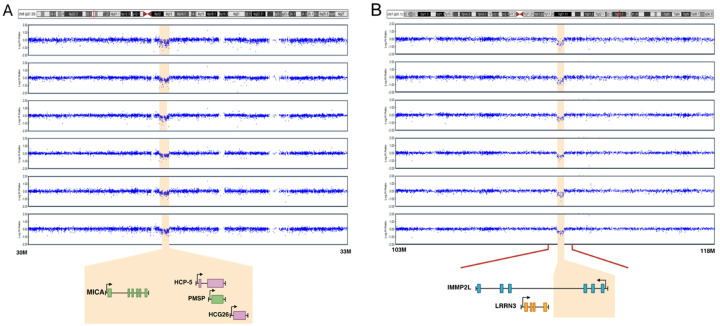 Figure 2
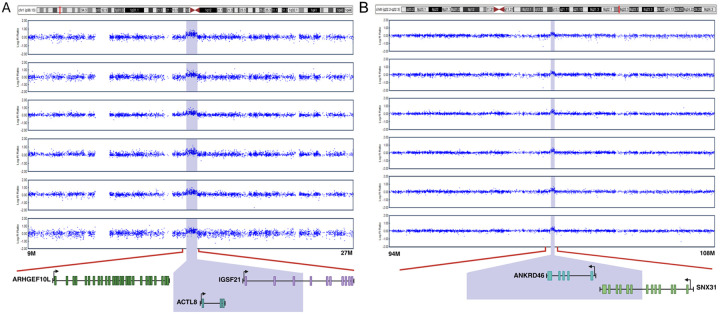 Figure 3
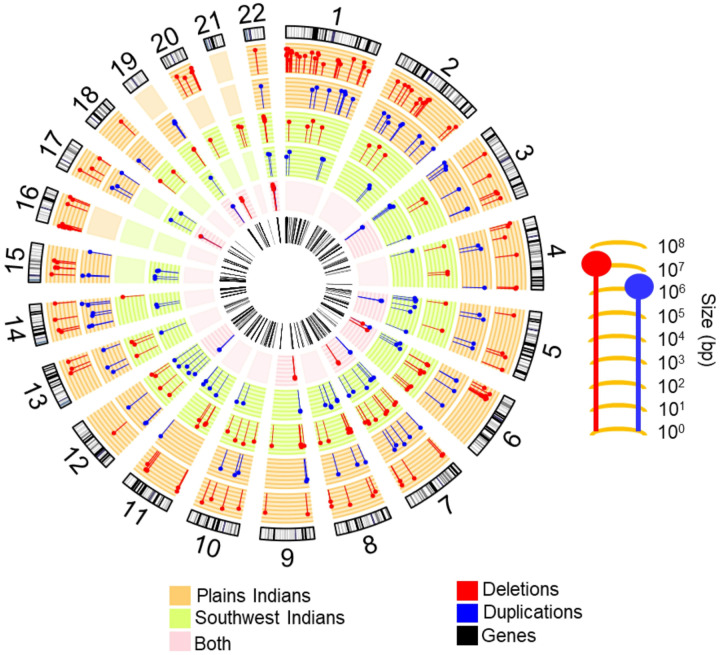 Figure 4
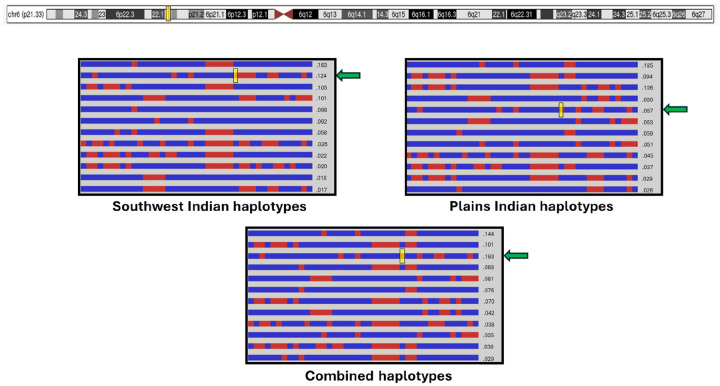 Figure 5
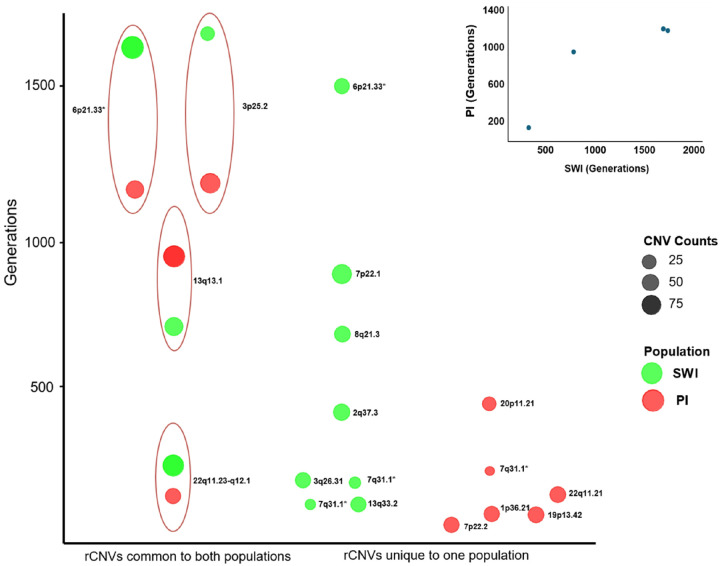 Figure 6
Peer Reviews
No public reviews on file for this paper yet. If you reviewed it on a platform where reviews are public (OpenReview, ICLR, NeurIPS, ICML), you can paste yours below so the community can read it here.
Videos
No videos yet. Explain this paper in a talk, walkthrough, or lecture? Add one.
Taxonomy
TopicsGenomic variations and chromosomal abnormalities · Genetic Associations and Epidemiology · Congenital heart defects research