High-throughput characterization of transcription factors that modulate UV damage formation and repair at single-nucleotide resolution
Hana I. Wasserman, Bo Chi, Kaitlynne A. Bohm, Mingrui Duan, Harshit Sahay, Alexias Safi, Gregory Crawford, Peng Mao, John J. Wyrick, Miles Pufall, Raluca Gordân

TL;DR
This study identifies how specific transcription factors influence UV-induced DNA damage and repair at a detailed level, offering new insights into how these factors contribute to skin cancer mutations.
Contribution
The paper introduces a scalable statistical framework to analyze how hundreds of transcription factors modulate UV damage and repair at single-nucleotide resolution.
Findings
Numerous previously unreported TFs were identified that significantly enhance or inhibit UV damage formation in their binding sites.
TF-induced structural distortions in DNA were found to either protect or predispose DNA to photodimer formation.
Specific TFs and binding site positions were identified that likely compete with repair factors, affecting repair efficiency.
Abstract
Genomic studies have revealed elevated damage and mutation rates in active transcription factor (TF) binding sites in UV-linked cancers. Previous investigations into the relationship between TF activity and UV DNA damage have primarily focused on select TFs or been done in aggregate across large cohorts of TFs at kilobase resolution. While collectively, there is evidence that TFs contribute to UV-induced mutagenesis by both enhancing initial damage formation and attenuating repair, there has yet to be a comprehensive characterization of these mechanisms on a per-TF basis. Using genome-wide maps of UV damage from human skin fibroblasts, we developed a scalable statistical framework to analyze TF-mediated mutagenic mechanisms across hundreds of TFs. We identify numerous previously unreported TFs that significantly enhance and / or inhibit damage formation in their binding sites. A…
Genes, proteins, chemicals, diseases, species, mutations and cell lines named across the full text — each resolved to its canonical identifier and authoritative record.
Click any figure to enlarge with its caption.
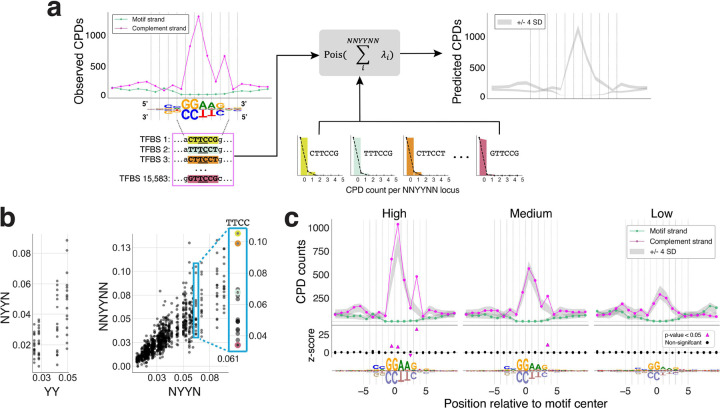 Figure 1
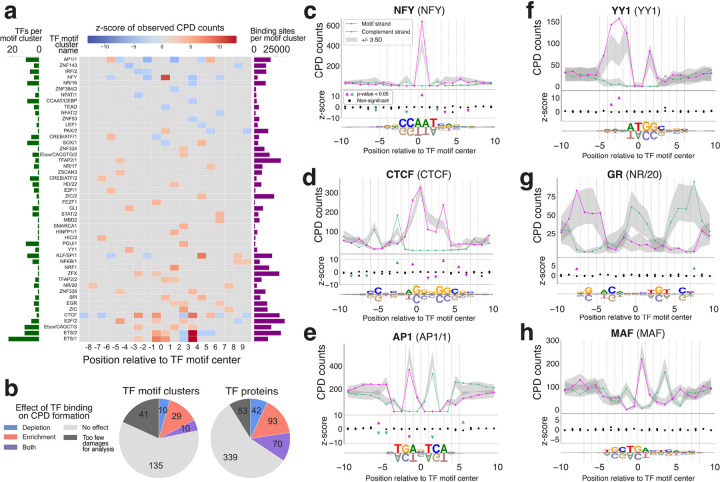 Figure 2
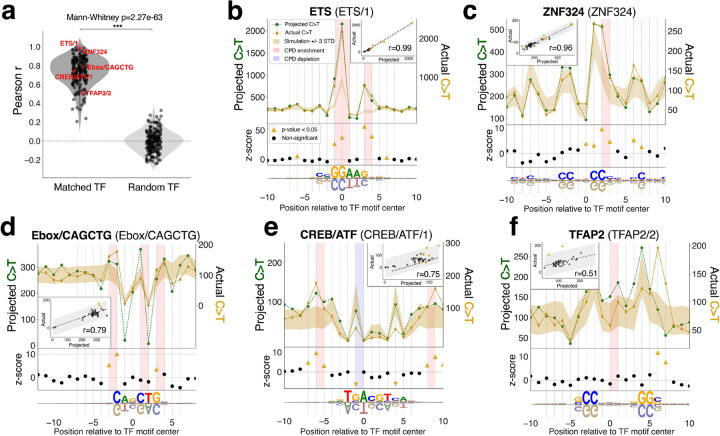 Figure 3
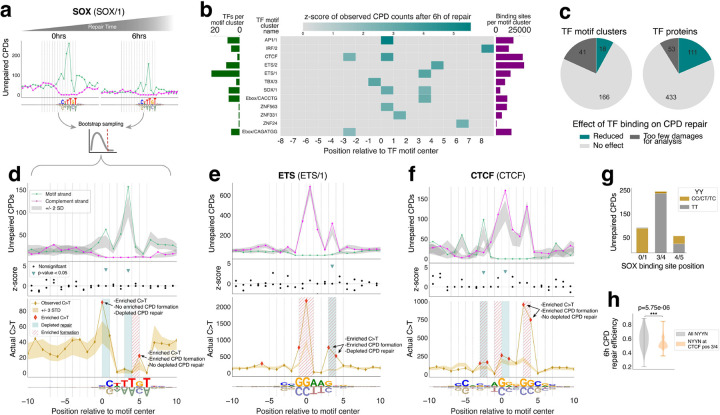 Figure 4
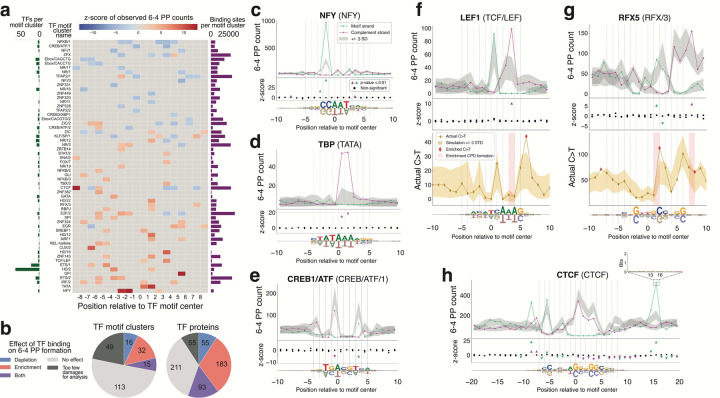 Figure 5
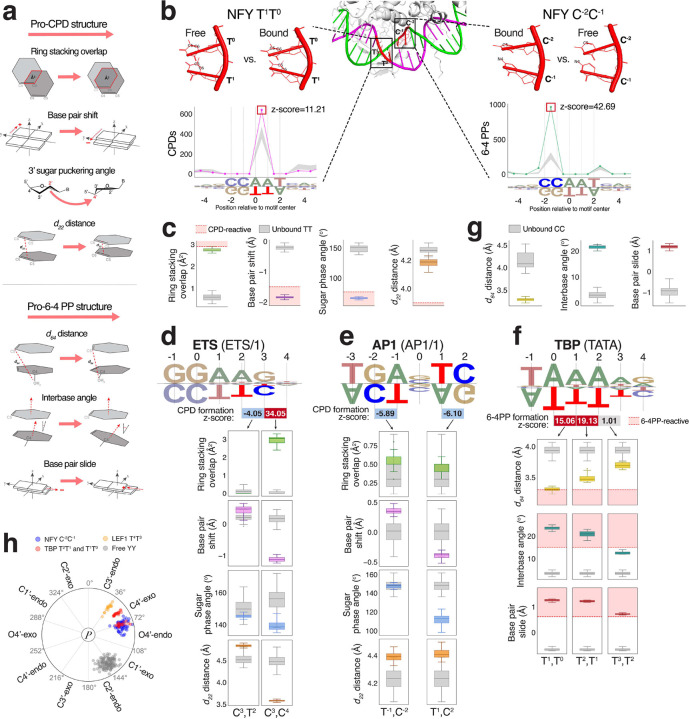 Figure 6
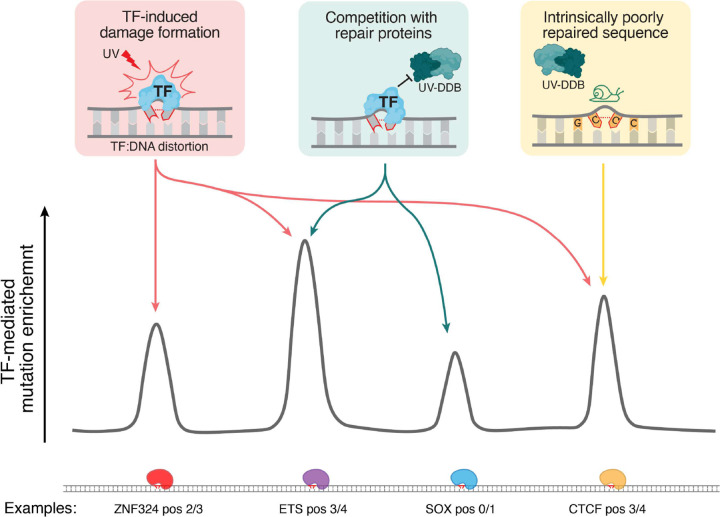 Figure 7
Peer Reviews
No public reviews on file for this paper yet. If you reviewed it on a platform where reviews are public (OpenReview, ICLR, NeurIPS, ICML), you can paste yours below so the community can read it here.
Videos
No videos yet. Explain this paper in a talk, walkthrough, or lecture? Add one.
Taxonomy
TopicsSkin Protection and Aging · DNA Repair Mechanisms · DNA and Nucleic Acid Chemistry