Huntingtin in the amygdaloid basolateral complex is correlated with Vonsattel staging in Huntington’s disease
Pablo Sanchez-Migallon, Alicia Flores-Cuadrado, Patricia Villanueva-Anguita, Alberto Rabano, Julia Vaamonde, Daniel Saiz-Sanchez, Alicia Mohedano-Moriano, Veronica Astillero-Lopez, Carmen Soriano-Herrador, Alino Martinez-Marcos, Isabel Ubeda-Banon

TL;DR
Huntingtin deposits in a brain region called the amygdaloid basolateral complex are linked to disease severity in Huntington’s disease and may explain nonmotor symptoms like depression.
Contribution
The study identifies a correlation between huntingtin deposits in the amygdala and Vonsattel staging, offering new insights into nonmotor symptoms and neuropathological diagnosis.
Findings
Huntingtin deposits in the amygdaloid basolateral complex correlate with Vonsattel neuropathological grades.
Huntingtin deposits are not influenced by sex or CAG repeat length but are associated with nonmotor symptoms like depression.
Other proteinopathies coexist with huntingtin aggregates in the amygdala.
Abstract
Huntington’s disease has traditionally been considered a motor disorder, but it is currently classified as a multisystem neurodegenerative disease that involves brain regions, such as the amygdala, and causes depression. The aim of the present study was to analyse the distribution of huntingtin in the human amygdaloid basolateral complex, considering its nuclei, sex, triplet repeats and Vonsattel score, as well as to characterize the cellular relationships between huntingtin and associated copathologies. The present study included 23 human brain samples from patients (males and females) with and without Huntington’s disease, Parkinson’s disease and Alzheimer’s disease. An unbiased stereology approach was used to quantify huntingtin deposits. Multiple immunofluorescence experiments were conducted to analyse the relationship between huntingtin and glial populations. Immunohistochemistry…
Genes, proteins, chemicals, diseases, species, mutations and cell lines named across the full text — each resolved to its canonical identifier and authoritative record.
Click any figure to enlarge with its caption.
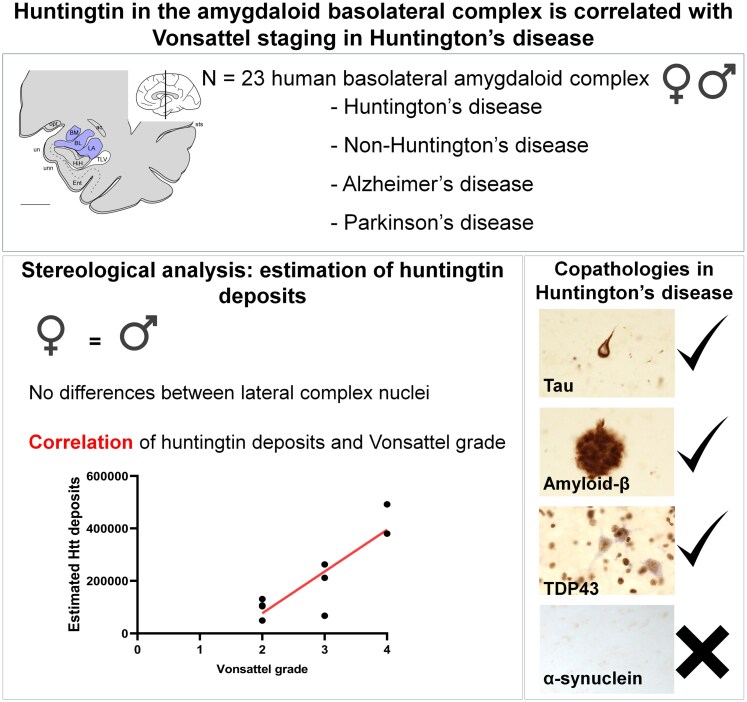 Figure 1
 Figure 2
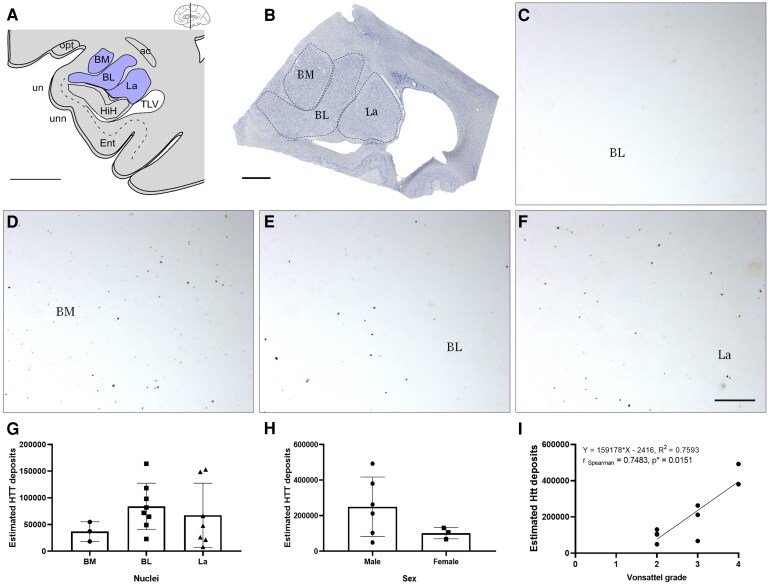 Figure 3
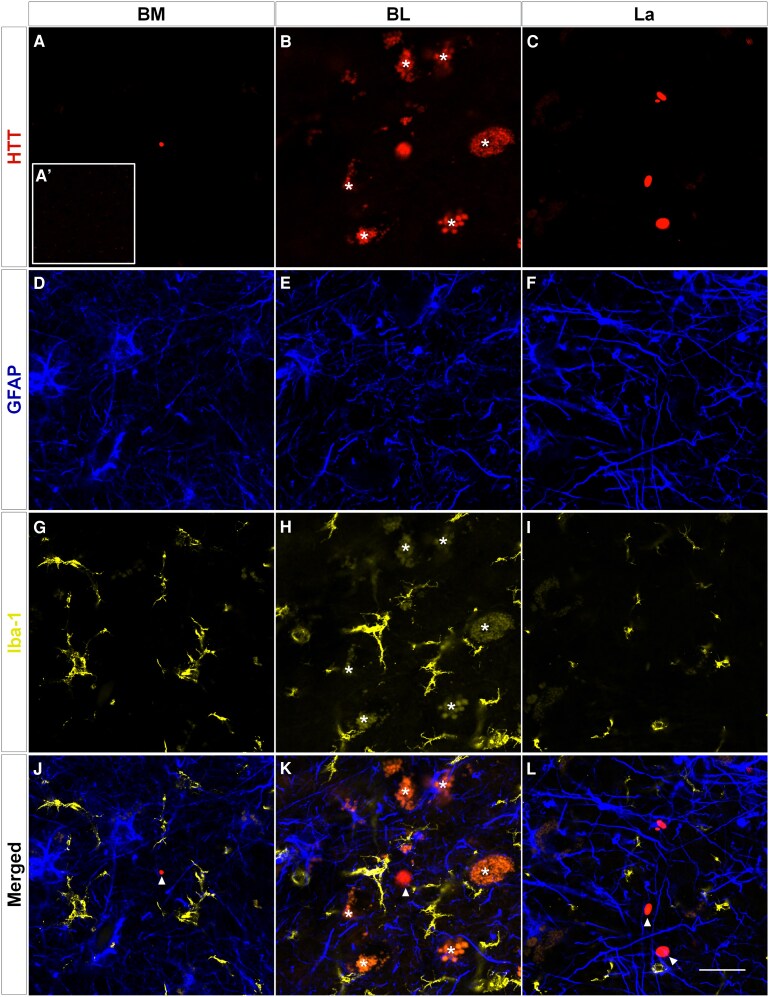 Figure 4
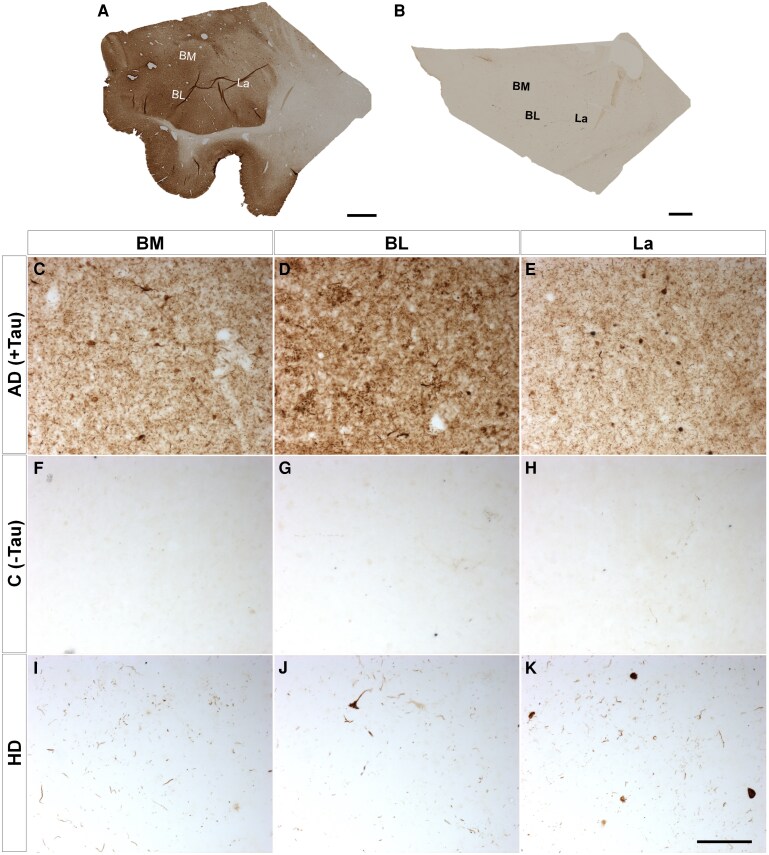 Figure 5
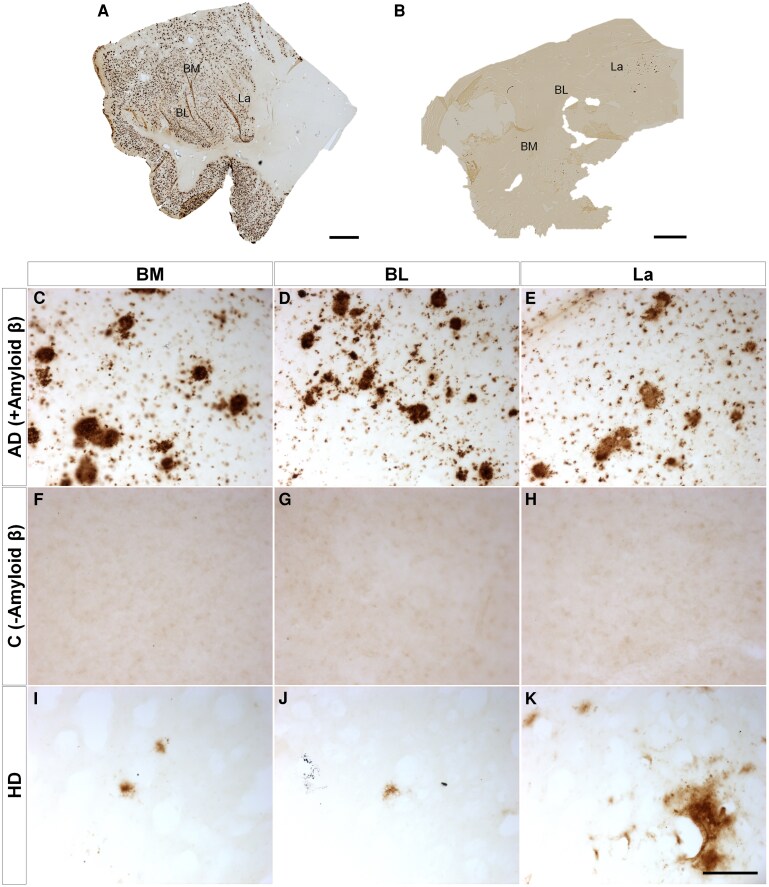 Figure 6
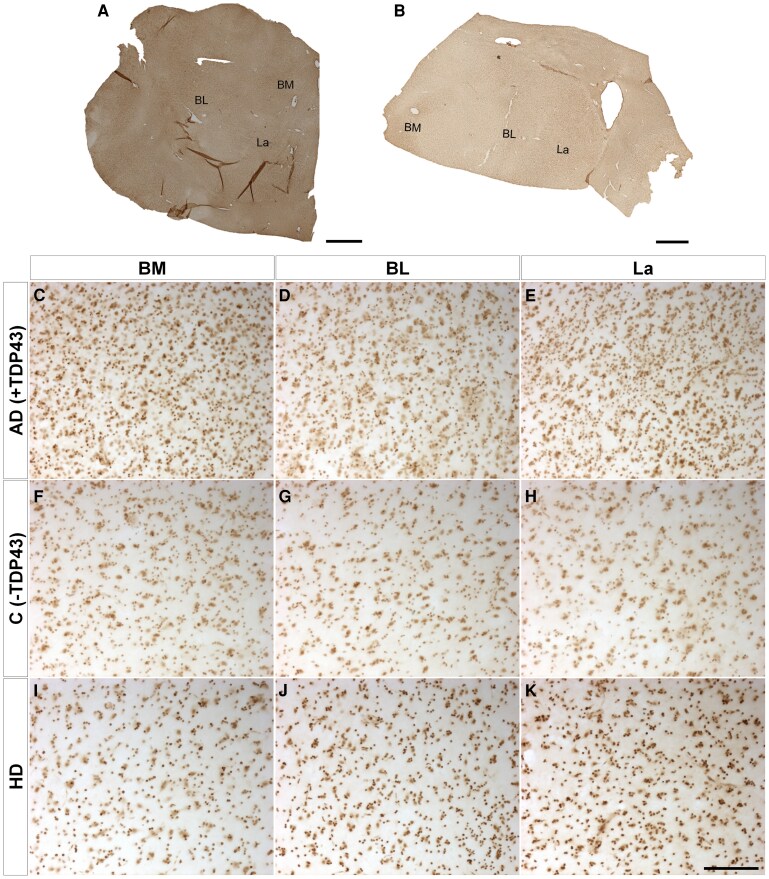 Figure 7
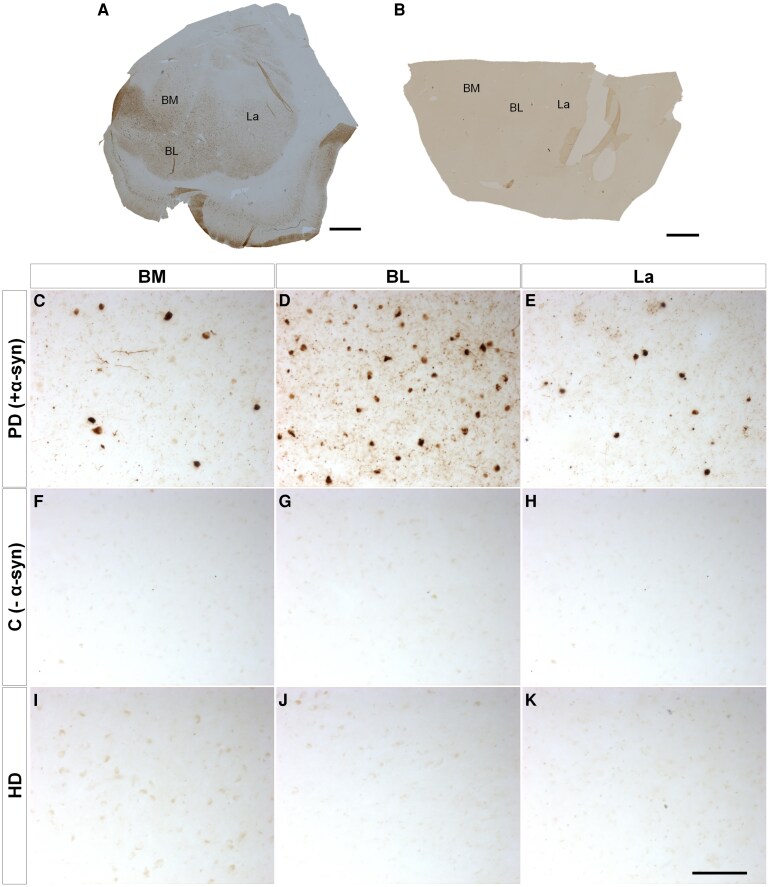 Figure 8
Peer Reviews
No public reviews on file for this paper yet. If you reviewed it on a platform where reviews are public (OpenReview, ICLR, NeurIPS, ICML), you can paste yours below so the community can read it here.
Videos
No videos yet. Explain this paper in a talk, walkthrough, or lecture? Add one.
Taxonomy
TopicsGenetic Neurodegenerative Diseases · Amyotrophic Lateral Sclerosis Research · Neurological disorders and treatments