Delayed Hemothorax Due to Rupture of a Right Inferior Phrenic Artery Pseudoaneurysm 67 Days After Rib Fractures: A Case Report
Akito Kubota, Momoko Sugiyama, Yasumasa Ode, Kenji Iwata, Asako Matsushima

TL;DR
A rare case of delayed hemothorax caused by a pseudoaneurysm in the inferior phrenic artery, occurring 67 days after rib fractures, highlights the importance of thorough medical history and diagnostic evaluation.
Contribution
This case report presents a rare delayed hemothorax caused by an inferior phrenic artery pseudoaneurysm, emphasizing the need for extended diagnostic vigilance in post-traumatic patients.
Findings
Delayed hemothorax occurred 67 days after rib fractures due to rupture of a right inferior phrenic artery pseudoaneurysm.
Transcatheter arterial embolization successfully managed the active extravasation from the pseudoaneurysm.
The case underscores the importance of tracing medical history several months back in diagnosing delayed hemothorax.
Abstract
Delayed hemothorax after blunt chest trauma usually develops within seven days, and the inferior phrenic artery (IPA) is a rare culprit vessel. We report a case of massive hemothorax that occurred 67 days after rib fractures due to rupture of an IPA pseudoaneurysm. A 73-year-old man was transported in shock with a five-day history of right hypochondrial pain. Non-contrast CT revealed a right pleural effusion with attenuation consistent with blood and multiple fractures of the right 8th-12th ribs, while contrast-enhanced CT demonstrated contrast extravasation adjacent to the right 10th rib. Angiography identified a pseudoaneurysm with active extravasation in a distal dorsal branch of the right IPA, and transcatheter arterial embolization was performed with successful hemostasis. He was admitted to the intensive care unit (ICU) and transfused; after stabilization of his hemodynamics, he…
Genes, proteins, chemicals, diseases, species, mutations and cell lines named across the full text — each resolved to its canonical identifier and authoritative record.
Click any figure to enlarge with its caption.
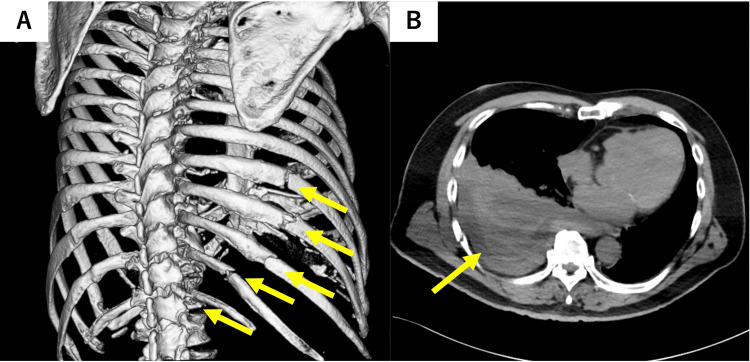 Figure 1
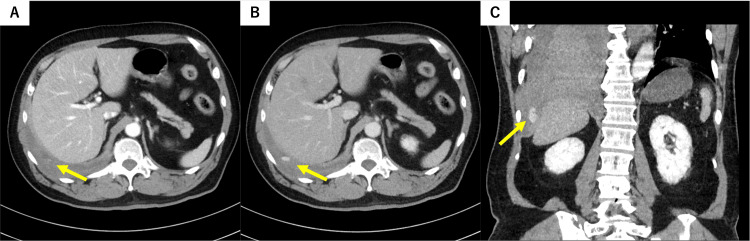 Figure 2
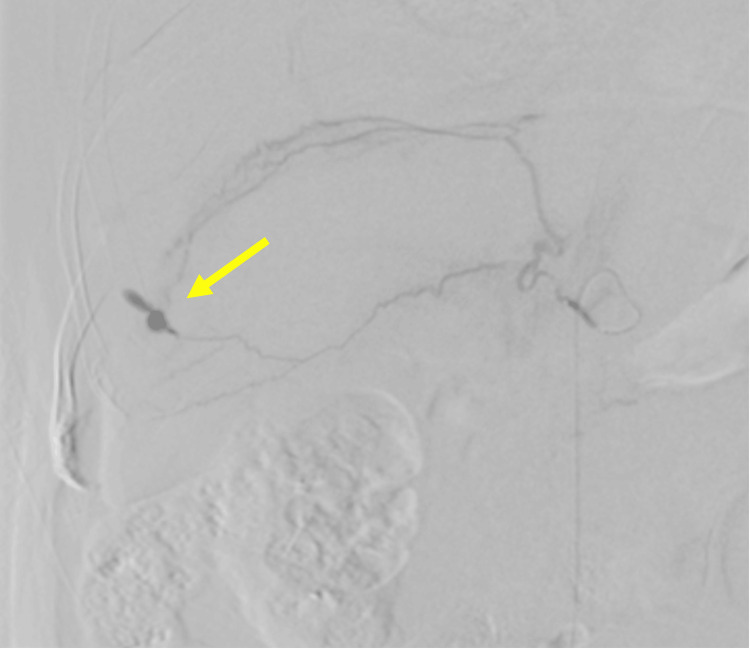 Figure 3
Peer Reviews
No public reviews on file for this paper yet. If you reviewed it on a platform where reviews are public (OpenReview, ICLR, NeurIPS, ICML), you can paste yours below so the community can read it here.
Videos
No videos yet. Explain this paper in a talk, walkthrough, or lecture? Add one.
Taxonomy
TopicsTrauma Management and Diagnosis · Vascular Anomalies and Treatments · Aortic Disease and Treatment Approaches