A Systematic Review of Ventriculoperitoneal Shunt Valve Types and Failure Rates in Paediatric Hydrocephalus
Lara Camilleri, Shawn Agius

TL;DR
This review compares different types of VP shunt valves in children with hydrocephalus, finding no single best option and highlighting the need for personalized choices.
Contribution
The study systematically evaluates and compares various VP shunt valve types in pediatric patients, identifying their strengths and limitations.
Findings
No valve design consistently showed better overall survival rates.
Adjustable valves reduced early revisions in young patients.
Gravitational and flow-regulated valves reduced overdrainage but increased underdrainage risks.
Abstract
Paediatric hydrocephalus remains a significant cause of morbidity, primarily managed by ventriculoperitoneal (VP) shunts. Despite technological advances, shunt valves frequently fail, resulting in high revision rates. This systematic review aims to evaluate and compare shunt valve types in paediatric hydrocephalus, assessing survival rates, complication profiles, and revision requirements. A systematic search was conducted using PubMed, Google Scholar, Scopus, and Cochrane Library databases. Eligible studies included randomised controlled trials (RCTs), cohort studies, systematic reviews, and meta-analyses comparing at least two valve types (adjustable, fixed-pressure, gravitational, anti-siphon, or flow-regulating) in patients aged ≤18 undergoing initial VP shunt insertion. Data were synthesised narratively and, where appropriate, via random-effects meta-analysis, using shunt survival…
Genes, proteins, chemicals, diseases, species, mutations and cell lines named across the full text — each resolved to its canonical identifier and authoritative record.
Click any figure to enlarge with its caption.
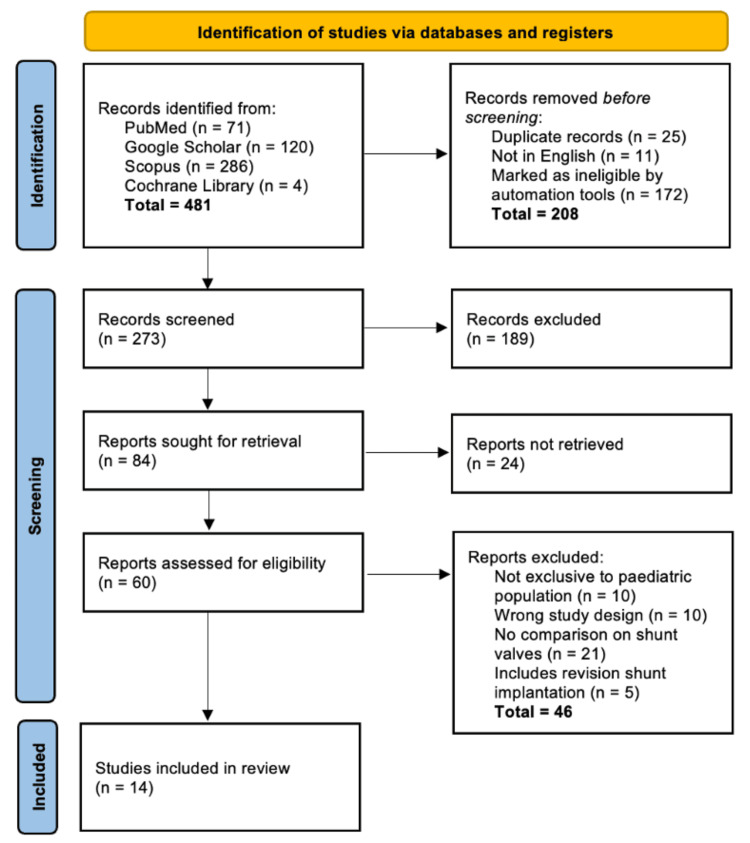 Figure 1
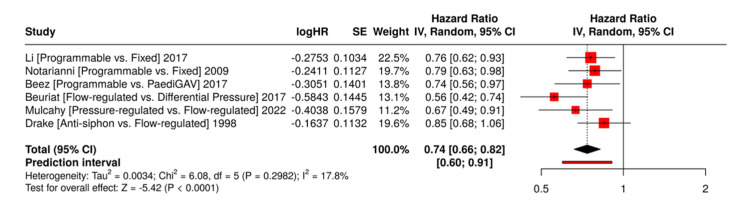 Figure 2
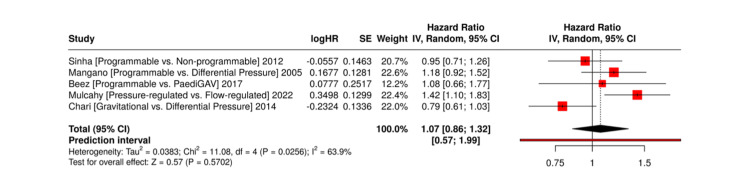 Figure 3
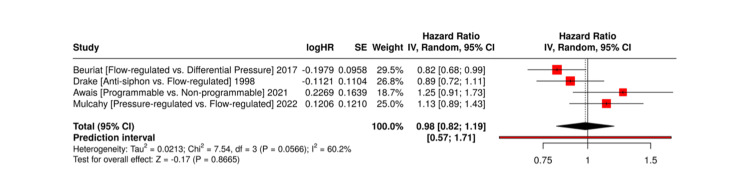 Figure 4
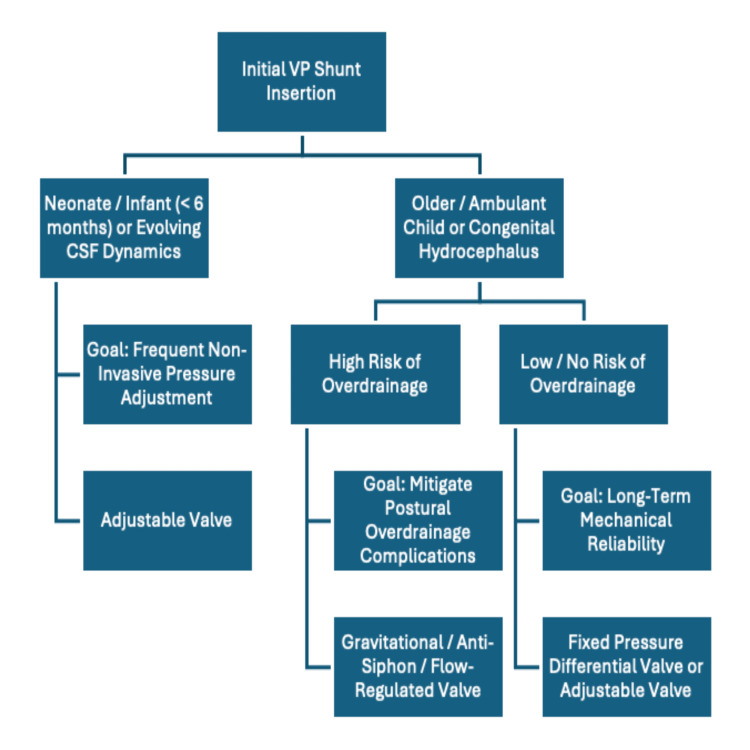 Figure 5
Peer Reviews
No public reviews on file for this paper yet. If you reviewed it on a platform where reviews are public (OpenReview, ICLR, NeurIPS, ICML), you can paste yours below so the community can read it here.
Videos
No videos yet. Explain this paper in a talk, walkthrough, or lecture? Add one.
Taxonomy
TopicsCerebrospinal fluid and hydrocephalus · Fetal and Pediatric Neurological Disorders · Spinal Dysraphism and Malformations