Trichobezoar Causing Obstruction of a Percutaneous Endoscopic Gastrostomy (PEG) Feeding Tube: A Case Report
Ahmed Elkhalifa, Mohamed A Elfeky, Serene Khabbass, Bahaa A Qadas, Samir Abdulla

TL;DR
A 29-year-old woman with learning disabilities had a trichobezoar (hairball) obstructing her feeding tube, highlighting the need to consider this rare condition in similar patients.
Contribution
This case report adds to the limited literature on trichobezoars causing PEG tube obstruction and emphasizes the importance of considering psychiatric comorbidities.
Findings
A trichobezoar was found obstructing a PEG feeding tube in a young female with psychiatric disorders.
Endoscopic retrieval of the trichobezoar was successful under general anesthesia.
Trichobezoars should be considered in the differential diagnosis for GI obstructions in patients with psychiatric conditions.
Abstract
Trichobezoar (hairball) is a rare condition that may pose a diagnostic challenge. Trichobezoar is prevalent in young females with psychiatric disorders. It is defined as a compact mass of ingested hair that accumulates within the gastrointestinal (GI) tract, most commonly in the stomach, and can sometimes extend into the intestines. Its formation occurs because hair is indigestible and tends to mat together over time, creating a dense, often obstructive mass. When a trichobezoar extends beyond the duodenum, the condition is referred to as Rapunzel syndrome. Trichobezoars are often associated with behavioral disorders such as trichotillomania (hair-pulling) and trichophagia (hair-swallowing), which may occur unconsciously or as part of impulse control disorders. This condition is particularly prevalent among adolescent females with psychiatric disorders. A 29-year-old female with…
Genes, proteins, chemicals, diseases, species, mutations and cell lines named across the full text — each resolved to its canonical identifier and authoritative record.
Click any figure to enlarge with its caption.
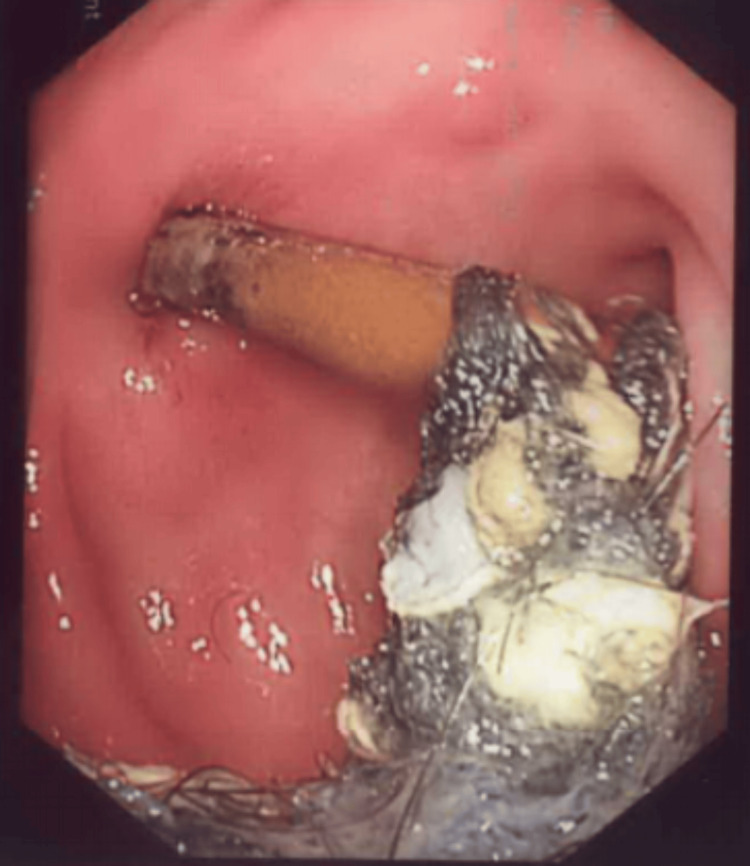 Figure 1
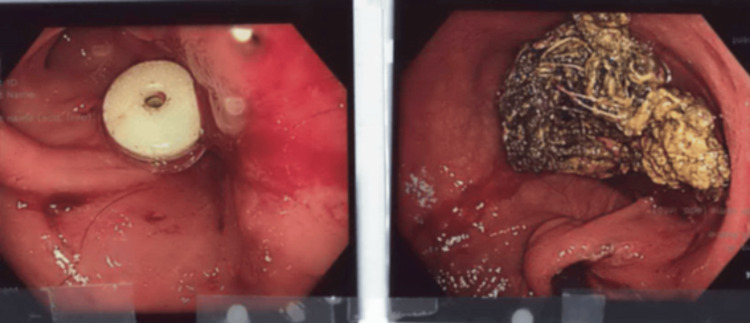 Figure 2
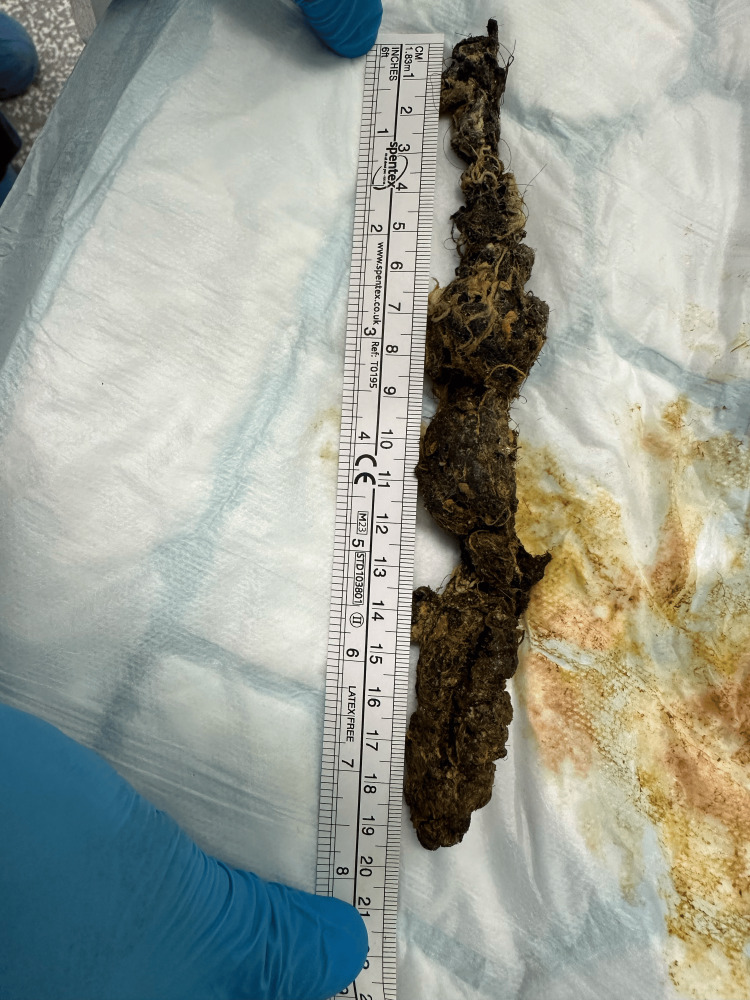 Figure 3
Peer Reviews
No public reviews on file for this paper yet. If you reviewed it on a platform where reviews are public (OpenReview, ICLR, NeurIPS, ICML), you can paste yours below so the community can read it here.
Videos
No videos yet. Explain this paper in a talk, walkthrough, or lecture? Add one.
Taxonomy
TopicsIntestinal and Peritoneal Adhesions · Potassium and Related Disorders · Omental and Epiploic Conditions