Clinical and demographic associations of recorded feigning in functional neurological disorder
Rok Berlot, Thomas A Pollak, Livia Asan, Biba Stanton, Timothy R Nicholson, Mark J Edwards, Richard A Kanaan

TL;DR
About 2.2% of people with functional neurological disorder were recorded as having malingering or factitious disorder, with higher rates among certain groups, suggesting possible clinician bias.
Contribution
This study provides the first large-scale analysis of feigning diagnoses in FND using real-world electronic health records.
Findings
FND cases had higher rates of malingering and factitious disorder compared to multiple sclerosis and depression.
Malingering was more common in Black individuals and those with stigmatized conditions like HIV.
The proportion of malingering diagnoses in FND decreased from 2018 to 2023.
Abstract
Although functional neurological disorder (FND) is common, increasingly recognized, potentially disabling, and treatable, it remains stigmatized, and concerns about feigning persist among clinicians. We examined the prevalence of malingering and factitious disorder diagnoses in individuals with FND, their associated demographic and clinical characteristics, and evidence of clinician bias in the diagnosis of feigning. In this retrospective cohort and case-control study using the international TriNetX electronic health record network, we analysed diagnostic codes (International Classification of Diseases, Tenth Revision) for FND, malingering and factitious disorder to assess their prevalence and overlap. We then compared rates of malingering and factitious disorder following a diagnosis of FND with those in cohorts of patients with multiple sclerosis and with depression, used as…
Genes, proteins, chemicals, diseases, species, mutations and cell lines named across the full text — each resolved to its canonical identifier and authoritative record.
Click any figure to enlarge with its caption.
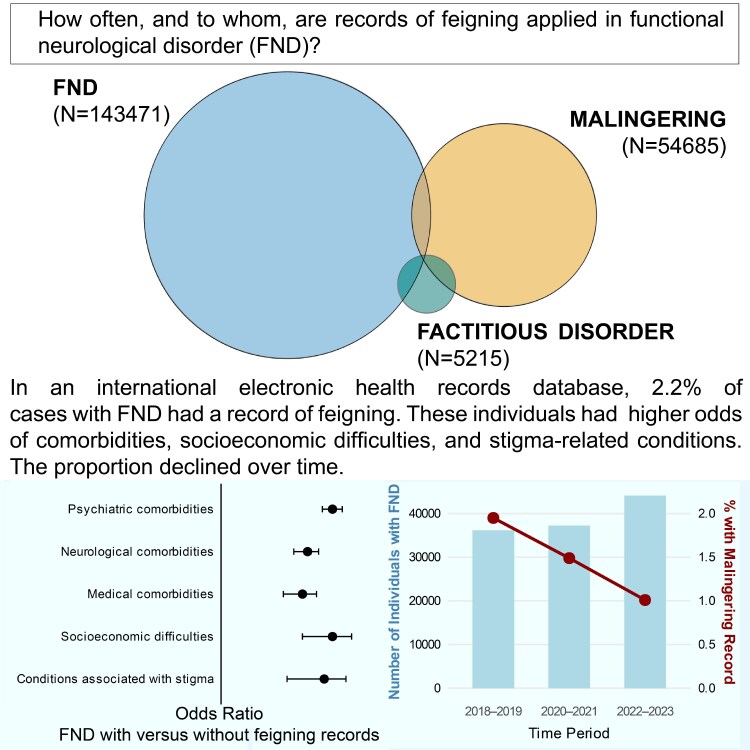 Figure 1
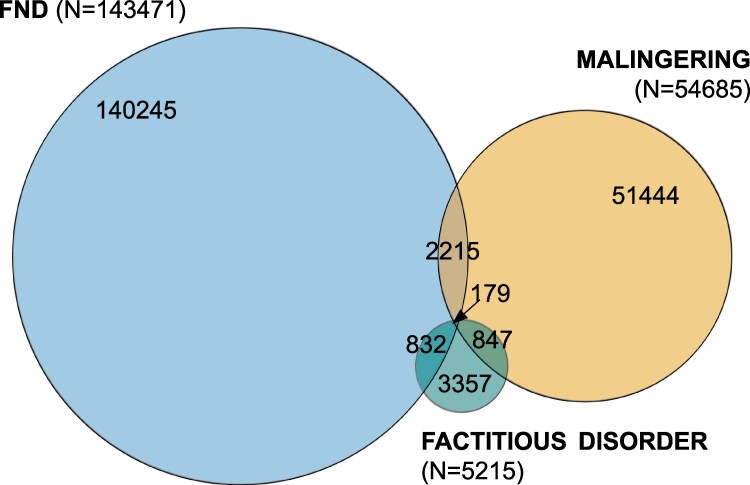 Figure 2
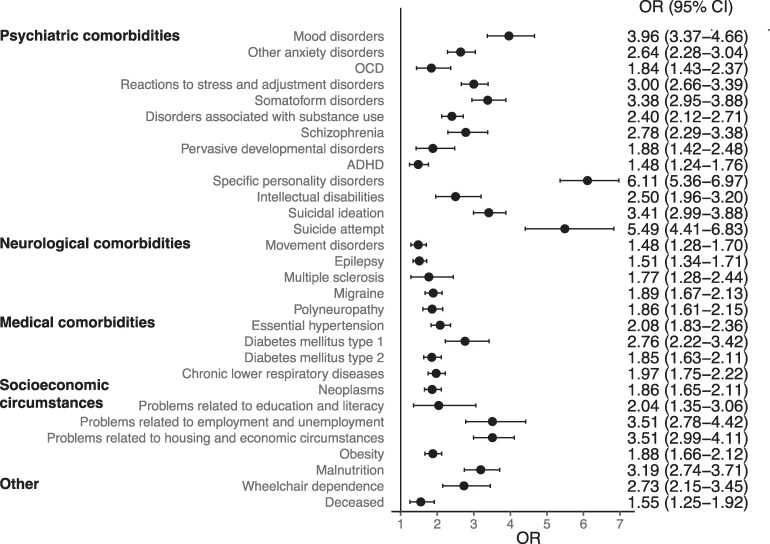 Figure 3
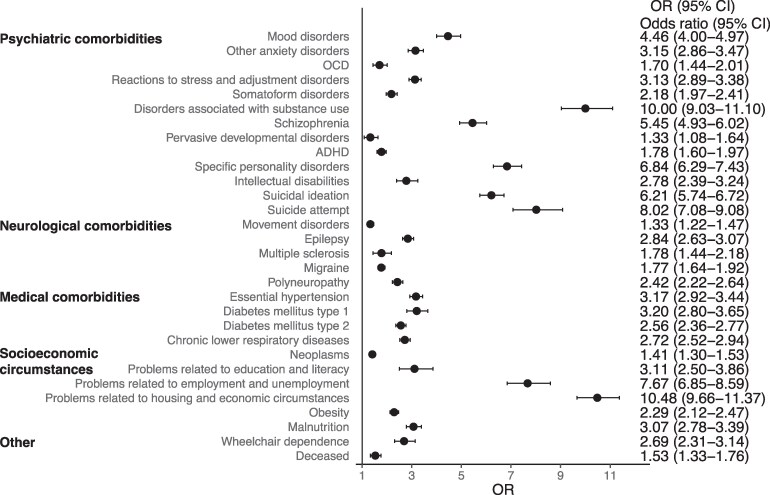 Figure 4
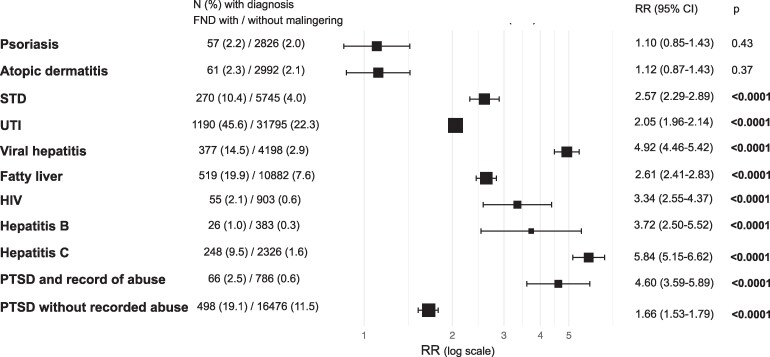 Figure 5
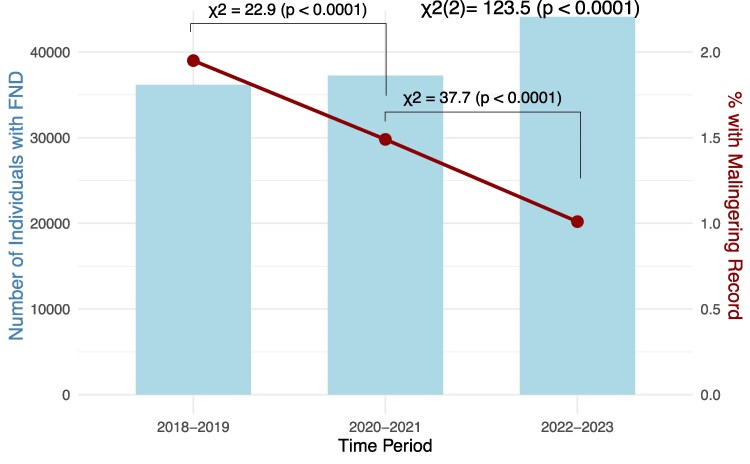 Figure 6
Peer Reviews
No public reviews on file for this paper yet. If you reviewed it on a platform where reviews are public (OpenReview, ICLR, NeurIPS, ICML), you can paste yours below so the community can read it here.
Videos
No videos yet. Explain this paper in a talk, walkthrough, or lecture? Add one.
Taxonomy
TopicsPsychosomatic Disorders and Their Treatments · Child Abuse and Related Trauma · Obsessive-Compulsive Spectrum Disorders