Progression of fragile X-associated tremor/ataxia syndrome revealed by subtype and stage inference
Douglas Ezra Morrison, Matthew Dominic Ponzini, Ellery R Santos, Hazel Maridith Barlahan Biag, Glenda Espinal, Flora Tassone, Susan M Rivera, David Hessl, Andrea Schneider, James A Bourgeois, Randi Hagerman, Kyoungmi Kim

TL;DR
This study reveals that FXTAS symptoms appear in different orders in males and females, suggesting the need for sex-specific diagnostic stages.
Contribution
The study identifies sex-based differences in the progression of FXTAS symptoms using a novel statistical method.
Findings
Psychiatric symptoms appear earlier in females compared to males.
Symptom progression sequences differ between sexes and may depend on CGG repeat length.
These findings suggest the need for sex-specific diagnostic criteria for FXTAS.
Abstract
The fragile X-associated tremor/ataxia syndrome (FXTAS) is a neurodegenerative disorder caused by the premutation (55–200 CGG repeats) in the fragile X messenger ribonucleoprotein-1 (FMR1) gene. An open question is: In what sequential order do FXTAS symptoms typically appear, and how does that sequence vary among patients and between males and females? We applied the ordinal-outcomes version of the Subtype and Stage Inference algorithm (‘Ordinal SuStaIn’) to identify the sequential events of clinical and brain MRI changes in cross-sectional data collected during baseline visits from a longitudinal cohort of FXTAS patients at Stages 0–5. We included 28 neurodegenerative symptoms collected from 253 premutation carriers (101 females and 152 males) and 44 controls (7 females and 37 males), aged 40–86 years old at entry, who participated in two longitudinal studies, with entry dates between…
Genes, proteins, chemicals, diseases, species, mutations and cell lines named across the full text — each resolved to its canonical identifier and authoritative record.
Click any figure to enlarge with its caption.
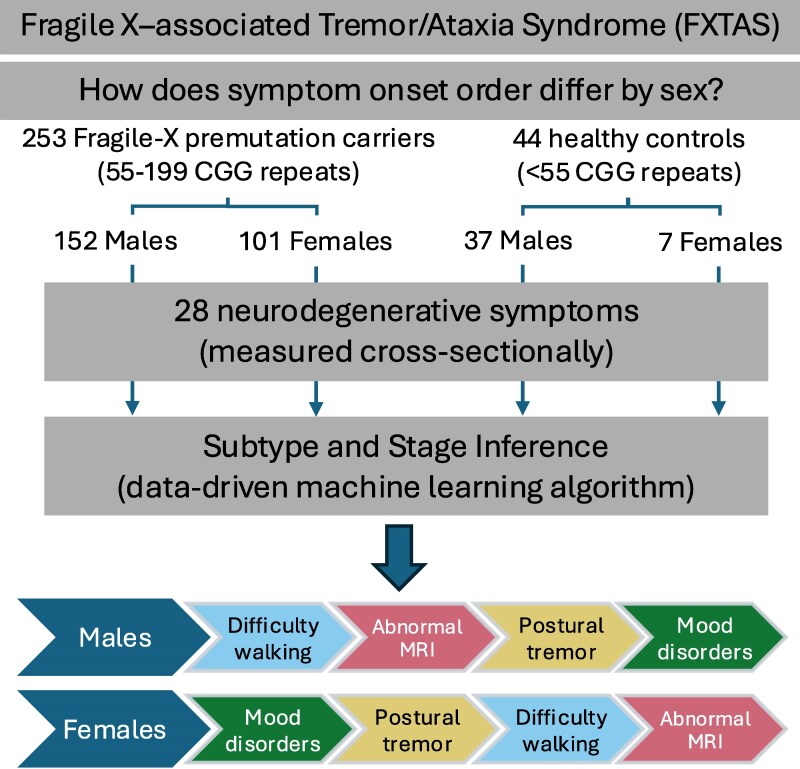 Figure 1
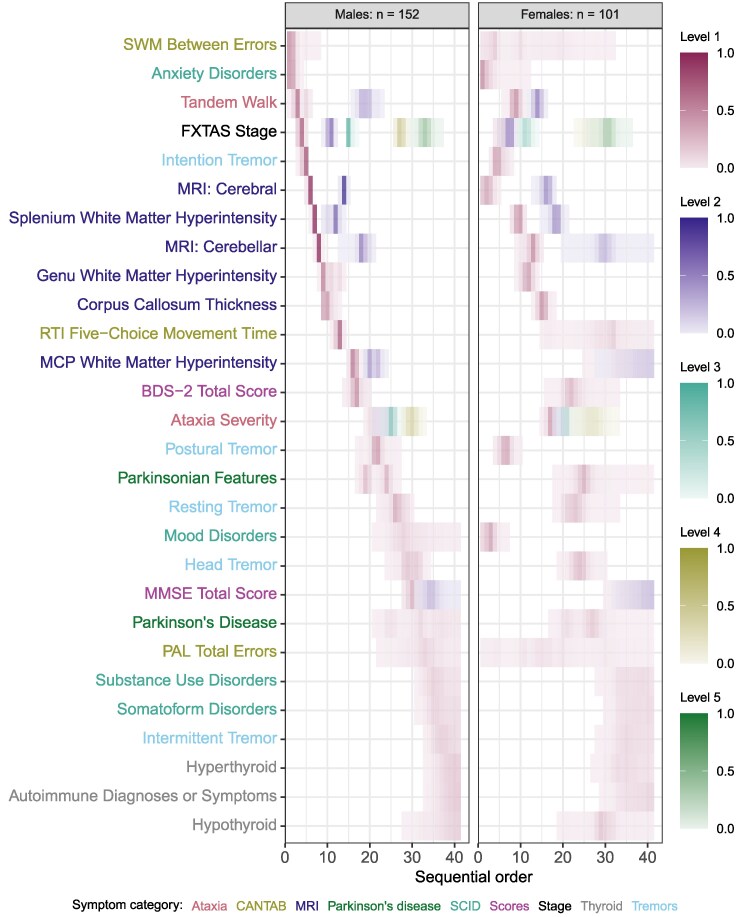 Figure 2
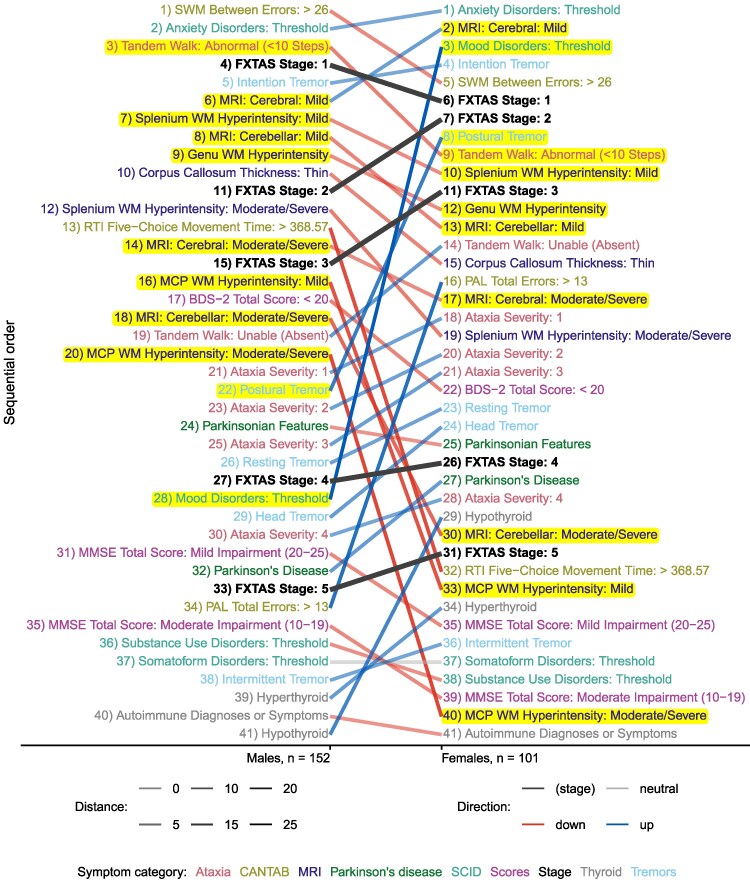 Figure 3
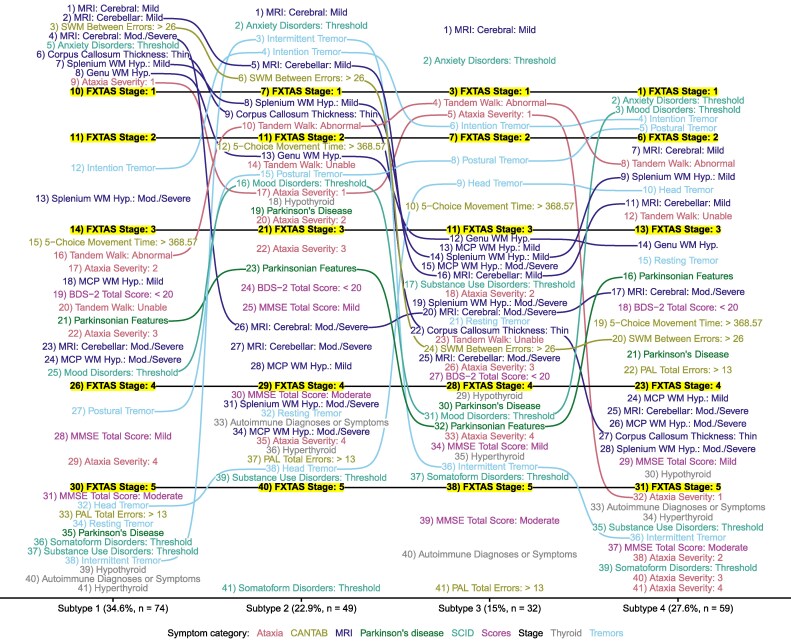 Figure 4
Peer Reviews
No public reviews on file for this paper yet. If you reviewed it on a platform where reviews are public (OpenReview, ICLR, NeurIPS, ICML), you can paste yours below so the community can read it here.
Videos
No videos yet. Explain this paper in a talk, walkthrough, or lecture? Add one.
Taxonomy
TopicsGenetics and Neurodevelopmental Disorders · Genetic Neurodegenerative Diseases · Ubiquitin and proteasome pathways