Time‐Efficient, Accurate, and Experimentally Grounded Optical Modeling of Multiscale‐Textured Thin‐Film Solar Cells
Federica Saitta, Govind Padmakumar, Paula Perez Rodriguez, Paul Procel Moya, Rudi Santbergen, Arno H.M. Smets

TL;DR
This paper introduces a fast and accurate optical modeling method for thin-film solar cells with complex surface textures, validated against experimental data.
Contribution
The first systematic validation of ray optics for modeling multiscale-textured solar cells, showing high accuracy and significant time savings.
Findings
Ray optics model achieves 2%–6% deviation compared to experimental data, matching RCWA accuracy.
Computation time is reduced from 1 week to under 30 minutes using ray optics.
The method successfully predicts performance for both single-junction and tandem solar cell architectures.
Abstract
Accurate prediction of optical performance in solar cells with multiscale‐textured interfaces is essential for optimizing light management in next‐generation photovoltaics. For the first time, a systematic validation of two complementary modeling approaches is carried out on experimentally fabricated thin‐film silicon (TF Si) solar cells: rigorous coupled‐wave analysis (RCWA), offering a full electromagnetic solution but constrained by boundary conditions, and a ray optics model, operating in the refractive regime. The study involves two device architectures: an a‐Si:H single‐junction cell on commercial Asahi VU‐type glass with random nanotextures, and an nc‐Si:H single‐junction cell on novel micro‐periodic honeycomb‐textured glass developed in‐house. Simulated and measured external quantum efficiency (EQE) and total front reflection losses (1‐R) are benchmarked using the root mean…
Genes, proteins, chemicals, diseases, species, mutations and cell lines named across the full text — each resolved to its canonical identifier and authoritative record.
Click any figure to enlarge with its caption.
 Figure 1
 Figure 2
 Figure 3
 Figure 4
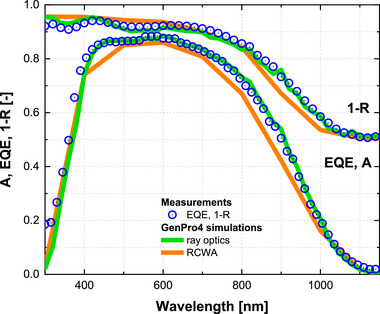 Figure 5
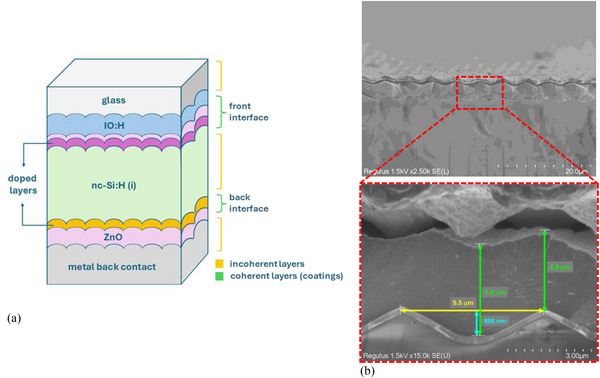 Figure 6
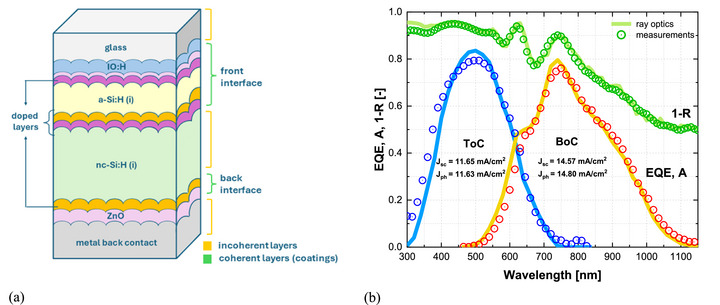 Figure 7
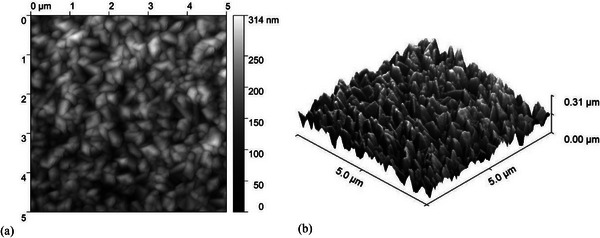 Figure 8
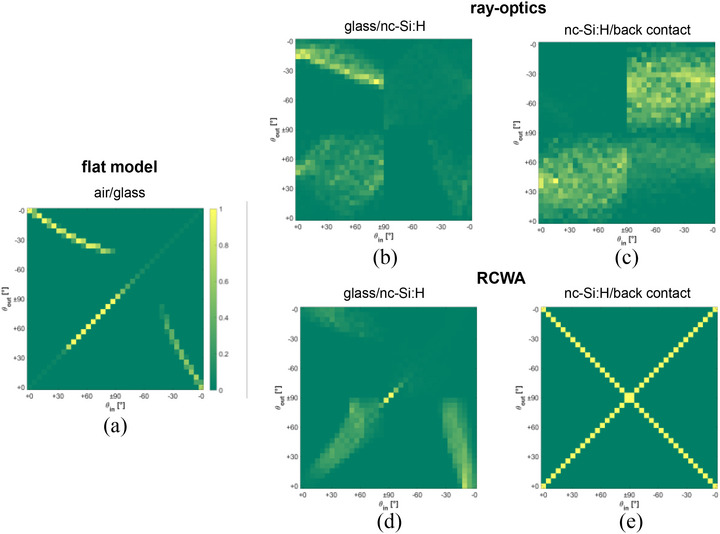 Figure 9
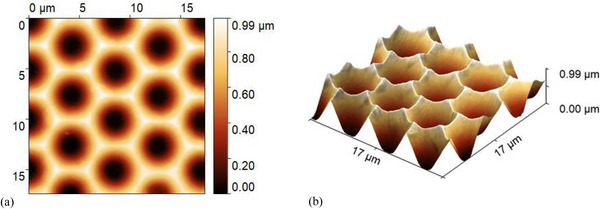 Figure 10
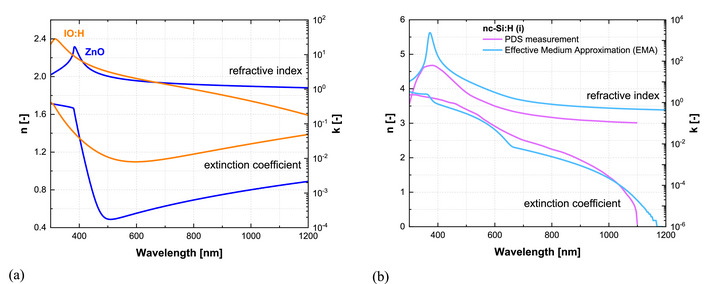 Figure 11
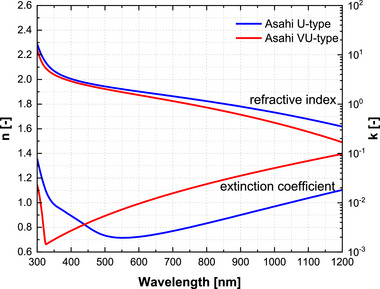 Figure 12
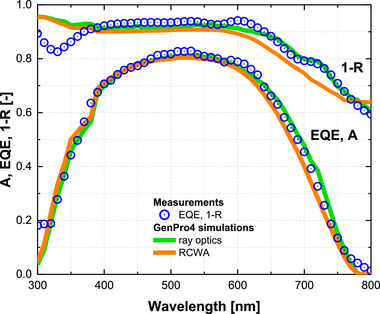 Figure 13
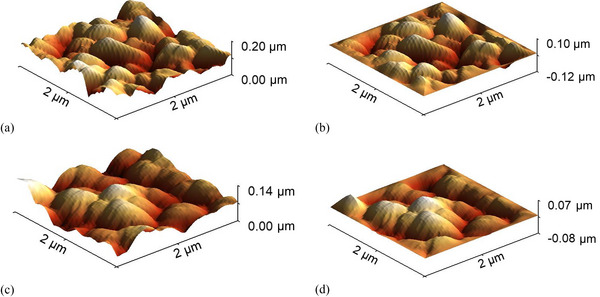 Figure 14
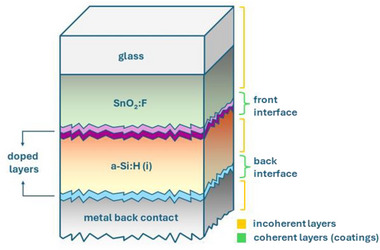 Figure 15
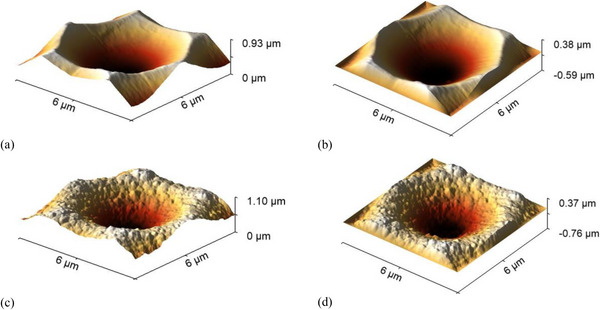 Figure 16
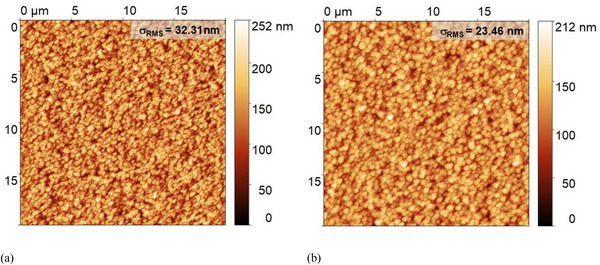 Figure 17
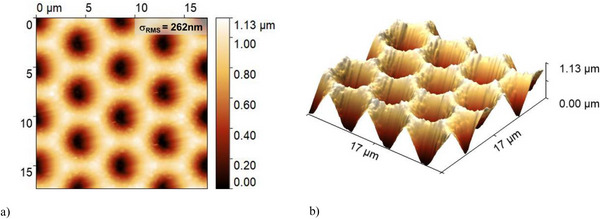 Figure 18
Peer Reviews
No public reviews on file for this paper yet. If you reviewed it on a platform where reviews are public (OpenReview, ICLR, NeurIPS, ICML), you can paste yours below so the community can read it here.
Videos
No videos yet. Explain this paper in a talk, walkthrough, or lecture? Add one.
Taxonomy
TopicsThin-Film Transistor Technologies · Silicon and Solar Cell Technologies · solar cell performance optimization