Novel adenovirus vaccine vectors lacking thrombosis-associated interactions with platelet factor 4
Erwan Sallard, Daniel Pembaur, Matias Ciancaglini, Lucie Manov-Bouard, Denice Weklak, Firas Hamdan, Chun Kit Chan, Franziska Jönsson, Elise Chabot, Carmen Musielak, Elena Scurti, Sara Feola, Sebastian Schellhorn, Nissai Beaude, Katrin Schröer, Daipayan Sarkar, Georgia Koukou

TL;DR
Researchers identified safer adenovirus-based vaccine vectors that do not bind to a blood protein linked to rare cases of thrombosis.
Contribution
Development of adenovirus vectors lacking interactions with platelet factor 4 (PF4), reducing thrombosis risk.
Findings
Ad5-ΔHVR1, Ad34, and Ad80 adenoviruses do not bind to PF4.
Ad5-ΔHVR1 was as effective as Ad5 in inducing immune responses in mice.
PF4 binding influences the infectivity of adenoviruses.
Abstract
The adenoviral vector-based AstraZeneca and Janssen COVID-19 vaccines have been associated with rare cases of thrombosis, believed to be triggered, among other factors, by vector binding to the blood protein platelet factor 4 (PF4). To identify vectors with lower thrombosis risk, we screened 50 natural and hexon-modified adenoviruses (Ads). Unlike the applied COVID-19 vaccines and most tested vectors, Ad34 and Ad80, as well as Ad5 vectors with deleted or chemically shielded hexon hyper-variable region 1 (HVR1), did not bind to PF4. Furthermore, interactions with PF4 substantially modified Ad5 infectivity in various immortalized and primary cells, suggesting that PF4 may influence existing vector tropism. Finally, HVR1-deleted Ad5 and Ad34 vectors expressing SARS-CoV-2 spike S1 domain were tested as vaccine candidates in mice and induced robust cellular immune responses. Therefore, the…
Genes, proteins, chemicals, diseases, species, mutations and cell lines named across the full text — each resolved to its canonical identifier and authoritative record.
Click any figure to enlarge with its caption.
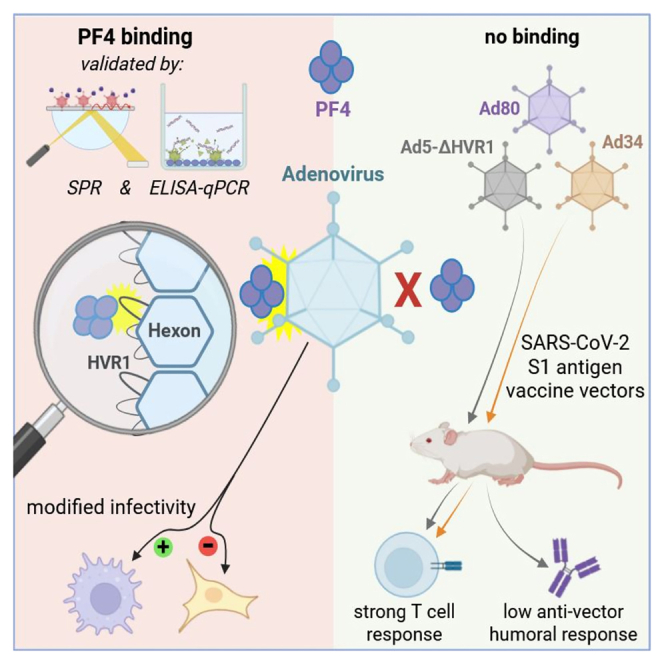 Figure 1
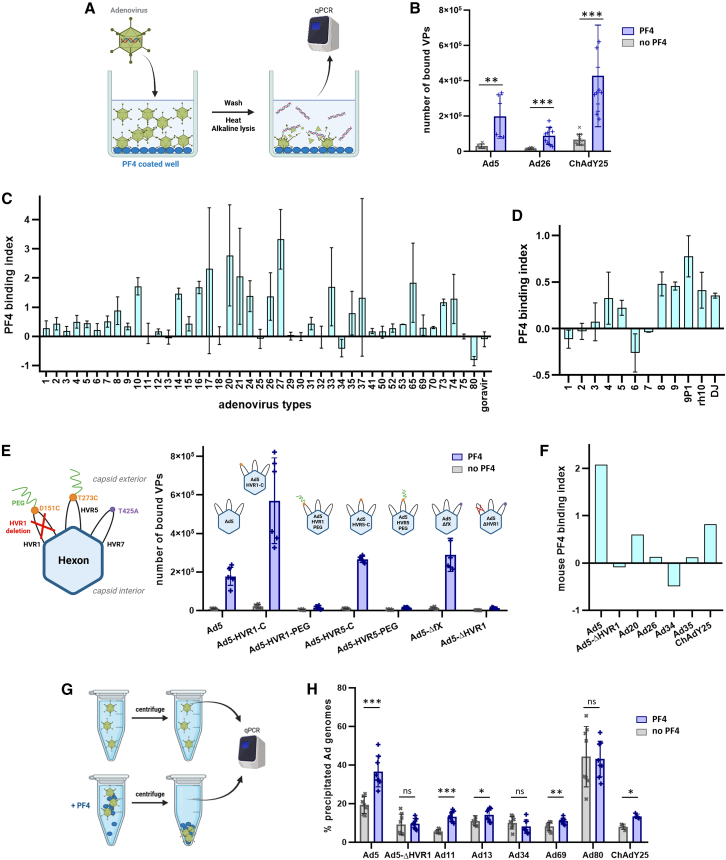 Figure 2
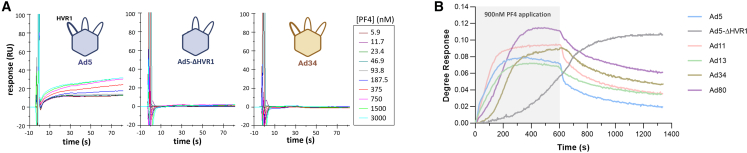 Figure 3
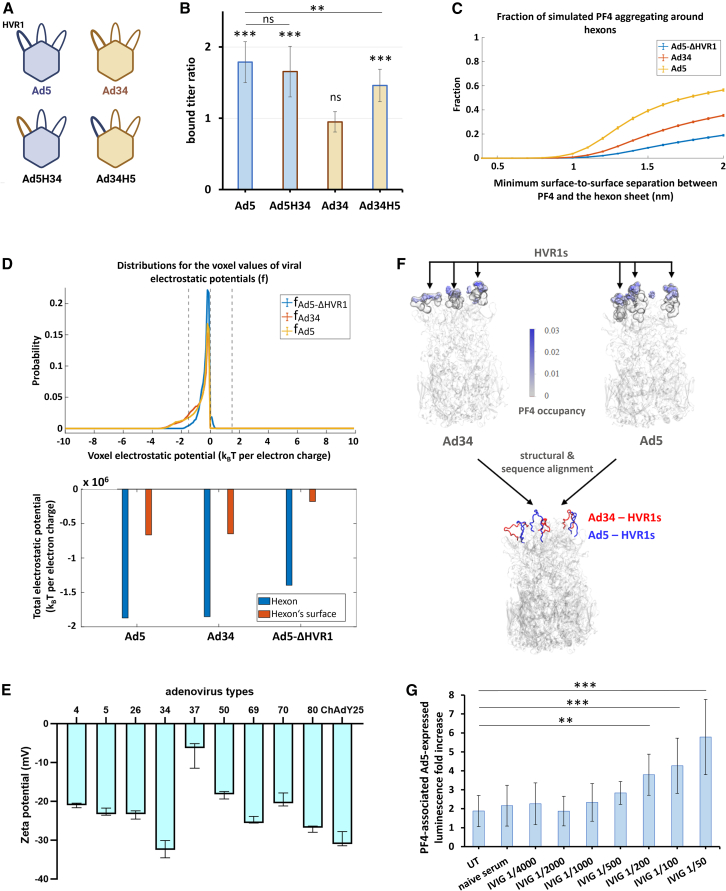 Figure 4
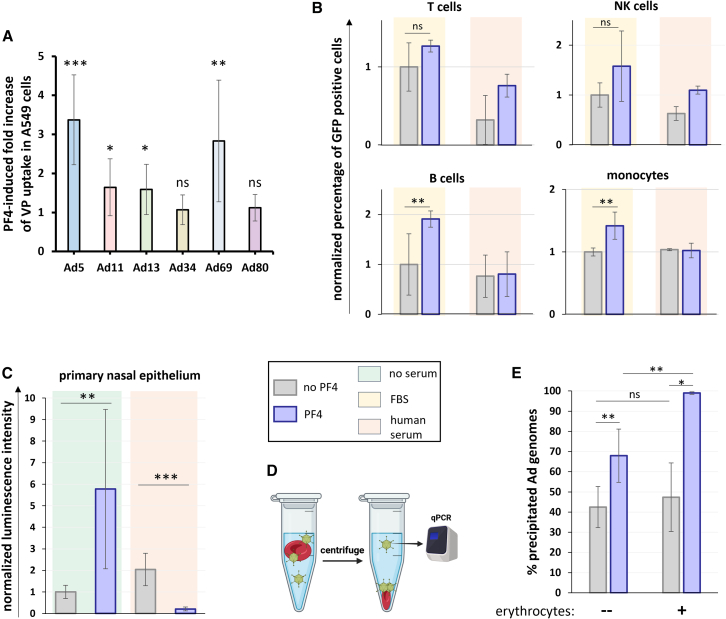 Figure 5
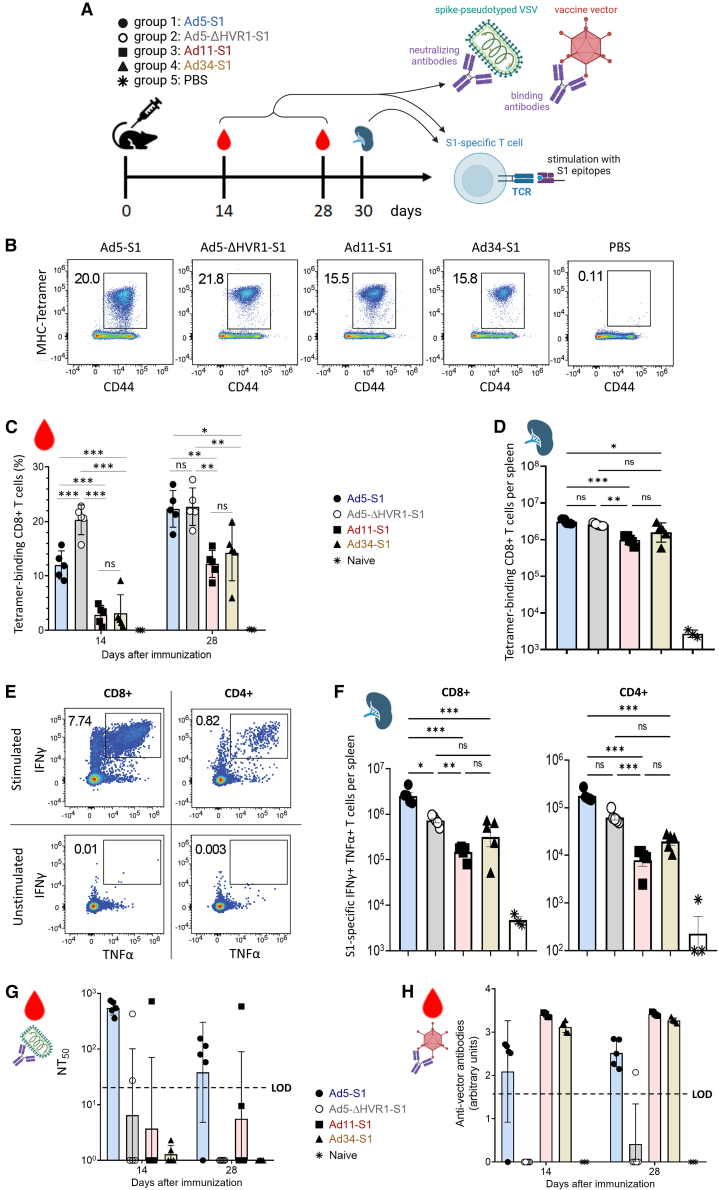 Figure 6
Peer Reviews
No public reviews on file for this paper yet. If you reviewed it on a platform where reviews are public (OpenReview, ICLR, NeurIPS, ICML), you can paste yours below so the community can read it here.
Videos
No videos yet. Explain this paper in a talk, walkthrough, or lecture? Add one.
Taxonomy
TopicsVirus-based gene therapy research · Heparin-Induced Thrombocytopenia and Thrombosis · Platelet Disorders and Treatments