Large-scale functional assessment of variants of the potassium channel Kir2.1: Clinical and comparative insights
Corey L. Anderson, Saba Munuwar, Janay K. Walters, Seamus F. McWilliams, Molly Melnick, Emma R. Langer, Igor Bereslavskyy, Maxwell R. Milaitis, Louise Reilly, Lee L. Eckhardt

TL;DR
This study evaluates the function of many Kir2.1 gene variants to better understand their role in Andersen-Tawil Syndrome and improve clinical classifications.
Contribution
The study introduces a yeast-based functional assay to validate and complement deep mutational scan data for Kir2.1 variants.
Findings
About 30% of Kir2.1 variants showed reduced surface expression when co-expressed with wild-type.
Approximately 70% of variants with reduced surface expression also had reduced thermal stability.
The yeast assay identified 7 out of 10 VUS as loss-of-function, contradicting some DMS results.
Abstract
Hundreds of KCNJ2 (Kir2.1) variants of uncertain significance (VUS) have been associated with Andersen-Tawil Syndrome (ATS). Remarkably, most Kir2.1 variants' surface expression and function have been described via deep mutational scans (DMS). These results have provided an unprecedented picture of Kir2.1 structure-function relationships and insights into VUS. However, these studies are limited by the lack of robust validation. We performed a flow cytometry-based Kir2.1 surface expression assay for 70 variants (61 ATS-linked) distributed across the potassium inward rectifier channel, a thermal stability assay of 20 variants with reduced surface expression, a yeast-based functional assay for 20 variants (10 pathogenic or likely pathogenic (P/LP) and 10 VUS), as well as whole-cell patch clamp for 13 variants (4 P/LP and 9 VUS). Kir2.1 cell surface expression results showed that ∼30% of…
Genes, proteins, chemicals, diseases, species, mutations and cell lines named across the full text — each resolved to its canonical identifier and authoritative record.
Click any figure to enlarge with its caption.
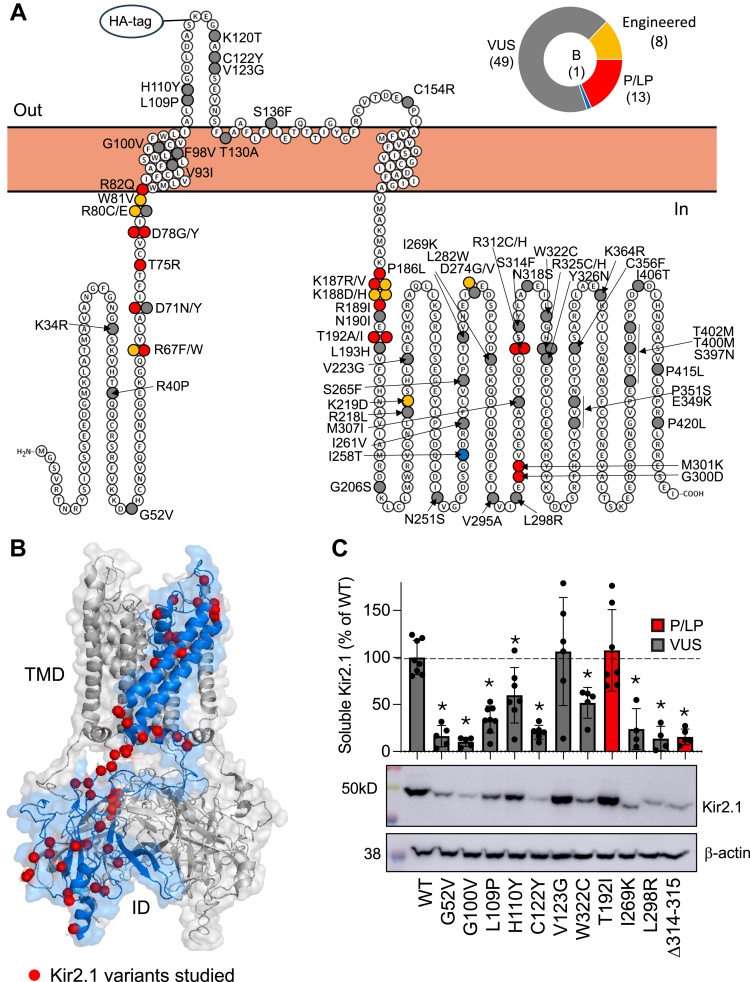 Figure 1
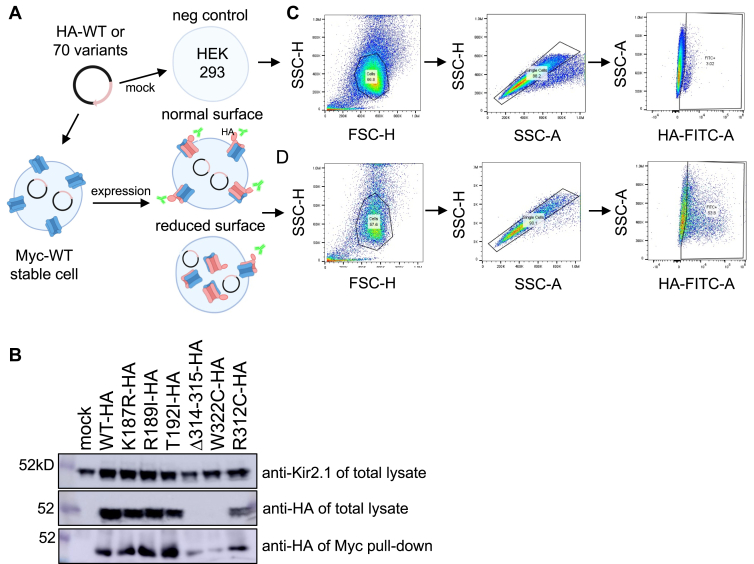 Figure 2
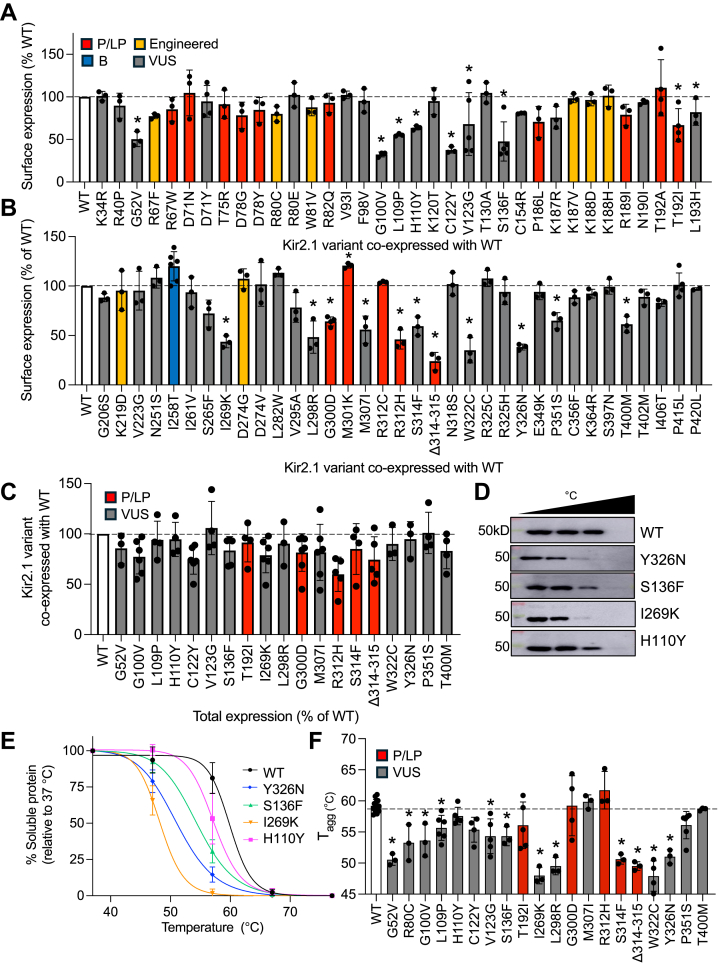 Figure 3
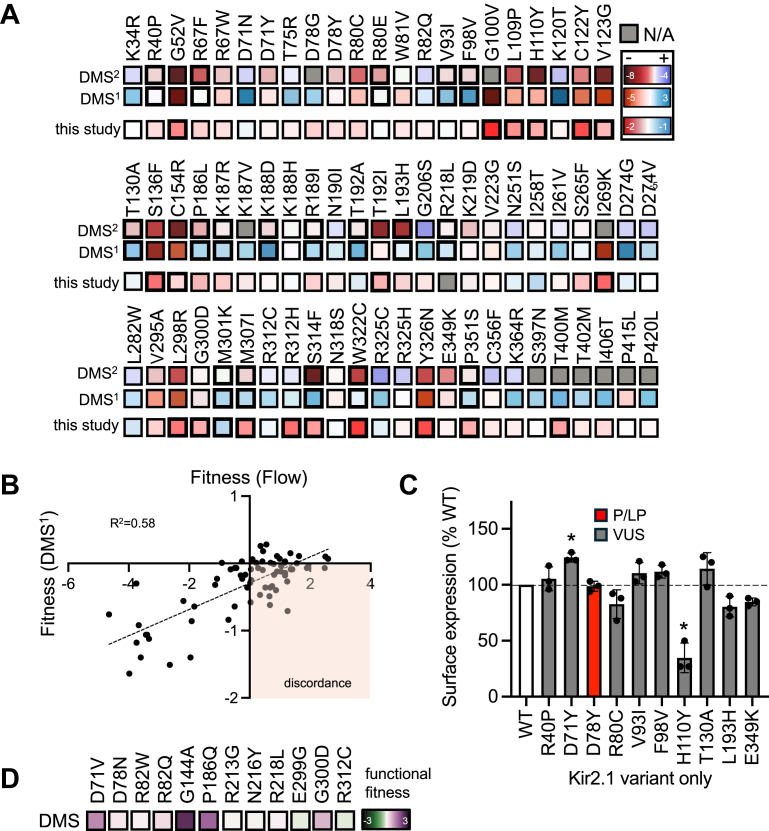 Figure 4
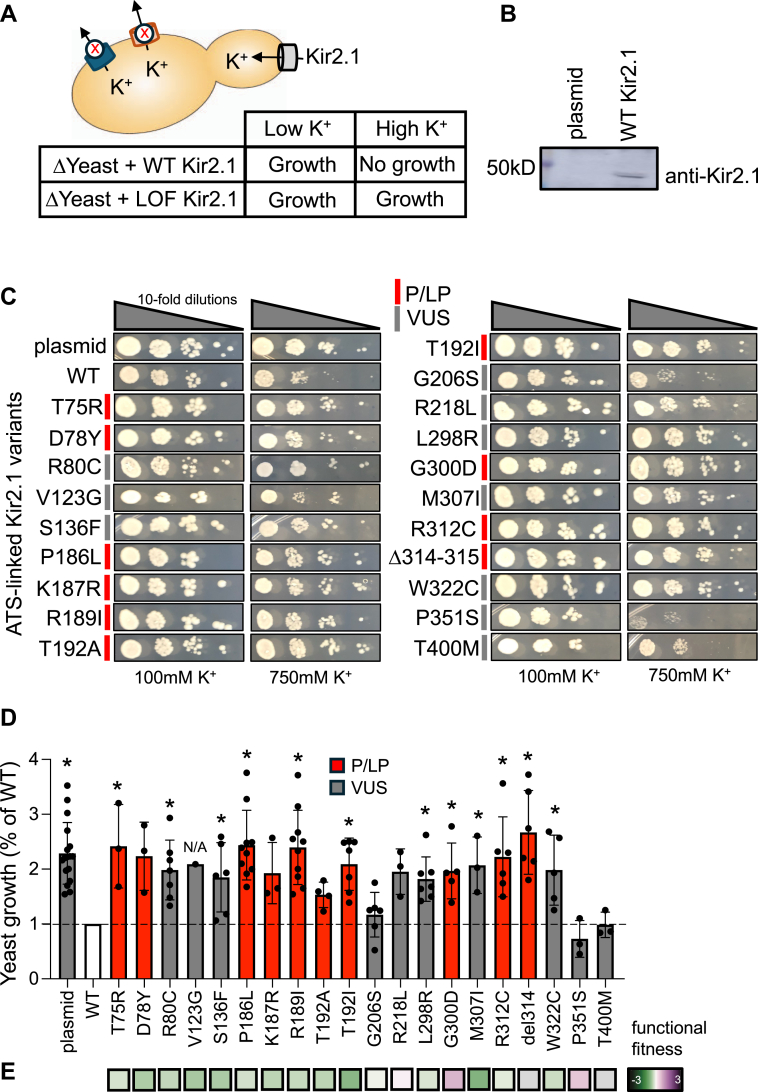 Figure 5
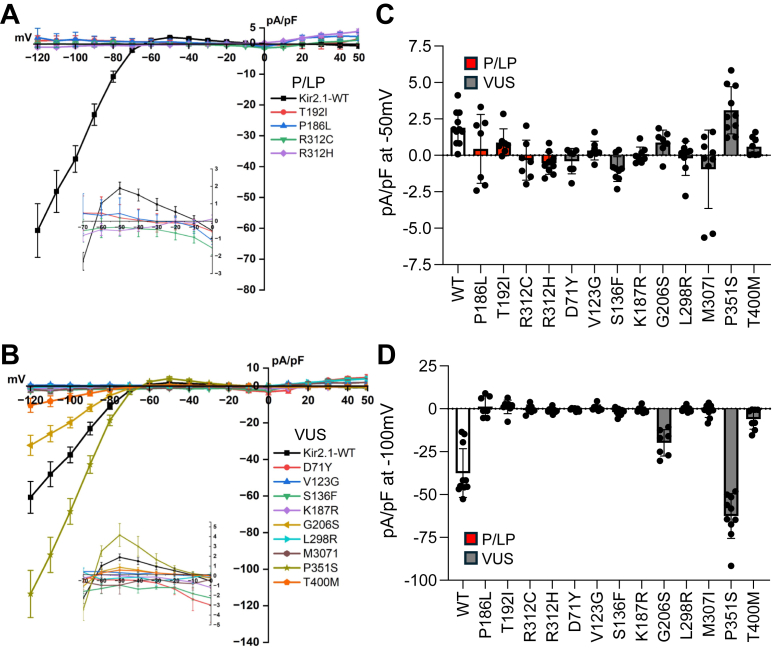 Figure 6
Peer Reviews
No public reviews on file for this paper yet. If you reviewed it on a platform where reviews are public (OpenReview, ICLR, NeurIPS, ICML), you can paste yours below so the community can read it here.
Videos
No videos yet. Explain this paper in a talk, walkthrough, or lecture? Add one.
Taxonomy
TopicsIon channel regulation and function · Glycogen Storage Diseases and Myoclonus · Erythrocyte Function and Pathophysiology