Otic organoids: A model to study spiral ganglion neuron characteristics in Tmprss3-deficiency
André U. Deutschmann, Lucie Pifkova, Betül Findik, Moritz Klingenstein, Anton Betz, Maksim Klimiankou, Julia Skokowa, Stefan Liebau, Ellen Reisinger, Stefanie Klingenstein

TL;DR
Researchers developed a model using otic organoids to study how a gene deficiency affects spiral ganglion neurons, which are important for cochlear implant performance.
Contribution
A refined protocol for generating SGN-like cells in otic organoids to study TMPRSS3-deficiency in human iPSCs.
Findings
TMPRSS3-deficient iPSC clones developed smaller and less differentiated organoids.
TMPRSS3-deficient SGN-like cells showed reduced currents and action potential firing.
The model recapitulates disease phenotypes linked to impaired cochlear implant performance.
Abstract
Organoids are valuable models to study human diseases. Cochlear implants (CIs) electrically stimulate spiral ganglion neurons (SGNs) to enable severely hearing-impaired people vocal communication. However, some studies found in patients with mutations in the TMPRSS3 gene that speech comprehension with CI was lower than for other etiologies. The reduced CI performance might be associated with reduced SGN excitability, the causes for which are largely unclear. We refined a protocol for generating SGN-like cells in otic organoids from human induced pluripotent stem cells (iPSC) and confirmed their identity through marker expression and electrophysiological characterization. TMPRSS3-deficient iPSC clones developed smaller and less differentiated organoids. Moreover, TMPRSS3-deficient SGN-like cells displayed smaller currents and were less likely to exhibit action potentials, which…
Genes, proteins, chemicals, diseases, species, mutations and cell lines named across the full text — each resolved to its canonical identifier and authoritative record.
Click any figure to enlarge with its caption.
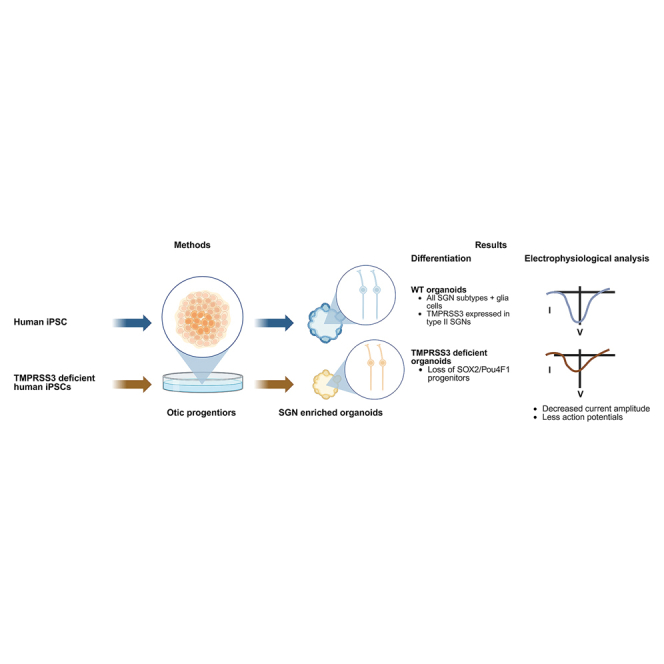 Figure 1
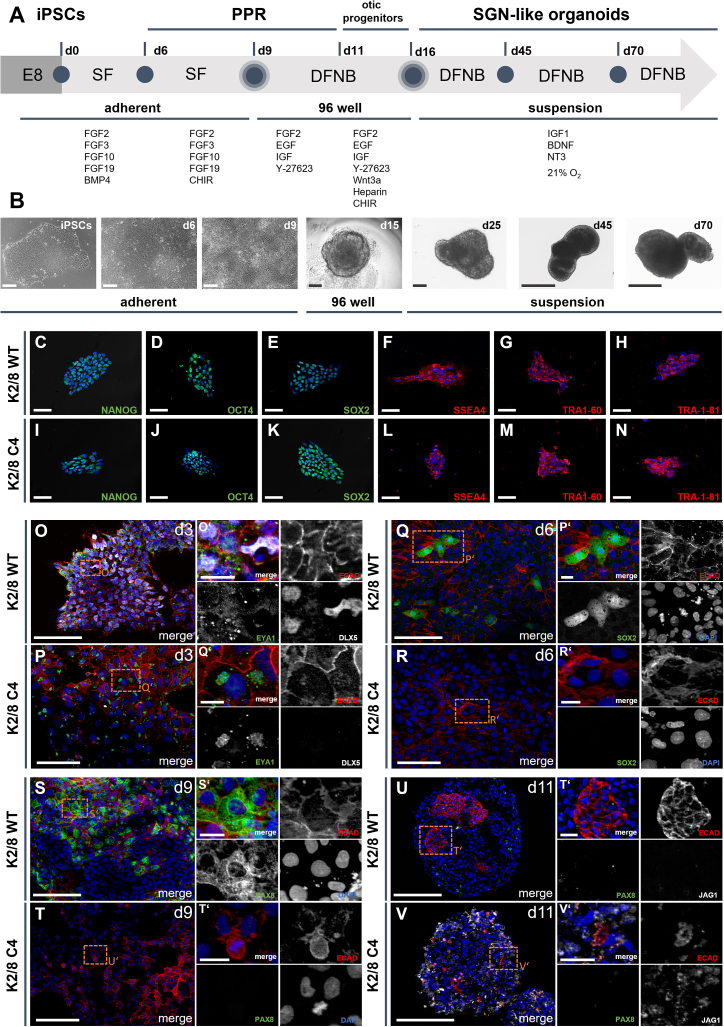 Figure 2
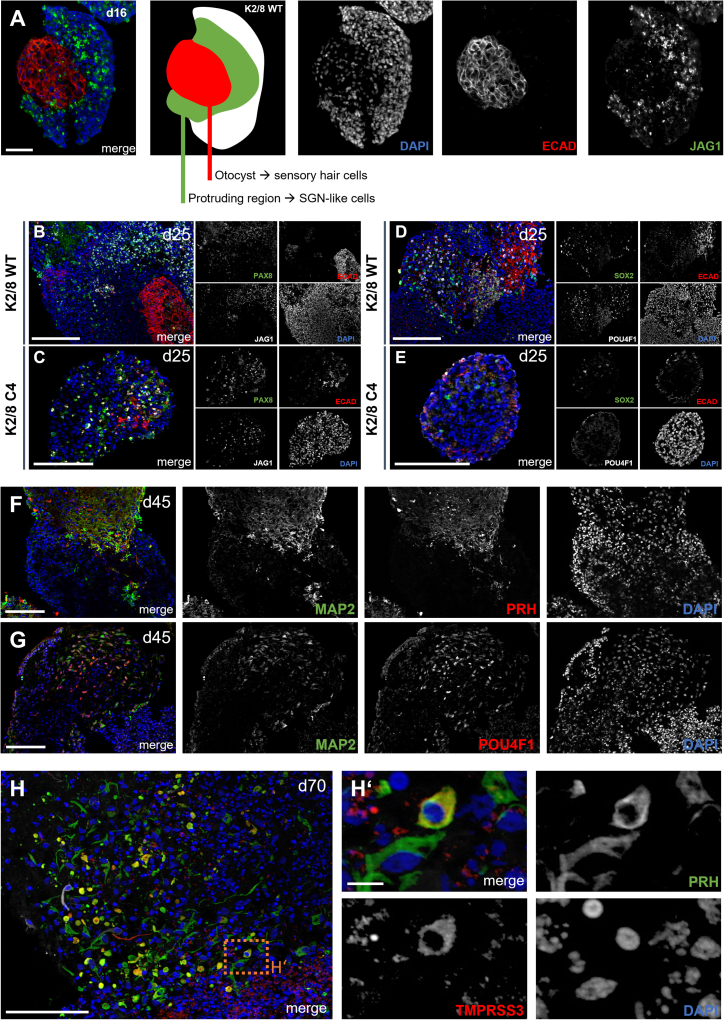 Figure 3
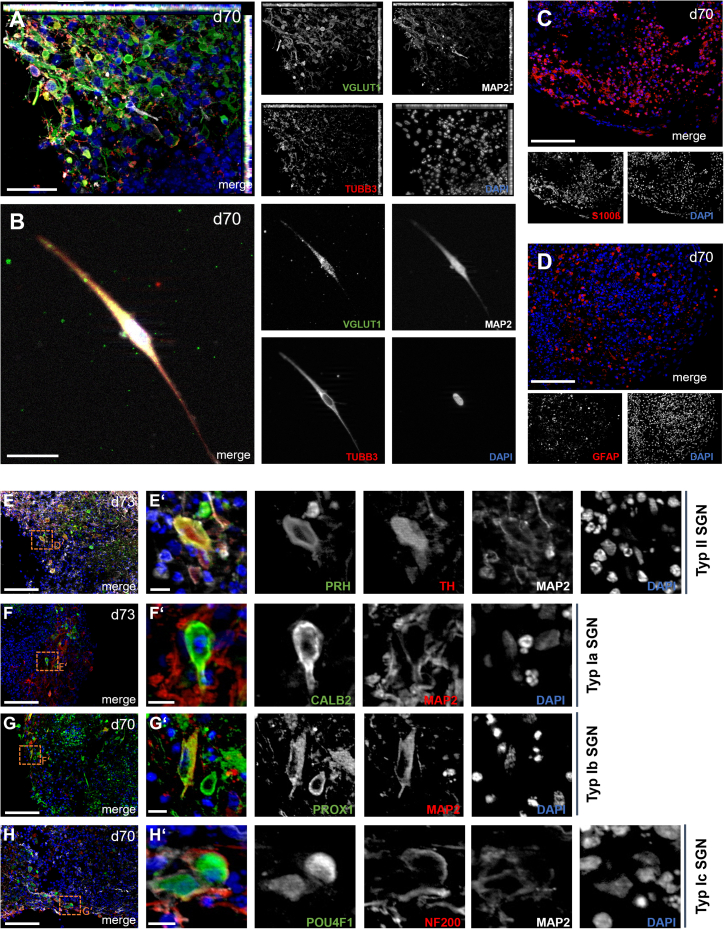 Figure 4
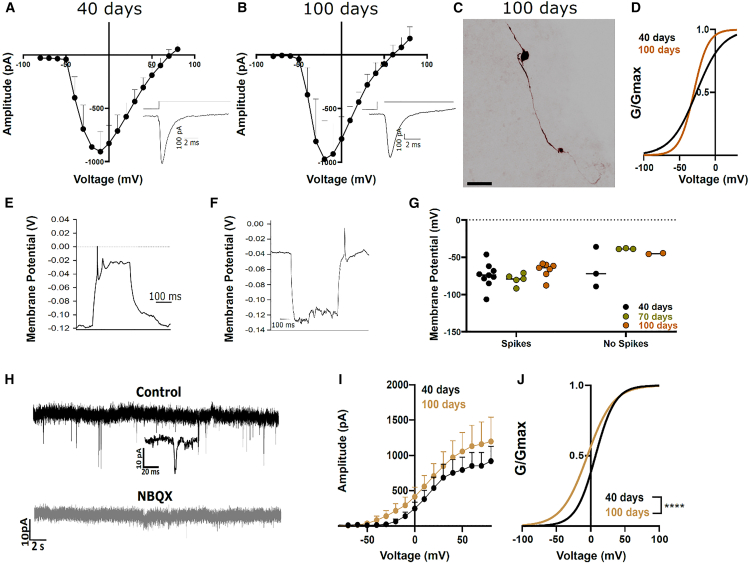 Figure 5
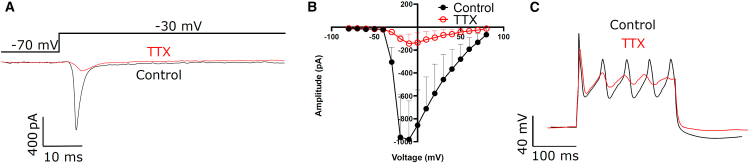 Figure 6
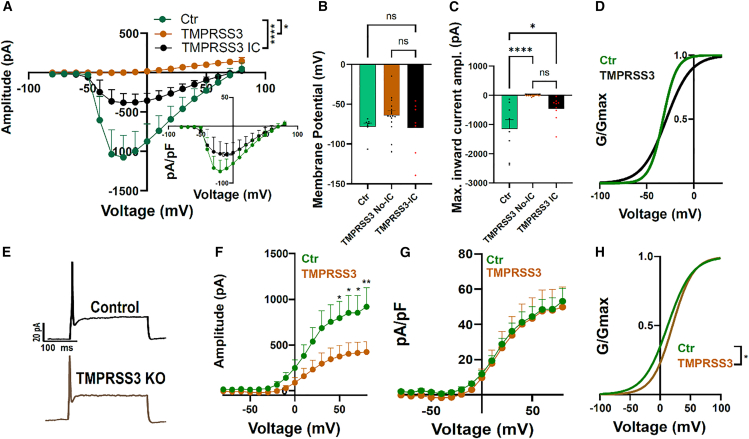 Figure 7
Peer Reviews
No public reviews on file for this paper yet. If you reviewed it on a platform where reviews are public (OpenReview, ICLR, NeurIPS, ICML), you can paste yours below so the community can read it here.
Videos
No videos yet. Explain this paper in a talk, walkthrough, or lecture? Add one.
Taxonomy
TopicsHearing, Cochlea, Tinnitus, Genetics · Animal Vocal Communication and Behavior · Hearing Loss and Rehabilitation