Optimizing PSMA-617-based inhibitors through charged linker modifications: Insights into structure-activity relationships
Nicolas M. Geis, Yvonne Braunwarth, Philipp T. Meyer, Matthias Eder, Ann-Christin Eder

TL;DR
This study explores how modifying the linker region of PSMA-617 can improve its performance in treating prostate cancer while reducing toxicity.
Contribution
The novel contribution is the synthesis and evaluation of histidine and glutamic acid-modified PSMA-617 variants to understand their impact on pharmacokinetics.
Findings
Glutamic acid modifications near the chelator increased PSMA affinity by two-fold.
Histidine and glutamic acid variants improved tumor uptake and kidney clearance in PET imaging.
Modified compounds showed high radiochemical purity and varied lipophilicity compared to the reference compound.
Abstract
Rationale: The introduction of Pluvicto® ([177Lu]Lu-vipivotide tetraxetan; [177Lu]Lu-PSMA-617) marks a milestone in radioligand therapy (RLT) for PSMA-positive metastatic castration-resistant prostate cancer (mCRPC). While dose escalation of [177Lu]Lu-PSMA-617 and alpha-emitting agents like [225Ac]Ac-PSMA-617 improves efficacy, it is limited by dose-dependent toxicity in critical organs, including kidneys, bone marrow and salivary glands. Modifications of the linker region in PSMA inhibitors have been proven to highly influence the pharmacokinetic profile. The utilization of charged linker moieties resulted in clinically used PSMA-targeting radiotracers such as [18F]PSMA-1007. This study explores histidine and/or glutamic acid-modified variants of PSMA-617 to investigate their effects on pharmacokinetic properties. Methods: Based on the core structure of PSMA-617, eleven novel…
Genes, proteins, chemicals, diseases, species, mutations and cell lines named across the full text — each resolved to its canonical identifier and authoritative record.
Click any figure to enlarge with its caption.
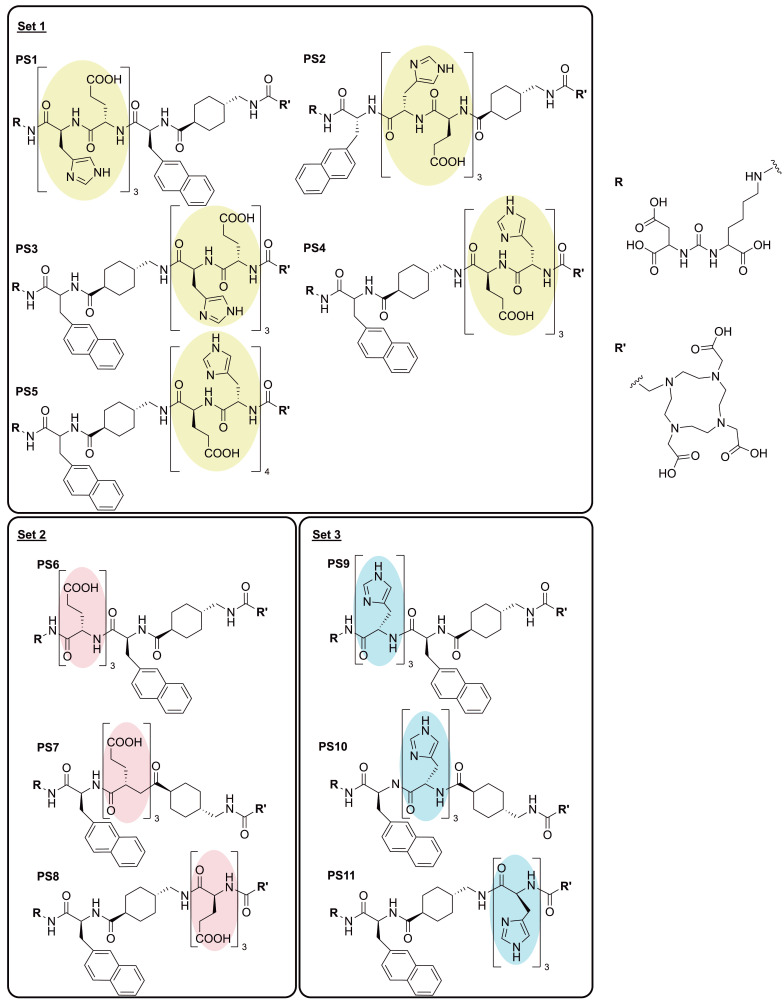 Figure 1
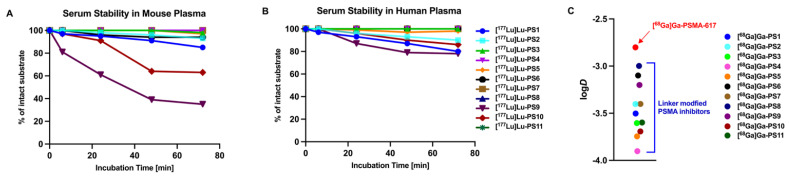 Figure 2
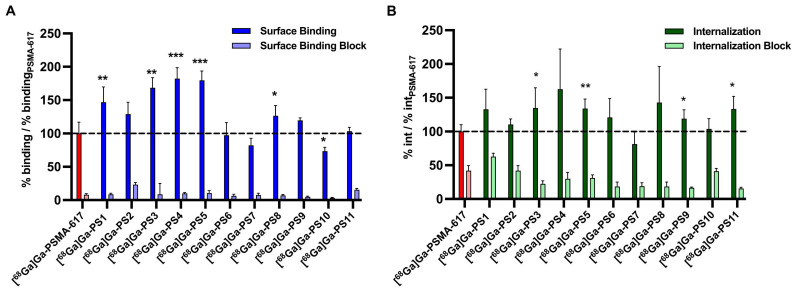 Figure 3
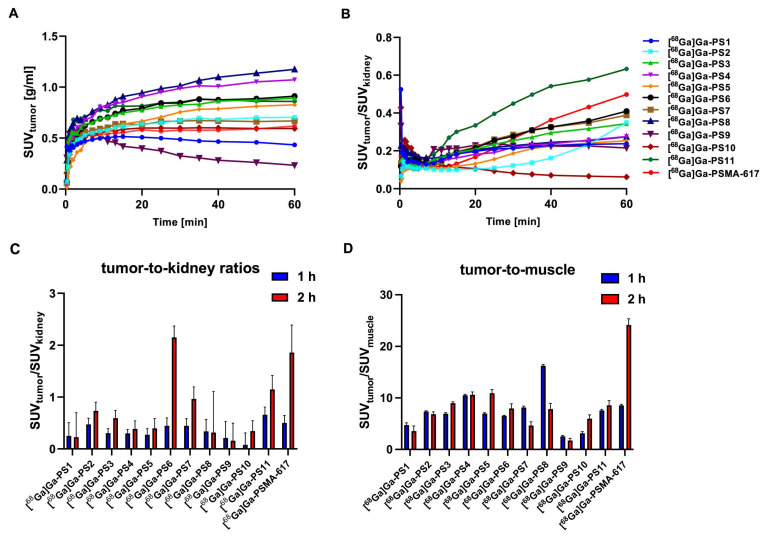 Figure 4
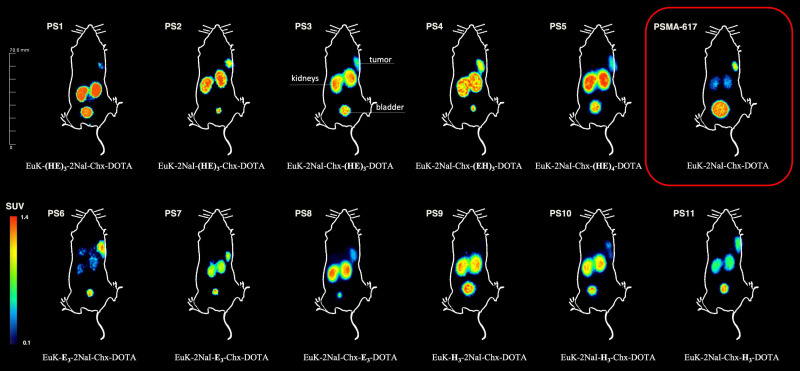 Figure 5
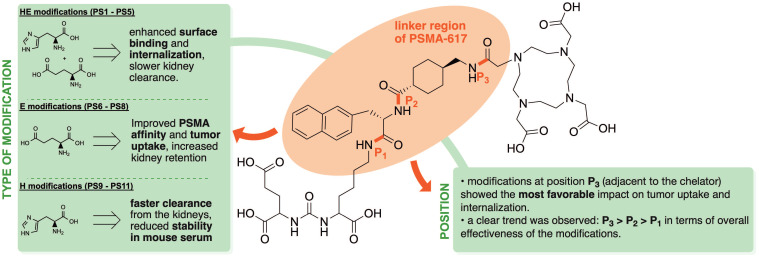 Figure 6
Peer Reviews
No public reviews on file for this paper yet. If you reviewed it on a platform where reviews are public (OpenReview, ICLR, NeurIPS, ICML), you can paste yours below so the community can read it here.
Videos
No videos yet. Explain this paper in a talk, walkthrough, or lecture? Add one.
Taxonomy
TopicsProstate Cancer Treatment and Research · Radiopharmaceutical Chemistry and Applications · Brain Metastases and Treatment