Characterization of a factor VIII/immunoglobulin heavy chain μ double-knockout mouse model of hemophilia A for long-term exposure to factor VIII proteins
Lara Monica, Olga Oleshko, Lina Aires, Silvio Wuschko, Jonas Füner, Helmut Paul, Paul Schauerte, Ditte Starberg Jespersen, Larisa Belyanskaya, Andreas Tiede, Sonja Werwitzke

TL;DR
Researchers created a new mouse model for hemophilia A that avoids antibody formation, allowing long-term study of factor VIII treatments.
Contribution
A novel FVIII/Ighm double-knockout mouse model was developed to enable long-term prophylactic studies without inhibitor formation.
Findings
DKO mice did not develop anti-FVIII antibodies after repeated dosing.
Pharmacokinetic parameters in DKO mice remained stable and physiological.
The DKO model supports long-term evaluation of hemostatic proteins without immune interference.
Abstract
Deficiency of coagulation factor (F)VIII is the key characteristic of hemophilia A. The FVIII knockout mouse model is a valuable tool for investigating disease mechanisms and evaluating the pharmacokinetics (PK) and efficacy of therapeutic agents. However, its utility for long-term studies, particularly those focused on prophylaxis, is limited by the development of anti-FVIII antibodies following repeated FVIII administration. To develop a FVIII knockout model that does not generate antibodies against FVIII but is not severely immunosuppressed. Established FVIII single-knockout (FVIII-/-; SKO) mice were crossed with the immunoglobulin heavy chain μ (Ighm) knockout strain to generate FVIII/Ighm double-knockout (FVIII-/-/Ighm-/-; DKO) mice. Both SKO and DKO mice received 4 intravenous doses of recombinant human FVIII on days 0, 7, 14, and 21. Peripheral blood, bone marrow, and spleen…
Genes, proteins, chemicals, diseases, species, mutations and cell lines named across the full text — each resolved to its canonical identifier and authoritative record.
Click any figure to enlarge with its caption.
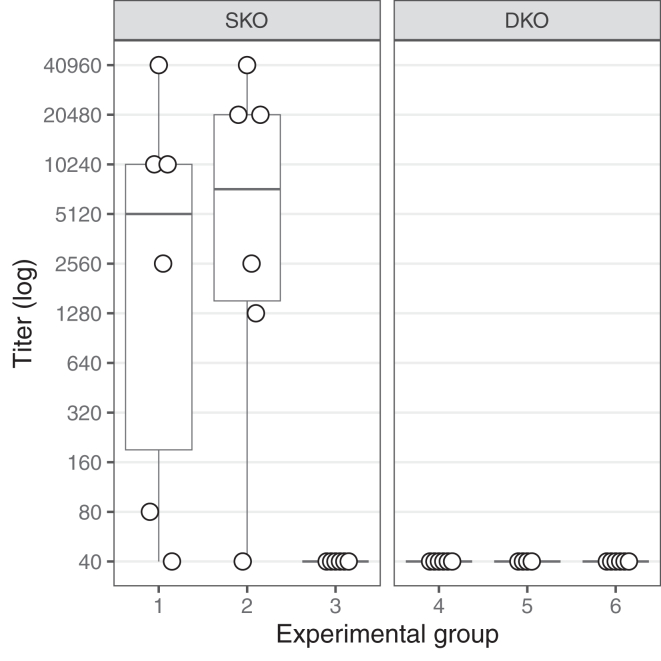 Figure 1
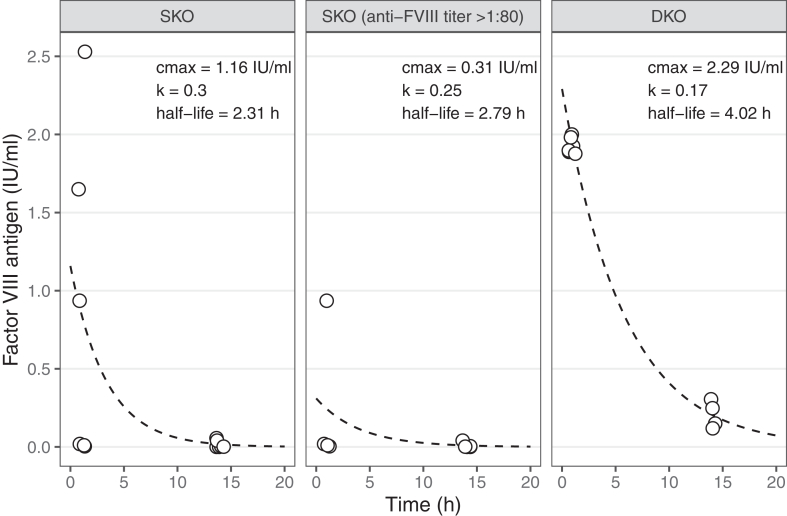 Figure 2
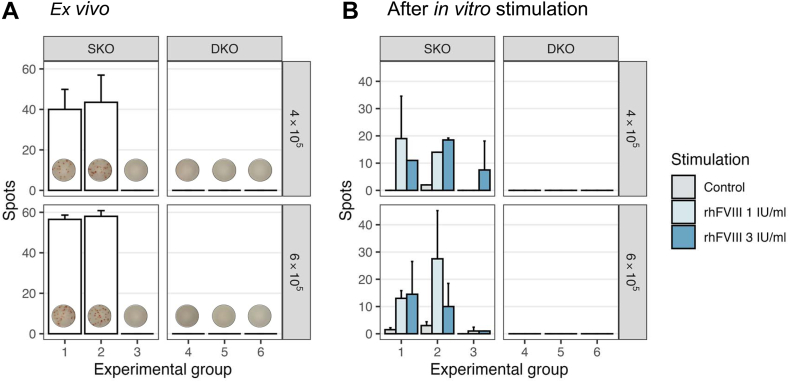 Figure 3
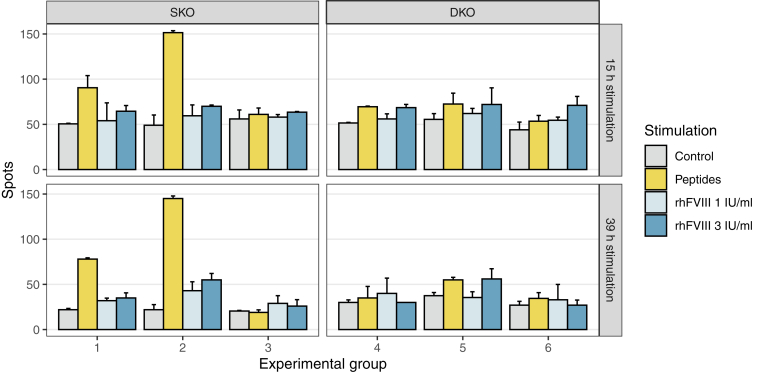 Figure 4
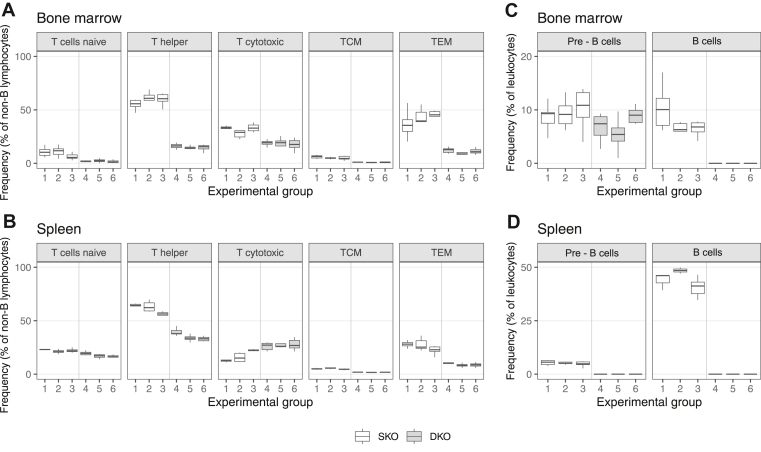 Figure 5
Peer Reviews
No public reviews on file for this paper yet. If you reviewed it on a platform where reviews are public (OpenReview, ICLR, NeurIPS, ICML), you can paste yours below so the community can read it here.
Videos
No videos yet. Explain this paper in a talk, walkthrough, or lecture? Add one.
Taxonomy
TopicsHemophilia Treatment and Research · Blood properties and coagulation · Protein purification and stability