Presenilin L166P Mutation, a Model of Familial Alzheimer's Disease, Leads to Early Onset Bone Loss
Vidyani Suryadevara, Connor J. Krehbial, Anuradha K. Valiya, Melinda Vang, Julian Balanta‐Melo, Pierre P. Eleniste, Sumana Posritong, Jung Min Hong, Katie Chester, Gabriel M. Pagnotti, Teresita Bellido, Monte S. Willis, Angela Bruzzaniti

TL;DR
A mutation in Presenilin 1 causes early bone loss in female mice, suggesting a link between Alzheimer's disease and bone health.
Contribution
The study identifies a female-specific mechanism linking the PSEN1 L166P mutation to early-onset bone loss in a mouse model of familial Alzheimer's disease.
Findings
Female PSEN1 KI mice show reduced bone mineral density and microarchitecture from a young age.
Bone loss is associated with reduced bone formation and increased FSH levels in female mice.
PSEN1 and amyloid-beta proteins are expressed in both bone and brain tissues of affected mice.
Abstract
Accelerated bone loss has been reported in the early stages of Alzheimer's disease (AD) as indicated by reduced bone mineral density and increased fracture risk in these patients, compared to healthy individuals. In the present study, we investigated bone loss in mouse models of familial Alzheimer's disease harboring the Presenilin 1 (L166P) knock‐in mutation (PSEN1 KI), with or without the human amyloid precursor protein transgene (hAPP Tg+) known to induce brain amyloid pathology by 6 months. Female and not male 12‐month PSEN1/hAPP Tg+ mice exhibited reduced whole‐body bone mineral density and bone mineral content, compared to sex‐matched controls. Consistent with PSEN1 L166P driving the phenotype, female PSEN1 KI mice lacking the hAPP transgene also displayed low bone mass with a reduction in bone microarchitecture observed as early as 1 month of age. Correspondingly, PSEN1 KI mice…
Genes, proteins, chemicals, diseases, species, mutations and cell lines named across the full text — each resolved to its canonical identifier and authoritative record.
Click any figure to enlarge with its caption.
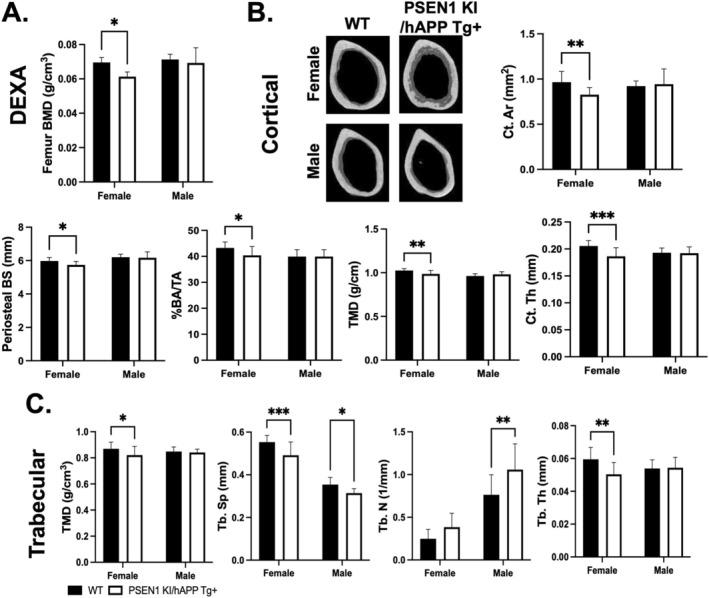 Figure 1
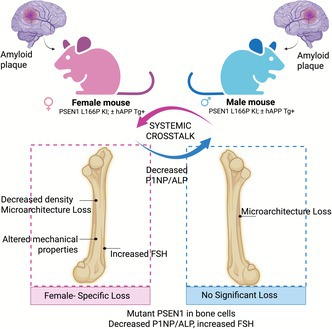 Figure 2
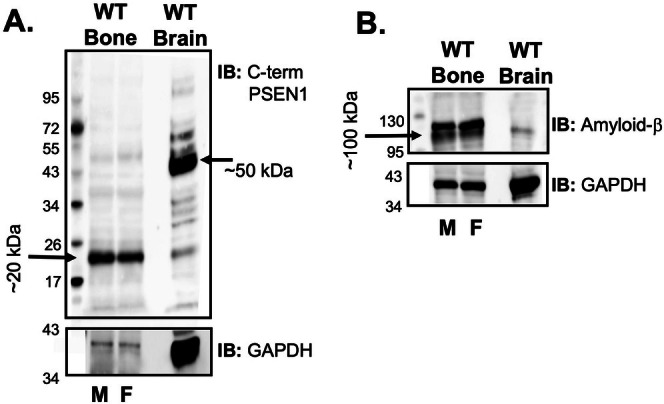 Figure 3
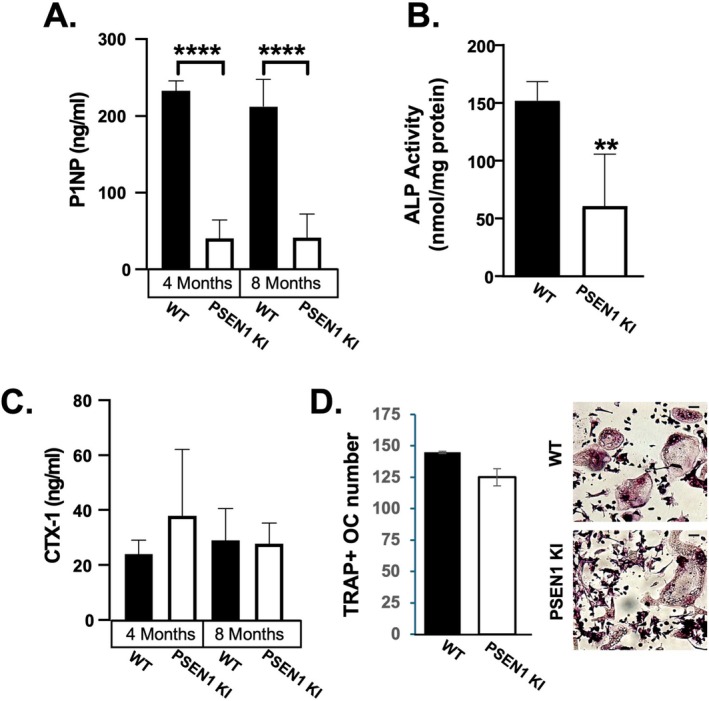 Figure 4
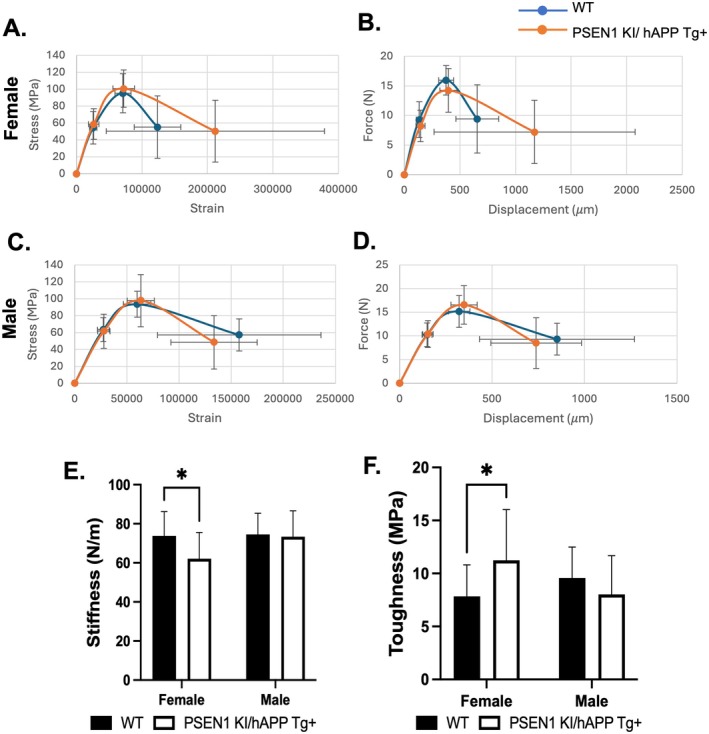 Figure 5
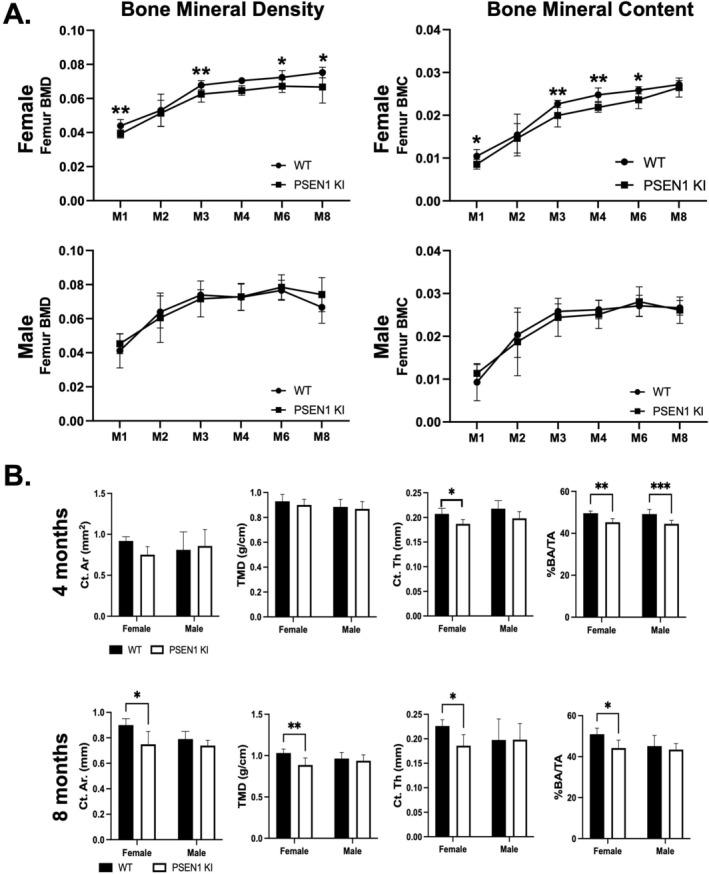 Figure 6
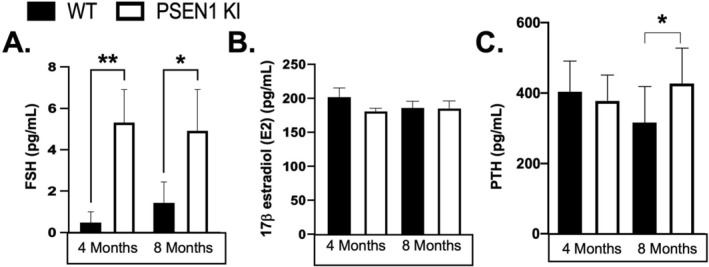 Figure 7
Peer Reviews
No public reviews on file for this paper yet. If you reviewed it on a platform where reviews are public (OpenReview, ICLR, NeurIPS, ICML), you can paste yours below so the community can read it here.
Videos
No videos yet. Explain this paper in a talk, walkthrough, or lecture? Add one.
Taxonomy
TopicsBone health and osteoporosis research · Alzheimer's disease research and treatments · Bone Metabolism and Diseases