Contributions of neighborhood violent crime and perceived neighborhood safety to cognition and mental health in the adolescent brain cognitive development study
Patrick M. Lindsley, Nourhan M. Elsayed, Deanna M. Barch

TL;DR
This study shows that how safe teens feel in their neighborhoods is more important than actual crime for their mental health and brain development.
Contribution
The study reveals that perceived neighborhood safety, not objective violence, is linked to better cognition and mental health in adolescents.
Findings
Perceived neighborhood safety was associated with fewer mental health symptoms and better cognitive performance.
Greater perceived safety was related to larger right amygdala volume.
Mental health symptoms may influence how youth perceive their neighborhoods.
Abstract
This study investigates how objective neighborhood violence and perceived neighborhood safety (PNS) relate to adolescent mental health, cognitive performance, and brain structure. We examined whether PNS moderated the effects of neighborhood violence, explored neural correlates of PNS, tested longitudinal relationships, and assessed sociodemographic and psychological predictors of PNS. Data from the ABCD Study (n = 11,865) were used to examine associations between PNS, violent crime, and youth outcomes. Measures included youth and caregiver surveys, FBI crime data, NIH Toolbox cognitive tasks, and MRI-based brain volume metrics in stress-related regions. PNS, but not objective violence, was associated with fewer mental health symptoms and better cognitive performance. PNS was also related to sociodemographic variables and greater right amygdala volume. Longitudinally, baseline PNS…
Genes, proteins, chemicals, diseases, species, mutations and cell lines named across the full text — each resolved to its canonical identifier and authoritative record.
Click any figure to enlarge with its caption.
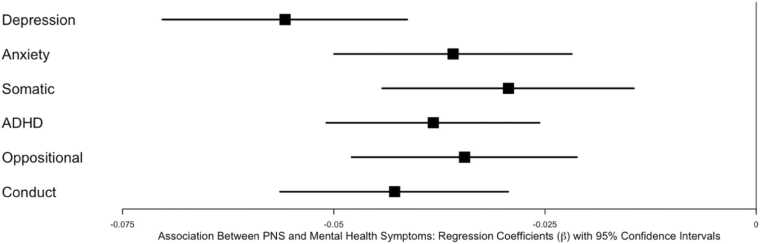 Figure 1
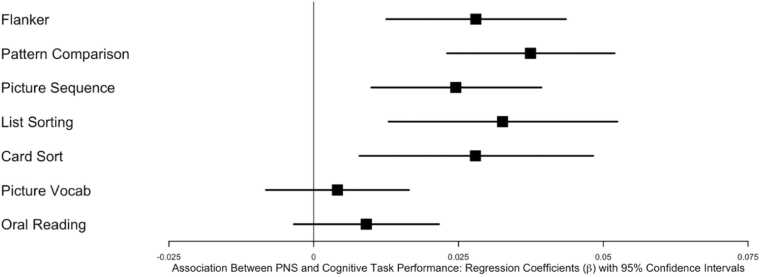 Figure 2
Peer Reviews
No public reviews on file for this paper yet. If you reviewed it on a platform where reviews are public (OpenReview, ICLR, NeurIPS, ICML), you can paste yours below so the community can read it here.
Videos
No videos yet. Explain this paper in a talk, walkthrough, or lecture? Add one.
Taxonomy
TopicsCrime Patterns and Interventions · Urban Green Space and Health · Place Attachment and Urban Studies