Condensatopathies as a mechanistic framework for disease and integrated theranostic intervention
Xin Li, Haiyan Wang, Jinghao Yao, Biwei Han, Xiaoxuan Zhao, Yuepeng Jiang, Huan Chen, Yan Yang, Hongwei Hou, Liang Wang

TL;DR
This paper introduces 'Condensatopathies' as a new framework for understanding diseases caused by disruptions in cellular condensates and proposes a new approach for diagnosis and treatment.
Contribution
The paper introduces a novel classification framework for diseases based on biomolecular condensate dysregulation and proposes a new theranostic paradigm.
Findings
Condensatopathies are classified based on genetic/environmental triggers, biophysical defects, and causal toxicity.
Two mechanisms underpin these diseases: Loss-of-Function and Toxic Gain-of-Function.
Emerging technologies like optogenetics and cryo-ET are helping decode these disease mechanisms.
Abstract
The spatial organization of the cell relies on biomolecular condensates formed via liquid-liquid phase separation (LLPS). The dysregulation of this physicochemical order drives a growing class of human pathologies. Here, we champion the unifying term "Condensatopathies" and establish a rigorous framework for their classification based on three core criteria: genetic/environmental triggers, demonstrable biophysical defects, and causal toxicity. We synthesize the pathogenic landscape into two distinct yet interconnected mechanisms: Loss-of-Function (LOF), where essential condensates fail to form or harden; and Toxic Gain-of-Function (TGOF), characterized by the formation of aberrant, often solid-like aggregates or oncogenic hubs that hijack cellular machinery. By analyzing representative cases—from the biophysical maturation of TDP-43 in neurodegeneration to the chromatin hijacking by…
Genes, proteins, chemicals, diseases, species, mutations and cell lines named across the full text — each resolved to its canonical identifier and authoritative record.
Click any figure to enlarge with its caption.
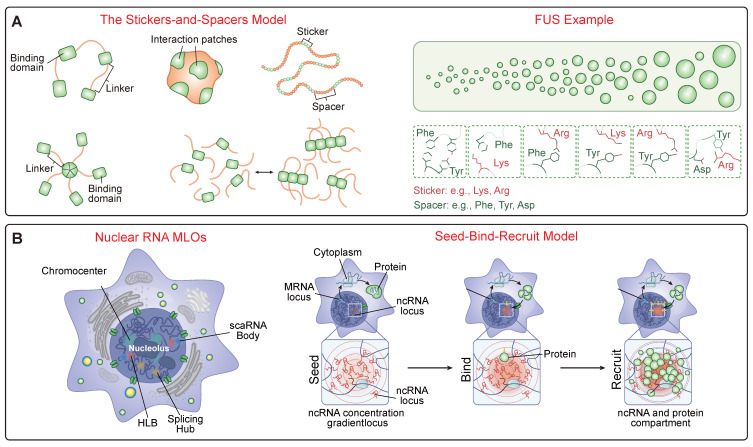 Figure 1
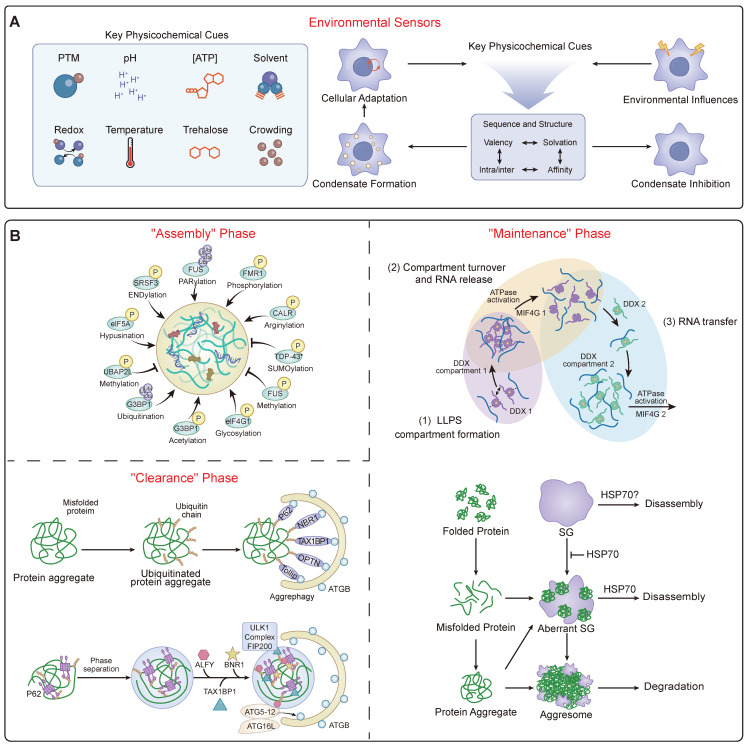 Figure 2
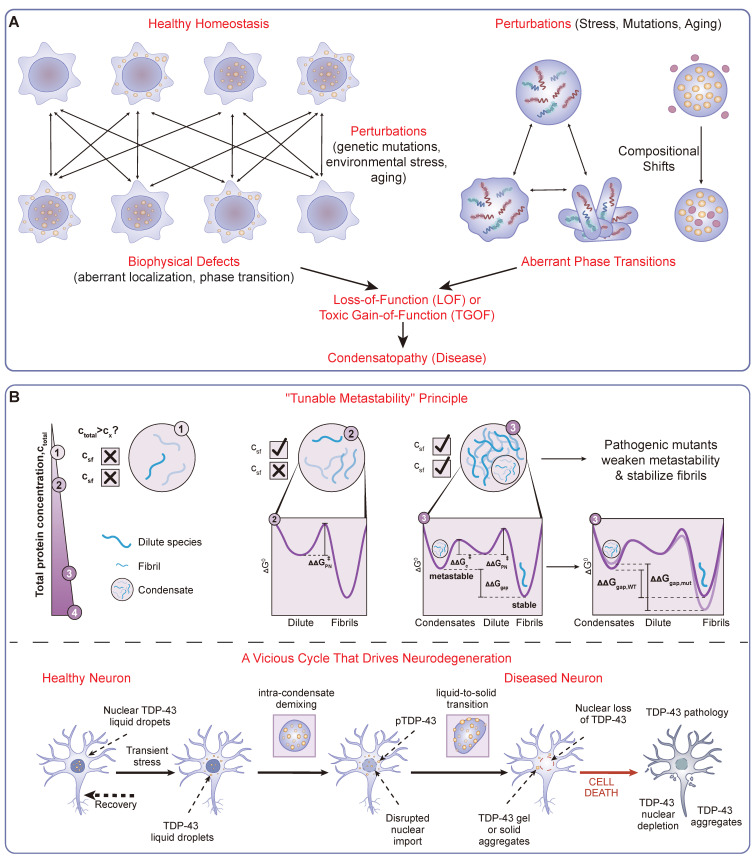 Figure 3
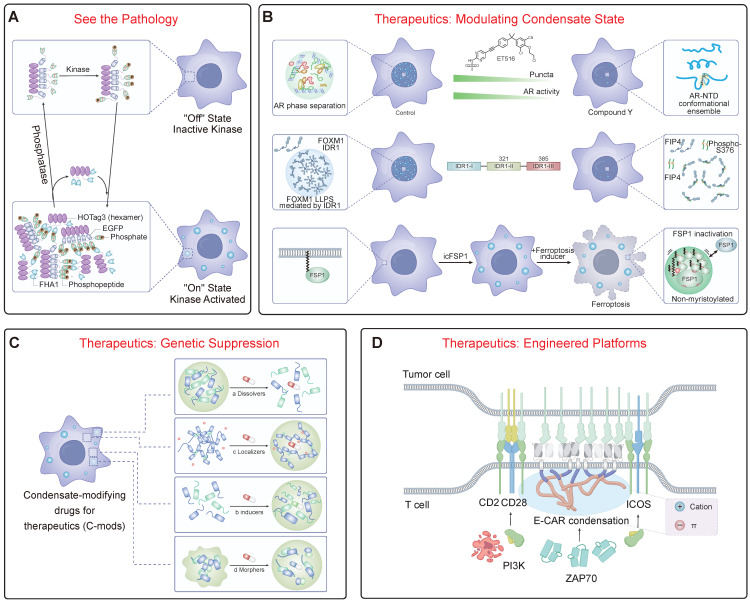 Figure 4
Peer Reviews
No public reviews on file for this paper yet. If you reviewed it on a platform where reviews are public (OpenReview, ICLR, NeurIPS, ICML), you can paste yours below so the community can read it here.
Videos
No videos yet. Explain this paper in a talk, walkthrough, or lecture? Add one.
Taxonomy
TopicsRNA Research and Splicing · Nuclear Structure and Function · Genetic factors in colorectal cancer