A tumor-targeted heptamethine cyanine dye induces suppression of progesterone receptor activity to treat hormone receptor-positive breast cancer
Yoonbin Park, Sang-Hyo Kim, Moon Suk Kim, Hoon Hyun

TL;DR
A new tumor-targeted dye effectively treats hormone receptor-positive breast cancer by suppressing progesterone receptors and inducing cell death.
Contribution
A novel heptamethine cyanine dye, CA800-PR, was developed as a multifunctional antitumor agent for hormone receptor-positive breast cancer.
Findings
CA800-PR suppresses progesterone receptor protein expression and causes Golgi fragmentation in MCF-7 xenograft tumors.
The dye increases pro-inflammatory M1-type macrophages and induces apoptosis in cancer cells.
CA800-PR shows potential as an alternative to traditional hormone therapies for breast cancer treatment.
Abstract
Background: A primary treatment of hormone receptor-positive breast cancer is the pharmacological inhibition of hormone receptors by blocking the effects of estrogen and/or progesterone. Methods: In MCF-7 xenograft tumors known as estrogen-sensitive breast cancer, a hydrophilic near-infrared (NIR) heptamethine cyanine dye (named CA800-PR) induced Golgi fragmentation and suppressed only progesterone receptor protein expression, regardless of estrogen receptors. Results: In this study, CA800-PR was newly developed for the treatment of hormone receptor-positive breast cancer unlike conventional drugs such as tamoxifen and aromatase inhibitors. Since the intracellular stress induced by CA800-PR led to the production of pro-inflammatory cytokines, we confirmed a significant increase in the presence of antitumor/pro-inflammatory MHC class II+ CD80+ M1-type macrophages during the course of…
Genes, proteins, chemicals, diseases, species, mutations and cell lines named across the full text — each resolved to its canonical identifier and authoritative record.
Click any figure to enlarge with its caption.
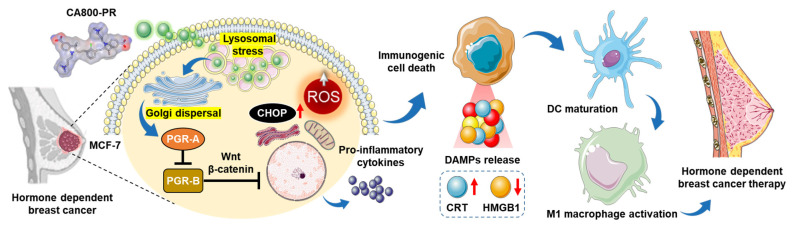 Figure 1
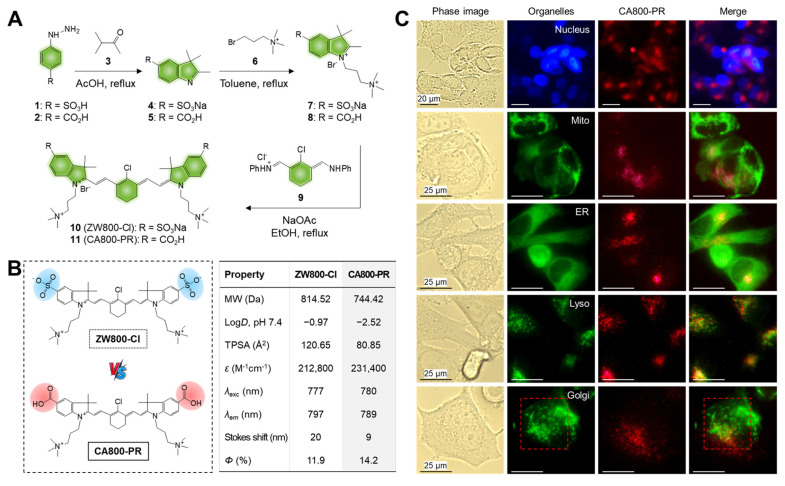 Figure 2
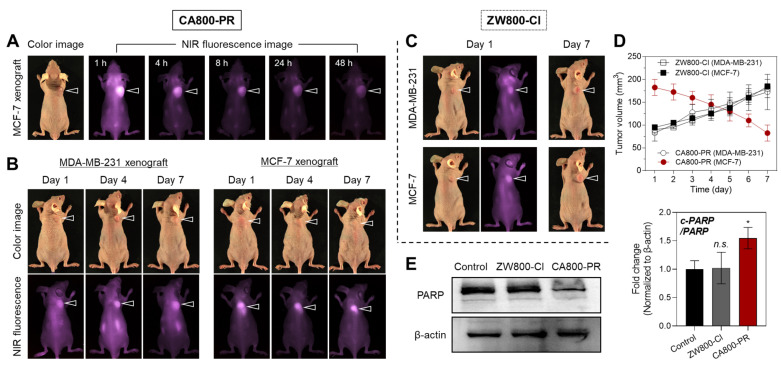 Figure 3
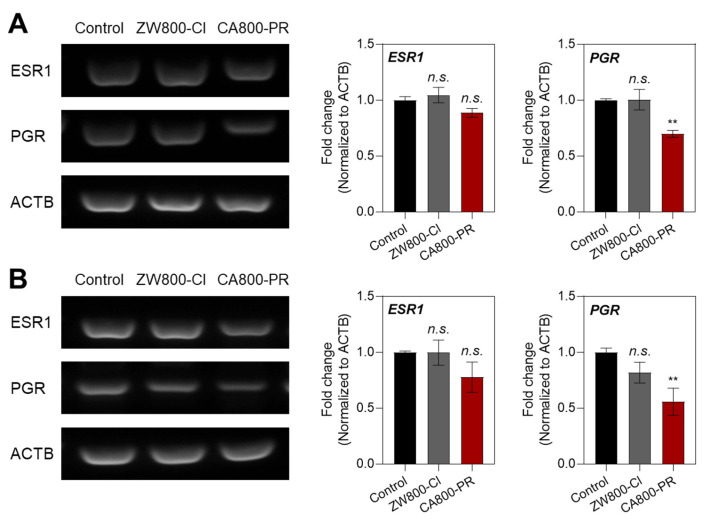 Figure 4
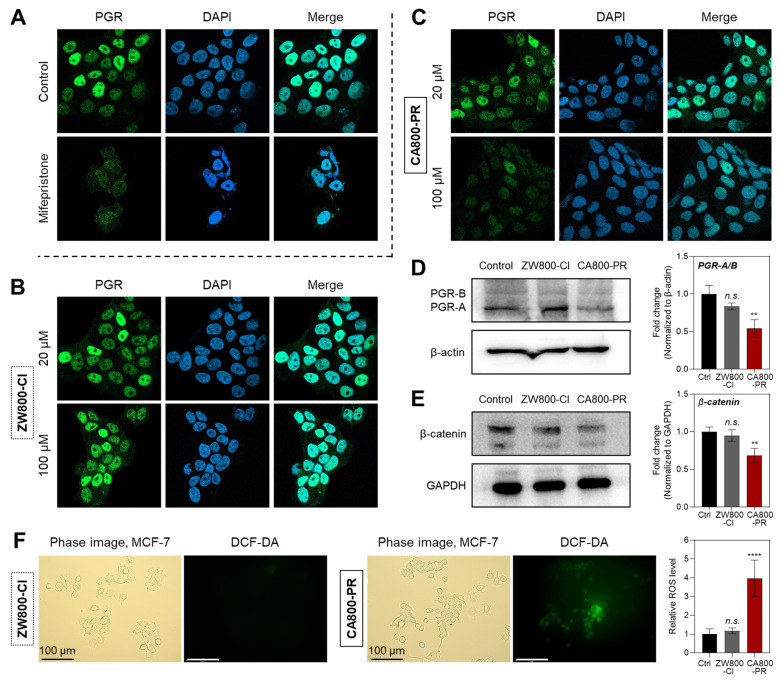 Figure 5
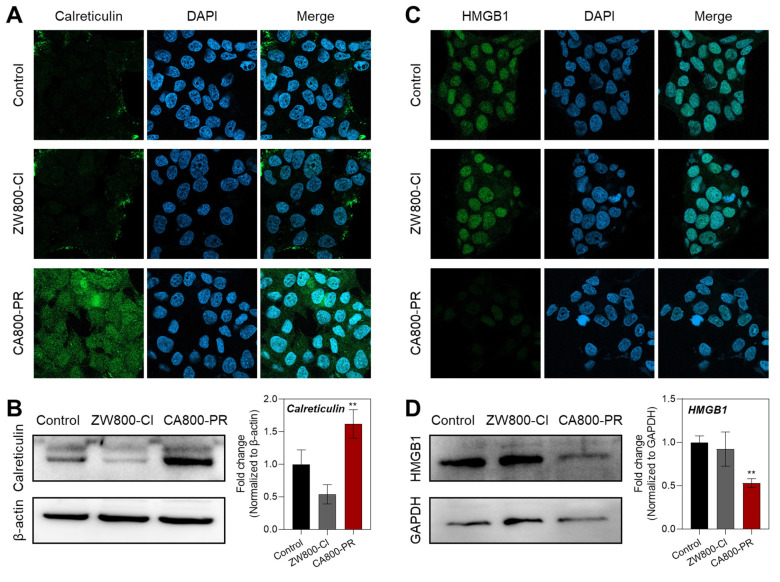 Figure 6
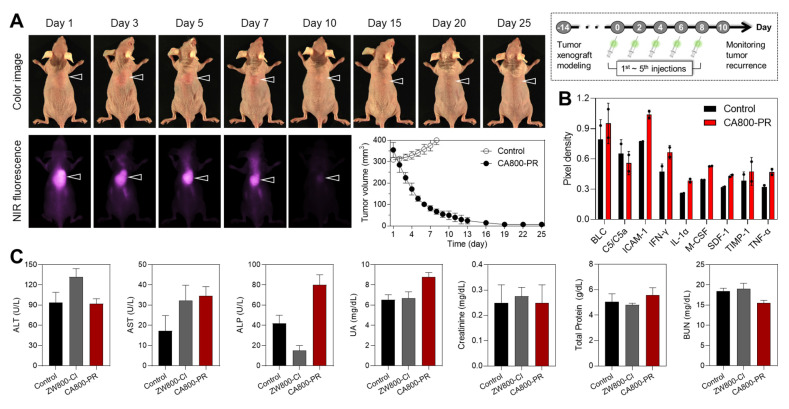 Figure 7
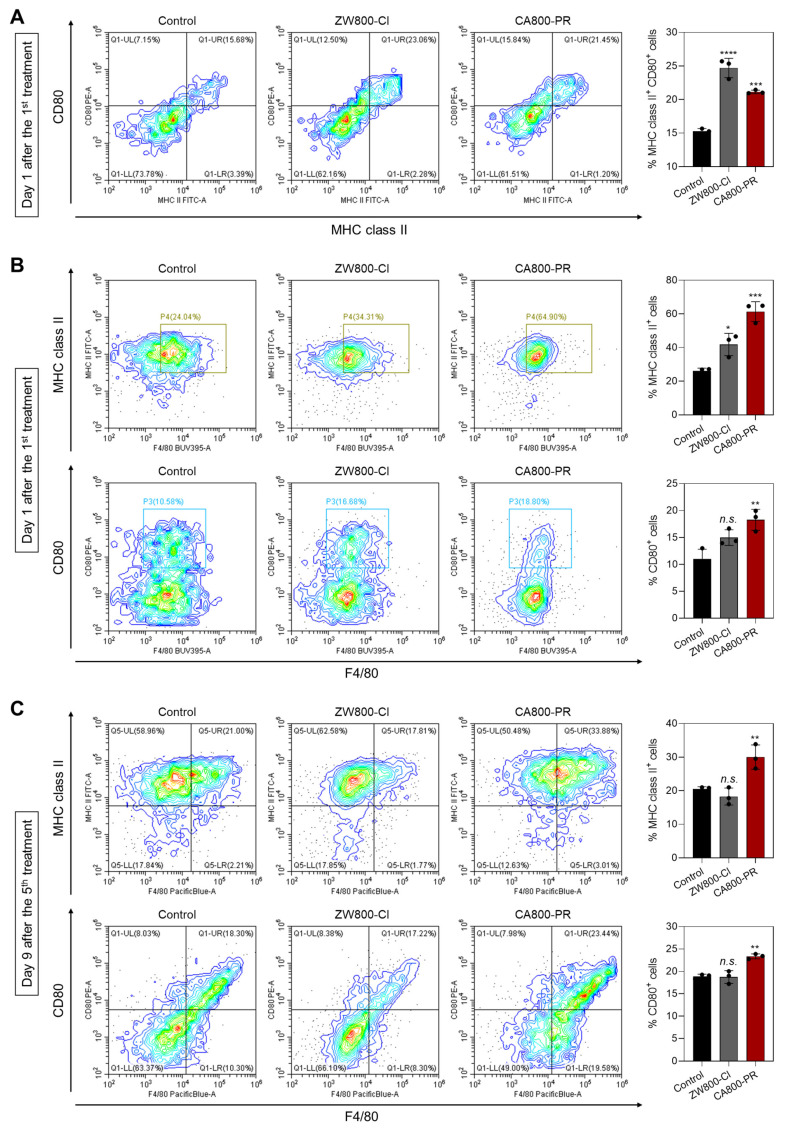 Figure 8
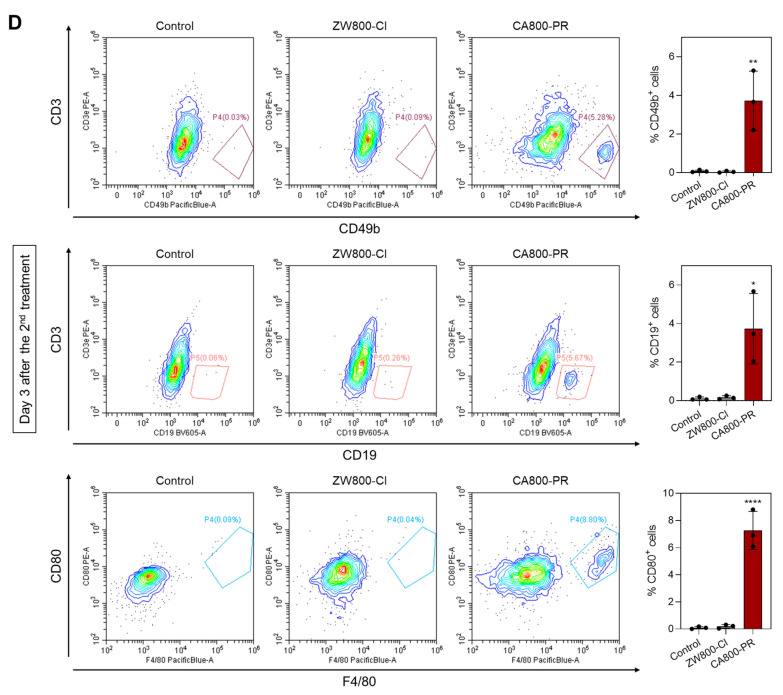 Figure 9
Peer Reviews
No public reviews on file for this paper yet. If you reviewed it on a platform where reviews are public (OpenReview, ICLR, NeurIPS, ICML), you can paste yours below so the community can read it here.
Videos
No videos yet. Explain this paper in a talk, walkthrough, or lecture? Add one.
Taxonomy
TopicsNanoplatforms for cancer theranostics · Cancer Research and Treatments · Cancer, Stress, Anesthesia, and Immune Response