Arctic geese in newly colonised, colder breeding areas have higher spring body mass and breed earlier relative to the onset of spring
Kees H. T. Schreven, Tom S. L. Versluijs, Michiel P. Boom, Fred Cottaar, Eckhart Kuijken, Jorma Pessa, Ingunn M. Tombre, Christine Verscheure, Jesper Madsen, Bart A. Nolet

TL;DR
Arctic geese moving to colder areas breed earlier relative to spring, which helps them adapt to climate change but requires more energy from parents.
Contribution
The study reveals how geese use body mass and migration timing to adapt to climate change in new breeding areas.
Findings
Geese in colder areas arrive at similar times but breed earlier relative to local spring conditions.
Geese on the new route are larger and heavier, possibly to cope with harsher pre-laying conditions.
Breeding performance is similar despite differences in timing and environmental conditions.
Abstract
Global warming causes spring onset to advance, especially in the Arctic. Migratory animals may respond by advancing their phenology or colonising colder areas where spring starts later. The role of climate change in range expansion can be both driving (making traditional areas suboptimal) and facilitating (making new areas suitable).Recently, Pink‐footed Geese (Anser brachyrhynchus) from Svalbard showed extreme range expansion by colonising the colder Novaya Zemlya as breeding ground, involving a new migration route. We examine potential costs and benefits associated with breeding in this new area.We use GPS‐tracking, long‐term population monitoring and remote sensing, to compare spring onset, migration timing and breeding performance between both flyways, and to evaluate how spring onset affects different reproductive stages in both breeding areas in these capital breeders.The…
Genes, proteins, chemicals, diseases, species, mutations and cell lines named across the full text — each resolved to its canonical identifier and authoritative record.
Click any figure to enlarge with its caption.
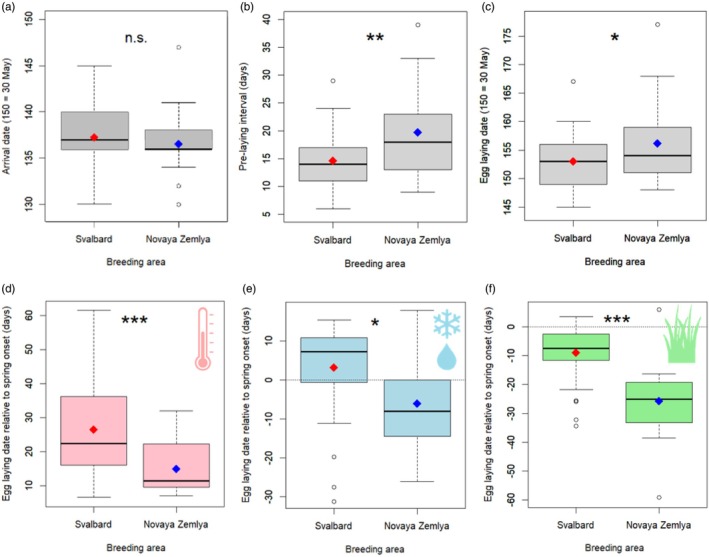 Figure 1
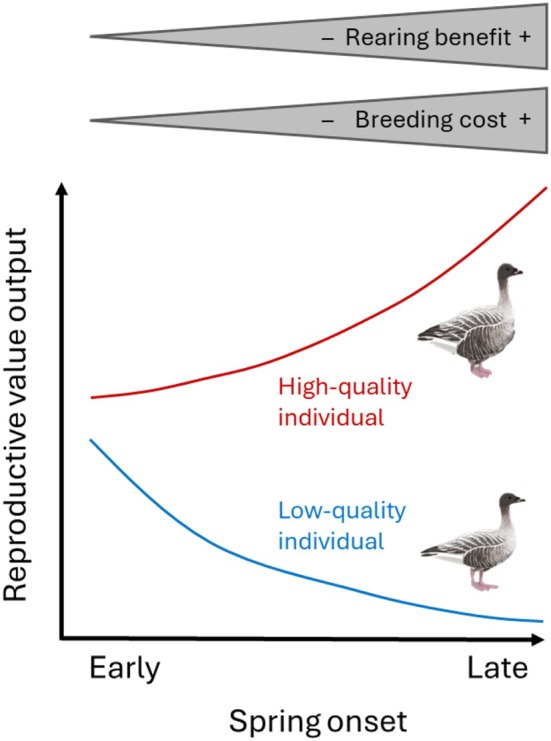 Figure 2
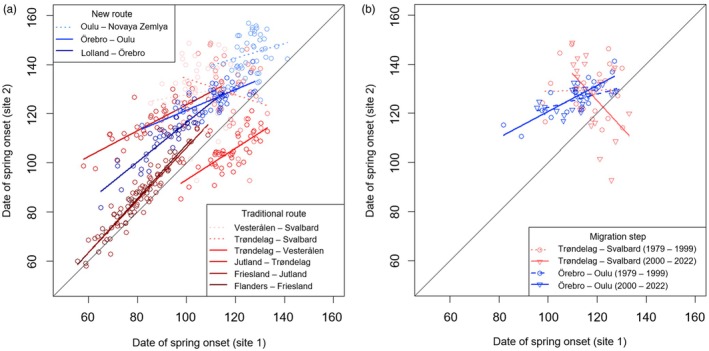 Figure 3
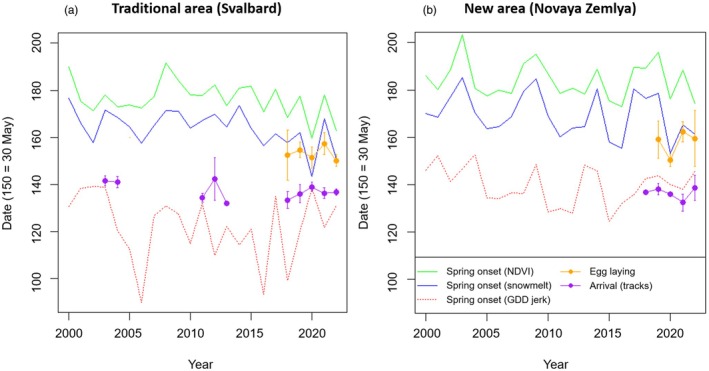 Figure 4
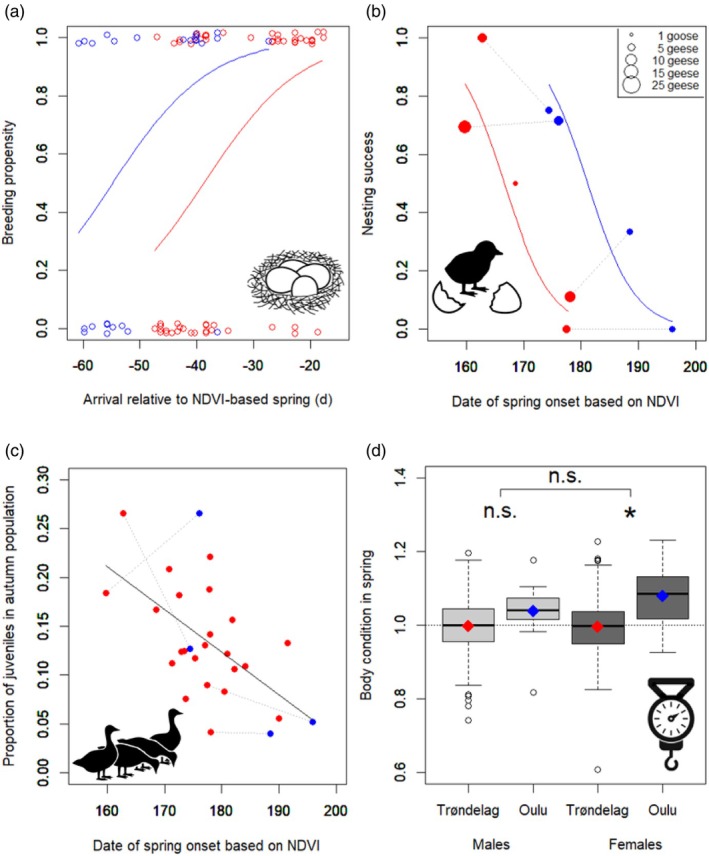 Figure 5
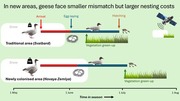 Figure 6
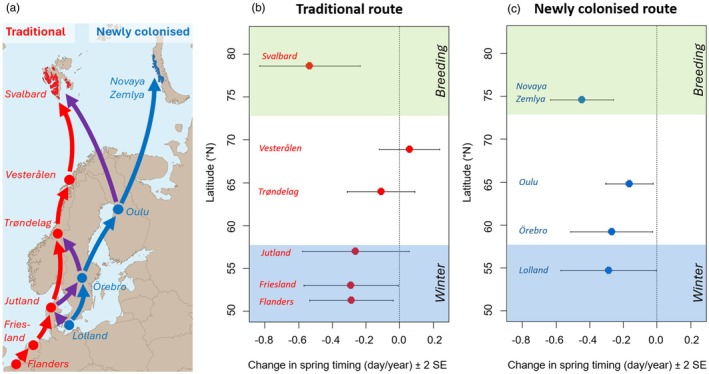 Figure 7
Peer Reviews
No public reviews on file for this paper yet. If you reviewed it on a platform where reviews are public (OpenReview, ICLR, NeurIPS, ICML), you can paste yours below so the community can read it here.
Videos
No videos yet. Explain this paper in a talk, walkthrough, or lecture? Add one.
Taxonomy
TopicsAvian ecology and behavior · Animal Nutrition and Physiology · Bird parasitology and diseases