Acute exercise rewires the proteomic landscape of human immune cells
David Walzik, Niklas Joisten, Alan J. Metcalfe, Sebastian Proschinger, Alexander Schenk, Charlotte Wenzel, Alessa L. Henneberg, Martin Schneider, Silvia Calderazzo, Andreas Groll, Carsten Watzl, Christiane A. Opitz, Dominic Helm, Philipp Zimmer

TL;DR
This study shows that high-intensity exercise causes bigger changes in immune cell proteins than moderate exercise, offering insights into how exercise intensity affects immune health.
Contribution
The study reveals intensity-dependent proteomic changes in immune cells after exercise and identifies a signature linked to cardiorespiratory fitness.
Findings
HIIE induces more pronounced proteomic changes in PBMCs compared to MICE.
Exercise triggers alterations in immune cell activation and effector function pathways.
An immunoproteomic signature predicts cardiorespiratory fitness and exercise-related health benefits.
Abstract
The positive effect of exercise on the immune system is widely acknowledged, but the molecular response of immune cells to exercise remains largely unknown. Here, we perform mass-spectrometry-based proteomic analysis on peripheral blood mononuclear cells (PBMC) at a depth of >6000 proteins. Comparing high-intensity interval exercise (HIIE) and moderate-intensity continuous exercise (MICE), matched for time and workload, we identify versatile changes in the proteomic makeup of PBMCs and reveal profound alterations, related to effector function and immune cell activation pathways within one hour following exercise. These changes are more pronounced after HIIE compared to MICE and occur despite identical immune cell mobilization patterns between the two exercise conditions. We further identify an immunoproteomic signature that effectively predicts cardiorespiratory fitness, thus allowing…
Genes, proteins, chemicals, diseases, species, mutations and cell lines named across the full text — each resolved to its canonical identifier and authoritative record.
Click any figure to enlarge with its caption.
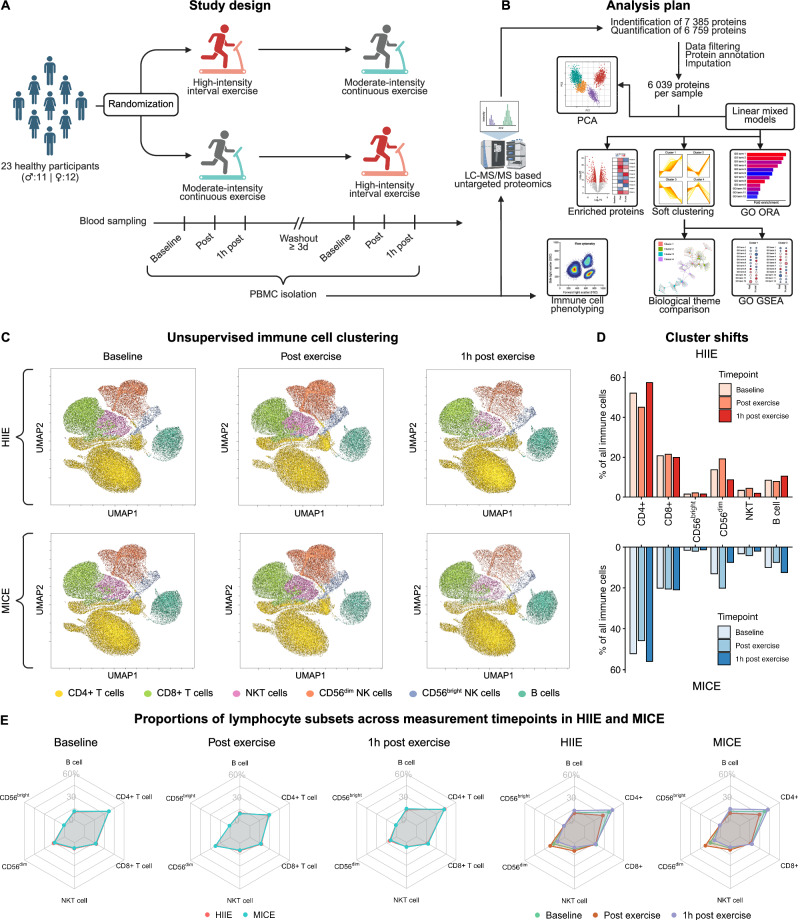 Figure 1
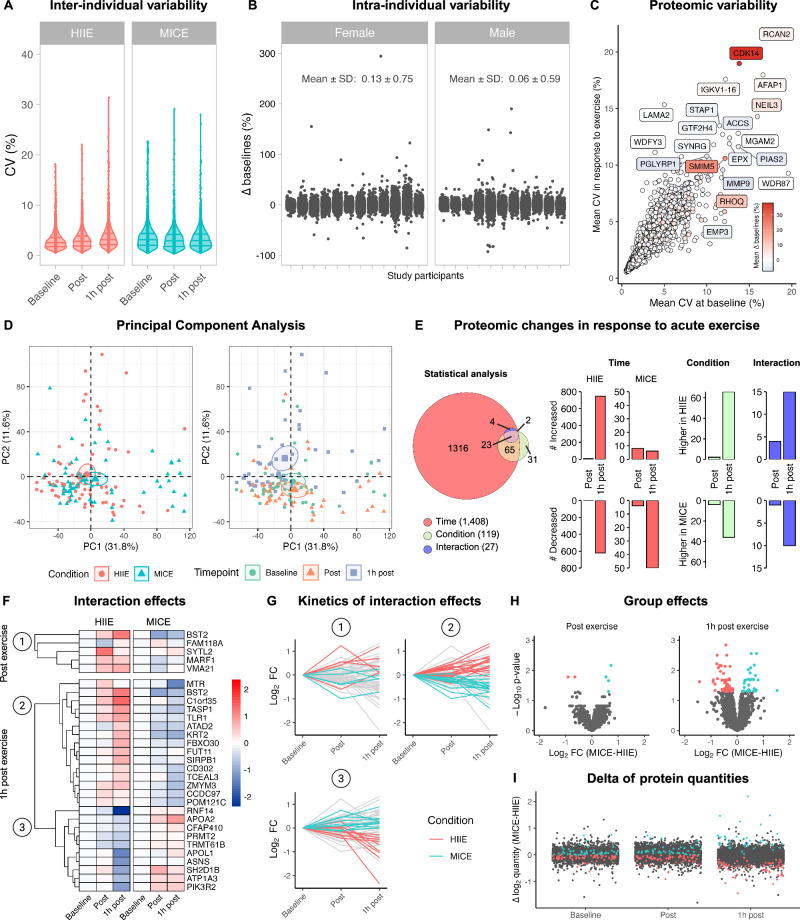 Figure 2
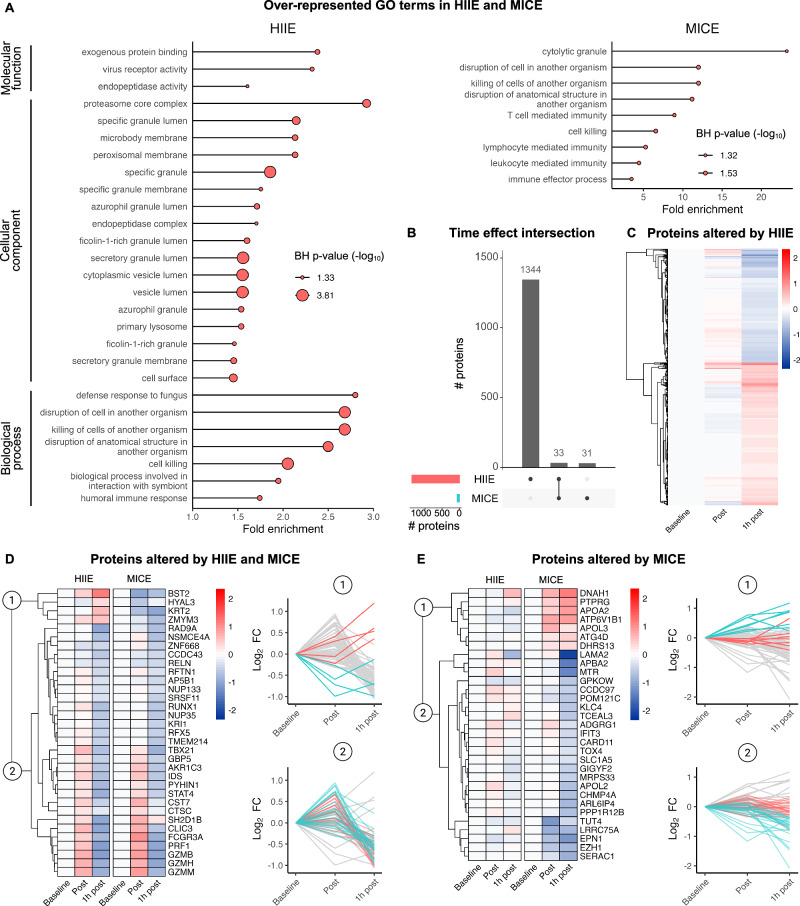 Figure 3
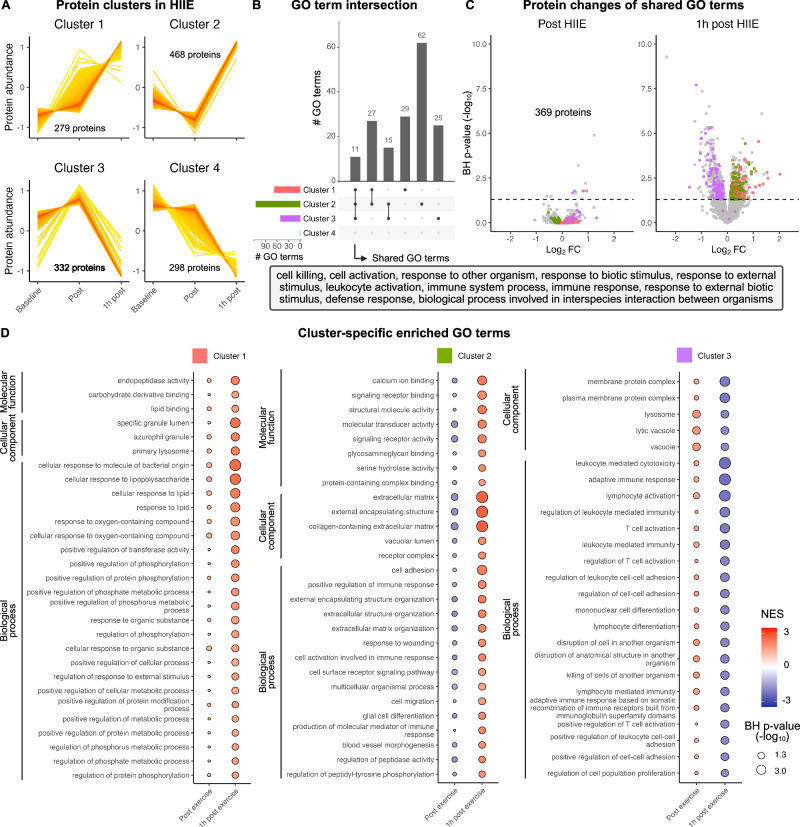 Figure 4
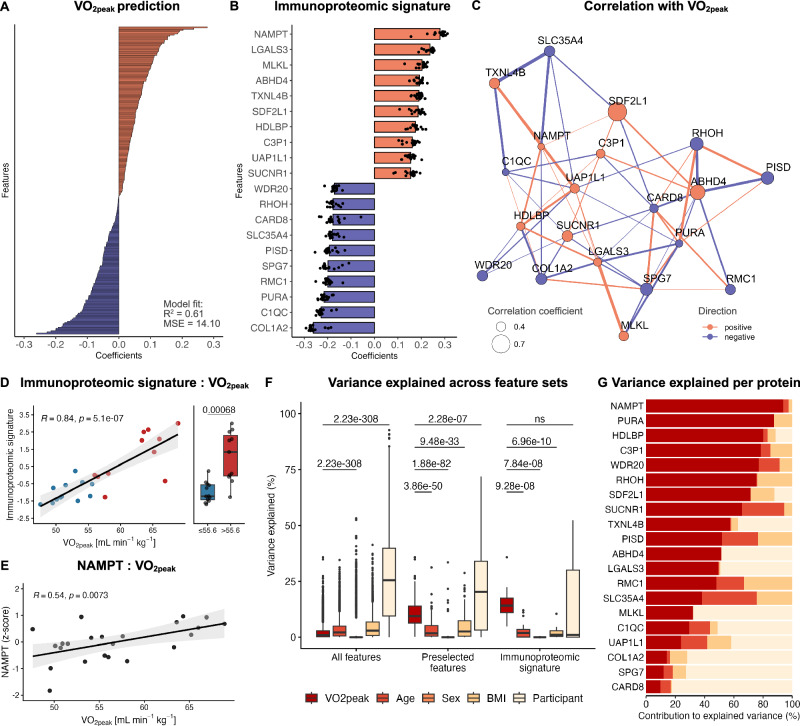 Figure 5
Peer Reviews
No public reviews on file for this paper yet. If you reviewed it on a platform where reviews are public (OpenReview, ICLR, NeurIPS, ICML), you can paste yours below so the community can read it here.
Videos
No videos yet. Explain this paper in a talk, walkthrough, or lecture? Add one.
Taxonomy
TopicsExercise and Physiological Responses · Muscle metabolism and nutrition · Cardiovascular and exercise physiology