Interpreting epidemiological surveillance data: a modelling study based on Pune city
Prathith Bhargav, Soumil Kelkar, Joy Merwin Monteiro, Philip Cherian

TL;DR
This study uses simulations to assess how well real-world surveillance data reflects the true state of an epidemic in Pune city.
Contribution
The novelty lies in using agent-based simulations to evaluate the representativeness of surveillance data for decision-making during epidemics.
Findings
Simulations show how testing and contact tracing strategies influence surveillance data accuracy.
The study highlights discrepancies between observed and actual epidemic trends due to data generation processes.
Findings suggest implications for using surveillance data in public health decisions during outbreaks.
Abstract
Routine epidemiological surveillance data represents one of the most continuous and current sources of data during the course of an epidemic. This data is used to calibrate epidemiological forecasting models, as well as for public health decision making such as the imposition and lifting of lockdowns and quarantine measures. However, such data is generated during testing and contact tracing and not through randomized sampling. Furthermore, since the process of generating this data affects the epidemic trajectory itself – identification of infected persons might lead to them being quarantined, for instance – it is unclear how representative such data is of the actual epidemic itself. For example, will the observed rise in infections correspond well with the actual rise in infections? To answer such questions, we employ epidemiological simulations not to study the effectiveness of…
Genes, proteins, chemicals, diseases, species, mutations and cell lines named across the full text — each resolved to its canonical identifier and authoritative record.
Click any figure to enlarge with its caption.
 Figure 1
 Figure 2
 Figure 3
 Figure 4
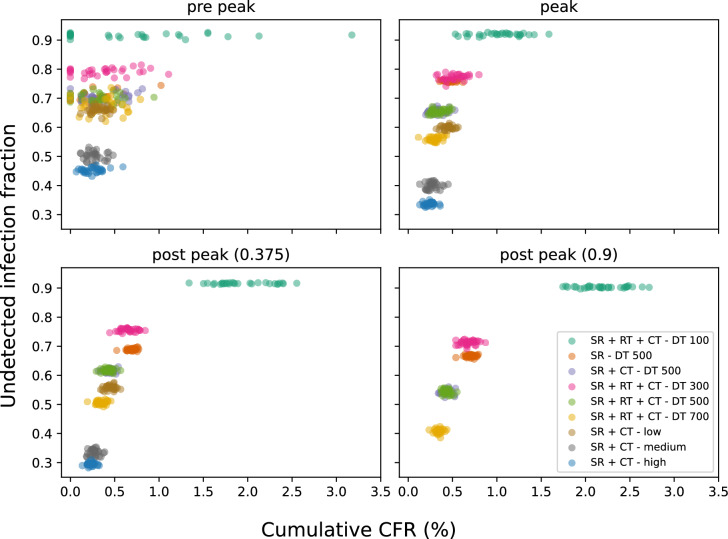 Figure 5
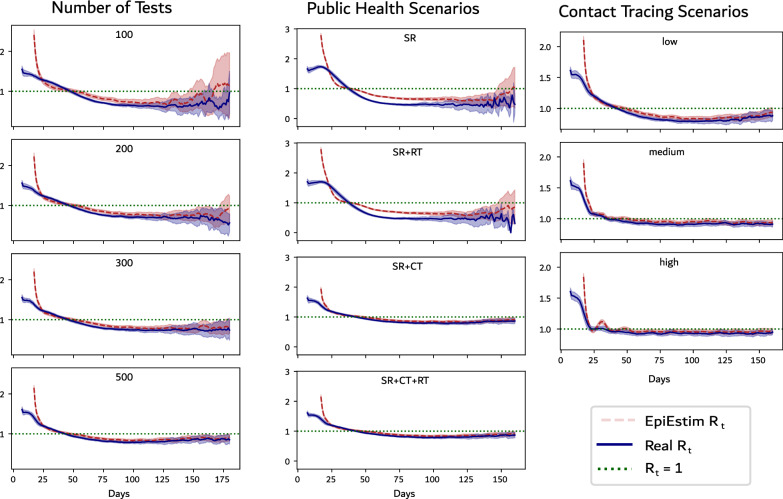 Figure 6
Peer Reviews
No public reviews on file for this paper yet. If you reviewed it on a platform where reviews are public (OpenReview, ICLR, NeurIPS, ICML), you can paste yours below so the community can read it here.
Videos
No videos yet. Explain this paper in a talk, walkthrough, or lecture? Add one.
Taxonomy
TopicsCOVID-19 epidemiological studies · Data-Driven Disease Surveillance · COVID-19 Digital Contact Tracing