Parkin–ACSL4 axis in ferroptosis regulation: a narrative review on therapeutic insights from exercise in aging cardiomyocytes
Negin Kordi, Behnam Bagherzadeh-Rahmani, Rezvan KheirAndish, Raheleh Rezaali, Brent R. Stockwell

TL;DR
This review explores how aerobic exercise may protect aging heart cells by regulating ferroptosis through the Parkin–ACSL4 pathway.
Contribution
The paper highlights the novel role of the Parkin–ACSL4 axis in exercise-induced protection against ferroptosis in aging cardiomyocytes.
Findings
Parkin reduces lipid peroxidation and ROS by ubiquitinating ACSL4.
Exercise activates PINK1/Parkin mitophagy and hepcidin to improve mitochondrial resilience.
Aerobic exercise may offer non-pharmacological cardiac protection against ferroptosis.
Abstract
Ferroptosis, iron-dependent regulated cell death, drives age-related cardiac dysfunction. This review examines aerobic exercise modulation of ferroptosis in aging cardiomyocytes via Parkin–ACSL4 axis. Parkin promotes ACSL4 ubiquitination/degradation, reducing lipid peroxidation and ROS. Exercise activates PINK1/Parkin mitophagy and hepcidin, enhancing mitochondrial resilience and iron homeostasis. Despite promising preclinical evidence, molecular mechanisms remain unclear. Aerobic exercise offers non-pharmacological cardiac protection against ferroptosis in aging.
Genes, proteins, chemicals, diseases, species, mutations and cell lines named across the full text — each resolved to its canonical identifier and authoritative record.
Click any figure to enlarge with its caption.
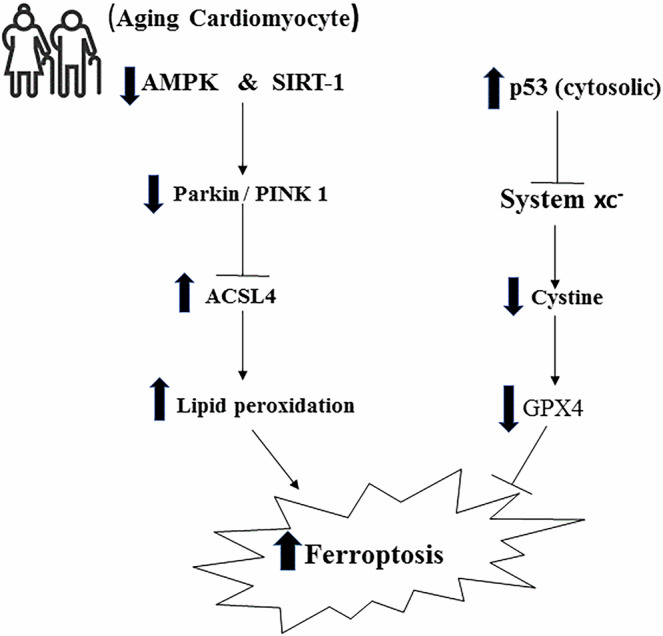 Figure 1
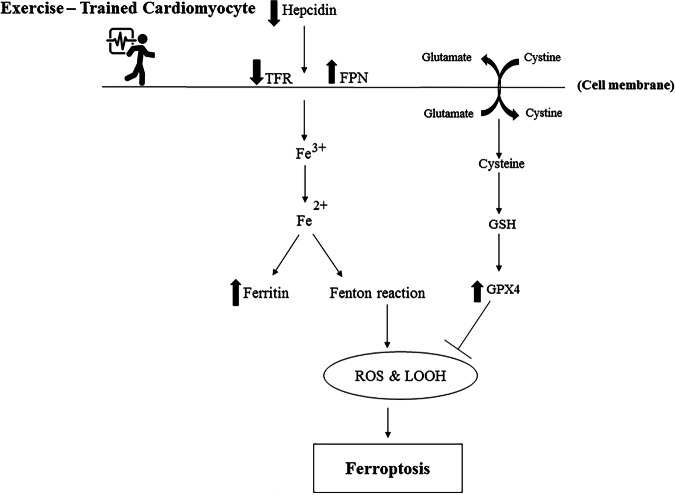 Figure 2
Peer Reviews
No public reviews on file for this paper yet. If you reviewed it on a platform where reviews are public (OpenReview, ICLR, NeurIPS, ICML), you can paste yours below so the community can read it here.
Videos
No videos yet. Explain this paper in a talk, walkthrough, or lecture? Add one.
Taxonomy
TopicsFerroptosis and cancer prognosis · Autophagy in Disease and Therapy · Cardiovascular Health and Risk Factors