Optoretinography reveals rapid rod photoreceptor movement upon rhodopsin activation
Huakun Li, Connor E. Weiss, Vimal Prabhu Pandiyan, Davide Nanni, Teng Liu, Pei Wen Kung, Bingyao Tan, Veluchamy Amutha Barathi, Leopold Schmetterer, Ramkumar Sabesan, Tong Ling

TL;DR
A new imaging technique shows rapid rod photoreceptor changes in response to light, offering a non-invasive way to study retinal diseases.
Contribution
The study introduces optoretinography to capture rapid rod photoreceptor movement during rhodopsin activation in vivo.
Findings
Rod photoreceptors contract rapidly in their outer segments upon rhodopsin activation.
Optoretinography enables non-invasive imaging of rod dysfunction in retinal diseases.
The contraction is linked to the rod's early receptor potential, previously hard to measure.
Abstract
Rod photoreceptors are essential for vision under dim light conditions and are highly vulnerable in retinal degenerative diseases. Here, we demonstrate that both human and rodent rods undergo a minute and rapid contraction of their outer segments upon photoisomerization, the first step of phototransduction. The contraction is explained as an electromechanical manifestation of the rod early receptor potential generated in the disk membranes, which is challenging to access in electrophysiology. The in vivo optical imaging of light-evoked electrical activity in rodent rods was facilitated by an ultrahigh-resolution point-scan optical coherence tomography (OCT) system, combined with an unsupervised learning approach to separate the light-evoked response of the rod outer segment tips from the retinal pigment epithelium-Bruch’s membrane complex. In humans, an adaptive optics line-scan OCT…
Genes, proteins, chemicals, diseases, species, mutations and cell lines named across the full text — each resolved to its canonical identifier and authoritative record.
Click any figure to enlarge with its caption.
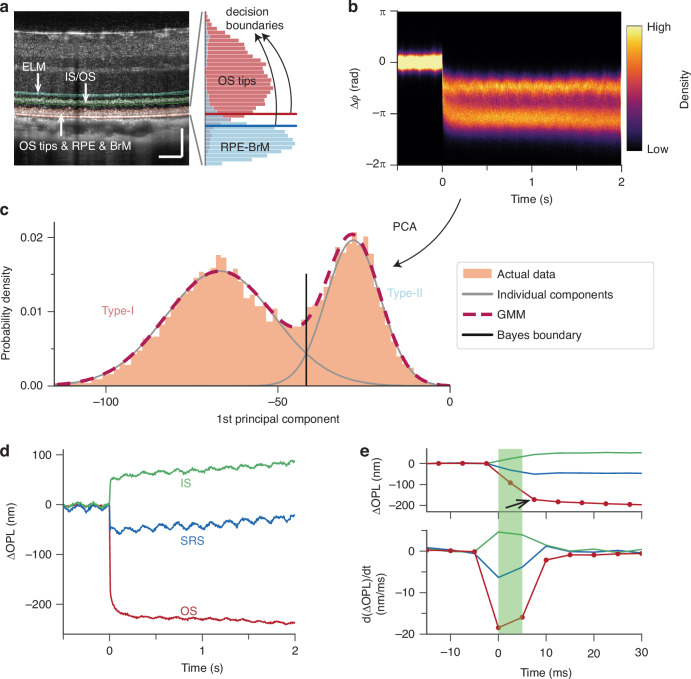 Figure 1
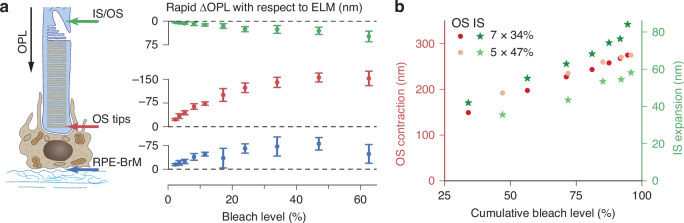 Figure 2
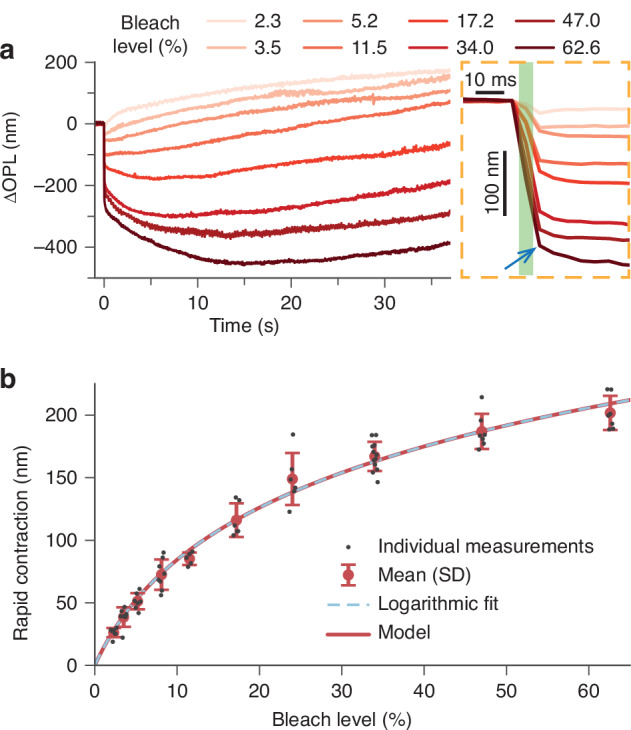 Figure 3
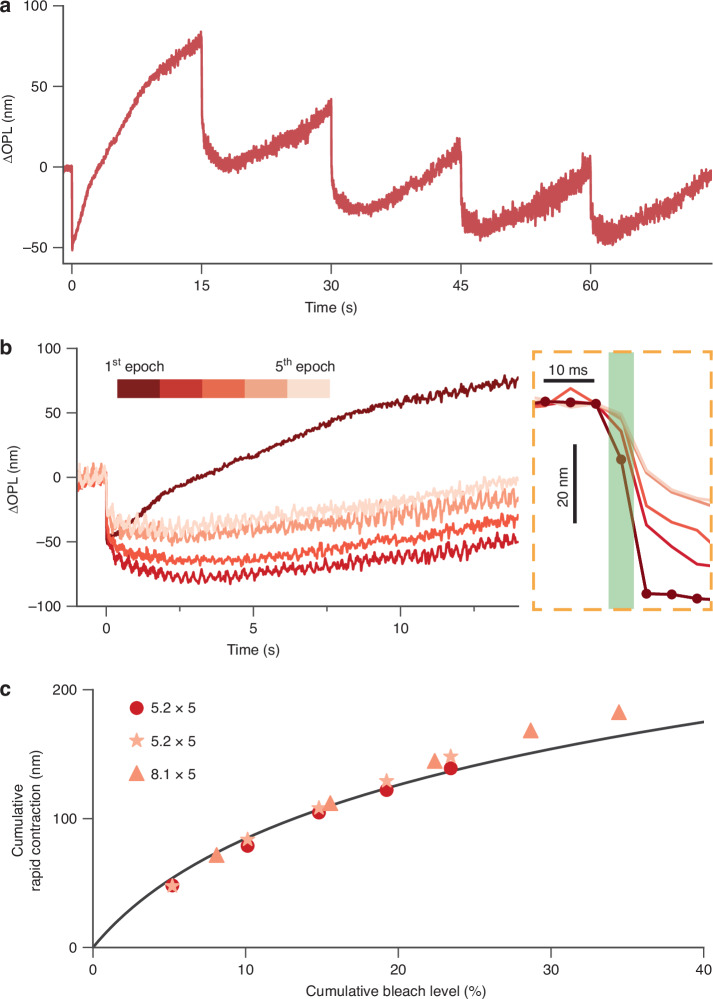 Figure 4
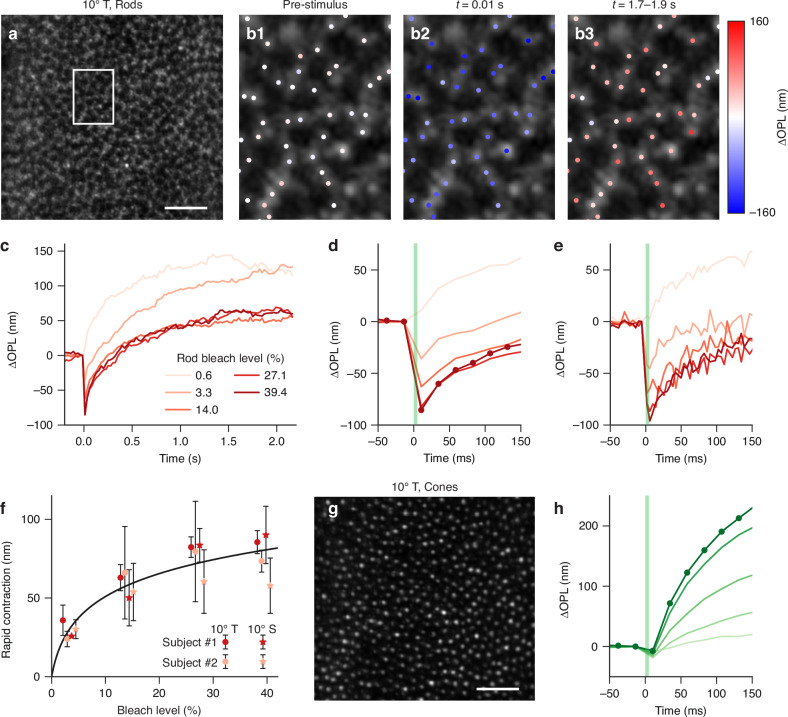 Figure 5
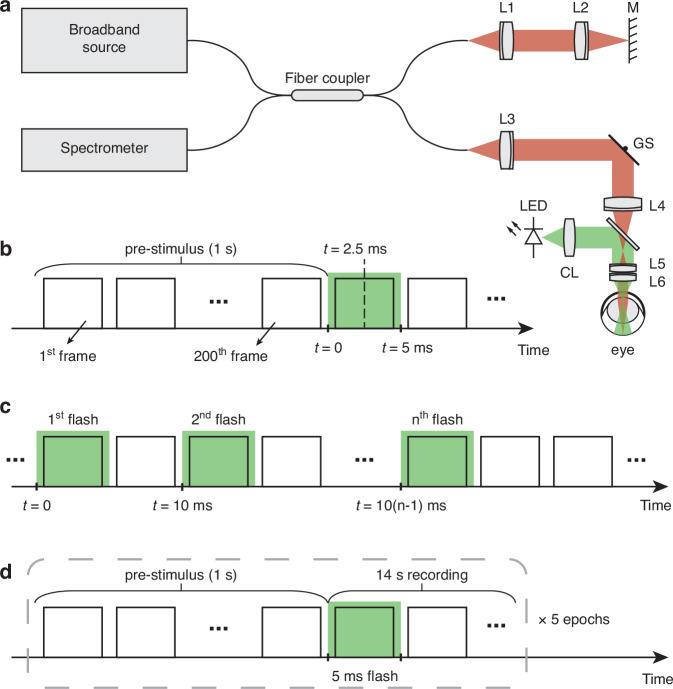 Figure 6
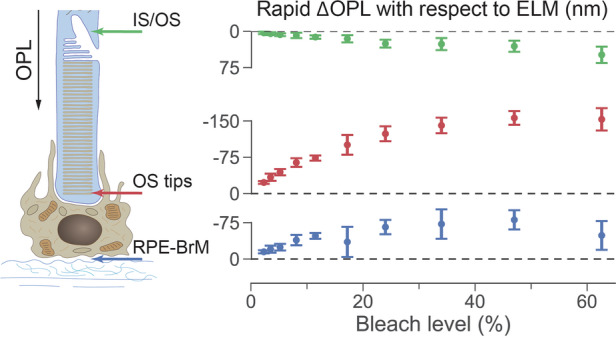 Figure 7
Peer Reviews
No public reviews on file for this paper yet. If you reviewed it on a platform where reviews are public (OpenReview, ICLR, NeurIPS, ICML), you can paste yours below so the community can read it here.
Videos
No videos yet. Explain this paper in a talk, walkthrough, or lecture? Add one.
Taxonomy
TopicsRetinal Development and Disorders · Photoreceptor and optogenetics research · Optical Coherence Tomography Applications