Microbiome modulation and behavioural improvements in children with fragile X syndrome following probiotic intake: A pilot study
Dragana Protic, Danijela Bascarevic, Sanja Dimitrijevic, Jovan Pesovic, Vladimir Nikolic, Sasa Nikolic, Velibor Novicevic, Jovana Markovic, Irena Arandjelovic, Dusanka Savic-Pavicevic, Margo Diricks, Meriem Belheouane, Matthias Merker

TL;DR
A pilot study found that probiotics may improve behavior in children with fragile X syndrome by modulating their gut microbiome.
Contribution
This is the first study to investigate the effects of probiotics on the gut microbiome and behavior in children with fragile X syndrome.
Findings
Probiotic supplementation led to significant improvements in irritability, communication, socialization, and adaptive behavior in children with fragile X syndrome.
Metagenomic analysis showed increased microbial network connectivity and trends toward enhanced fatty acid biosynthesis and starch degradation pathways after probiotic use.
Abstract
The gut microbiome (GM) is increasingly recognized as a key modulator of neurodevelopment via the microbiome-gut-brain axis. Fragile X syndrome (FXS), the most common inherited monogenic cause of intellectual disability, shares behavioural and molecular features with other neurodevelopmental disorders (NDDs), yet the role of the GM in FXS remains largely unexplored. In this open-label, single-arm trial, 15 children with genetically confirmed FXS received a daily probiotic formulation containing Lactobacillus casei, Lactobacillus salivarius, and Bifidobacterium breve for 12 weeks. Behavioural analysis and metagenomic sequencing with network and pathway analyses were performed before and after probiotic supplementation. Significant improvements were observed in irritability (-3.9, SD: ± 5.2; p = 0.027), communication (+ 1.7, SD: ± 2.5; p = 0.022), socialization (+ 1.4, SD: ± 2.1; p =…
Genes, proteins, chemicals, diseases, species, mutations and cell lines named across the full text — each resolved to its canonical identifier and authoritative record.
Click any figure to enlarge with its caption.
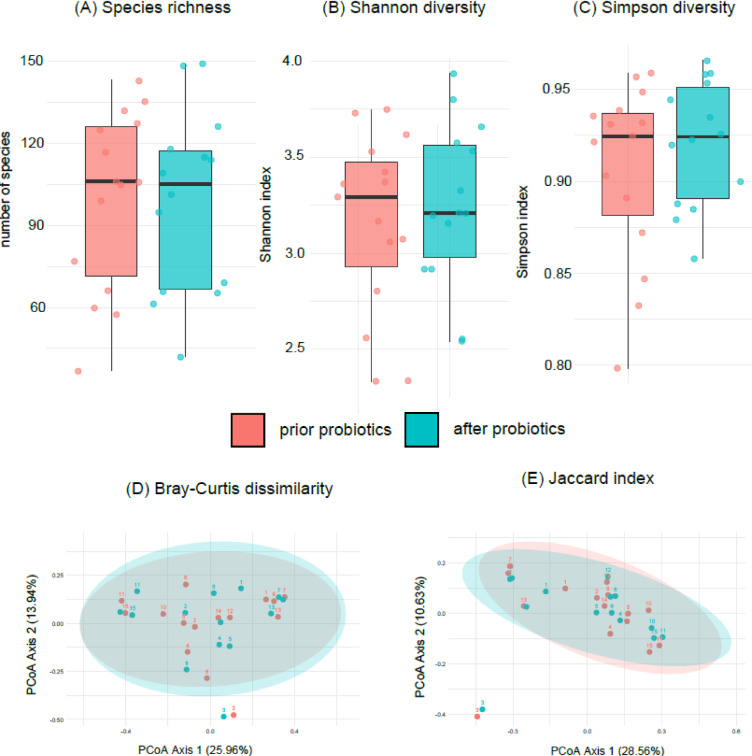 Figure 1
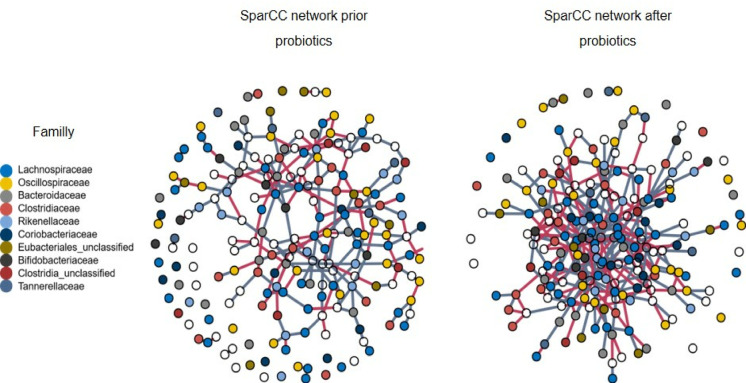 Figure 2
Peer Reviews
No public reviews on file for this paper yet. If you reviewed it on a platform where reviews are public (OpenReview, ICLR, NeurIPS, ICML), you can paste yours below so the community can read it here.
Videos
No videos yet. Explain this paper in a talk, walkthrough, or lecture? Add one.
Taxonomy
TopicsGenetics and Neurodevelopmental Disorders · Gut microbiota and health · Child Nutrition and Feeding Issues