Investigation into the utility of ultra-high-resolution mode on dynamic-ventilation computed tomography using sponge phantoms
Ryo Uemura, Yukihiro Nagatani, Jun Matsubayashi, Akitoshi Inoue, Kyohei Iwai, Kenichi Kamiya, Kentaro Doi, Akira Sato, Hodaka Numasaki, Kazuaki Nakane, Masahiro Yanagawa, Noriyuki Tomiyama, Yoshiyuki Watanabe

TL;DR
Ultra-high-resolution CT scans provide better detail of lung structures during simulated breathing compared to normal-resolution scans.
Contribution
This study is the first to evaluate ultra-high-resolution CT in dynamic-ventilation CT using sponge phantoms.
Findings
UHR-CT detected more simulated peripheral air spaces than NR-CT using binarization and homology-based analysis.
UHR-CT showed smaller deviations in SPAS measurements compared to smartphone reference images.
UHR DVCT accurately reflected changes in SPAS with compression, while NR DVCT did not.
Abstract
Ultra-high-resolution (UHR) computed tomography (CT) provides more detailed information on peripheral lung structures than normal-resolution (NR) CT for static images. However, its potential advantage in four-dimensional dynamic-ventilation CT (DVCT) has not been investigated. This experimental study used sponge phantoms and a compression machine to simulate respiratory changes and assess the superiority of the UHR mode on DVCT. We obtained results that demonstrated: (1) regardless of the compression percentage, the number of simulated peripheral air spaces (SPAS) detected on UHR-CT was greater than on NR-CT, as assessed using a simple binarization method. Similarly, peak b0 values as a representative of total SPAS count obtained by homology-based image analysis were higher on UHR-CT than on NR-CT. (2) The deviation in measured longitudinal diameter and area of the SPAS relative to the…
Genes, proteins, chemicals, diseases, species, mutations and cell lines named across the full text — each resolved to its canonical identifier and authoritative record.
Click any figure to enlarge with its caption.
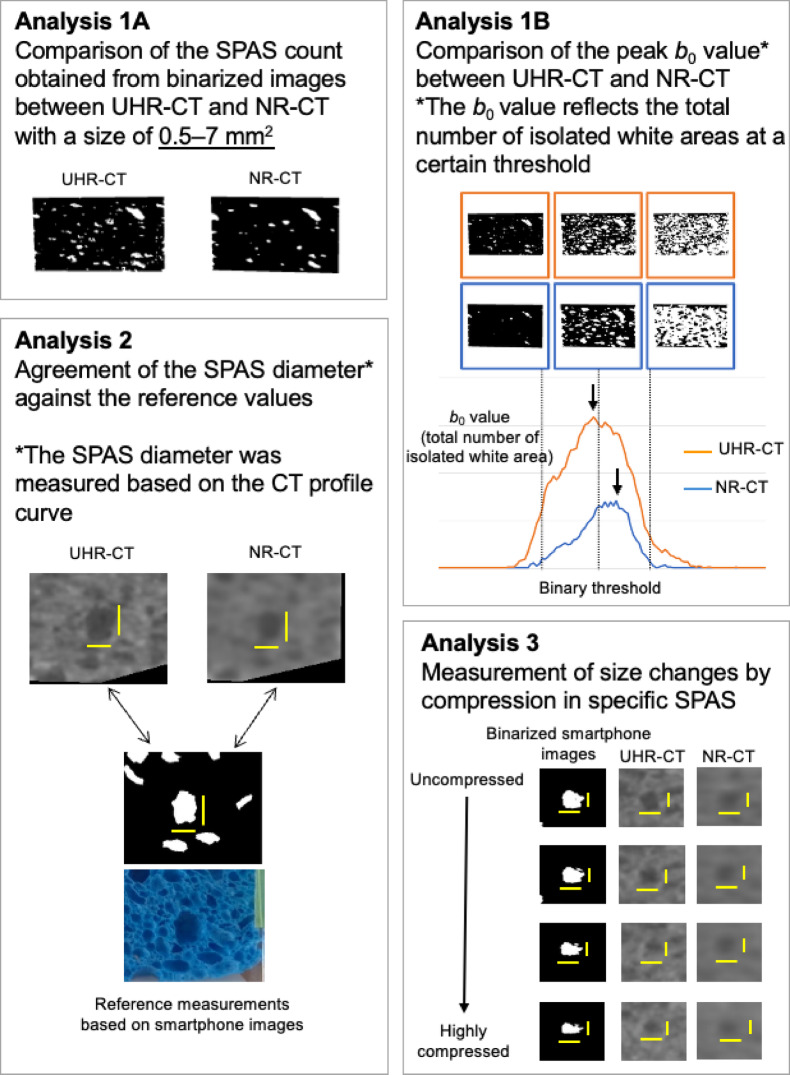 Figure 1
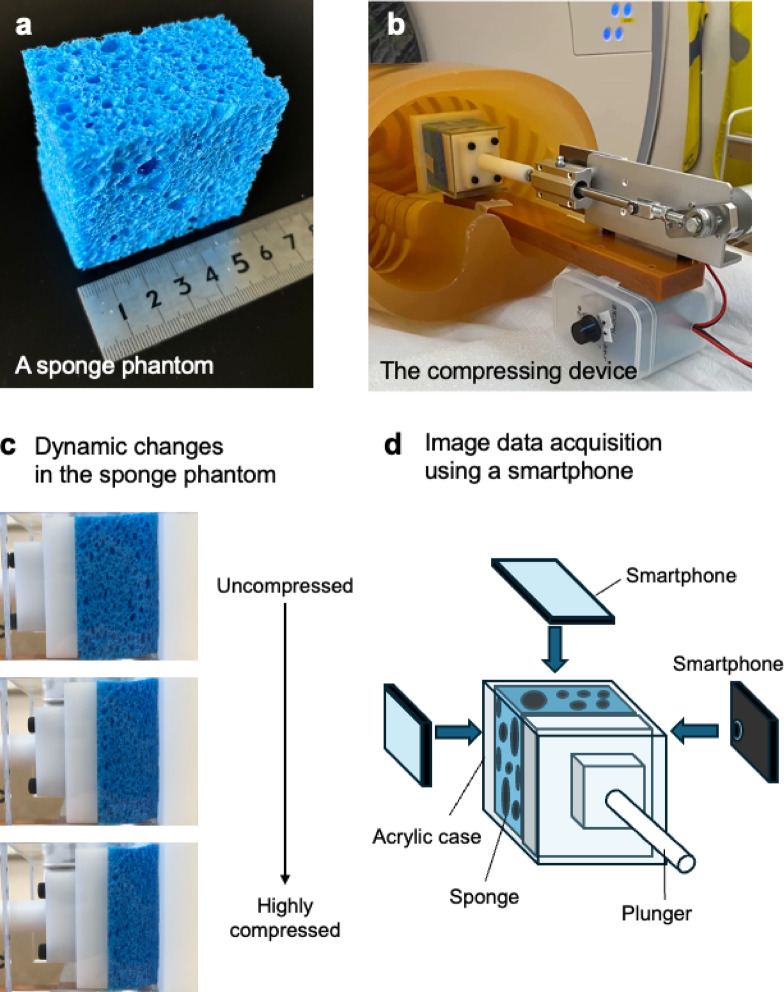 Figure 2
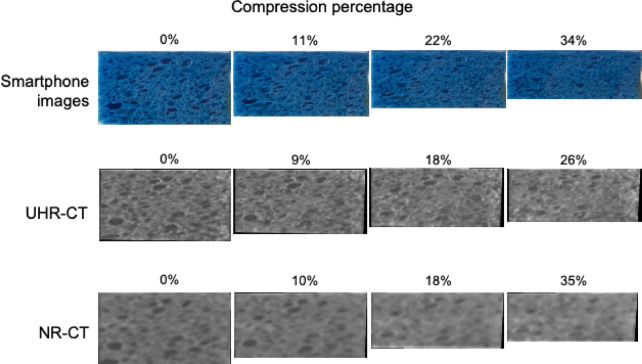 Figure 3
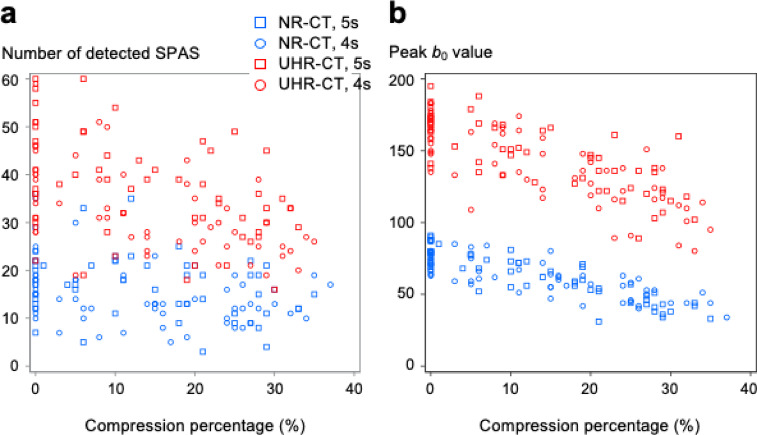 Figure 4
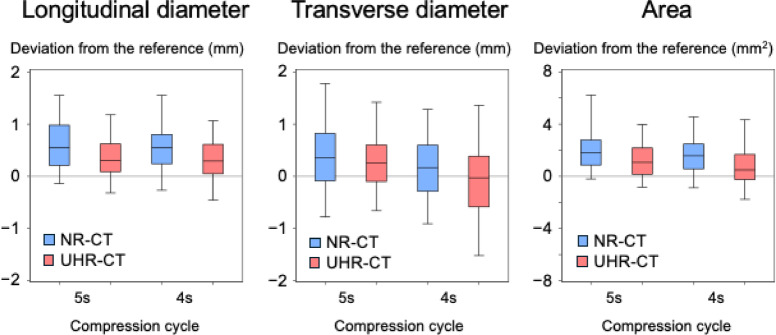 Figure 5
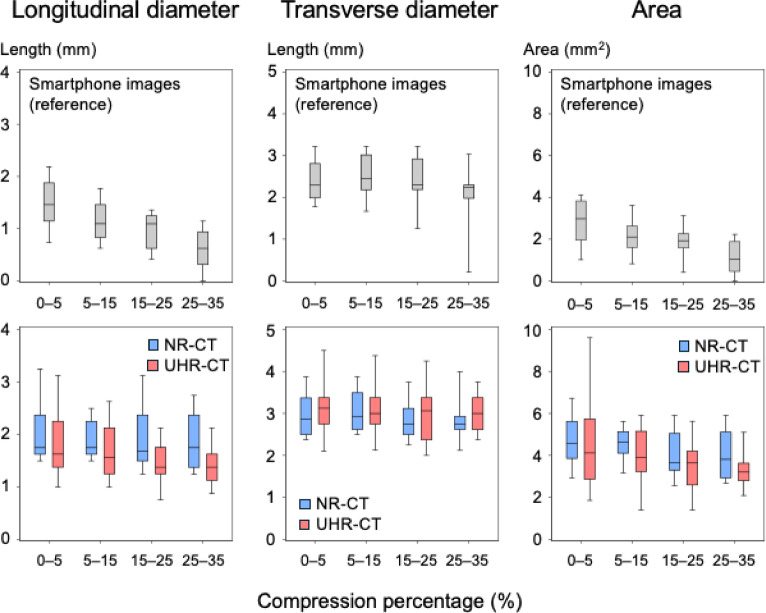 Figure 6
Peer Reviews
No public reviews on file for this paper yet. If you reviewed it on a platform where reviews are public (OpenReview, ICLR, NeurIPS, ICML), you can paste yours below so the community can read it here.
Videos
No videos yet. Explain this paper in a talk, walkthrough, or lecture? Add one.
Taxonomy
TopicsEffects of Radiation Exposure · Lung Cancer Diagnosis and Treatment · Advanced Radiotherapy Techniques