A High-Resolution Subcellular Map of Proteins in Cells with Motile Cilia
Filippa Bertilsson, Feria Hikmet, Jan N. Hansen, Mathias Uhlén, Loren Méar, Cecilia Lindskog

TL;DR
This study creates a detailed map of proteins in cells with motile cilia across five human tissues, revealing that many proteins lack clear biological function evidence.
Contribution
A high-throughput workflow combining multiplex immunohistochemistry and image analysis to map motile cilia proteins in multiple tissues.
Findings
Over 180 proteins were spatially mapped in motile ciliated cells across five tissues.
73% of the mapped proteins have low Functional Evidence (FE) scores, indicating limited biological function evidence.
Protein expression patterns varied between tissues, suggesting non-universal expression of motile cilia proteins.
Abstract
Motile cilia are complex structures regulated by thousands of genes, essential for various physiological functions like respiration and reproduction. Their dysfunction can result in severe conditions like primary ciliary dyskinesia (PCD), highlighting the need for a deeper molecular understanding of their specific ciliary compartments. Interestingly, ciliated cells harbor multiple proteins with limited evidence on biological function, as defined by Functional Evidence (FE) scores, a grading system developed by the Human Proteome Project (HPP). Building upon the stringent antibody validation pipeline of the Human Protein Atlas (HPA) project, we developed a high-throughput workflow that combines a novel multiplex immunohistochemistry protocol with image analysis to investigate protein expression and subcellular localization in motile ciliated cells across five human tissues: nasopharynx,…
Genes, proteins, chemicals, diseases, species, mutations and cell lines named across the full text — each resolved to its canonical identifier and authoritative record.
Click any figure to enlarge with its caption.
 1
1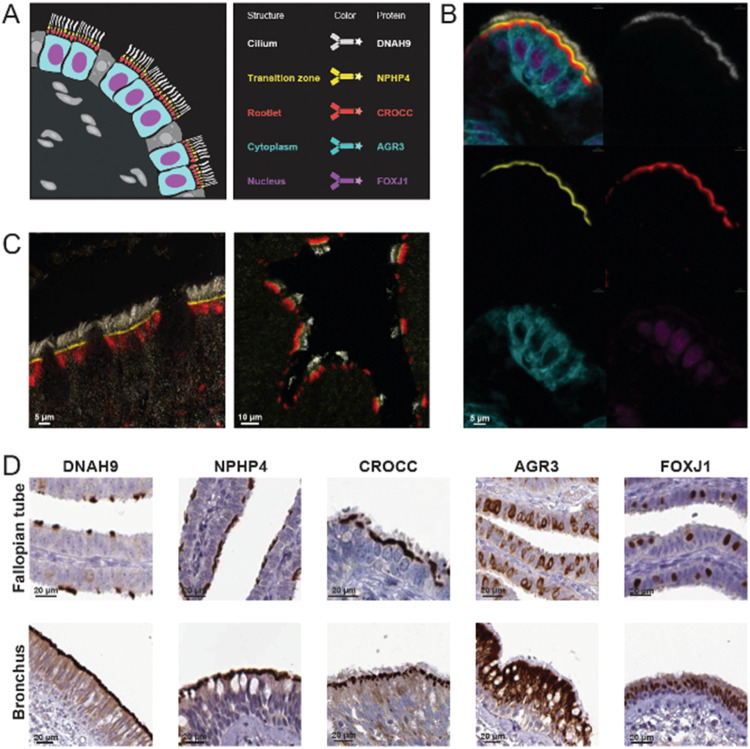 2
2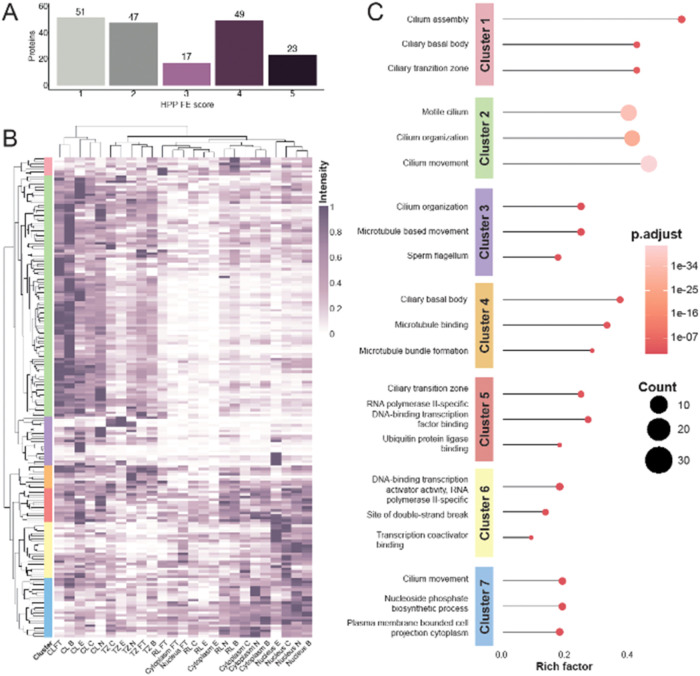 3
3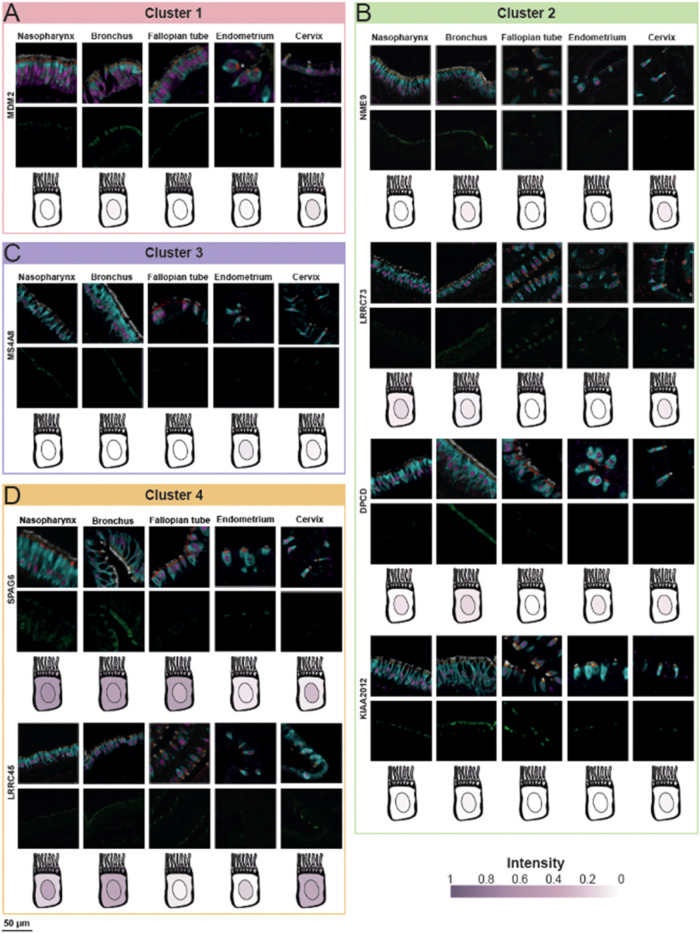 4
4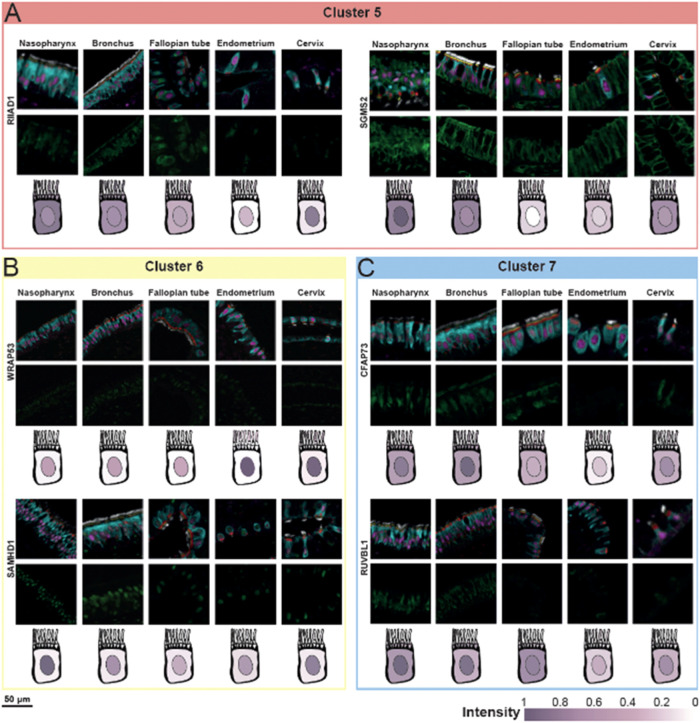 5
5- —Wenner-Gren Foundation10.13039/100001388
- —European Molecular Biology Organization10.13039/100004410
- —Knut och Alice Wallenbergs Stiftelse10.13039/501100004063
- —Vetenskapsr?det10.13039/501100004359
Peer Reviews
No public reviews on file for this paper yet. If you reviewed it on a platform where reviews are public (OpenReview, ICLR, NeurIPS, ICML), you can paste yours below so the community can read it here.
Videos
No videos yet. Explain this paper in a talk, walkthrough, or lecture? Add one.
Taxonomy
TopicsGenetic and Kidney Cyst Diseases · Cystic Fibrosis Research Advances · Microtubule and mitosis dynamics
Introduction
Cells are not organized randomly, but instead form complex organ systems where molecules, cellular compartments and cell types are spatially distributed based on cellular function. Proteins often execute their functions in specific subcellular locations, which is crucial for maintaining various cellular processes such as cell growth, motility, and signaling.? To investigate the role of proteins and their biochemical functions within the cell, knowledge about the spatial localization from both a cellular and subcellular perspective is a crucial first step for further functional studies.?
The Human Proteome Project (HPP) is an initiative of the Human Proteome Organization (HUPO) that has contributed to credibly identifying at least one major isoform of all human proteins, mainly using mass spectrometry-based methods.? As a next step, the HPP consortium currently leads a major effort called the “Grand Challenge”, with the ultimate goal to gain a solid understanding of at least one biological function for each protein at the molecular level. A Functional Evidence (FE) scoring system has been developed, with FE1–5 elucidating the amount of evidence for protein function. The scoring system is linked to annotations contained in UniProt,? including Gene Ontology terms, publications and computational predictions where FE1 represent proteins with at least one known molecular function based on experimental evidence. FE5 represents the lowest scoring, indicating that basically nothing is known about the role of these proteins in human cells. Interestingly, only 5229 proteins encoded by the human genome currently have FE1, highlighting the importance of further efforts that can contribute to understanding protein function.
With the goal of mapping all human proteins, the Human Protein Atlas (HPA) project has built one of the world’s largest biological knowledge resources, available as an open-access database (www.proteinatlas.org). The HPA integrates both transcriptomics data and spatial antibody-based proteomics,? and within this effort, >15,000 proteins have been mapped to all major human normal and cancer tissues using classical immunohistochemistry (IHC). The resource of more than 10 million manually annotated high-resolution histological images provides important information on spatial expression patterns of proteins from a body-wide and cell type-specific perspective, but the possibilities to distinguish subcellular patterns are limited.
Standard IHC is primarily used to study one protein per tissue section, but an increasing number of methods utilize multiplexed IHC (mIHC), enabling novel insights into coexpression and tissue or cell type heterogeneity. Spatial proteomics technologies are of utmost importance to characterize the intrinsic subcellular functions of human proteins,? as has been demonstrated in multiple large-scale studies. ?,? To increase the resolution of the Tissue resource, the HPA version 24 and onward includes data based on a novel mIHC protocol employing in-house generated 6-plex antibody panels. Using an iterative fluorescence-based staining-stripping method, fixed antibody panels of five markers outlining specific cell types, cell states or subcellular structures were stained together with proteins of interest. By examining overlap in expression, this workflow allows for exploring protein localization in structures that are challenging to distinguish based on histological examination only. This facilitates automated image analysis efforts, and minimizes the subjectivity introduced during manual annotation. ?,?
Interestingly, when comparing the FE scores with single-cell transcriptomics data in the Single Cell Type resource of the HPA?, as many as 441 proteins with FE2–5 showed an elevated expression in ciliated cells. This suggests that further mapping of these cells is an important contribution toward understanding protein function. Here, we therefore seek to further explore the cilium (plural cilia), a filamentous hair-like cellular membrane protrusion, whose assembly (ciliogenesis) and structure requires at least 2000 genes.? Cilia are canonically distinguished into two types: primary cilia and motile cilia. Motile cilia are present on epithelia of different organs where they aid in transporting cells, fluids, particles or mucus, and are crucial for e.g., reproduction, respiration, L/R body asymmetry, or brain development and function.? Defects in genes related to motile cilia have been linked to motile ciliopathies, contributing to a large spectrum of diseases in various tissues, including chronic respiratory problems, infertility, and hydrocephalus.? The most common ciliopathy, primary ciliary dyskinesia (PCD), is characterized by impaired ciliary movement. PCD is usually caused by autosomal recessive mutations, but also by autosomal dominant and even X-linked mutations in rare cases. ?,?
Despite advancements in understanding PCD in the last 20 years, its diagnosis remains challenging, and effective treatments are lacking.? Studying motile cilia genes can provide us with fundamental insights into ciliary function and structure, being a first step toward understanding the underlying molecular mechanisms of ciliopathies (e.g., impaired mucociliary clearance in the airways).? Structurally, the cilium comprises several distinct regions: the basal body, containing a modified centriole anchoring the cilium to the cell; the ciliary rootlet, a fibrous structure anchoring the basal body to the cell and it is cytoskeleton for additional support; the transition zone, a specialized gateway at the ciliary base (between basal body and cilium) that regulates protein trafficking and acts as a diffusion barrier; and the axoneme, the core ciliary skeleton that extends from the basal body, traverses the transition zone and that is composed of microtubule doublets and associated motor proteins that mediate ciliary movement. ?,? Given their small size, close spatial proximity, and dynamic nature, these compartments are best studied for their architecture using imaging and microscopy-based methods.? While electron microscopy and Cryo-ET have been instrumental in profiling ciliary ultrastructure, these techniques primarily reveal stable structural components like the axoneme, basal body, and transition zone, but often fail to preserve and visualize soluble or transiently associated proteins. Nonstructural proteins yet remain underrepresented in structural studies. To our knowledge, no previous mIHC approach exists that enables comprehensive characterization of both structural and nonstructural proteins in the different subcompartments of ciliated cells at a high resolution. Therefore, we developed a medium-plex mIHC panel specifically designed to map cells with motile cilia.
With this background, the aim of the study was to develop a novel high-throughput workflow for quantifying cilia proteins at subcellular resolution using mIHC and automated image analysis, a first step toward understanding protein function. Based on signal overlap with a panel of marker proteins outlining the cilium (CL), the transition zone (TZ), the rootlet (RL), the cytoplasm, and the nucleus of ciliated cells, the spatial subcellular localization of 187 motile cilia proteins was mapped across five different tissue types from both respiratory (nasopharynx and bronchus) and reproductive tracts (fallopian tube, endometrium and cervix). The detailed information at the tissue, cellular, and subcellular levels offered new insights into the presumed functions of these proteins in motile cilia. Moreover, our approach, combining spatial proteomics with automated image analysis enables detailed spatial mapping at the subcellular level, offering a valuable resource for future large-scale studies of cilia biology in health and disease. The resulting images can be explored in the open access Human Protein Atlas (www.proteinatlas.org).
Materials and Methods
Ethics and Tissue Microarray Design
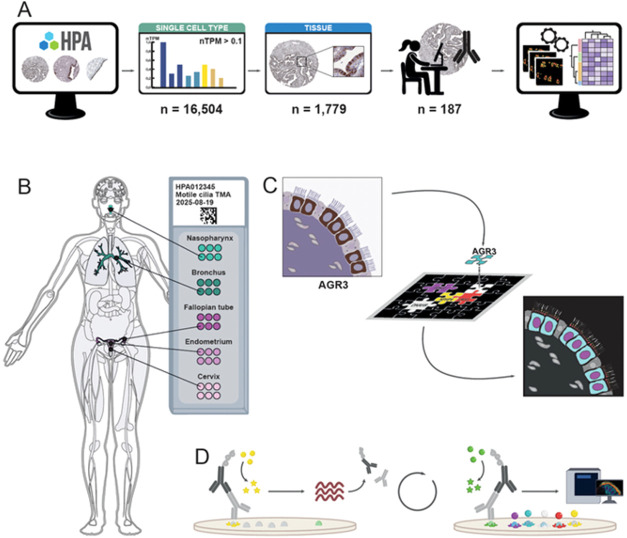
Human samples from five tissue types were obtained from Uppsala University Hospital, Sweden, and collected within the Uppsala Biobank organization. All samples were anonymized in accordance with the approval and advisory report of the Uppsala Ethical Review Board (ref nos. 2002–577, 2005–388, 2007–159). The tissue microarray (TMA) was generated as previously described? and comprised five distinct tissues: nasopharynx, bronchus, fallopian tube, endometrium, and cervix (FigureB). Each tissue was represented by six 1 mm diameter cores, with duplicate cores from three individuals. Patient information is provided in Supporting Table 1. The TMA was sectioned into 4 μm sections using a waterfall microtome (Microm H355S, ThermoFisher Scientific, Fremont, CA) and mounted onto SuperFrost Plus slides (Thermo Fisher Scientific, Fremont, CA). The slides were dried at room temperature (RT) overnight, baked at 50 °C for 12–24 h, cooled, and stored at RT until further use.
Experimental design. (A) Selection of protein candidates from the Human Protein Atlas (HPA, www.proteinatlas.org) utilizing publicly available data from both the Single Cell Type and Tissue resources, allowing the identification of protein candidates expressed in ciliated cells with available reliably validated antibodies (n = 187). The candidates were stained alongside the fixed antibody panel. Each acquired image was automatically analyzed to determine the expression profile, followed by clustering analysis. (B) Five different tissues were collected and organized into a tissue microarray (TMA), consisting of two airway tissues (nasopharynx and bronchus) and three reproductive tissues (fallopian tube, endometrium, and cervix). For each tissue, six cores from three patients were included. (C) A multiplex immunohistochemistry (mIHC) antibody panel for ciliated cells was developed based on a literature review and existing IHC data in the HPA Tissue resource, here exemplified by the protein AGR3, showing staining in the cytoplasm of ciliated cells. The antibodies targeted different subcellular compartments of ciliated cells: nucleus (magenta), cytoplasm (cyan), rootlet (red), transition zone (yellow), and cilium (white). (D) Schematic representation of the mIHC workflow, with the first and last cycles illustrated. The method relies on iterative cycles, each separated by heat-induced antibody stripping.
Multiplex Panel Development
A fixed 5-plex panel was built to target five regions in ciliated cells: the cilium (CL), transition zone (TZ), rootlet (RL), cytoplasm, and nucleus. Protein markers and corresponding antibodies have been selected based on (i) literature search (e.g., UniProtKB and scientific publications), (ii) antibody IHC reliability score on HPA? (see next section on Candidate selection), (iii) expected IHC staining patterns in ciliated cells in nasopharynx, bronchus, fallopian tube, endometrium, and cervix, and (iv) compatibility with the multiplex immunohistochemistry (mIHC) panel and workflow. Each antibody was first tested with a single-plex run, i.e., one antibody at a time, to ensure that it worked equally well with the OPAL detection system, generating the same staining pattern as with regular IHC. Then, each antibody was tested in each position of the mIHC workflow to find the best location for each antibody to ensure a stable panel (Supporting Table 2). Finally, when the best position for each antibody was selected, all five panel markers were stained simultaneously in a 5-plex staining, to confirm nonoverlapping signals. To further validate the three markers targeting the cilium structure, confocal microscopy at 63X was conducted using Leica STELLARIS 5 (Leica Microsystems, Illinois, US).
Candidate Selection
Protein candidates and corresponding antibodies to be included in the present investigation were selected based on publicly available data in the HPA, including scRNA-seq data, IHC antibody reliability, and IHC staining pattern in human tissues. First, human scRNA-seq data from ciliated cells was used. This cell type in the HPA Single Cell Type resource? is based on external data sets from bronchus, lung, fallopian tube and endometrium. The data is presented as normalized transcripts per million (nTPM), showing the average expression of the cells in all cell type clusters from these four tissue types that represent ciliated cells. In this study, genes showing an expression level nTPM ≥ 0.1 were retained. Next, the IHC reliability score on HPA was considered, that evaluates the expected staining pattern in the entire human body taking into consideration positive and negative controls, literature, corresponding mRNA levels and similarity between multiple antibodies targeting the same protein. This stringent antibody validation pipeline is divided into four categoriesEnhanced, Supported, Approved and Uncertain.? In this study, we restricted the selection to only antibodies with Enhanced, Supported or Approved reliability score. From this list, existing IHC annotation data from nasopharynx, bronchus and fallopian tube was considered, consisting of proteins that previously have been identified to stain specific subsets of epithelial cells in these tissues in the standard HPA pipeline. Finally, a manual curation was carried out based on IHC staining patterns in all tissues with motile cilia that were included in the present investigation, keeping only candidates with a distinct staining in ciliated cells, resulting in a refined list of candidate markers (FigureA).
Slide Pretreatment
To remove paraffin and rehydrate tissue cores, a ST5010 Autostainer XL (Leica Biosystems, Baden-Württemberg, Germany) was used with the following protocol: Xylene (5 min), Xylene (5 min), Xylene (1 min), absolute ethanol (3 min), absolute ethanol (3 min), 96% ethanol (3 min), 96% ethanol +0.3% H_2_O_2_ (5 min), 80% ethanol (3 min), and dH_2_O (30 s). The slides were then stored in deionized water until antigen retrieval.
Antigen retrieval was performed to expose protein epitopes for antibody binding. Slides were subjected to heat-induced epitope retrieval (HIER) in pH 6 buffer (Agilent Technologies Inc., Santa Clara, CA, USA) at 125 °C for 4 min using a Biocare Medical Decloaking Chamber PLUS (DC2008INTL). After cooling to 90 °C, the slides were rinsed in deionized water (1–2 min) and transferred to TBS-Tween wash buffer (Thermo Fisher Scientific, TA-999-TT, Waltham, MA, USA) until further processing. To reduce autofluorescence, slides were incubated in a bleaching buffer containing 1.5% hydrogen peroxide, 0.2 M glycine, and 1× TBS-Tween (Thermo Fisher Scientific, TA-999-TT) in 50 mL Falcon tubes. Tubes were rotated under an overhead LED light at RT on a bench for 1 h using a Stuart SRT9D roller mixer. Slides were subsequently washed and stored in TBS-Tween until further use.
Multiplex Immunohistochemistry
For mmIHC staining, one slide per candidate protein was used. Each of the six staining cycles proceeded as follows: Tissue sections were blocked with UV Blocking Buffer (10 min) (UltraVision LP HRP kit, Epredia, Kalamazoo, MI), incubated with primary antibody (30 min), rinsed in TBS-Tween, incubated with HRP-conjugated secondary antibody (preconjugated ready-to-use) (10 min) (UltraVision LP HRP kit, Epredia), and washed again in TBS-Tween. Slides were then incubated with the cycle-specific OPAL fluorophore (Akoya Biosciences, Marlborough, MA) for 10 min, rinsed, and subjected to HIER (90 °C, pH 6 buffer, (Agilent Technologies Inc.) 20 min). The order of the Opal dyes and panel markers from first to last cycle was: OPAL690 for CROCC, OPAL620 for DNAH9, OPAL520 for candidate protein (changed for each slide), OPAL570 for AGR3, OPAL480 for NPHP4, and OPAL-DIG-780 for FOXJ1. After each cycle, slides were rinsed and stored in wash buffer. The final step involved incubating slides with OPAL 780 fluorophore-conjugated anti-DIG antibody (1:125 in Epredia Lab Vision Antibody Diluent OP Quanto, #TA-125-ADQ) for 1 h, followed by staining with DAPI (1:1000, Invitrogen, D1306, Thermo Fisher Scientific) for 5 min. Slides were rinsed, mounted with Invitrogen ProLong Glass Antifade Mountant, covered, and cured overnight. Finally, slides were digitized at 40× magnification using PhenoImager (Akoya Biosciences).
Image Analysis
A manual quality control was performed on all tissue cores, ensuring representativity of the staining pattern, presence of ciliated cells and normal tissue histology. Tissue cores that did not pass this quality control were not included in the data analysis. Automated image analysis was conducted in ImageJ Fiji? to generate quantitative data. TIFF image stacks were processed per TMA core (Supporting Figure 1A). Each stack contained separate images for panel marker proteins, DAPI, and autofluorescence. Images were converted to 8-bit, and DAPI/autofluorescence images were discarded (Supporting Figure 1B). Segmentation was performed using 3-level Multi Otsu thresholding,? where only the highest threshold level (brightest pixels) was used (Supporting Figure 1C). If segmentation failed for any marker, the stack was excluded from further analysis. For each panel marker image, segmentation masks were generated (Supporting Figure 1D), defining regions of interest (ROIs) corresponding to each marker and candidate protein (Supporting Figure 1E). ROIs were used to extract pixel values from candidate protein images by measuring the pixel value within each ROI, including mean pixel intensity, maximum intensity, minimum intensity, and total ROI area per core.
Data Analysis
Data analysis was performed using R 4.4.2. Median intensity values were calculated per ROI (CL, TZ, RL, cytoplasm, nucleus) for each protein and tissue, identifying predominant colocalization patterns. Cores excluded during manual annotation were omitted from median calculations. Data were normalized via Min-Max scaling per protein and slide across all tissues, with values rescaled between 0 and 1. Heatmaps were generated based on image analysis results using the pheatmap package (v1.0.12). Clusters in the heatmaps were generated using default Euclidean clustering incorporated in the package. Gene Ontology (GO) enrichment analysis was conducted using clusterProfiler (v4.14.6) and the human gene reference database org.Hs.eg.db (v3.20.0), retrieved on 2025–02–25. Only GO terms with p value <0.05 were retained. The top three terms per cluster were selected based on the highest number of associated proteins. The Protein Evidence (PE) and Function Evidence (FE) scores for the candidate proteins were downloaded from the HPP portal? on 2025/02/13.
Results
A High-Throughput Workflow to Study Subcellular Location of
Proteins in Ciliated Cells
Utilizing the extensive data sets in the publicly available HPA database (www.proteinatlas.org),[?](#ref5) we identified a total of 16,504 genes in the Single Cell Type resource that were expressed in the ciliated cell cluster above the defined expression threshold. Among these, 10,197 proteins were targeted by at least one antibody that met the IHC data reliability criteria, out of which 1,779 proteins were previously identified as having differential expression pattern in selected tissues harboring motile ciliated cells. A final list of 187 candidates for further exploration was retained following a manual examination of the IHC staining pattern in ciliated cells (FigureA and Supporting Table 3). A dedicated tissue microarray (TMA) was created, including five tissue types known to harbor motile ciliated cells in both the respiratory and reproductive tracts: nasopharynx, bronchus, fallopian tube, endometrium, and cervix (FigureB and Supporting Table 1). To precisely determine the localization of candidate proteins using an iterative mIHC workflow, a fixed panel of five antibodies outlining different subcellular structures of motile ciliated cells was developed (FigureC). The panel was combined with one antibody for a new candidate protein to be studied per slide (FigureD). This design allowed for a standardized high-throughput characterization of subcellular protein localization across multiple tissue samples.
The fixed panel was designed to map protein localization to five distinct subcellular regions of ciliated cells defined by the CL, the TZ, the RL, the cytoplasm, and the nucleus (FigureA). The final panel was based on the following proteins: DNAH9 (Dynein Axonemal Heavy Chain 9), a component of the motile cilia axoneme, here used as a marker for CL?; NPHP4 (Nephrocystin 4) localized in the TZ; ?−? ? CROCC (Rootletin), the main structural protein of the ciliary RL?; AGR3 (Anterior Gradient Protein 3), described in mice as essential for regulating ciliary beat frequency, here used as a marker for cytoplasm?; and the transcription factor FOXJ1 (Forkhead Box Protein J1), a key transcription factor for motile cilia formation, an established marker for ciliated cell nucleus ?,? (FigureB and Supporting Table 2). To validate the antibodies targeting the ciliary regions (CL, TZ, and RL), we performed confocal microscopy at 63× magnification (FigureC). Given the complex structure of the CL, no substantial overlap was observed between these three markers, reinforcing confidence in the panel. The final validated mIHC panel enabled the development of image analysis pipelines and the definition of regions of interests (ROIs) based on the signals obtained from each of the markers in the fixed panel, corresponding to the five distinct subcellular localizations in ciliated cells (Supporting Figure 1E).
Validation and characterization of the fixed antibody panel. (A) Schematic overview of the fixed panel used for mIHC stainings. The mIHC panel included five antibodies targeting proteins expressed in specific subcellular structures of ciliated cells: DNAH9 for the cilium (CL, white), NPHP4 for the transition zone (TZ, yellow), CROCC for the rootlet (RL, red), AGR3 for the cytoplasm (cyan), and FOXJ1 for the nucleus (magenta). (B) Staining of the 5-plex fixed panel in ciliated cells of the fallopian tube. Top left: all five antibodies combined; top right: CL; middle left: TZ; middle right: RL; bottom left: cytoplasm; bottom right: nucleus. (C) Confocal microscopy images. Confocal microscopy was used to validate the markers targeting ciliary structures. Nonoverlapping signals representing the CL (white), TZ (yellow), and RL (red) are shown in the nasopharynx (left) and fallopian tube (right) at 63X resolution. (D) IHC images from the HPA. Antibodies included in the panel were selected based on literature, as well as their staining patterns and reliability scores in the Tissue resource of the HPA.
Hierarchical Clustering and Functional Annotation of Ciliated
Cells Proteins
To address gaps in functional annotation, we integrated the FE scores defined by the HPP project? with our 187 protein candidates (Supporting Table 4) to assess the functional characterization of the proteins included in our study. Interestingly, just over a quarter (27%, n = 51) of the candidate proteins stained alongside the panel fell into the FE1 category, indicating that at least one of their functions has been described. However, the majority (73%, n = 136) remain poorly or partially characterized, with limited or no functional annotations (FE2 to FE5). To further examine the relationship between protein function and clustering, we analyzed the distribution of FE scores across clusters (Supporting Figure 3). To provide a quantitative and systematic assessment of expression levels, we developed an automated image analysis workflow to quantify pixel intensity values for each analyzed protein and assess the subcellular localization of the staining patterns in relation to the fixed antibody panel (Supporting Figure 1). To determine the overlap between each candidate protein and a specific area of the ciliated cells, the analysis method defined ROIs based on each panel marker individually. Pixel intensity values within these ROIs were then extracted from the images, allowing quantification of colocalization for each specific subcellular structure (Supporting Figure 1). To account for multiple images per protein per ROI and per tissue, a median pixel intensity value was calculated per protein and tissue type for each ROI, generating an expression profile across the tissues. The resulting quantitative protein expression levels were subsequently used for hierarchical clustering, which identified seven distinct protein clusters (FigureB). Clustering was also performed on ROI per tissue type, revealing that CL and TZ regions consistently grouped together across all tissues. In contrast, RL, cytoplasm, and nucleus displayed more heterogeneous localization patterns, with the cytoplasm and RL exhibiting the highest variability across tissues. Gene ontology (GO) enrichment analysis was performed for each cluster across the three GO categories: biological process, molecular function and cellular component. This analysis aimed to validate the expression patterns across different subcellular localizations and provide insights into the potential functions of the protein within each cluster (FigureC and Supporting Table 5).
Functional evidence (FE), Clustering Analysis, and Gene Ontology (GO) Enrichment. (A) Bar plot showing the distribution of the studied protein between the different FE scores (FE1–5). (B) A heatmap was generated based on expression levels obtained from image analysis for each candidate protein across different subcellular localizations and tissues fallopian tube (FT), bronchus (B), endometrium (E), cervix (C), and nasopharynx (N). Hierarchical clustering was applied to both rows and columns. The columns were primarily clustered according to subcellular localization rather than tissue type, particularly for ciliary structures such as the cilium (CL) and transition zone (TZ). Row clustering identified seven distinct clusters based on the expression patterns of the 187 candidate proteins. (C) Bubble plot showing the top three GO terms of the three categories (biological process, molecular function and cellular component) per cluster, with enrichment levels represented by the rich factor i.e., the proportion of input genes annotated to a specific term relative to the total genes associated with that term.
Cluster 1: Basal Body and Ciliary Core
Cluster 1 (n = 7, primarily expressed in the RL, FigureB), was strongly linked to cilia, as indicated by its top GO terms: cilium assembly, ciliary basal body, and ciliary transition zone (FigureC). This suggests that proteins in this cluster play a central role in ciliary function. One notable example is MDM2, which localized to the RL of the cilia in all five tissues and showed a strong concordance between image observation and image analysis results (FigureA). Interestingly, none of the 65 GO terms associated with MDM2 in our analysis; including response to magnesium ion, cellular response to estrogen stimulus, positive regulation of intracellular protein transport, and negative regulation of cell cycle G1/S phase transition; are directly related to cilia or their structure. Although MDM2 is an FE1 protein with at least one well-characterized function, its role in ciliated cells remains unclear.
mIHC staining of representative proteins from each cluster across different tissues. The top row of images shows the composite staining, including the fixed panel and the candidate protein. The bottom row displays only the candidate protein (in green). Below the images, a schematic representation of a ciliated cell illustrates the expression levels obtained from image analysis for each subcellular localization. (A) Cluster 1: MDM2 (RL) (B) Cluster 2: NME9 (CL), LRRC73 (CL and RL), DPCD (CL), and KIAA2012 (CL). (C) Cluster 3: MS4A8 (CL). (D) Cluster 4: SPAG6 (whole cell in nasopharynx, bronchus and fallopian tube; CL and TZ in endometrium and cervix) and LRRC45 (CL, TZ and RL).
Cluster 2: Axonemal and Motile Cilia Proteins
Cluster 2 harbored the largest number of proteins (n = 94), with the top GO terms: motile cilium, cilium organization, and cilium movement, indicating a strong association with motile cilia specifically, rather than cilia in general (FigureC). The proteins in this cluster were primarily detected in CL across all five analyzed tissues (FigureB). One example is NME9 (NME/NM23 family member 9, also known as TXNDC6 or TXL-2) (FigureB). While NME9 is highly expressed in multiple tissues, with the highest mRNA level detected in the testis, previous studies have shown that it localizes to airway epithelial cilia as a microtubule binding protein.? Here, we demonstrated that NME9 is not restricted to the airway epithelium but is also present in the motile cilia of three female reproductive tissues, where it exhibited similar staining intensity. Another protein in Cluster 2 is LRRC73 (Leucine rich repeat containing 73) (FigureB). The mIHC analysis indicated that LRRC73 was equally expressed in CL and RL but absent in TZ, with a consistent pattern across all five tissues. However, no GO terms were identified for LRRC73 in our analysis, nor are functional annotations available in UniProt, and it is ranked as a FE5 protein (Supporting Tables 4 and 5). A third example is DPCD (Deleted in primary ciliary dyskinesia homologue) (FigureB,a) protein implicated in the function or formation of ciliated cells. Its highest gene expression was observed in the testis, and previous studies have shown it is expressed in sperm.? Our analysis confirmed that DPCD was specifically detected in CL of motile cilia in all five tissues, with stronger expression in airway epithelial cilia compared to those in the female reproductive tract. In humans, DPCD interacts with RUVBL1 and RUVBL2, proteins known to be involved in dynein motor assembly, a crucial component for ciliary motility. ?,? RUVBL1, which fell into Cluster 7, was detected in the cytoplasm and nucleus of ciliated cells but not in the ciliary structure (FigureC), in line with previous findings. GO terms identified for RUVBL1 include dynein axonemal particle, TFIID-class transcription factor complex binding, and ADP binding (Supporting Table 4). Notably, Ruvbl1 knockdown in mice leads to axoneme structural defects, further supporting its role as a ciliopathy-related protein essential for ciliary integrity.? Another protein found to be in Cluster 2 was ARMC2 (FE2), located in the cilium across all five tissues (Supporting Figure 4). It has been shown that PCD caused by ARMC2 mutations not only affects the reproductive system and abnormalities in sperm flagella,? but also results in an impaired airway system.? Here, spatial evidence is provided showing ARMC2 to be present in motile cilia in both female reproductive and airway epithelium (Supporting Figure 4). Our analysis connected ARMC2 to multiple GO terms, such as cilium organization, cilium assembly, and spermatid development. Finally, KIAA2012, a poorly characterized protein with no known function (FE5) (FigureB and Supporting Table 5) was also found in this cluster. Our data revealed that it localized to CL of motile cilia across all five tissues, with similar expression levels throughout, suggesting a conserved ciliary function.
mIHC staining of representative proteins from each cluster across different tissues. The top row of images shows the composite staining, including the fixed panel and the candidate protein. The bottom row displays only the candidate protein (in green). Below the images, a schematic representation of a ciliated cell illustrates the expression levels obtained from image analysis, the darker the color, the higher the expression level. (A) Cluster 5: RIIAD1 (CL, TZ, cytoplasm and nucleus) and SGMS2 (whole cell). (B) Cluster 6: WRAP53 (nucleus) and SAMHD1 (nucleus). (C) Cluster 7: CFAP73 (cytoplasm and nucleus) and RUBBL1 (cytoplasm and nucleus).
Cluster 3: Ciliary and Flagellar Motility Proteins
The top GO terms for Cluster 3 (n = 19), were cilium organization, microtubule-based movement, and sperm flagellum (FigureC), highlighting its association with ciliary and flagellar structures. One notable protein in this cluster is MS4A8 (Membrane spanning 4-domains A8, also known as MS4A8b) (FigureC,a) member of the MS4A protein family, that shares sequence and structural homology with the IgE receptor CD20.? Here, we demonstrated that MS4A8 is specifically localized to CL of motile ciliated cells across all five tissue types. MS4A8 has been ranked FE4 and interestingly also lacks previous evidence at the protein level (Supporting Table 5). Our findings here provide spatial evidence of MS4A8 protein expression, offering a valuable insight into its potential role in motile cilia function.
Cluster 4: Dual Localization in Axoneme and Transition Zone
Cluster 4 (n = 9, with no FE1 proteins, Supporting Figure 3), presented a more complex expression pattern, with overrepresentation in both CL and TZ (FigureB). The top GO terms identified were ciliary basal body, microtubule binding, and microtubule bundle formation (FigureC), highlighting the potential structural roles of these proteins in cilia. One key protein in this cluster was SPAG6 (Sperm associated antigen 6) (FigureD), which is strongly linked to microtubule bundle formation, cilium organization, and cilium movement (Supporting Table 5). SPAG6 is crucial for maintaining normal ciliary structure and function, and its loss has been associated with brain edema in mice. ?,? While SPAG6 deficiency leads to male infertility, female mice remain fertile, although fertilization is delayed, suggesting an impact on the motile cilia in the oviduct.? In this study, SPAG6 showed widespread expression across the whole cell in nasopharynx, bronchus and fallopian tube, while its localization was more restricted to CL and TZ in endometrium and cervix (FigureD). Another protein in this cluster is LRRC45 (Leucine rich repeat containing 45), which was primarily localized to CL, as well as TZ and RL (FigureD). Previously described in primary cilia, defects of LRRC45 are thought to alter ciliary length and beat frequency. ?,? Here, we showed its presence and specific localization in motile cilia across both the respiratory and reproductive tract. However, our GO term analysis did not identify any functional annotation for LRRC45, and it is classified as FE5 (Supporting Table 5), indicating that its precise role remains to be elucidated.
Cluster 5: Ciliated Proteins with Diverse Localization
In Cluster 5 (n = 13), protein expression patterns were distributed across the entire ciliated cell (FigureB). The GO terms identified in this cluster were ciliary transition zone, RNA polymerase II-specific DNA-binding transcription factor binding, and Ubiquitin protein ligase binding, suggesting a broad functional involvement in cellular activity (FigureC). One example is RIIAD1 (Regulatory subunit of type II PKA R-subunit domain containing 1), which was predominantly localized in CL, TZ, cytoplasm and nucleus across all examined tissues (FigureA). Although RIIAD1 remains poorly characterized, studies have reported its upregulation in breast cancer tumors. ?,? Notably, our GO term analysis did not identify any functional annotations for this protein, which is classified as a FE5 protein (Supporting Table 4), suggesting its role in motile cilia should be examined. Another protein in this cluster is SGMS2 (Sphingomyelin synthase 2), which was detected in all targeted locations in the ciliated cells across all tissues, although significantly lower presence was observed in RL in the reproductive tissues (FigureA). SGMS2 is classified as a FE1 protein (Supporting Table 4), indicating strong evidence for a molecular function. While our GO term analysis identified phosphotransferase activity for other substituted phosphate groups as a related term (Supporting Table 5), additional annotations, including nucleoplasm, plasma membrane, and sphingomyelin synthase activity, suggest broader functional roles.
Cluster 6: Nuclear and Cytoplasmic Proteins
Cluster 6 (n = 22) consisted of proteins primarily localized to the cytoplasm and nucleus (FigureB), as supported by the top three GO terms: DNA-binding transcription activator activity, RNA polymerase II-specific, site of double-strand break, and transcription coactivator binding (FigureC). Notably, 45% of the proteins (n = 10) in this cluster are classified as FE1, indicating strong evidence of the molecular function (Supporting Figure 3). One key protein of this cluster is WRAP53 (WD repeat containing antisense to TP53) (FigureB), classified as FE1 (Supporting Table 4). The GO term enrichment identified the site of double-strand break as a related function (Supporting Table 5), aligning with its known role in DNA damage response. WRAP53 is recruited to the site of a double strand break, where it facilitates the recruitment of other DNA repair proteins.? Here, we showed that WRAP53 was predominantly expressed in the nucleus of ciliated cells across all tissues. Another protein in this cluster is SAMHD1 (SAM and HD domain containing deoxynucleoside triphosphate triphosphohydrolase
- (FigureB), also classified as FE1 (Supporting Table 4). Like WRAP53, SAMHD1 is associated with the GO term site of double-strand break (Supporting Table 4). We revealed its nuclear localization in ciliated cells across all five tissues, reinforcing its potential role in DNA repair mechanisms.
Cluster 7: Mixed Localization with Ciliary and Cytoplasmic Functions
The final cluster, Cluster 7 (n = 23), exhibited less specific localization patterns compared to other clusters, with proteins predominantly found in the cytoplasm and the nucleus (FigureB). GO term analysis identified key biological functions, including cilium movement, nucleoside phosphate biosynthetic process, and plasma membrane bounded cell projection cytoplasm (FigureC). Among the proteins in this cluster, RUVBL1 was previously mentioned with proteins from cluster 2 (FigureC) and classified as FE1 (Supporting Table 4). Another protein in this cluster is CFAP73 (Cilia and flagella associated protein 73), classified as FE4 (Supporting Table 4), which was primarily expressed in the cytoplasm and, to a lesser extent, in the nucleus across all tissues (FigureC). GO analysis linked CFAP73 to essential ciliary processes, including cilium movement, axonemal dynein complex assembly, and cilium organization (Supporting Table 5), suggesting a role in ciliary structure and function.
Discussion
This study introduces a comprehensive mIHC and automated image analysis workflow designed to investigate the subcellular localization of proteins in motile ciliated cells at a high resolution. To our knowledge, this is the first approach to combine high-resolution tissue imaging of motile ciliated cells with the scalability of high-throughput analysis of a large set of proteins across multiple tissue types using an in-house medium-plex panel tailored for this purpose. The unique panel and novel workflow were successfully used to spatially map 187 proteins in ciliated cells across five human tissues from both respiratory and female reproductive tracts. Protein localization was determined based on the overlap with a fixed reference panel outlining distinct subcellular compartments of motile ciliated cells. The validated panel enabled precise localization and quantification of each of the candidate proteins within five defined subcellular regions: the nucleus, cytoplasm, and three cilia-specific compartments: CL, TZ, and RL.?
The 187 candidate proteins studied in the present investigation were selected using two key resources of the HPA: (i) the Single Cell Type resource, to validate the transcript-level expression in ciliated cells compared to other cell types in the studied tissues, and (ii) the Tissue resource, to prioritize candidates with reliable antibodies showing positive IHC staining in ciliated cells in at least one of the five analyzed tissues included in the study. Using the cutoff threshold of 0.1 nTPM enabled the inclusion of a broad spectrum of proteins, encompassing both cilia specific markers and proteins with more ubiquitous expression profiles across different cell types (Supporting Figure 2). As some proteins are broadly expressed across multiple cell types, immunostaining outside the ciliated cells population was occasionally observed and could be detected upon manual examination. The image analysis pipeline was however restricted to the predefined panel markers specifically targeting ciliated cells, and as a result quantitative data on protein expression in other cell types was not generated as part of this effort. One example of such a protein is GALNS (images not shown), that in addition to staining in ciliated cells also showed positivity in other epithelial cells and immune cells. Even if some proteins are not specific to ciliated cells from a body-wide perspective, we still believe that a detailed mapping of these proteins in ciliated cells aids in understanding their potential role in cilia function.
While most of the proteins encoded by the human genome have been credibly identified, many proteins still lack a specifically defined function based on experimental evidence. One of the major goals of the international consortium HPP is to gain a solid understanding of at least one function for every protein at the molecular level.? As a result, the HPP has introduced the definition of FE scores that build upon the functional information available in the UniProtKB, described as FE1-FE5 according to the level of evidence for a molecular function.? These new FE scores have been implemented for each protein encoded by the human genome. Interestingly, a majority (73%) of the candidate proteins characterized in our study showed FE2-FE5 scores, indicating that a full understanding of the role of these proteins in ciliated cells is still lacking. Our stringent validation pipeline and detailed data presenting a specific localization to ciliated cells at a subcellular resolution gives further insights into a presumed function of these proteins. The spatial localization data constitutes a starting point for further functional studies using e.g., model systems, to determine the roles of these proteins in each of the analyzed tissue types.
For further functional analysis, we also performed a hierarchical clustering analysis of the candidate proteins for each of the analyzed tissues using quantitative protein localization data generated by automated image analysis. The clustering analysis revealed that protein localization was largely conserved across tissues, particularly for CL and TZ, suggesting a shared spatial distribution for these proteins. Similarly, candidate proteins clustered based on their expression patterns, resulting in seven distinct expression groups. While some clusters exhibited clear localization patterns, such as cluster 2, with proteins mainly expressed in the cilium, or cluster 6, in the nucleus; others, like cluster 5, displayed a more dispersed expression profile. Nevertheless, the clustering analysis allowed us to group the proteins according to expression patterns, highlighting numerous poorly described proteins that shared a similar expression profile with well-described cilia markers, thus indicating a similar molecular function. We also performed a GO analysis for each of the expression clusters, which revealed a clear overrepresentation of cilia-associated functions, thus validating our strategy and providing an initial framework for a deeper understanding of protein function. It should however be noted that proteins localized to general cellular compartments such as the cytoplasm or nucleus may still exhibit cilia-specific roles. Given that GO annotations are derived from data across multiple cell types or model systems and not exclusively motile ciliated cells in the in situ context described here, definitive conclusions regarding specific functional or biological processes require further targeted investigation.
To confirm the validity of our approach, the list of candidates included several well-characterized proteins belonging to families with known functions in cilia, such as cilia and flagella associated proteins (CFAPs), coiled-coil domain-containing proteins (CCDCs), dynein axonemal heavy chain proteins (DNAHs) and dynein axonemal intermediate chain proteins (DNAIs). We also shed light on several proteins with only limited evidence, such as seven different open reading frame proteins (C15orf48, C1orf87, C20orf8, C2orf50, C4orf47, C6orf132 and C7orf57) and other proteins with no previous description in the context of cilia biology, e.g., KIAA2012, RIIAD1 and MS4A8. Here we show for the first time that these proteins are expressed in specific subcellular compartments of motile ciliated cells. KIAA2012, a poorly described protein located in the cilium compartment (CL region) of motile ciliated cells in both respiratory and female reproductive tissues. Based on its subcellular location, it can be anticipated that this protein may contribute to cilia motility and thereby has the potential to cause PCD where the function of motile cilia is impaired, a syndrome causing a wide range of symptoms and diseases.? Another protein with limited characterization is RIIAD1, previously shown to be upregulated in breast cancer tumors, but without a known molecular function. The name of the protein suggests that it regulates a subunit of protein kinase A (PKA), involved in endocrine signaling and previously described to play a crucial role in regulating ciliary beating frequency.? Here, we show that this protein is generally expressed across the whole ciliated cell, both in the cell body and the cilium, in all five analyzed tissues. Interestingly, scRNA levels in other analyzed tissues in the Single Cell Type resource of the HPA show that expression is dominated in ciliated cells, followed by early spermatids, and cone photoreceptor cells. As mature sperm contain flagella, with a similar molecular function related to motility as ciliated cells,? and photoreceptor cells contain specialized sensory cilia,? the mRNA expression levels together with the spatial localization pattern suggests that this protein may be crucial for regulating and supporting key ciliary functions. Our study included numerous other proteins that lack a description of molecular function or were not previously described in the context of cilia biology, including MS4A8 which previously only has been described at the transcript level. Here, we could provide the first spatial evidence that this protein is expressed in the cilium of motile ciliated cells.
The selection of proteins included in the present investigation was mostly focusing on conserved motile ciliary proteins present in all the analyzed tissues, but we did identify several proteins whose expression pattern differed between respiratory and reproductive tissues. This shows that our workflow has the potential of cross-tissue comparison and that motile cilia may have different proteomes in different human tissue compartments, a finding that may explain phenotypic diversity in motile ciliopathy patients. Further studies using our novel strategy for mapping the entire motile cilia proteome in health and disease are expected to give unprecedented insights into the field of cilia biology.
Importantly, our method is facing limitations in resolution: Proteins detected in the TZ region might not necessarily be part of the TZ but localize close to it, at the rootlet or at the proximal cilium. Similarly, proteins that we discover in the CL region might not localize in the axoneme but in the cilioplasm or ciliary membrane. And we may detect proteins in the RL region that belong either to the RL or to broader structures close to the RL or in the basal body. Nevertheless, our workflow provides a resolution not attainable by regular IHC, and a starting point for identifying subcellular expression patterns of ciliary proteins that can be validated by other molecular approaches.
In the rapidly expanding field of spatial biology, a multitude of methods focus on multiplexed imaging of proteins. Here, we developed a novel “medium-plex” workflow, centered around a fixed antibody panel outlining five different subcellular compartments of motile ciliated cells. While higher-plex methods enable the simultaneous analysis of multiple cell types and structures within a given tissue, our approach offers the advantage of subcellular-level resolution combined with high-throughput capacity, making it well suited for both proteome-wide investigation and clinical routine. This strategy provides a powerful foundation for comprehensive mapping of the motile cilia proteome in both health and disease. It represents an important step toward uncovering the molecular mechanisms driving ciliopathy and paves the way for future applications in precision diagnostics and personalized medicine.
Supplementary Material
The reference list from the paper itself. Each links out to its DOI / PubMed record.
- 1Hung M.-C.Link W.Protein localization in disease and therapy J. Cell Sci.20111243381339210.1242/jcs.08911022010196 · doi ↗ · pubmed ↗
- 2Thul P. J.Åkesson L.Wiking M.A subcellular map of the human proteome Science 2017356 eaal 332110.1126/science.aal 332128495876 · doi ↗ · pubmed ↗
- 3Adhikari S.Nice E. C.Deutsch E. W.A high-stringency blueprint of the human proteome Nat. Commun.202011530110.1038/s 41467-020-19045-933067450 PMC 7568584 · doi ↗ · pubmed ↗
- 4Omenn G. S.Orchard S.Lane L.The 2024 Report on the Human Proteome from the HUPO Human Proteome Project J. Proteome Res.2024235296531110.1021/acs.jproteome.4c 0077639514846 PMC 11781352 · doi ↗ · pubmed ↗
- 5Uhlén M.Fagerberg L.Hallström B. M.Tissue-based map of the human proteome Science 2015347126041910.1126/science.126041925613900 · doi ↗ · pubmed ↗
- 6Method of the Year 2024: spatial proteomics Nat. Methods 2024; Vol. 21, pp 2195–2196.39643689 10.1038/s 41592-024-02565-3 · doi ↗ · pubmed ↗
- 7Ghoshal B.Hikmet F.Pineau C.Tucker A.Lindskog C.Deep Histo Class: A Novel Strategy for Confident Classification of Immunohistochemistry Images Using Deep Learning Mol. Cell Proteomics 20212010014010.1016/j.mcpro.2021.10014034425263 PMC 8476775 · doi ↗ · pubmed ↗
- 8Shariff A.Kangas J.Coelho L. P.Quinn S.Murphy R. F.Automated Image Analysis for High-Content Screening and Analysis J. Biomol. Screen.20101572673410.1177/108705711037089420488979 · doi ↗ · pubmed ↗