The genome sequence of the cylindrical bark beetle, Colydium elongatum (Fabricius, 1787) (Coleoptera: Zopheridae)
Liam M. Crowley, Arun Arumugaperumal, Chenyang Cai, Lindsey C Perkin, Zhonghua Wei

TL;DR
This paper presents the genome sequence of the cylindrical bark beetle, including its chromosomes and mitochondrial DNA, as part of a larger project to sequence species in Britain and Ireland.
Contribution
The paper provides the first reference genome for Colydium elongatum, including sex chromosomes and mitochondrial DNA.
Findings
The genome assembly is 450.16 megabases long, with 99.15% scaffolded into 10 chromosomal pseudomolecules.
The mitochondrial genome is 16.82 kilobases long and was fully assembled.
Gene annotation identified 13,883 protein-coding genes.
Abstract
We present a genome assembly from an individual male Colydium elongatum (cylindrical bark beetle; Arthropoda; Insecta; Coleoptera; Zopheridae). The genome sequence has a total length of 450.16 megabases. Most of the assembly (99.15%) is scaffolded into 10 chromosomal pseudomolecules, including the X and Y sex chromosomes. The mitochondrial genome has also been assembled, with a length of 16.82 kilobases. Gene annotation of this assembly on Ensembl identified 13 883 protein-coding genes. This assembly was generated as part of the Darwin Tree of Life project, which produces reference genomes for eukaryotic species found in Britain and Ireland.
Genes, proteins, chemicals, diseases, species, mutations and cell lines named across the full text — each resolved to its canonical identifier and authoritative record.
Click any figure to enlarge with its caption.
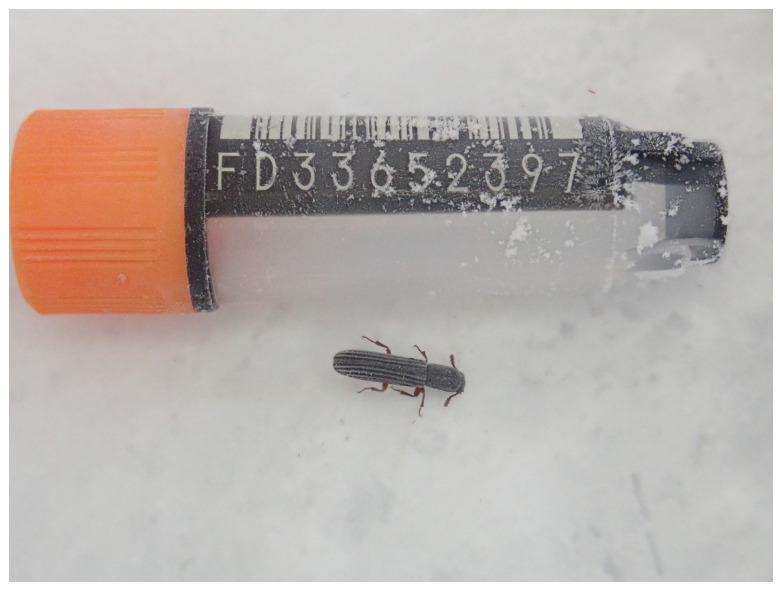 Figure 1
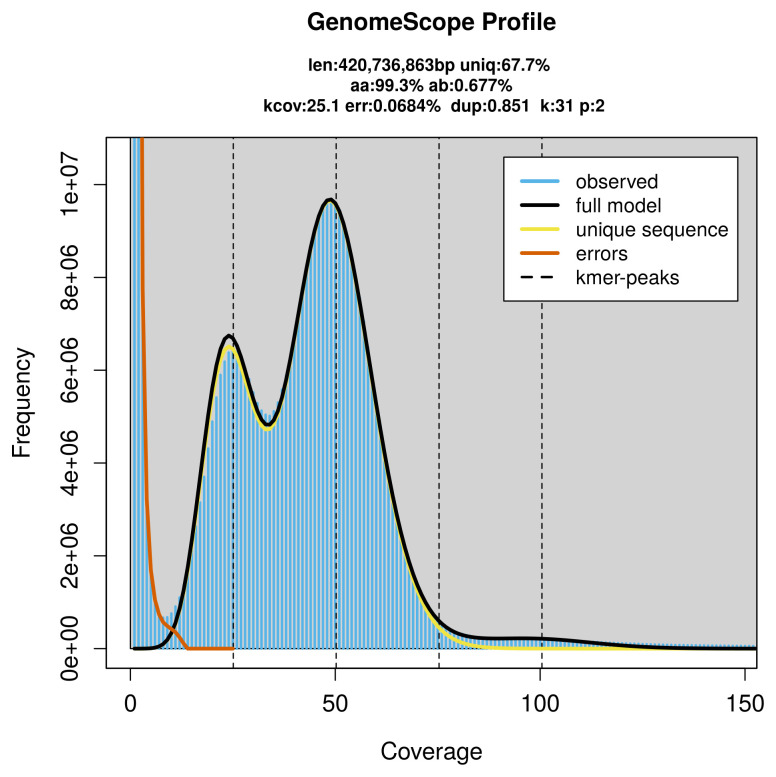 Figure 2
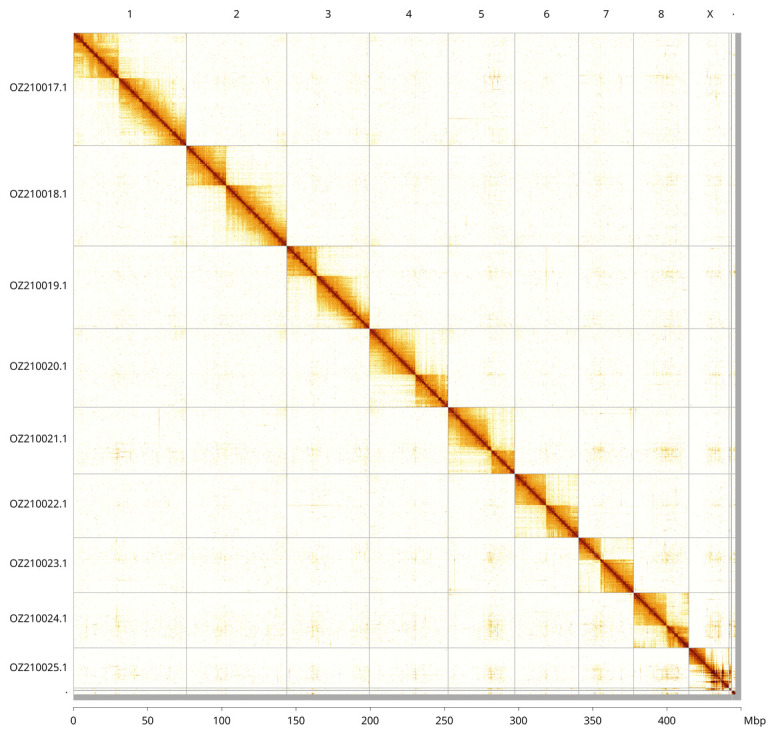 Figure 3
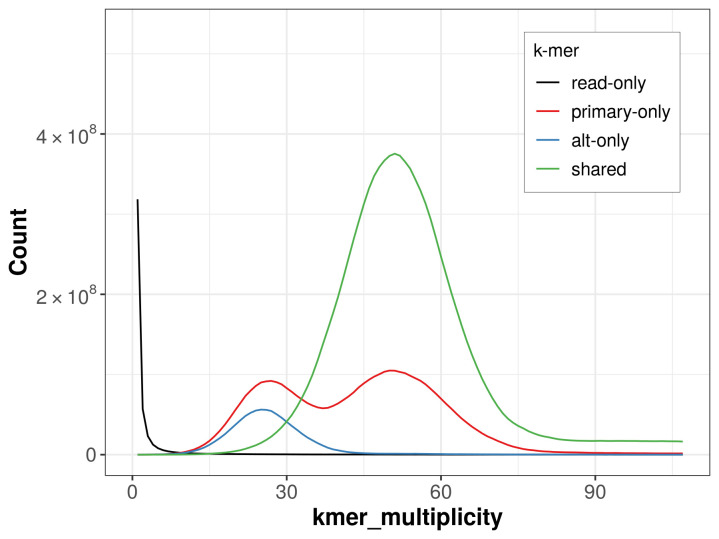 Figure 4
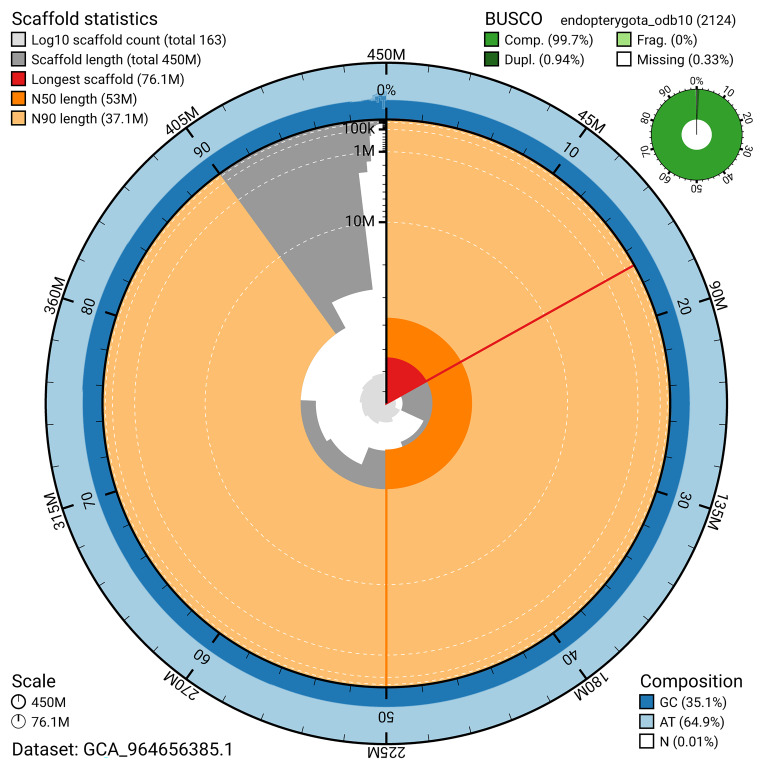 Figure 5
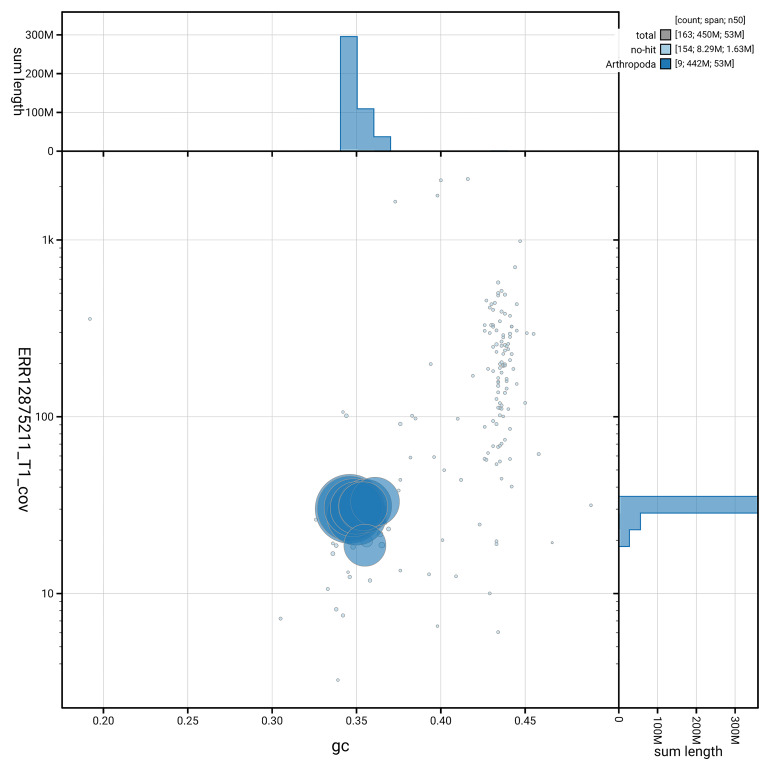 Figure 6
| Platform | PacBio HiFi | Hi-C |
|---|---|---|
|
| icColElon2 | icColElon1 |
|
| ||
|
| SAMEA112232558 | SAMEA112232557 |
|
| SAMEA112233006 | SAMEA112233005 |
|
| whole organism | whole organism |
|
| Revio | Illumina NovaSeq 6000 |
|
| ERR12875211; ERR12875212 | ERR12893017 |
|
| 2.64 million | 582.09 million |
|
| 21.96 Gb | 87.90 Gb |
|
| icColElon2.1 |
|
| GCA_964656385.1 |
|
| GCA_964656365.1 |
|
| chromosome |
|
| 450.16 |
|
| 10 |
|
| 484 |
|
| 2.41 Mb |
|
| 162 |
|
| 52.95 Mb |
|
| X and Y |
|
| Mitochondrion: 16.82 kb |
| INSDC accession | Molecule | Length (Mb) | GC% |
|---|---|---|---|
| 1 | 76.14 | 34.50 | |
| 2 | 67.71 | 34.50 | |
| 3 | 55.75 | 35 | |
| 4 | 52.95 | 35 | |
| 5 | 44.93 | 35.50 | |
| 6 | 43.04 | 35 | |
| 7 | 37.13 | 36 | |
| 8 | 37.12 | 35.50 | |
| X | 29 | 35.50 | |
| Y | 2.56 | 34.50 |
| Measure | Value | Benchmark |
|---|---|---|
| EBP summary (primary) | 6.C.Q63 | 6.C.Q40 |
| Contig N50 length | 2.41 Mb | ≥ 1 Mb |
| Scaffold N50 length | 52.95 Mb | = chromosome N50 |
| Consensus quality (QV) | Primary: 63.1; alternate: 59.1; combined: 60.8 | ≥ 40 |
|
| Primary: 89.40%; alternate: 68.72%; combined: 99.52% | ≥ 95% |
| BUSCO | C:99.7% [S:98.7%; D:0.9%]; F:0.0%; M:0.3%; n:2 124 | S > 90%; D < 5% |
| Percentage of assembly
| 99.15% | ≥ 90% |
- —Wellcome Trust
Peer Reviews
No public reviews on file for this paper yet. If you reviewed it on a platform where reviews are public (OpenReview, ICLR, NeurIPS, ICML), you can paste yours below so the community can read it here.
Videos
No videos yet. Explain this paper in a talk, walkthrough, or lecture? Add one.
Taxonomy
TopicsGenomics and Phylogenetic Studies · Forest Insect Ecology and Management · Coleoptera Taxonomy and Distribution
Species taxonomy
Eukaryota; Opisthokonta; Metazoa; Eumetazoa; Bilateria; Protostomia; Ecdysozoa; Panarthropoda; Arthropoda; Mandibulata; Pancrustacea; Hexapoda; Insecta; Dicondylia; Pterygota; Neoptera; Endopterygota; Coleoptera; Polyphaga; Cucujiformia; Tenebrionoidea; Zopheridae; Colydiinae; Colydium; Colydium elongatum (Fabricius, 1787) (NCBI:txid295817)
Background
Colydium elongatum (Fabricius, 1787) is a small, slender, cylindrical zopherid (Colydiinae) with a glossy, almost glabrous dorsum and costate elytra. It is morphologically adapted for movement under bark ( Węgrzynowicz, 1999).
It is widespread in Europe and also recorded from North Africa ( Węgrzynowicz, 1999). Within the western Palaearctic it occurs alongside C. filiforme, with a third species ( C. noblecourti) recently added ( Parmain et al., 2024). Adults are saproxylic, living under the bark of dead or dying trees in the galleries of other wood-dwelling insects. C. elongatum has been reported to feed by facultative predation on eggs or young larvae of xylophages, or as commensal feeders on fungi and decaying organic matter. Here “saproxylic” follows the usage for species dependent on wood-decay processes in living as well as dead trees ( Alexander, 2008).
We present a chromosome-level genome sequence for Colydium elongatum, the first genome for the genus Colydium as of October 2025 (NCBI datasets, O’Leary et al., 2024). The assembly was produced using the Tree of Life pipeline from a specimen collected in Wytham Woods, Oxfordshire, UK ( Figure 1).
Photograph of the Colydium elongatum (icColElon2) specimen used for genome sequencing.
Methods
Sample acquisition and DNA barcoding
The specimen used for genome sequencing was an adult male Colydium elongatum (specimen ID Ox002331, ToLID icColElon2; Figure 1), collected from Wytham Woods, Oxfordshire, UK (latitude 51.77, longitude –1.336) on 2022-05-27. A second specimen collected on the same occasion was used for Hi-C sequencing (specimen ID Ox002330, ToLID icColElon1). The specimens were collected and identified by Liam Crowley. Sample metadata were collected in line with the Darwin Tree of Life project standards described by Lawniczak et al. (2022).
The initial identification was verified by an additional DNA barcoding process according to the framework developed by Twyford et al. (2024). A small sample was dissected from one of the specimens and stored in ethanol, while the remaining parts were shipped on dry ice to the Wellcome Sanger Institute (WSI) (see the protocol). The tissue was lysed, the COI marker region was amplified by PCR, and amplicons were sequenced and compared to the BOLD database, confirming the species identification ( Crowley et al., 2023). Following whole genome sequence generation, the relevant DNA barcode region was also used alongside the initial barcoding data for sample tracking at the WSI ( Twyford et al., 2024). The standard operating procedures for Darwin Tree of Life barcoding are available on protocols.io.
Nucleic acid extraction
Protocols for high molecular weight (HMW) DNA extraction developed at the Wellcome Sanger Institute (WSI) Tree of Life Core Laboratory are available on protocols.io ( Howard et al., 2025). The icColElon2 sample was weighed and triaged to determine the appropriate extraction protocol. Tissue from the whole organism was homogenised by powermashing using a PowerMasher II tissue disruptor. HMW DNA was extracted using the Automated MagAttract v2 protocol. We used centrifuge-mediated fragmentation to produce DNA fragments in the 8–10 kb range, following the Covaris g-TUBE protocol for ultra-low input (ULI). Sheared DNA was purified by automated SPRI (solid-phase reversible immobilisation). The concentration of the sheared and purified DNA was assessed using a Nanodrop spectrophotometer and Qubit Fluorometer using the Qubit dsDNA High Sensitivity Assay kit. Fragment size distribution was evaluated by running the sample on the FemtoPulse system. For this sample, the final post-shearing DNA had a Qubit concentration of 1.86 ng/μL and a yield of 241.80 ng.
PacBio HiFi library preparation and sequencing
Library preparation and sequencing were performed at the WSI Scientific Operations core. Prior to library preparation, the DNA was fragmented to ~10 kb. Ultra-low-input (ULI) libraries were prepared using the PacBio SMRTbell® Express Template Prep Kit 2.0 and gDNA Sample Amplification Kit. Samples were normalised to 20 ng DNA. Single-strand overhang removal, DNA damage repair, and end-repair/A-tailing were performed according to the manufacturer’s instructions, followed by adapter ligation. A 0.85× pre-PCR clean-up was carried out with Promega ProNex beads.
The DNA was evenly divided into two aliquots for dual PCR (reactions A and B), both following the manufacturer’s protocol. A 0.85× post-PCR clean-up was performed with ProNex beads. DNA concentration was measured using a Qubit Fluorometer v4.0 (Thermo Fisher Scientific) with the Qubit HS Assay Kit, and fragment size was assessed on an Agilent Femto Pulse Automated Pulsed Field CE Instrument (Agilent Technologies) using the gDNA 55 kb BAC analysis kit. PCR reactions A and B were then pooled, ensuring a total mass of ≥500 ng in 47.4 μl.
The pooled sample underwent another round of DNA damage repair, end-repair/A-tailing, and hairpin adapter ligation. A 1× clean-up was performed with ProNex beads, followed by DNA quantification using the Qubit and fragment size analysis using the Agilent Femto Pulse. Size selection was performed on the Sage Sciences PippinHT system, with target fragment size determined by Femto Pulse analysis (typically 4–9 kb). Size-selected libraries were cleaned with 1.0× ProNex beads and normalised to 2 nM before sequencing.
The sample was sequenced on a Revio instrument (Pacific Biosciences). The prepared library was normalised to 2 nM, and 15 μL was used for making complexes. Primers were annealed and polymerases bound to generate circularised complexes, following the manufacturer’s instructions. Complexes were purified using 1.2X SMRTbell beads, then diluted to the Revio loading concentration (200–300 pM) and spiked with a Revio sequencing internal control. The sample was sequenced on a Revio 25M SMRT cell. The SMRT Link software (Pacific Biosciences), a web-based workflow manager, was used to configure and monitor the run and to carry out primary and secondary data analysis.
Hi-C
** Sample preparation and crosslinking **
The Hi-C sample was prepared from 20–50 mg of frozen whole organism tissue of the icColElon1 sample using the Arima-HiC v2 kit (Arima Genomics). Following the manufacturer’s instructions, tissue was fixed and DNA crosslinked using TC buffer to a final formaldehyde concentration of 2%. The tissue was homogenised using the Diagnocine Power Masher-II. Crosslinked DNA was digested with a restriction enzyme master mix, biotinylated, and ligated. Clean-up was performed with SPRISelect beads before library preparation. DNA concentration was measured with the Qubit Fluorometer (Thermo Fisher Scientific) and Qubit HS Assay Kit. The biotinylation percentage was estimated using the Arima-HiC v2 QC beads.
** Hi-C library preparation and sequencing **
Biotinylated DNA constructs were fragmented using a Covaris E220 sonicator and size selected to 400–600 bp using SPRISelect beads. DNA was enriched with Arima-HiC v2 kit Enrichment beads. End repair, A-tailing, and adapter ligation were carried out with the NEBNext Ultra II DNA Library Prep Kit (New England Biolabs), following a modified protocol where library preparation occurs while DNA remains bound to the Enrichment beads. Library amplification was performed using KAPA HiFi HotStart mix and a custom Unique Dual Index (UDI) barcode set (Integrated DNA Technologies). Depending on sample concentration and biotinylation percentage determined at the crosslinking stage, libraries were amplified with 10–16 PCR cycles. Post-PCR clean-up was performed with SPRISelect beads. Libraries were quantified using the AccuClear Ultra High Sensitivity dsDNA Standards Assay Kit (Biotium) and a FLUOstar Omega plate reader (BMG Labtech).
Prior to sequencing, libraries were normalised to 10 ng/μL. Normalised libraries were quantified again and equimolar and/or weighted 2.8 nM pools were created. Pool concentrations were checked using the Agilent 4200 TapeStation (Agilent) with High Sensitivity D500 reagents before sequencing. Sequencing was performed using paired-end 150 bp reads on the Illumina NovaSeq 6000.
Genome assembly
Prior to assembly of the PacBio HiFi reads, a database of k-mer counts ( k = 31) was generated from the filtered reads using FastK. GenomeScope2 ( Ranallo-Benavidez et al., 2020) was used to analyse the k-mer frequency distributions, providing estimates of genome size, heterozygosity, and repeat content.
The HiFi reads were assembled using Hifiasm ( Cheng et al., 2021) with the --primary option. The Hi-C reads ( Rao et al., 2014) were mapped to the primary contigs using bwa-mem2 ( Vasimuddin et al., 2019), and the contigs were scaffolded in YaHS ( Zhou et al., 2023) with the --break option for handling potential misassemblies. The scaffolded assemblies were evaluated using Gfastats ( Formenti et al., 2022), BUSCO ( Manni et al., 2021) and MERQURY.FK ( Rhie et al., 2020). The organelle genomes were assembled using MitoHiFi ( Uliano-Silva et al., 2023).
Assembly curation
The assembly was decontaminated using the Assembly Screen for Cobionts and Contaminants ( ASCC) pipeline. TreeVal was used to generate the flat files and maps for use in curation. Manual curation was conducted primarily in PretextView and HiGlass ( Kerpedjiev et al., 2018). Scaffolds were visually inspected and corrected as described by Howe et al. (2021). Manual corrections included 17 breaks and 73 joins. This reduced the scaffold count by 19.7% and increased the scaffold N50 by 98.7%. The curation process is described at https://gitlab.com/wtsi-grit/rapid-curation. PretextSnapshot was used to generate a Hi-C contact map of the final assembly.
Assembly quality assessment
The Merqury.FK tool ( Rhie et al., 2020) was run in a Singularity container ( Kurtzer et al., 2017) to evaluate k-mer completeness and assembly quality for the primary and alternate haplotypes using the k-mer databases ( k = 31) computed prior to genome assembly. The analysis outputs included assembly QV scores and completeness statistics.
The genome was analysed using the BlobToolKit pipeline, a Nextflow implementation of the earlier Snakemake version ( Challis et al., 2020). The pipeline aligns PacBio reads using minimap2 ( Li, 2018) and SAMtools ( Danecek et al., 2021) to generate coverage tracks. It runs BUSCO ( Manni et al., 2021) using lineages identified from the NCBI Taxonomy ( Schoch et al., 2020). For the three domain-level lineages, BUSCO genes are aligned to the UniProt Reference Proteomes database ( Bateman et al., 2023) using DIAMOND blastp ( Buchfink et al., 2021). The genome is divided into chunks based on the density of BUSCO genes from the closest taxonomic lineage, and each chunk is aligned to the UniProt Reference Proteomes database with DIAMOND blastx. Sequences without hits are chunked using seqtk and aligned to the NT database with blastn ( Altschul et al., 1990). The BlobToolKit suite consolidates all outputs into a blobdir for visualisation. The BlobToolKit pipeline was developed using nf-core tooling ( Ewels et al., 2020) and MultiQC ( Ewels et al., 2016), with containerisation through Docker ( Merkel, 2014) and Singularity ( Kurtzer et al., 2017).
Genome sequence report
Sequence data
PacBio sequencing of the Colydium elongatum specimen generated 21.96 Gb (gigabases) from 2.64 million reads, which were used to assemble the genome. GenomeScope2.0 analysis estimated the haploid genome size at 420.74 Mb, with a heterozygosity of 0.68% and repeat content of 32.45% ( Figure 2). These estimates guided expectations for the assembly. Based on the estimated genome size, the sequencing data provided approximately 50× coverage. Hi-C sequencing produced 87.90 Gb from 582.09 million reads, which were used to scaffold the assembly. Table 1 summarises the specimen and sequencing details.
Frequency distribution of k-mers generated using GenomeScope2.The plot shows observed and modelled k-mer spectra, providing estimates of genome size, heterozygosity, and repeat content based on unassembled sequencing reads.
Assembly statistics
The primary haplotype was assembled, and contigs corresponding to an alternate haplotype were also deposited in INSDC databases. The final assembly has a total length of 450.16 Mb in 162 scaffolds, with 322 gaps, and a scaffold N50 of 52.95 Mb ( Table 2).
Most of the assembly sequence (99.15%) was assigned to 10 chromosomal-level scaffolds, representing 8 autosomes and the X and Y sex chromosomes. These chromosome-level scaffolds, confirmed by Hi-C data, are named according to size ( Figure 3; Table 3). Chromosome X was identified by read coverage and alignment to the genome of Tarphius canariensis (GCA_964277315.1). Chromosome Y was identified by read coverage.
Hi-C contact map of the Colydium elongatum genome assembly.Assembled chromosomes are shown in order of size and labelled along the axes, with a megabase scale shown below. The plot was generated using PretextSnapshot.
Table 3.: Chromosomal pseudomolecules in the primary genome assembly of Colydium elongatum icColElon2.
The mitochondrial genome was also assembled (length 16.82 kb, OZ210027.1). This sequence is included as a contig in the multifasta file of the genome submission and as a standalone record.
The combined primary and alternate assemblies achieve an estimated QV of 60.8. The k-mer completeness is 89.40% for the primary assembly, 68.72% for the alternate haplotype, and 99.52% for the combined assemblies ( Figure 4).
Evaluation of k-mer completeness using MerquryFK.This plot illustrates the recovery of k-mers from the original read data in the final assemblies. The horizontal axis represents k-mer multiplicity, and the vertical axis shows the number of k-mers. The black curve represents k-mers that appear in the reads but are not assembled. The green curve corresponds to k-mers shared by both haplotypes, and the red and blue curves show k-mers found only in one of the haplotypes.
BUSCO v.5.5.0 analysis using the endopterygota_odb10 reference set ( n = 2 124) identified 99.7% of the expected gene set (single = 98.7%, duplicated = 0.9%). The snail plot in Figure 5 summarises the scaffold length distribution and other assembly statistics for the primary assembly. The blob plot in Figure 6 shows the distribution of scaffolds by GC proportion and coverage.
Assembly metrics for icColElon2.1.The BlobToolKit snail plot provides an overview of assembly metrics and BUSCO gene completeness. The circumference represents the length of the whole genome sequence, and the main plot is divided into 1 000 bins around the circumference. The outermost blue tracks display the distribution of GC, AT, and N percentages across the bins. Scaffolds are arranged clockwise from longest to shortest and are depicted in dark grey. The longest scaffold is indicated by the red arc, and the deeper orange and pale orange arcs represent the N50 and N90 lengths. A light grey spiral at the centre shows the cumulative scaffold count on a logarithmic scale. A summary of complete, fragmented, duplicated, and missing BUSCO genes in the endopterygota_odb10 set is presented at the top right. An interactive version of this figure can be accessed on the BlobToolKit viewer.
BlobToolKit GC-coverage plot for icColElon2.1.Blob plot showing sequence coverage (vertical axis) and GC content (horizontal axis). The circles represent scaffolds, with the size proportional to scaffold length and the colour representing phylum membership. The histograms along the axes display the total length of sequences distributed across different levels of coverage and GC content. An interactive version of this figure is available on the BlobToolKit viewer.
Table 4 lists the assembly metric benchmarks adapted from Rhie et al. (2021) and the Earth BioGenome Project Report on Assembly Standards September 2024. The EBP metric, calculated for the primary assembly, is 6.C.Q63, meeting the recommended reference standard.
Table 4.: Earth Biogenome Project summary metrics for the Colydium elongatum assembly.
Genome annotation report
The Colydium elongatum genome assembly (GCA_964656385.1) was annotated by Ensembl at the European Bioinformatics Institute (EBI). This annotation includes 21 948 transcribed mRNAs from 13 883 protein-coding and 1 841 non-coding genes. The average transcript length is 9 431.64 bp, with an average of 1.40 coding transcripts per gene and 4.88 exons per transcript. For further information about the annotation, please refer to the Ensembl annotation page.
Wellcome Sanger Institute – Legal and Governance
The materials that have contributed to this genome note have been supplied by a Darwin Tree of Life Partner. The submission of materials by a Darwin Tree of Life Partner is subject to the ‘Darwin Tree of Life Project Sampling Code of Practice’, which can be found in full on the Darwin Tree of Life website. By agreeing with and signing up to the Sampling Code of Practice, the Darwin Tree of Life Partner agrees they will meet the legal and ethical requirements and standards set out within this document in respect of all samples acquired for, and supplied to, the Darwin Tree of Life Project. Further, the Wellcome Sanger Institute employs a process whereby due diligence is carried out proportionate to the nature of the materials themselves, and the circumstances under which they have been/are to be collected and provided for use. The purpose of this is to address and mitigate any potential legal and/or ethical implications of receipt and use of the materials as part of the research project, and to ensure that in doing so we align with best practice wherever possible. The overarching areas of consideration are:
Ethical review of provenance and sourcing of the materialLegality of collection, transfer and use (national and international)
Each transfer of samples is further undertaken according to a Research Collaboration Agreement or Material Transfer Agreement entered into by the Darwin Tree of Life Partner, Genome Research Limited (operating as the Wellcome Sanger Institute), and in some circumstances, other Darwin Tree of Life collaborators.
The reference list from the paper itself. Each links out to its DOI / PubMed record.
- 1Alexander KNA : Tree biology and saproxylic Coleoptera: issues of definitions and conservation language. Revue d’Écologie (La Terre et la Vie). 2008; (Suppl. 10):9–13. 10.3406/revec.2008.1455 · doi ↗
- 2Altschul SF Gish W Miller W : Basic Local Alignment Search Tool. J Mol Biol. 1990;215(3):403–410. 10.1016/S 0022-2836(05)80360-2 2231712 · doi ↗ · pubmed ↗
- 3Bateman A Martin MJ Orchard S : Uni Prot: the Universal Protein knowledgebase in 2023. Nucleic Acids Res. 2023;51(D 1):D 523–D 531. 10.1093/nar/gkac 1052 36408920 PMC 9825514 · doi ↗ · pubmed ↗
- 4Buchfink B Reuter K Drost HG : Sensitive protein alignments at Tree-of-Life scale using DIAMOND. Nat Methods. 2021;18(4):366–368. 10.1038/s 41592-021-01101-x 33828273 PMC 8026399 · doi ↗ · pubmed ↗
- 5Challis R Richards E Rajan J : Blob Tool Kit – interactive quality assessment of genome assemblies. G 3 (Bethesda). 2020;10(4):1361–1374. 10.1534/g 3.119.400908 32071071 PMC 7144090 · doi ↗ · pubmed ↗
- 6Cheng H Concepcion GT Feng X : Haplotype-resolved de novo assembly using phased assembly graphs with hifiasm. Nat Methods. 2021;18(2):170–175. 10.1038/s 41592-020-01056-5 33526886 PMC 7961889 · doi ↗ · pubmed ↗
- 7Crowley L Allen H Barnes I : A sampling strategy for genome sequencing the British terrestrial arthropod fauna [version 1; peer review: 2 approved]. Wellcome Open Res. 2023;8:123. 10.12688/wellcomeopenres.18925.1 37408610 PMC 10318377 · doi ↗ · pubmed ↗
- 8Danecek P Bonfield JK Liddle J : Twelve years of SA Mtools and BC Ftools. Giga Science. 2021;10(2): giab 008. 10.1093/gigascience/giab 008 33590861 PMC 7931819 · doi ↗ · pubmed ↗