The genome sequence of the lesser sand-eel, Ammodytes marinus Raitt, 1934
Helga Bára Mohr Vang, Ian Salter, Svein-Ole Mikalsen, Sunnvør í Kongsstovu, Khairul Syahputra, Tree of Life Team Sanger, Artur Burzynski, Tree of Life Team Sanger

TL;DR
This paper presents the genome sequence of the lesser sand-eel, including a detailed assembly and gene annotation.
Contribution
The novel contribution is the first genome assembly for Ammodytes marinus, including chromosomal scaffolding and mitochondrial genome.
Findings
The genome assembly is 777.80 megabases long with 95.51% scaffolded into 25 chromosomal pseudomolecules.
The mitochondrial genome is 16.53 kilobases in length.
Gene annotation identified 22,410 protein-coding genes.
Abstract
We present a genome assembly from a specimen of Ammodytes marinus (the lesser sand-eel; Chordata; Actinopteri; Uranoscopiformes; Ammodytidae). The genome sequence has a total length of 777.80 megabases. Most of the primary assembly (95.51%) is scaffolded into 25 chromosomal pseudomolecules. The mitochondrial genome has also been assembled and is 16.53 kilobases in length. Gene annotation of this assembly on Ensembl identified 22,410 protein-coding genes.
Genes, proteins, chemicals, diseases, species, mutations and cell lines named across the full text — each resolved to its canonical identifier and authoritative record.
Click any figure to enlarge with its caption.
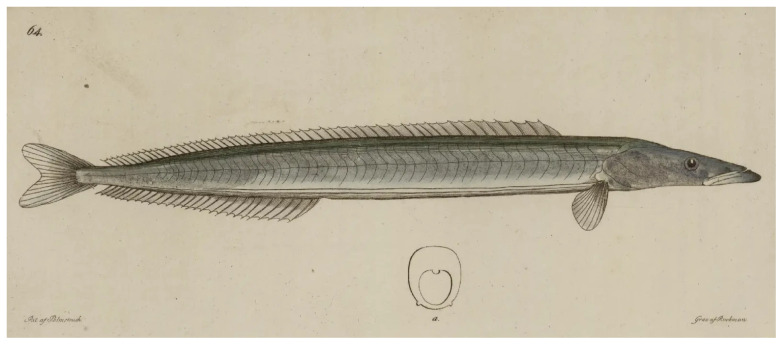 Figure 1
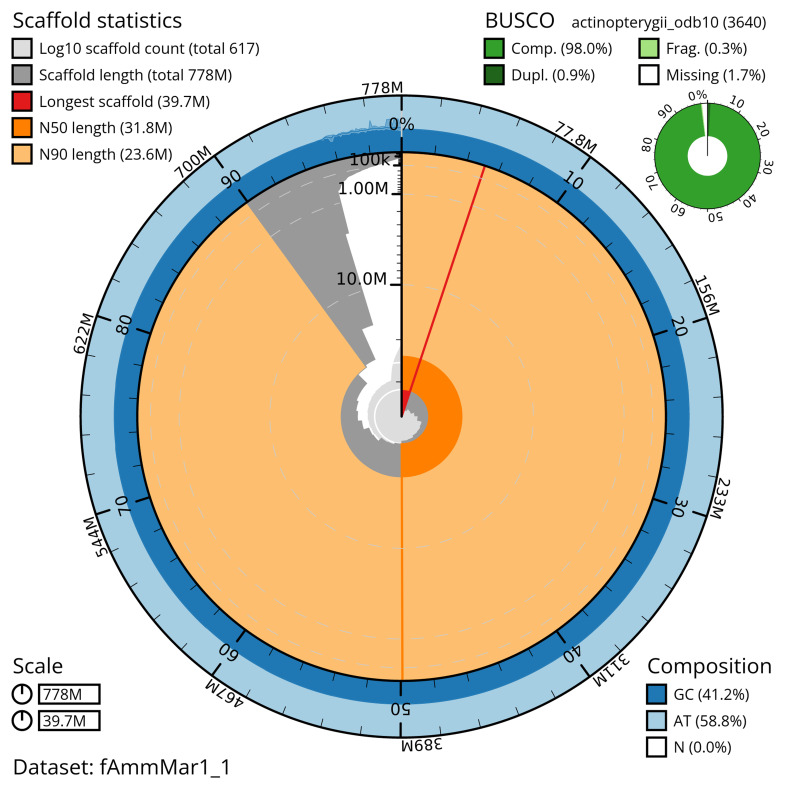 Figure 2
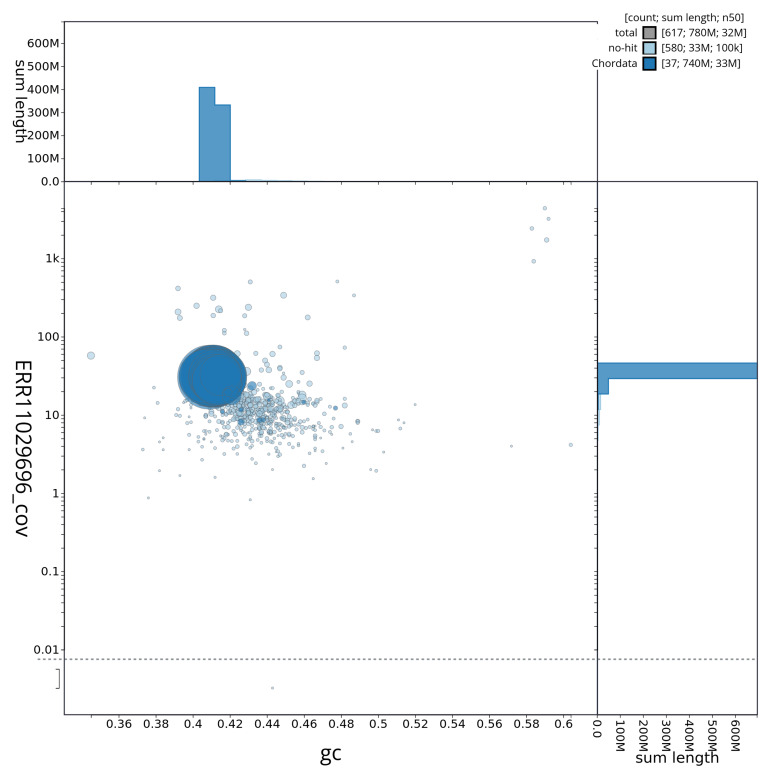 Figure 3
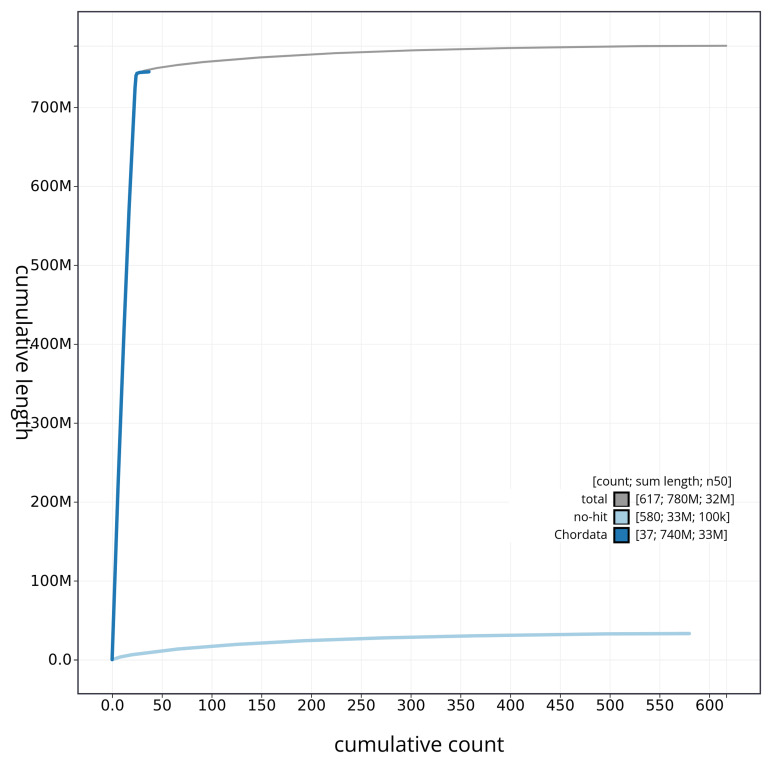 Figure 4
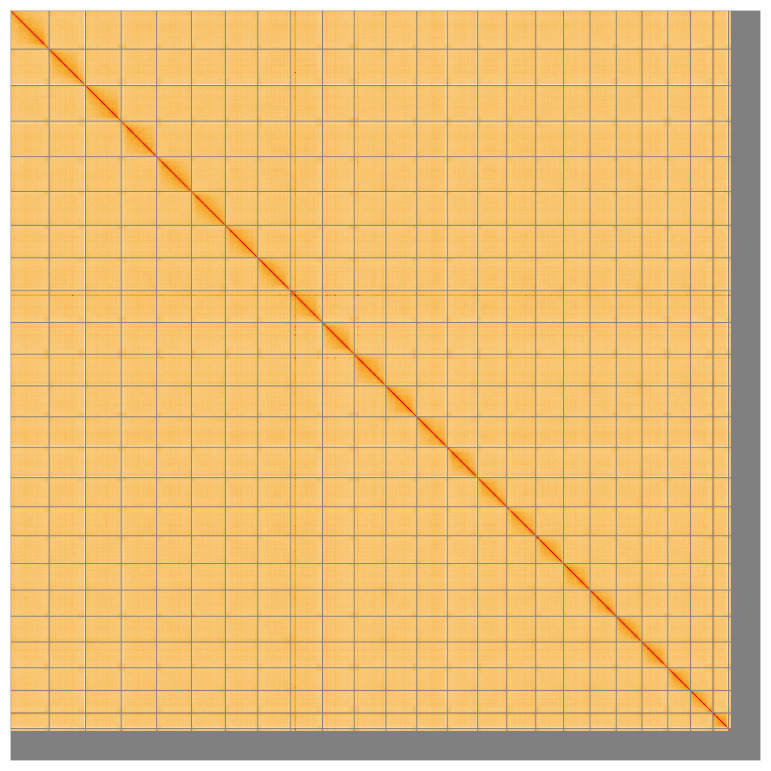 Figure 5
| Project information | |||
|---|---|---|---|
|
| Ammodytes marinus (lesser sand-eel) | ||
|
| PRJEB60704 | ||
|
|
| ||
|
| SAMEA110137622 | ||
|
| 146480 | ||
| Specimen information | |||
|
|
|
|
|
|
| fAmmMar1 | SAMEA110137625 | Gill |
|
| fAmmMar1 | SAMEA110137631 | Fin |
|
| fAmmMar1 | SAMEA110137632 | Fin |
| Sequencing information | |||
|
|
|
|
|
|
| ERR11040187 | 7.71e+08 | 116.36 |
|
| ERR11029695 | 1.87e+06 | 18.8 |
|
| ERR11029696 | 2.32e+06 | 23.63 |
|
| ERR11042966 | 6.47e+07 | 9.77 |
| Genome assembly | ||
|---|---|---|
| Assembly name | fAmmMar1.1 | |
| Assembly accession | GCA_949987685.1 | |
|
|
| |
| Span (Mb) | 777.80 | |
| Number of contigs | 1,634 | |
| Number of scaffolds | 616 | |
| Longest scaffold (Mb) | 39.74 | |
| Assembly metrics
|
| |
| Contig N50 length (Mb) | 2.0 |
|
| Scaffold N50 length (Mb) | 31.8 |
|
| Consensus quality (QV) | 53.7 |
|
|
| Primary: 81.08%; alternate:
|
|
| BUSCO
| C:98.0%[S:97.1%,D:0.9%],
|
|
| Percentage of assembly mapped
| 95.51% |
|
| Sex chromosomes | Not identified |
|
| Organelles | Mitochondrial genome: 16.53 kb |
|
| Genome annotation of assembly GCA_949987685.1 at Ensembl | ||
| Number of protein-coding genes | 22,410 | |
| Number of non-coding genes | 2,954 | |
| Number of gene transcripts | 47,704 | |
| INSDC accession | Name | Length (Mb) | GC% |
|---|---|---|---|
| 1 | 39.74 | 41.0 | |
| 2 | 37.46 | 41.0 | |
| 3 | 36.71 | 41.0 | |
| 4 | 36.69 | 41.0 | |
| 5 | 35.78 | 41.0 | |
| 6 | 34.9 | 41.0 | |
| 7 | 33.56 | 41.0 | |
| 8 | 33.34 | 41.0 | |
| 9 | 33.22 | 41.0 | |
| 10 | 32.76 | 41.0 | |
| 11 | 32.61 | 41.0 | |
| 12 | 31.85 | 41.0 | |
| 13 | 31.42 | 41.0 | |
| 14 | 31.26 | 41.0 | |
| 15 | 30.11 | 41.5 | |
| 16 | 29.9 | 41.5 | |
| 17 | 28.48 | 41.5 | |
| 18 | 27.48 | 40.5 | |
| 19 | 27.02 | 41.0 | |
| 20 | 26.52 | 41.0 | |
| 21 | 26.51 | 41.5 | |
| 22 | 23.55 | 41.5 | |
| 23 | 22.99 | 41.5 | |
| 24 | 16.04 | 41.5 | |
| 25 | 3.03 | 42.0 | |
| MT | 0.02 | 48.0 |
| Software tool | Version | Source |
|---|---|---|
| BEDTools | 2.30.0 |
|
| BlobToolKit | 4.1.7 |
|
| BUSCO | 5.3.2 |
|
| bwa-mem2 | 2.2.1 |
|
| Cooler | 0.8.11 |
|
| Gfastats | 1.3.6 |
|
| Hifiasm | 0.16.1-r375 |
|
| HiGlass | 1.11.6 |
|
| Merqury | MerquryFK |
|
| MitoHiFi | 3 |
|
| PretextView | 0.2.5 |
|
| purge_dups | 1.2.5 |
|
| samtools | 1.15.1 |
|
| Singularity | 3.9.0 |
|
| YaHS | 1.2a |
|
- —Wellcome Trust
Peer Reviews
No public reviews on file for this paper yet. If you reviewed it on a platform where reviews are public (OpenReview, ICLR, NeurIPS, ICML), you can paste yours below so the community can read it here.
Videos
No videos yet. Explain this paper in a talk, walkthrough, or lecture? Add one.
Taxonomy
TopicsGenomics and Phylogenetic Studies · Identification and Quantification in Food · Genetic diversity and population structure
Species taxonomy
Eukaryota; Opisthokonta; Metazoa; Eumetazoa; Bilateria; Deuterostomia; Chordata; Craniata; Vertebrata; Gnathostomata; Teleostomi; Euteleostomi; Actinopterygii; Actinopteri; Neopterygii; Teleostei; Osteoglossocephalai; Clupeocephala; Euteleosteomorpha; Neoteleostei; Eurypterygia; Ctenosquamata; Acanthomorphata; Euacanthomorphacea; Percomorphaceae; Eupercaria; Uranoscopiformes; Ammodytidae; Ammodytes; Ammodytes marinus Raitt, 1934 (NCBI:txid146480).
Background
The lesser sandeel ( Ammodytes marinus) is a small fish characterised by its elongated body, pointed head, and silvery colouration ( Figure 1). It typically grows to a length of about 25 cm and has a lifespan of 5 to 10 years ( Mouritsen, 2007; Muus & Nielsen, 1999). This species belongs to a group of closely related fishes collectively referred to as sandeels ( Ammodytes spp and Hyperoplus spp). Sandeels are known to burrow into sandy seabeds for protection at night and during the winter months. During the day, they are benthopelagic and feed primarily on plankton ( Winslade, 1974). The various sandeel species have overlapping geographical distributions, with the lesser sandeel spanning much of the Northeast Atlantic. Its range extends from 49°N to 74°N, covering areas from eastern Greenland to the Baltic Sea ( Mouritsen, 2007).
Image of Ammodytes marinus (not the specimen used for genome sequencing) (Credit: https://s3.animalia.bio/animals/photos/full/original/svensk-zoologi-vol-ii-1806-247.webp).

Sandeels are cornerstone species in costal and shallow marine ecosystems, playing a vital role as prey for seabirds, larger fish, and marine mammals. As such they serve as a critical link between primary production and higher trophic levels ( Eliasen et al., 2011). Humans also exploit sandeel species, primarily for producing fishmeal and fish oil, with annual catches mounting up to 1 million tonnes ( ICES, 2017). However, fisheries activities and climate change pose significant threats to sandeel populations, emphasising the urgency of conservation measures ( MacDonald et al., 2019). Reflecting these ecological concerns, the UK government implemented a prohibition on sandeel fishing in English and Scottish waters starting in March 2024 ( Government Digital Service, 2024; Scottish Government, 2024).
A chromosomal-level genome assembly of the lesser sandeel genome provides a crucial resource for conservation and research. This genetic tool represents a significant advancement in understanding the genetic health and population structure of the lesser sandeel, both of which are essential for informed conservation strategies and the sustainable management of fisheries. Moreover, genome assemblies from the lesser sandeel and closely related species will enable the precise differentiation of species providing deeper insights into their ecological roles and interactions within marine ecosystems. Such knowledge is essential for ensuring the health and resilience of marine ecosystems.
Genome sequence report
The genome of a specimen of Ammodytes marinus was sequenced using Pacific Biosciences single-molecule HiFi long reads, generating a total of 42.43 Gb (gigabases) from 4.19 million reads, providing an estimated 58-fold coverage. Chromosome conformation Hi-C sequencing produced 116.36 Gb from 770.57 million reads. Specimen and sequencing details are summarised in Table 1.
Table 1.: Specimen and sequencing data for Ammodytes marinus.
Assembly errors were corrected by manual curation, including 68 missing joins or mis-joins and eight haplotypic duplications. This reduced the scaffold number by 3.89%. The final assembly has a total length of 777.80 Mb in 616 sequence scaffolds, with 1,017 gaps and a scaffold N50 of 31.8 Mb ( Table 2).
Table 2.: Genome assembly data for Ammodytes marinus, fAmmMar1.1.
The snail plot in Figure 2 provides a summary of the assembly statistics, indicating the distribution of scaffold lengths and other assembly metrics. Figure 3 shows the distribution of scaffolds by GC proportion and coverage. Figure 4 presents a cumulative assembly plot, with separate curves representing different scaffold subsets assigned to various phyla, illustrating the completeness of the assembly.
Genome assembly of Ammodytes marinus, fAmmMar1.1: metrics.The BlobToolKit snail plot shows N50 metrics and BUSCO gene completeness. The main plot is divided into 1,000 size-ordered bins around the circumference with each bin representing 0.1% of the 777,835,610 bp assembly. The distribution of scaffold lengths is shown in dark grey with the plot radius scaled to the longest scaffold present in the assembly (39,742,375 bp, shown in red). Orange and pale-orange arcs show the N50 and N90 scaffold lengths (31,846,471 and 23,554,204 bp), respectively. The pale grey spiral shows the cumulative scaffold count on a log scale with white scale lines showing successive orders of magnitude. The blue and pale-blue area around the outside of the plot shows the distribution of GC, AT and N percentages in the same bins as the inner plot. A summary of complete, fragmented, duplicated and missing BUSCO genes in the actinopterygii_odb10 set is shown in the top right. An interactive version of this figure is available at https://blobtoolkit.genomehubs.org/view/fAmmMar1_1/dataset/fAmmMar1_1/snail.
Genome assembly of Ammodytes marinus, fAmmMar1.1: BlobToolKit GC-coverage plot showing sequence coverage (vertical axis) and GC content (horizontal axis).The circles represent scaffolds, with the size proportional to scaffold length and the colour representing phylum membership. The histograms along the axes display the total length of sequences distributed across different levels of coverage and GC content. An interactive version of this figure is available at https://blobtoolkit.genomehubs.org/view/fAmmMar1_1/dataset/fAmmMar1_1/blob.
Genome assembly of Ammodytes marinus fAmmMar1.1: BlobToolKit cumulative sequence plot.The grey line shows cumulative length for all sequences. Coloured lines show cumulative lengths of sequences assigned to each phylum using the buscogenes taxrule. An interactive version of this figure is available at https://blobtoolkit.genomehubs.org/view/fAmmMar1_1/dataset/fAmmMar1_1/cumulative.
Most of the assembly sequence (95.51%) was assigned to 25 chromosomal-level scaffolds. Chromosome-scale scaffolds confirmed by the Hi-C data are named in order of size ( Figure 5; Table 3). While not fully phased, the assembly deposited is of one haplotype. Contigs corresponding to an alternate haplotype have also been deposited.
Genome assembly of Ammodytes marinus fAmmMar1.1: Hi-C contact map of the fAmmMar1.1 assembly, visualised using HiGlass.Chromosomes are shown in order of size from left to right and top to bottom. An interactive version of this figure may be viewed at https://genome-note-higlass.tol.sanger.ac.uk/l/?d=G2gEVsC1TO2seAVccxAueQ.
Table 3.: Chromosomal pseudomolecules in the genome assembly of Ammodytes marinus, fAmmMar1.
The mitochondrial genome was also assembled and can be found as a contig within the multifasta file of the genome submission, and as a separate fasta file with accession OX465170.1 ( Table 2).
The final assembly has a Quality Value (QV) of 53.7. The k-mer completeness was estimated as 81.08% for the primary assembly, 79.48% for the alternate haplotype, and 98.50% for the combined assemblies. BUSCO (v5.4.3) analysis using the actinopterygii_odb10 reference set ( n = 3,640) achieved a completeness score of 98.1% (single = 97.1%, duplicated = 1.0%).
Genome annotation report
The Ammodytes marinus genome assembly (GCA_949987685.1) was annotated at the European Bioinformatics Institute (EBI) on Ensembl Rapid Release. The resulting annotation includes 47,704 transcribed mRNAs from 22,410 protein-coding and 2,954 non-coding genes ( Table 2; https://rapid.ensembl.org/Ammodytes_marinus_GCA_949987685.1/Info/Index). The average transcript length is 18,875.56. There are 1.88 coding transcripts per gene and 12.03 exons per transcript.
Methods
Sample acquisition
An adult specimen of Ammodytes marinus (specimen ID ERGA SM FO 03, ToLID fAmmMar1) was collected aboard R/V Jákup Sverri at Faroe Bank (latitude 60.94, longitude –8.42) on 2021-09-10. The specimen was collected and identified by Helga Bára Mohr Vang (Faroe Marine Research Institute). The following biological parameters were recorded for the specimen: length, weight, life stage, and sex. Tissue samples were collected from the gills and immediately frozen in liquid nitrogen by Ian Salter (Faroe Marine Research Institute). The remaining portion of the specimen was preserved in 96% ethanol if further analyses were needed.
Nucleic acid extraction
The workflow for high molecular weight (HMW) DNA extraction at the Wellcome Sanger Institute (WSI) Tree of Life Core Laboratory includes a sequence of core procedures: sample preparation and homogenisation, DNA extraction, fragmentation and purification. Detailed protocols are available on protocols.io ( Denton et al., 2023b). The fAmmMar1 sample was prepared for DNA extraction by weighing and dissecting it on dry ice ( Jay et al., 2023), and tissue from the gill was homogenised using a PowerMasher II tissue disruptor ( Denton et al., 2023a).
HMW DNA was extracted using the Automated MagAttract v1 protocol ( Sheerin et al., 2023). DNA was sheared into an average fragment size of 12–20 kb in a Megaruptor 3 system ( Todorovic et al., 2023). Sheared DNA was purified by solid-phase reversible immobilisation, using AMPure PB beads to sample to eliminate shorter fragments and concentrate the DNA ( Strickland et al., 2023). The concentration of the sheared and purified DNA was assessed using a Nanodrop spectrophotometer and Qubit Fluorometer using the Qubit dsDNA High Sensitivity Assay kit. Fragment size distribution was evaluated by running the sample on the FemtoPulse system.
RNA was extracted from fin tissue of fAmmMar1 in the Tree of Life Laboratory at the WSI using the RNA Extraction: Automated MagMax™ mirVana protocol ( do Amaral et al., 2023). The RNA concentration was assessed using a Nanodrop spectrophotometer and a Qubit Fluorometer using the Qubit RNA Broad-Range Assay kit. Analysis of the integrity of the RNA was done using the Agilent RNA 6000 Pico Kit and Eukaryotic Total RNA assay.
Hi-C sample preparation
Tissue from the fin of specimen fAmmMar1 was processed at the WSI Scientific Operations core, using the Arima-HiC v2 kit. Tissue (stored at –80 °C) was fixed, and the DNA crosslinked using a TC buffer with 22% formaldehyde. After crosslinking, the tissue was homogenised using the Diagnocine Power Masher-II and BioMasher-II tubes and pestles. Following the kit manufacturer's instructions, crosslinked DNA was digested using a restriction enzyme master mix. The 5’-overhangs were then filled in and labelled with biotinylated nucleotides and proximally ligated. An overnight incubation was carried out for enzymes to digest remaining proteins and for crosslinks to reverse. A clean up was performed with SPRIselect beads prior to library preparation.
Library preparation and sequencing
Library preparation and sequencing were performed at the WSI Scientific Operations core. Pacific Biosciences HiFi circular consensus DNA sequencing libraries were prepared using the PacBio Express Template Preparation Kit v2.0 (Pacific Biosciences, California, USA) as per the manufacturer's instructions. The kit includes the reagents required for removal of single-strand overhangs, DNA damage repair, end repair/A-tailing, adapter ligation, and nuclease treatment. Library preparation also included a library purification step using AMPure PB beads (Pacific Biosciences, California, USA) and size selection step to remove templates shorter than 3 kb using AMPure PB modified SPRI. DNA concentration was quantified using the Qubit Fluorometer v2.0 and Qubit HS Assay Kit and the final library fragment size analysis was carried out using the Agilent Femto Pulse Automated Pulsed Field CE Instrument and gDNA 165kb gDNA and 55kb BAC analysis kit. Samples were sequenced using the Sequel IIe system (Pacific Biosciences, California, USA). The concentration of the library loaded onto the Sequel IIe was between 40–135 pM. The SMRT link software, a PacBio web-based end-to-end workflow manager, was used to set-up and monitor the run, as well as perform primary and secondary analysis of the data upon completion.
For Hi-C library preparation, DNA was fragmented to a size of 400 to 600 bp using a Covaris E220 sonicator. The DNA was then enriched, barcoded, and amplified using the NEBNext Ultra II DNA Library Prep Kit following manufacturers’ instructions. The Hi-C sequencing was performed using paired-end sequencing with a read length of 150 bp on an Illumina NovaSeq 6000 instrument.
Poly(A) RNA-Seq libraries were constructed using the NEB Ultra II RNA Library Prep kit, following the manufacturer’s instructions. RNA sequencing was performed on the Illumina NovaSeq 6000 instrument.
Genome assembly, curation and evaluation
** Assembly **
The HiFi reads were assembled using Hifiasm ( Cheng et al., 2021) with the --primary option. Haplotypic duplications were identified and removed using purge_dups ( Guan et al., 2020). The Hi-C reads were mapped to the primary contigs using bwa-mem2 ( Vasimuddin et al., 2019). The contigs were further scaffolded using the provided Hi-C data ( Rao et al., 2014) in YaHS ( Zhou et al., 2023) using the --break option. The scaffolded assemblies were evaluated using Gfastats ( Formenti et al., 2022), BUSCO ( Manni et al., 2021) and MERQURY.FK ( Rhie et al., 2020).
The mitochondrial genome was assembled using MitoHiFi ( Uliano-Silva et al., 2023), which runs MitoFinder ( Allio et al., 2020) and uses these annotations to select the final mitochondrial contig and to ensure the general quality of the sequence.
** Assembly curation **
The assembly was decontaminated using the Assembly Screen for Cobionts and Contaminants (ASCC) pipeline (article in preparation). Manual curation was primarily conducted using PretextView ( Harry, 2022), with additional insights provided by JBrowse2 ( Diesh et al., 2023) and HiGlass ( Kerpedjiev et al., 2018). Scaffolds were visually inspected and corrected as described by Howe et al. (2021). Any identified contamination, missed joins, and mis-joins were corrected, and duplicate sequences were tagged and removed. The entire process is documented at https://gitlab.com/wtsi-grit/rapid-curation (article in preparation).
** Evaluation of the final assembly **
The Merqury.FK tool ( Rhie et al., 2020), run in a Singularity container ( Kurtzer et al., 2017), was used to evaluate k-mer completeness and assembly quality for the primary and alternate haplotypes using the k-mer databases ( k = 31) that were computed prior to genome assembly. The analysis outputs included assembly QV scores and completeness statistics.
A Hi-C contact map was produced for the final version of the assembly. The Hi-C reads were aligned using bwa-mem2 ( Vasimuddin et al., 2019) and the alignment files were combined using SAMtools ( Danecek et al., 2021). The Hi-C alignments were converted into a contact map using BEDTools ( Quinlan & Hall, 2010) and the Cooler tool suite ( Abdennur & Mirny, 2020). The contact map was visualised in HiGlass ( Kerpedjiev et al., 2018).
The genome was analysed within the BlobToolKit environment ( Challis et al., 2020) and BUSCO scores ( Manni et al., 2021) were calculated.
Table 4 contains a list of relevant software tool versions and sources.
Genome annotation
The Ensembl Genebuild annotation system ( Aken et al., 2016) was used to generate annotation for the Ammodytes marinus assembly (GCA_949987685.1) in Ensembl Rapid Release at the EBI. Annotation was created primarily through alignment of transcriptomic data to the genome, with gap filling via protein-to-genome alignments of a select set of proteins from UniProt ( UniProt Consortium, 2019).
Wellcome Sanger Institute – Legal and Governance
The materials that have contributed to this genome note have been supplied by a Tree of Life collaborator.
The Wellcome Sanger Institute employs a process whereby due diligence is carried out proportionate to the nature of the materials themselves, and the circumstances under which they have been/are to be collected and provided for use. The purpose of this is to address and mitigate any potential legal and/or ethical implications of receipt and use of the materials as part of the research project, and to ensure that in doing so we align with best practice wherever possible.
The overarching areas of consideration are:
Ethical review of provenance and sourcing of the materialLegality of collection, transfer and use (national and international)
Each transfer of samples is undertaken according to a Research Collaboration Agreement or Material Transfer Agreement entered into by the Tree of Life collaborator, Genome Research Limited (operating as the Wellcome Sanger Institute) and in some circumstances other Tree of Life collaborators.
The reference list from the paper itself. Each links out to its DOI / PubMed record.
- 1Abdennur N Mirny LA : Cooler: scalable storage for Hi-C data and other genomically labeled arrays. Bioinformatics. 2020;36(1):311–316. 10.1093/bioinformatics/btz 540 31290943 PMC 8205516 · doi ↗ · pubmed ↗
- 2Aken BL Ayling S Barrell D : The Ensembl gene annotation system. Database (Oxford). 2016;2016: baw 093. 10.1093/database/baw 093 27337980 PMC 4919035 · doi ↗ · pubmed ↗
- 3Allio R Schomaker-Bastos A Romiguier J : Mito Finder: efficient automated large-scale extraction of mitogenomic data in target enrichment phylogenomics. Mol Ecol Resour. 2020;20(4):892–905. 10.1111/1755-0998.13160 32243090 PMC 7497042 · doi ↗ · pubmed ↗
- 4Challis R Richards E Rajan J : Blob Tool Kit – interactive quality assessment of genome assemblies. G 3 (Bethesda). 2020;10(4):1361–1374. 10.1534/g 3.119.400908 32071071 PMC 7144090 · doi ↗ · pubmed ↗
- 5Cheng H Concepcion GT Feng X : Haplotype-resolved de novo assembly using phased assembly graphs with hifiasm. Nat Methods. 2021;18(2):170–175. 10.1038/s 41592-020-01056-5 33526886 PMC 7961889 · doi ↗ · pubmed ↗
- 6Danecek P Bonfield JK Liddle J : Twelve years of SA Mtools and BC Ftools. Giga Science. 2021;10(2): giab 008. 10.1093/gigascience/giab 008 33590861 PMC 7931819 · doi ↗ · pubmed ↗
- 7Denton A Oatley G Cornwell C : Sanger Tree of Life sample homogenisation: Power Mash. protocols.io. 2023 a. 10.17504/protocols.io.5qpvo 3r 19v 4o/v 1 · doi ↗
- 8Denton A Yatsenko H Jay J : Sanger Tree of Life wet laboratory protocol collection V.1. protocols.io. 2023 b. 10.17504/protocols.io.8epv 5xxy 6g 1b/v 1 · doi ↗