Municipal food waste collection strategies in Portugal: A dataset
Diego del Oro Alcalde, Diogo Bugarim, Telmo Coelho, Emília Almeida, Catarina Silva, Luís Cavique, Celia Dias-Ferreira

TL;DR
This paper presents a dataset on food waste collection strategies across 308 Portuguese municipalities to evaluate compliance with EU waste regulations.
Contribution
The dataset systematically compiles and validates biowaste collection data at the municipal level in Portugal, filling a gap in available information.
Findings
The dataset includes coverage, collection models, and performance indicators for biowaste in 308 Portuguese municipalities.
It enables cross-regional and international comparisons of food waste management strategies.
The dataset highlights the lack of systematic assessment of pilot initiatives in biowaste collection.
Abstract
The dataset reports an up-to-date overview of the selective biowaste collection with a focus on food waste and organic kitchen waste across 308 municipalities in Portugal, to assess the compliance with the EU Waste Framework Directive that made biowaste collection mandatory from 1st January 2024. Data were collected through a structured survey sent to the totality of the municipalities, complemented by systematic research in secondary official sources such as municipal websites, reports and statistical data. The questionnaire covered aspects such as coverage, collection models (nearby bring points, door-to-door, co-collection), sector-specific deployment (household collection, non-domestic collection), operational characteristics, and performance indicators (capture rates, cost per tonne). The dataset was structured and validated through cross-checking the multiple sources assessed,…
Genes, proteins, chemicals, diseases, species, mutations and cell lines named across the full text — each resolved to its canonical identifier and authoritative record.
Click any figure to enlarge with its caption.
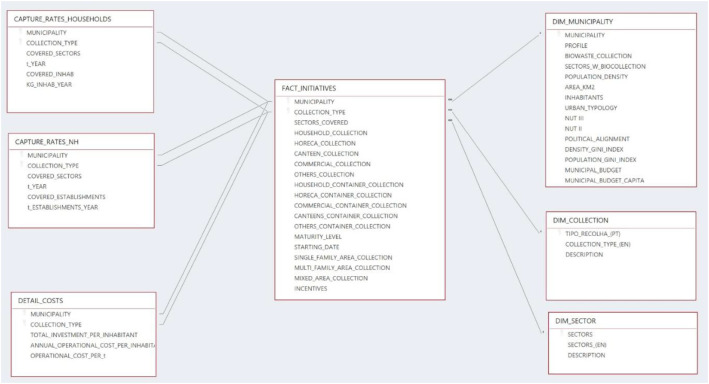 Figure 1
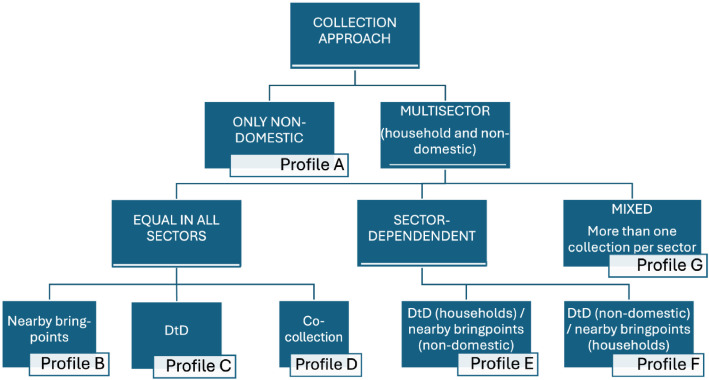 Figure 2
Peer Reviews
No public reviews on file for this paper yet. If you reviewed it on a platform where reviews are public (OpenReview, ICLR, NeurIPS, ICML), you can paste yours below so the community can read it here.
Videos
No videos yet. Explain this paper in a talk, walkthrough, or lecture? Add one.
Taxonomy
TopicsFood Waste Reduction and Sustainability · Municipal Solid Waste Management · Composting and Vermicomposting Techniques
Specifications TableSubjectEarth & Environmental SciencesSpecific subject areaWaste Collection; Biowaste.Type of dataTables, Figures, CSV filesData collectionData was collected through a structured questionnaire (Microsoft Forms) sent by email to all 308 municipalities in Portugal, obtaining 93 responses. Complementary, data was also collected using a systematic search in secondary official sources such as municipal websites, reports and statistical data.Data source location308 Portuguese municipalities, covering both mainland Portugal and the insular territories.Data accessibilityhttps://data.mendeley.com/datasets/sv66hbm297/2Repository name: Dataset in municipal strategies for food waste collection in Portugal. Available in Mendeley Data.Data identification number: doi: 10.17632/sv66hbm297.2Direct URL to data: https://prod-dcd-datasets-cache-zipfiles.s3.eu-west-1.amazonaws.com/sv66hbm297–2.zipRelated research articleNone.
Value of the Data
1
- •This dataset includes information from 196 food waste collection initiatives implemented across 152 different Portuguese municipalities, based on both questionnaire responses and official secondary sources. The dataset facilitates comparative analyses of different strategies and their relation to several municipal characteristics.
- •The data follows a star schema, integrating information on collection types, capture rates, costs and territorial profiles. Official indicators such as population size, area and density have been included, enabling cross-sectoral (domestic vs. non-domestic) and territorial analyses.
- •These data support further research on the drivers behind the implementation of new waste collection fluxes, specifically by using the data as explanatory variables for the adoption of food waste collection schemes. In turn, this could further support the analysis of existing barriers and facilitators to the transposition of European waste management policies to the national level.
- •The data also supports analysis of the efficiency of selective food waste systems in different territorial contexts. Univariate and multivariate analyses can be performed to identify relations between the municipal characteristics (explanatory variables) and cost-related efficiency parameters, such as the operational cost per tonne of food waste collected and the operational and investment cost per inhabitant.
- •The data also supports comparison of different collection model and collection approaches among municipalities, allowing to benchmark collection models based on the efficacy (capture rates) attained.
- •This study, along with the presented dataset, contributes to filling a data gap, as there are not any publicly available datasets regarding food waste collection strategies in Portugal. It provides a foundation for further research and policy evaluations on the biowaste management strategies, on a national and international level.
Background
2
Biowaste represents 34 % of municipal waste in Europe [1] and 38 % in Portugal [2]. It is composed primarily of food and kitchen waste (60 %) and garden waste (35 %), with the remaining 5 % classified as “others” [3]. Following the EU Waste Framework Directive [4], selective collection of biowaste became mandatory from January 2024, reflecting broader environmental and economic objectives that include efforts to increase recycling rates, reduce greenhouse gas emissions, and support the transition to a circular economy. This legislation represents a challenge for municipalities, which are required to adapt their waste collection systems to comply with the new requirements while simultaneously addressing the environmental and operational demands of the shift toward a circular economy.
Across Europe, approaches to bio-waste collection vary substantially. Some countries or regions collect garden waste but collect little or no food waste, such as most of Denmark, many areas in the Baltic countries and most of France [5]. Others co-collect garden and food waste in the same container, as in the Netherlands, Austria, and Germany [5]. A third group prioritises food waste collection, leaving garden waste as a separate fraction to be collected through civic amenity sites or with specific collection rounds, an approach adopted in Norway, Italy, Wales, Catalonia and the Basque Country [5]. These differences occur not only between countries but also within them resulting in different performances across regions. For example, in Italy in 2023, regional disparities were pronounced, with the Molise Region (in the Center) collecting 86,55 kg/inhabitant whereas Emilia-Romana Region (in the North) reaching 187,84 kg/inhabitant [6].
Performance in biowaste separate collection is generally assessed using three groups of indicators:
- (i)effectiveness indicators, the most used being biowaste captured (kg/inhabitant) and capture rates ( % of total biowaste generated that is separately collected);
- (ii)quality indicators, primarily contaminant levels ( % of impurities in the biowaste stream);
- (iii)efficiency indicators, the most common being operational costs or investment needs per capita or per tonne collected.
Capture rates are highly influenced by the collection models (door-to-door, drop-off points in the streets, civic amenity sites, on‑demand-collection) in combination with the type and configuration of the containers, and the presence of economic incentives, such as pay-as-you-throw schemes [1,7]. Specifically, container type, location and accessibility, including individual kerbside bins, shared bring-points, semi-underground containers, in-home sorting bins and smart/controlled containers, are known to influence participation and capture rates in separate collection [8,9].
The residential structure of municipalities also affects separate collection outcomes, in particular the type of housing namely apartment, multi-family or single-family houses [9]. Detached single-family housing areas are associated with higher participation and lower contamination in biowaste streams [10], whereas multi-residential buildings present logistical and behavioural challenges, often requiring different infrastructuresuch as in-building storage facilities and nearby collection points to make separate collection viable [11].
Geographic and demographic factors, such as population size, population density, degree of urbanisation (rural/urban) further affect collection performance [9]. Research shows that rural areas, characterised by low density and longer average collection distances, typically face higher per capita costs, lower collection efficiency, and a greater likelihood of uncollected waste, compared with urban ones [12].
In Portugal 198 municipalities (out of 278 in mainland) currently implement some form of biowaste separate collection, while 157 municipalities promote source separation, primarily through home composting [2]. Current biowaste capture rates are quite low in most municipalities, specifically between 1–5 % [2]. This data includes both garden waste and food waste, and there is no official dataset exclusively dedicated to food waste collection. Some collection models work well in certain urban typologies (e.g., residential neighbourhoods with detached houses), but not in others (e.g., apartment buildings or mixed-use zones), and although several pilot experiences have been carried out in Portugal, there is no systematic, comprehensive, and up-to-date data on the food waste separate collection systems currently implemented across Portuguese municipalities. This is the gap that the present dataset aims to fill.
Data Description
3
The dataset [3] is structured in the form of a star schema (Fig. 1), with one central fact table linked to multiple dimension and detail tables.Fig. 1. Diagram of the star schema.Fig 1
The FACT_INITIATIVES table contains information about all 196 food waste collection initiatives implemented by 156 Portuguese municipalities. Each entry describes a specific collection initiative, including information about the covered sectors and operational characteristics. Table 1 lists all the tables in the star database, including a description of the contents.Table 1. Description of the associated star scheme dataset.Table 1. Table NameTypeContentsFACT_INITIATIVESFact TableRecords of food waste collection initiatives, linked to municipality, activity sector, and collection type (see Table 2)DIM_MUNICIPALITYDimensionInformation about each municipality based on: Official data: population, area, density, urban typology NUT II, NUT III; political alignment of the municipal executive (2021–2024), Municipal budget.Data directly obtained from the questionnaire: existence of separate collection of food waste at the municipality; economic sectors with foodwaste collectionData calculated by the authors: Gini index for the population distribution; Gini index for the density distribution), profile of the municipality regarding foodwaste collection (classification based on the data obtained in the questionnaire); Municipal budget per capitaDIM_COLLECTIONDimensionDescription of the type and features of the food waste collection systemsDIM_SECTORDimensionDescription of the target sectors of the initiatives (domestic, non-domestic, mixed)CAPTURE_RATES_HOUSEHOLDSDetail (1:1)Captured rates, in kg per inhabitant per year, in households, including some services in the city fabricCAPTURE_RATES_NDDetail (1:1)Capture rate, in tonnes per establishment in exclusive non-household collections, if availableDETAIL_COSTSDetail (1:1)Financial information related to the initiative (costs/year, €/ton), if available
The dataset is uploaded in the repository Mendeley titled “Dataset in municipal strategies for food waste collection in Portugal” [13], which contains the star schema dataset in 7 CSVs and the questionnaire in PDF format, which provides context for the collected variables.
Experimental Design, Materials and Methods
4
Data selection
4.1
The selection of data to be included in the dataset was guided by the literature reviewed and by the professional experience of the authors, reflecting theoretical, empirical and policy relevant considerations related to the implementation and performance of separate food waste collection systems. The variables fall into two main categories: (i) geographic, socio-economic, and institutional characteristics of municipalities, and (ii) variables directly related to the design and operation of separate collection schemes.
(i) Geographic, socio-economic, and institutional characteristics
Separate waste collection of food waste is under the responsibility of the municipality and therefore the municipal context plays a decisive role in shaping waste-management strategies and the feasibility of different collection models. For this reason, the dataset includes several structural variables. Population, area and population density are classical descriptors of municipal morphology and settlement patterns. To distinguish between rural and urban we have used the official variable “urban typology” of the municipality, which classifies municipalities in three levels: predominantly rural, moderatly urban and predominantly urban).
Gini-based indexes were used to quantify the degree to which residents are unevenly spread across spatial units (census tracts). A Gini value close to 0 indicates a relatively uniform distribution of population across the municipality, whereas a value approaching 1 reflects strong concentration in a limited area. To account for regional differences (as highlighted in the background section), the NUTII and NUT III were included in the dataset. The political alignment and municipal budget available in each municipality might also be related to the waste collection options, so these variables were also included in the dataset.
(ii) Variables related to separate waste-collection systems
To characterise the food-waste collection initiatives themselves (Fig. 2), the dataset includes variables reflecting the design choices, target groups, and outcomes of the systems.Fig. 2. Diagram explanation of the municipality profile classification.Fig 2
Captured amounts of food waste, contaminant levels and operational costs per unit waste or per inhabitant constitute key performance indicators, reflecting both user participation and the operational effectiveness of the system. Including these variables allows for the evaluation of outcomes in relation to contextual factors and collection design choices, such as the collection model used (nearby bring-points, door-to-door, and co-colection) and types of containers (individual bins, shared containers, smart bins, etc.).
Housing type (detached houses vs. multi-residential buildings) is essential because the feasibility and performance of collection models, particularly door-to-door, vary substantially with the built environment and dwelling typologies. Economic sectors targeted (e.g., households, commerce, services) capture the scope of the initiative, acknowledging that coverage and performance differ substantially depending on whether the system targets only domestic producers or includes commercial and institutional generators.
Data Collection
5
Survey
5.1
A structured questionnaire was designed to assess the municipal initiatives in place until 2025 for the selective collection of biowaste in Portugal. Before conducting the extensive survey, a pre-trial was conducted (one municipality was asked to answer) to ensure linguistic clarity and relevance of questions. The results of the pre-trial were used to make adjustments to the wording of the questions.
The questionnaire was made available in Microsoft Forms and was distributed via email to the waste management officials responsible for biowaste collection in all 308 municipalities of Portugal. The questionnaire was sent on 14/03/2025. After four weeks, it was resent to those municipalities that had not yet responded. Answers were received up to 16/06/2025.
The questionnaire’s had an introductory section addressing the name of the municipality, whether the municipality had separate collection of food and kitchen waste and which alternatives were available for biowaste management (e.g. composting). In case the municipality did not have separate collection of fod waste the questionaire would terminate after the introductory section. Those municipalities that had separate collection moved forward to the main part of the questionnaire, which was structured around three predominant collection models: nearby bring-points, door-to-door, and co-collection. Each collection model was addressed in an independent section, containing up to 21 questions which were structured around four topics:
- 1.Activity sector and access to waste containers: Municipalities were asked to identify the activity sectors covered by each collection model applied on their territory, including households, HoReCa (Hotels-Restaurants-Cafeterias), food retail and canteens, specifying the type of access to the biowaste containers (free or controlled) for each urban typology. The implementation dates of the initiatives were also questioned.
- 2.Waste producers and captured quantities: The questions from this section addressed the number of inhabitants, households or establishments included in the biowaste collection initiatives and the captured quantities in each case (tonnes/inhabitants/year, tons per year, cumulative tonnes or other indicators).
- 3.Changes in mixed/residual waste collection after the biowaste initiative started: This set of questions addressed the potential changes in the regular waste collection system after the start of the selective biowaste collection. It addressed changes in frequency, collection circuits or volume of waste containers, including comparative answers before and after the implementation of the separate collection initiative.
- 4.Economic Details: Municipalities were asked to detail the investments and operational costs associated with the implementation of the biowaste collection initiative. Additionally, the presence of economic incentives, such as Pay-as-you-throw (PAYT), was assessed.
Website research
5.2
Official sources (municipal websites and social media pages, waste management operators’ reports) and reliable online news articles were systematically reviewed to collect additional data regarding biowaste collection initiatives across Portugal. In parallel, a documentary corpus was created and archived, comprising prints of all webpages and documents consulted. These records were organised by municipality and served, at a later stage, as a reference to validate and trace the origin of the different entries in the database.
Data processing
5.3
Data from survey answers and secondary official research sources were consolidated into an XLSX file, structured as a database. A cross-check process was conducted for all entries, flagging missing data as “-”, and resolving discrepancies by prioritising information directly obtained from the municipalities over secondary sources, and further contacting municipal waste managers in cases of abnormal values. Obtaining a total of 24 different variables, as in Table 2.Table 2. Description of variables on municipal biowaste initiatives.Table 2. Variable NameDescriptionData TypeSourceValue Range / UnitsMUNICIPALITYFull name of the Portuguese municipalityGeographic (Text)NGISN/ACOLLECTION_TYPEType of biowaste collection model implemented in the initiativeCategorical (Nominal)Quest & O.s.sNearby bring points, Door-to-door, Co-collectionCOVERED_SECTORSActivity sectors covered by the initiativeCategorical (Nominal)Quest & O.s.sHousehold, Non-household, MixedHOUSEHOLD_COLLECTIONWhether the household sector is includedBinaryQuest & O.s.s0 = No or unknown, 1 = YesHORECA_COLLECTIONWhether the HORECA (hotels- restaurants-cafeterias) sector is includedBinaryQuest & O.s.s0 = No or unknown, 1 = YesCANTEENS_COLLECTIONWhether institutional canteens (schools, hospitals, etc.) are includedBinaryQuest & O.s.s0 = No or unknown, 1 = YesCOMMERCIAL_COLLECTIONWhether food retail and markets are includedBinaryQuest & O.s.s0 = No or unknown, 1 = YesOTHER_COLLECTIONWhether other sectors (not listed above) are includedBinaryQuest & O.s.s0 = No or unknown, 1 = YesPROFILEClassification of the municipal approach to selective biowaste collectionEncoded ClassificationAuthor-definedAs defined in Fig. 2.BIOWASTE_COLLECTIONTypes of collection models present in the municipalityEncoded (Integer)Quest & O.s.s1-Door-to-door 2- Bringpoints 3-Co-collection 4-Door-to-door & Bringpoints 5-Bringpoints & Co-collection 6-Door-to-door & Co-collection 7-All 8-None.SECTORS_W_BIOCOLLECTIONSectors covered by biowaste collection in the municipalityEncoded (Integer)Quest & O.s.s1 = Household, 2 = Non-domestic, 3 = Both, 4 = None_CONTAINER_COLLECTIONType of collection per sector (e.g., household, HORECA, etc.)Encoded (Integer)Quest & O.s.s0–7 (see legend below)MATURITY_LEVELMaturity level of the biowaste collection systemOrdinal ScaleQuest & O.s.s1 = Incipient (<3 month); 2 = Developing (3–12 months); 3 = Mature (>1 yr)STARTING_DATEYear or date of implementationDate / Year (Text)Quest & O.s.se.g., 2023, 01/04/2025_AREA_COLLECTIONType of collection in single-family, multi-family, or mixed areasEncoded (Integer)Quest & O.s.s0–7 (see legend below)INCENTIVESWhether incentive mechanisms (e.g., PAYT) are presentBinaryQuest & O.s.s0 = No or unknown; 1 = Yest_YEARAnnual tonnage of biowaste collectedNumeric (Continuous)Quest & O.s.sTonnes/yearCOVERED_INHABNumber of inhabitants covered by the systemNumeric (Integer)Quest & O.s.sNumber of inhabitantsCOVERED_ESTABLISHMENTSNumber of establishments coveredNumeric (Integer)Quest & O.s.sNumber of establishmentsANNUAL_COSTSAnnual operational costs of the systemNumeric (Continuous)Quest.Euros (€)KG_INHAB_YEARBiowaste captured per capita in kilograms per yearNumeric (Continuous)Derivedkg/inhabitant/yeart_ESTABLISHMENT_YEARBiowaste captured per establishment per yearNumeric (Continuous)Derivedtonnes/establishment/yearCOST_PER_tOperational cost per tonne of collected biowasteNumeric (Continuous)Quest.€/tonneCOST_PER_INHABOperational cost per capitaNumeric (Continuous)Quest.€/inhabitantLegend for Encoded Fields: 1. (*_CONTAINER_COLLECTION and *_AREA_COLLECTION):0 = No selective collection / Not applicable; 1 = Nearby bring point (free access); 2 = Nearby bring point (controlled access); 3 = Nearby bring point (mixed access); 4 = Door-to-door with containers; 5 = Door-to-door with bags; 6 = Door-to-door with containers and bags; 7 = Co-collection.2. Source: Quest = Questionnaire; O.s.s. = Official secondary sources; NGIS = National Geographic Information System
Limitations
The main limitation of the former study is the scarcity of information available regarding biowaste collection, specifically quantitative parameters regarding capture rates and costs. With the available data, correctly assessing the efficiency of the different systems becomes challenging. Additionally, the questionnaire was answered by nearly 100 municipalities, which represent one-third of the potential respondents. The data for the remaining municipalities had to be taken from online sources, which may not always provide accurate or up-to-date information. While the launch of a municipal initiative for food-waste collection is very likely to be reported in news outlets, such as municipal websites, online newspapers, and the municipality’s social-media accounts, the subsequent evolution of the initiative is much less consistently reported. Data on capture rates, performance over time, and operational costs are often missing or might be outdated.
Ethics Statement
The current study does not involve human subjects, animal experiments or data collection from social media sources. The authors confirm that they have read and followed the ethical requirements for publication in Data in Brief.
CRediT Author Statement
Catarina Silva: Investigation; Celia Dias-Ferreira: Conceptualization, Methodology, Formal analysis, Investigation, Writing - Original Draft, Writing - Review & Editing, Supervision, Funding acquisition; Diego del Oro Alcalde: Methodology, Validation, Formal analysis, Investigation, Data curation, Writing - Original Draft, Visualization. Diogo Bugarim: Methodology, Validation, Investigation, Writing - Review & Editing, Supervision; Emilia Almeida: Investigation; Luís Cavique: Formal analysis, Writing - Review & Editing, Visualization; Telmo Coelho: Investigation.
The reference list from the paper itself. Each links out to its DOI / PubMed record.
- 1APA, urban report municipal waste 2024, Portuguese Environment Agency, v 1.1 (2025) https://apambiente.pt/sites/default/files/_Residuos/Producao_Gestão_Residuos/Dados%20RU/2024/raru_2024_v 1.1.pdf.
- 2A. Severin, K. Krell & M. Michalikova, The biowaste management challenge. A Policy Brief. Interreg Europe Policy learning platform on environment and resource efficiency, December (2021) (https://www.interregeurope.eu/sites/default/files/2022-04/Biowaste%20challenge.pdf).
- 3Directive (EU) 2018/851 of the European Parliament and of the Council of 30 May 2018 amending Directive 2008/98/EC on waste OJ L 1502018109140
- 4Favoino E.Giavini M.Bio-waste generation in the EU: current capture levels and future potential Zero waste Europe and bio-based industries consortium 2nd Edition 2024 https://zerowasteeurope.eu/wp-content/uploads/2024/11/Nov 24_ZWE-BIC_report_fullreport.pdf
- 5Ana J.B.Moreno R.Gomes M.I.Silveira A.Decision making methodology for biowaste management planning support: addressing an EU directive J. Clean. Prod.5172025110 Article 145826
- 6P.F. Albizzati, I.S. Antonopoulos, D. Caro, J. Cristobal García, L. Egle, G. Foster, P. Gaudillat, S. Manfredi, R. Marschinski, D. Martinez Turegano, E. Pierri, H. Saveyn, D. Tonini, Development of an EU Harmonised Model For Separate Municipal Waste Collection and Related Policy Support – Literature Review, Publications Office of the European Union, Luxembourg, 2023; 10.2760/158073, JRC 130419.
- 7Dronia W.J Połomka Jędrczak A.Quantity and material composition of foreign bodies in bio-waste collected in towns from single- and multi-Family housing and in rural areas Energies 171720244350
- 8Rolewicz-Kalińska A.Wesołowska J.H.Towards a circular economy in urban households: spatial challenges of waste collection under residential growth in Warsaw Sustainability 17192025854210.3390/su 17198542 · doi ↗