Correction to “Cepharanthine Attenuates Early Brain Injury after Subarachnoid Hemorrhage in Mice via Inhibiting 15‐Lipoxygenase‐1‐Mediated Microglia and Endothelial Cell Ferroptosis”

Abstract
Genes, proteins, chemicals, diseases, species, mutations and cell lines named across the full text — each resolved to its canonical identifier and authoritative record.
Click any figure to enlarge with its caption.
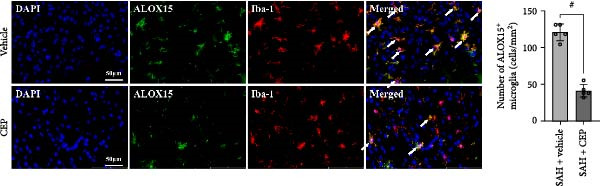 Figure 1
Peer Reviews
No public reviews on file for this paper yet. If you reviewed it on a platform where reviews are public (OpenReview, ICLR, NeurIPS, ICML), you can paste yours below so the community can read it here.
Videos
No videos yet. Explain this paper in a talk, walkthrough, or lecture? Add one.
Taxonomy
TopicsFerroptosis and cancer prognosis · Neuroinflammation and Neurodegeneration Mechanisms · Intracerebral and Subarachnoid Hemorrhage Research
S. Gao, L. Zhou, J. Lu, Y. Fang, H. Wu, W. Xu, Y. Pan, J. Wang, X. Wang, J. Zhang, and A. Shao, “Cepharanthine Attenuates Early Brain Injury after Subarachnoid Hemorrhage in Mice via Inhibiting 15‐Lipoxygenase‐1‐Mediated Microglia and Endothelial Cell Ferroptosis,” Oxidative Medicine and Cellular Longevity 2022, no. 1 (2022): 4295208, https://doi.org/10.1155/2022/4295208.
In the article titled “Cepharanthine Attenuates Early Brain Injury after Subarachnoid Hemorrhage in Mice via Inhibiting 15‐Lipoxygenase‐1‐Mediated Microglia and Endothelial Cell Ferroptosis,” there was an error in Figure 5d related to an accidental duplication of the panels representing vehicle‐treated microglia. The overlapping images were included in error during figure preparation and Figure 5d is corrected as follows:
We apologize for this error.