Correction to “Nanostructure‐Mediated Photothermal Effect‐Reinforced Physical Killing Activity of Nanorod Arrays”
Guannan Zhang, Zehao Li, Menlin Sun, Ying Lu, Jianbo Song, Wangping Duan, Xiaobo Huang, Ruiqiang Hang, Xiaohong Yao, Paul K Chu, Xiangyu Zhang

Abstract
Genes, proteins, chemicals, diseases, species, mutations and cell lines named across the full text — each resolved to its canonical identifier and authoritative record.
Click any figure to enlarge with its caption.
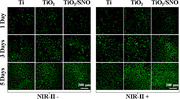 Figure 1
Peer Reviews
No public reviews on file for this paper yet. If you reviewed it on a platform where reviews are public (OpenReview, ICLR, NeurIPS, ICML), you can paste yours below so the community can read it here.
Videos
No videos yet. Explain this paper in a talk, walkthrough, or lecture? Add one.
Taxonomy
TopicsGold and Silver Nanoparticles Synthesis and Applications · Luminescence and Fluorescent Materials · Nanoplatforms for cancer theranostics
Adv. Sci. 2025, 12, 2411997
https://doi.org/10.1002/advs.202411997
The authors regret that an incorrect immunofluorescence staining image for Live/dead (green/red) was used for TiO_2_ samples without NIR‐II irradiation at 3 days in Figure S15 (Supporting Information). The modified correct version is shown below. As shown in Figure S15 (Supporting Information), the cells on Ti, TiO_2_, and TiO_2_/SNO proliferate with time with or without laser irradiation besides no noticeable cytotoxicity. Upon irradiation with a 0.3 W cm^−2^ laser, TiO_2_/SNO facilitates the proliferation of HUVECs.
Figure S15. Live/dead (green/red) fluorescence staining images of HUVECs.
We apologize for this error.
Supporting information
Supporting Information