Improving Energy and Molecular Properties by Convergence of the One‐Particle Reduced Density Matrix in Variational Quantum Eigensolvers (VQE)
Amanda Marques de Lima, Erico Souza Teixeira, Eivson Darlivam Rodrigues de Aguiar Silva, Ricardo Luiz Longo

TL;DR
This paper introduces new strategies to improve the accuracy of quantum simulations of molecular systems by ensuring convergence of the one-particle reduced density matrix.
Contribution
The novel contribution is the introduction of two new VQE algorithms, VQE* and VQE-LD, that incorporate 1-RDM convergence for better energy and molecular property predictions.
Findings
VQE* and VQE-LD improved accuracy of energy and density-based properties like dipole moments and electron density.
For GateFabric ansatz, both approaches significantly enhanced energy accuracy and 1-RDM quality.
The convergence of 1-RDM provides a simple yet effective strategy for reliable molecular predictions on quantum computers.
Abstract
The variational quantum eigensolver (VQE) is a relevant method for simulating molecular systems on near‐term quantum computers. While its primary application is the estimation of ground‐state energies, VQE also produces the one‐particle reduced density matrix (1‐RDM), from which other relevant molecular properties can be obtained. The accuracy of these properties depends on the reliability and convergence of the 1‐RDM, which is not guaranteed by energy‐only optimization. Thus, two new algorithms were introduced: VQE* that incorporates the RMSD of consecutive 1‐RDM as a convergence criterion and VQE‐LD that modifies the cost function by adding to the energy a term involving the RMSD of 1‐RDM weighted by a proper factor. These algorithms were tested for protonated methane, CH, at equilibrium and four dissociation geometries, with the k‐UpCCGSD (4,4)‐ and GateFabric (2,2)‐active space…
Genes, proteins, chemicals, diseases, species, mutations and cell lines named across the full text — each resolved to its canonical identifier and authoritative record.
Click any figure to enlarge with its caption.
 Figure 1
 Figure 2
 Figure 3
 Figure 4
 Figure 5
 Figure 6
 Figure 7
 Figure 8
 Figure 9
 Figure 10
 Figure 11
 Figure 12
 Figure 13
 Figure 14
 Figure 15
 Figure 16
 Figure 17
 Figure 18
 Figure 19
 Figure 20
 Figure 21
 Figure 22
 Figure 23
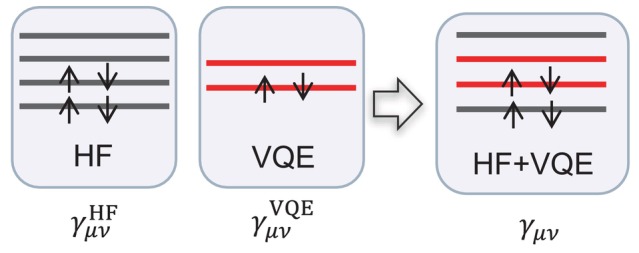 Figure 24
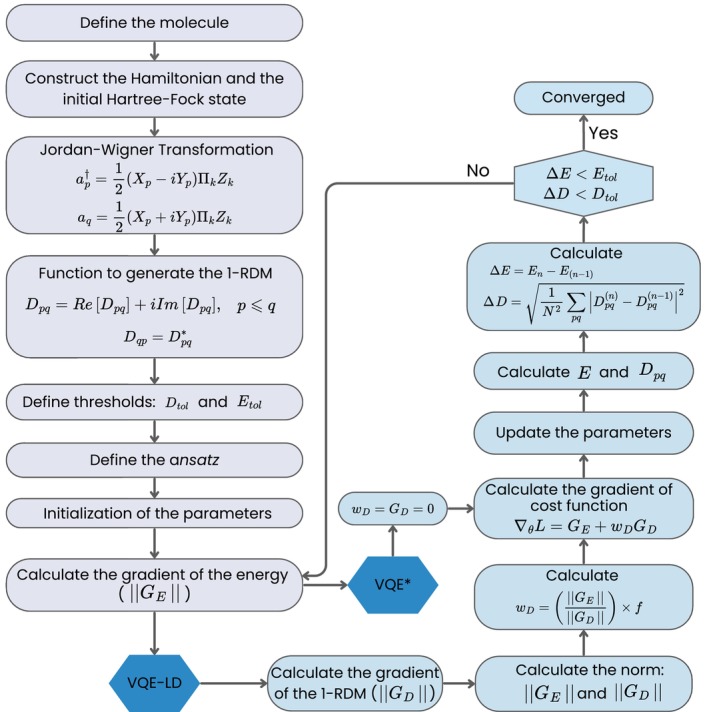 Figure 25
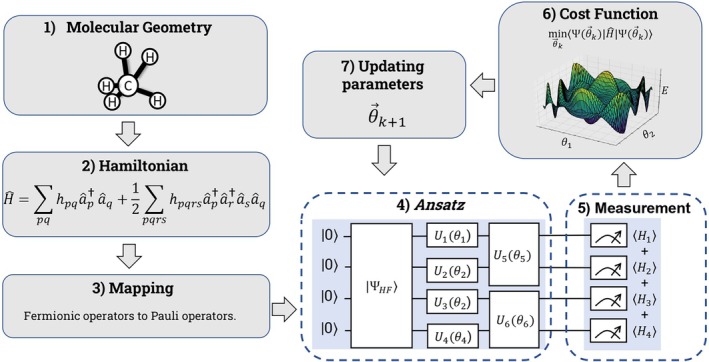 Figure 26
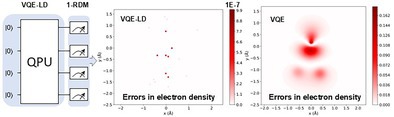 Figure 27
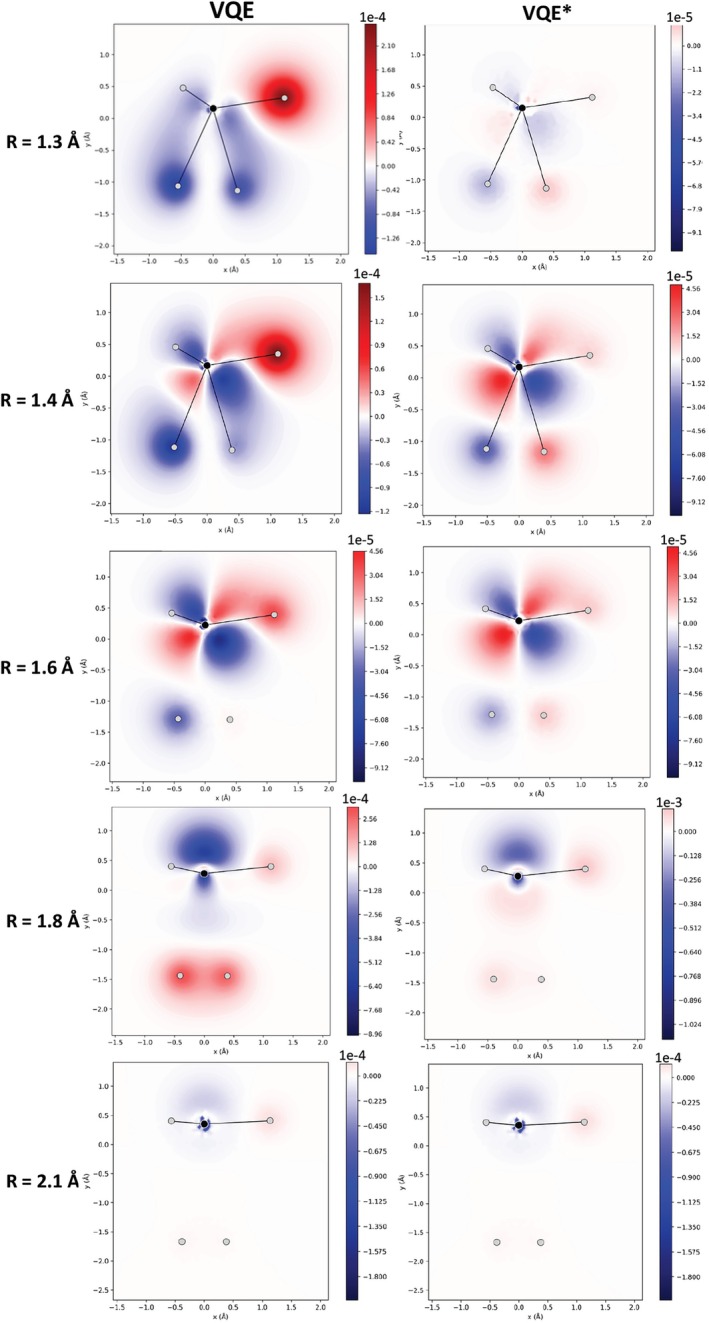 Figure 28
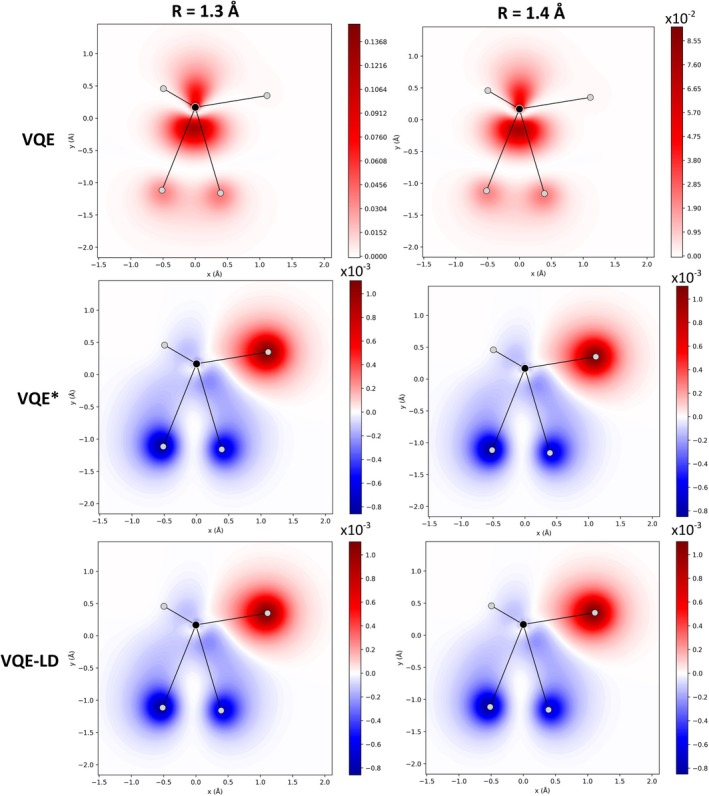 Figure 29
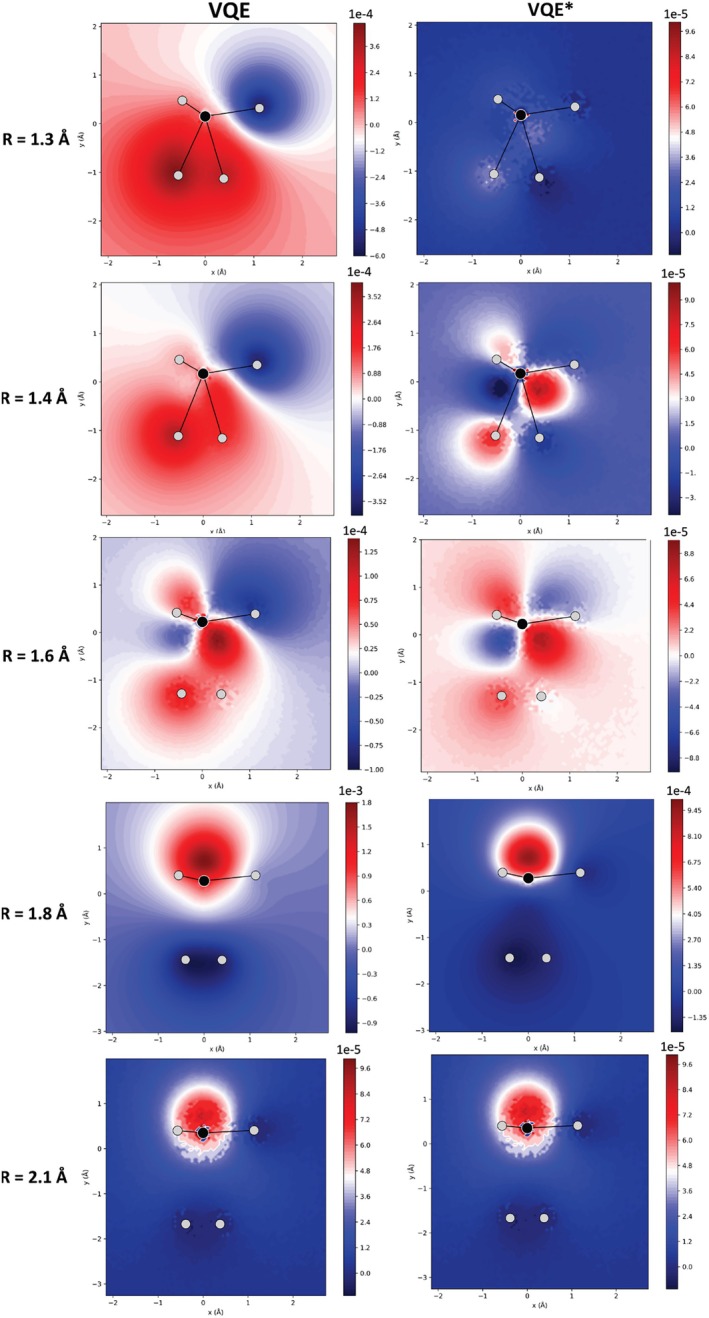 Figure 30
Peer Reviews
No public reviews on file for this paper yet. If you reviewed it on a platform where reviews are public (OpenReview, ICLR, NeurIPS, ICML), you can paste yours below so the community can read it here.
Videos
No videos yet. Explain this paper in a talk, walkthrough, or lecture? Add one.
Taxonomy
TopicsQuantum Computing Algorithms and Architecture · Spectroscopy and Quantum Chemical Studies · Machine Learning in Materials Science