FAP Expression in Renal Tumors Assessed by [68Ga]Ga-FAPI-46 PET Imaging and FAP Immunohistochemistry: A Case Series of Six Patients from the Prospective Exploratory Trial NCT04147494
Adrien Holzgreve, Lena M. Unterrainer, Kimberly Flores, Ethan C. Lam, Christine E. Mona, Johannes Czernin, Brian M. Shuch, Anthony E. Sisk, Jeremie Calais

TL;DR
This study explores the use of FAP PET imaging in kidney tumors and finds that FAP expression varies by tumor type, with lower levels in renal cell carcinoma compared to other cancers.
Contribution
The study provides a novel assessment of FAP expression in different renal tumor subtypes using PET imaging and immunohistochemistry.
Findings
FAP radiotracer uptake was highest in clear cell renal cell carcinoma compared to other renal tumor types.
FAP PET signal strongly correlated with immunohistochemistry results (r = 0.93).
FAP expression in renal tumors was lower than in cancers like sarcoma.
Abstract
Fibroblast activation protein (FAP) has been proposed as a pan-tumor target for PET imaging using FAP-targeted tracers. Here, we explore the potential value of FAP PET in renal tumors. Methods: Six patients with renal tumors (4 with clear cell renal cell carcinoma, 1 with papillary renal cell carcinoma, and 1 with renal oncocytoma) who were included in a prospective imaging study (NCT04147494) underwent [68Ga]Ga-FAPI-46 PET before nephrectomy. FAP PET radiotracer uptake and FAP expression by immunohistochemistry were assessed in the tumors and surrounding renal parenchyma. Results: Tumoral FAP radiotracer uptake was highest in clear cell renal cell carcinoma (median SUVmax, 3.1; range, 2.5–5.3), followed by renal oncocytoma (SUVmax, 1.9) and papillary renal cell carcinoma (SUVmax, 1.1). The FAP PET signal strongly correlated with FAP expression by immunohistochemistry (SUVmax; r = 0.93;…
Genes, proteins, chemicals, diseases, species, mutations and cell lines named across the full text — each resolved to its canonical identifier and authoritative record.
Click any figure to enlarge with its caption.
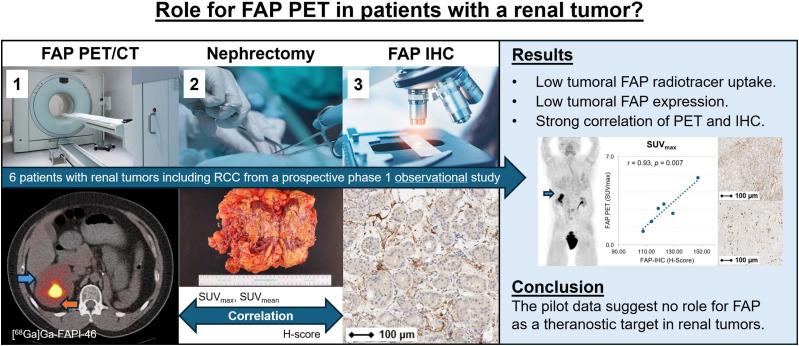 Figure 1
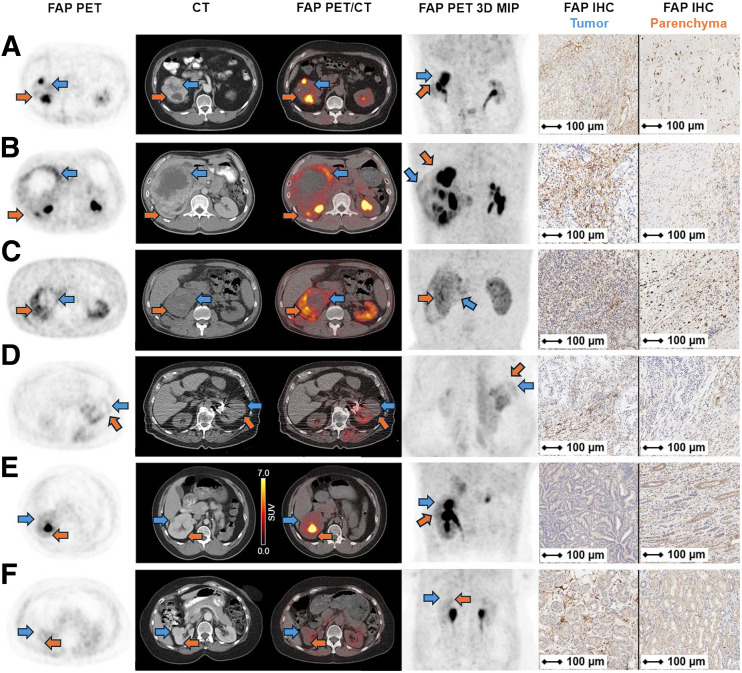 Figure 2
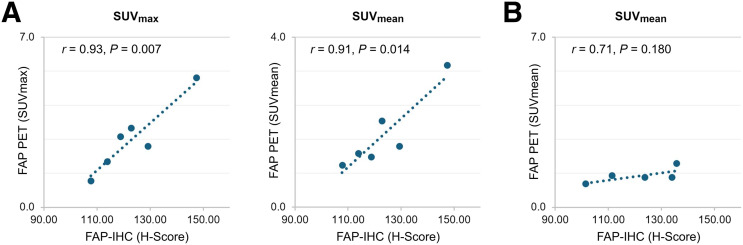 Figure 3
Peer Reviews
No public reviews on file for this paper yet. If you reviewed it on a platform where reviews are public (OpenReview, ICLR, NeurIPS, ICML), you can paste yours below so the community can read it here.
Videos
No videos yet. Explain this paper in a talk, walkthrough, or lecture? Add one.
Taxonomy
TopicsPeptidase Inhibition and Analysis · Protease and Inhibitor Mechanisms · Neuropeptides and Animal Physiology