Vertically stratified carbon fixation and coupling processes in deep-sea sediment
Hai Shi, Xiaotong Zhang, Liyan Liu, Fabiano Thompson, Xueqi Li, Haowei Sun, Huichao Mi, Xiao-Hua Zhang, Yunhui Zhang

TL;DR
This study explores how carbon fixation varies with depth in deep-sea sediment, revealing distinct microbial pathways and energy sources at different depths.
Contribution
The study identifies depth-specific carbon fixation pathways and microbial groups in deep-sea sediment, highlighting mixotrophic lifestyles and environmental drivers.
Findings
DIC and ammonium concentrations are key drivers of carbon fixation and redox processes in deep-sea sediment.
Carbon fixation gene diversity increases with depth, while network complexity of functional genes and taxa declines.
The CBB and rGLY pathways dominate surface sediments, while the WL pathway prevails in deeper anoxic layers.
Abstract
Deep-sea sediments represent a vast yet underexplored reservoir of microbial carbon fixation, playing a critical role in global carbon cycling. However, the vertical distribution of carbon-fixing microorganisms, metabolic pathways, and the underlying energy sources and environmental drivers remain poorly understood. In this study, we investigated microbial carbon fixation and associated energy metabolism in South China Sea (SCS) sediment across 0–690 cm depth. Our findings revealed that dissolved inorganic carbon (DIC) and ammonium (NH₄+) concentrations were key environmental drivers of carbon fixation and linked redox processes. Carbon fixation gene diversity increased with sediment depth, while the network complexity of functional genes and taxa involved in these processes declined. A distinct vertical succession of dominant microbial carbon-fixation pathways and their associated…
Genes, proteins, chemicals, diseases, species, mutations and cell lines named across the full text — each resolved to its canonical identifier and authoritative record.
Click any figure to enlarge with its caption.
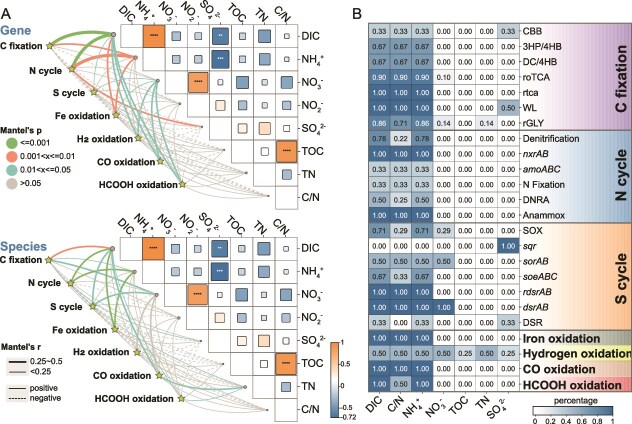 Figure 1
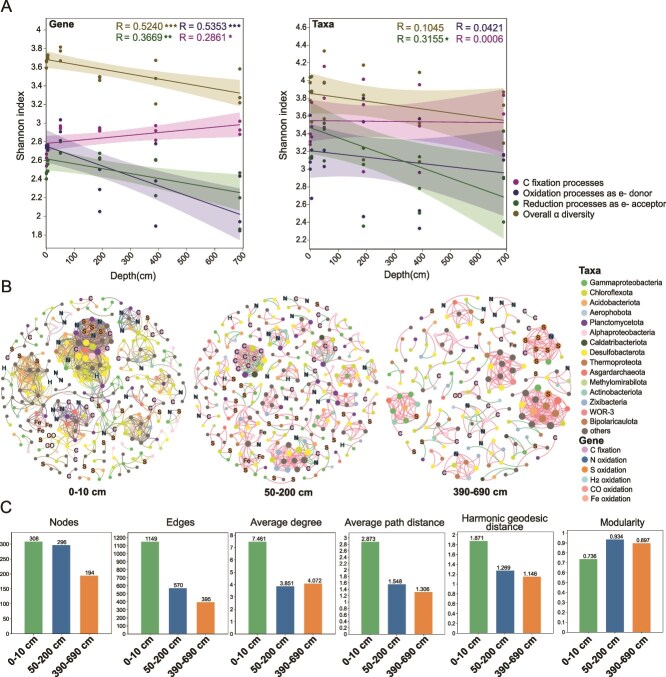 Figure 2
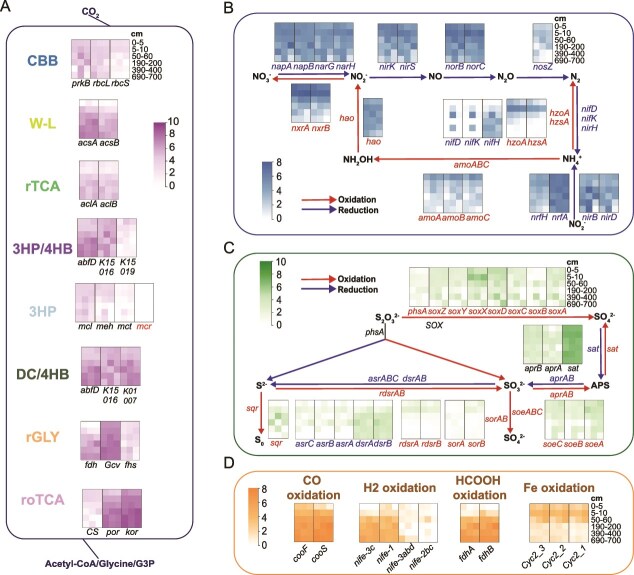 Figure 3
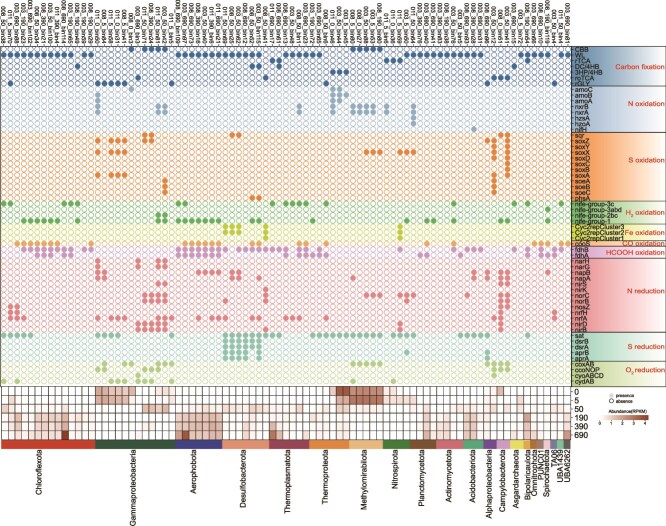 Figure 4
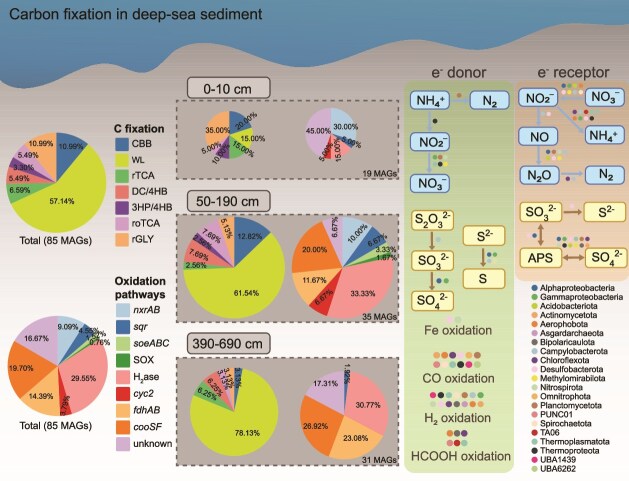 Figure 5
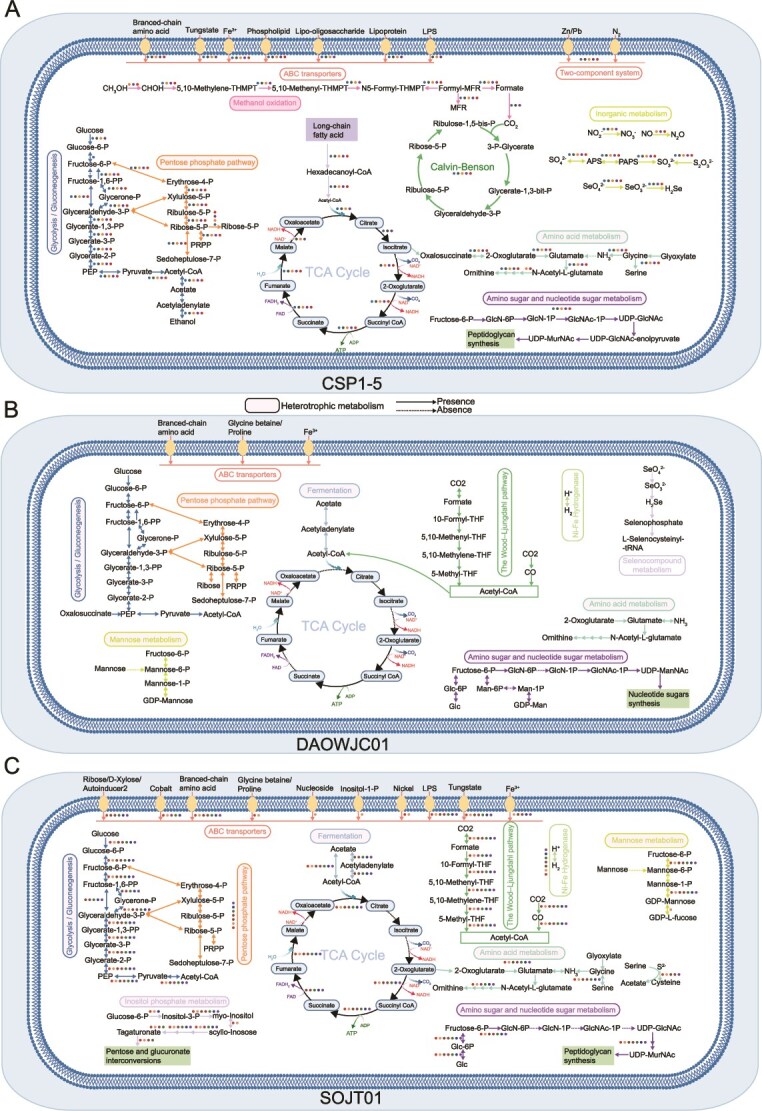 Figure 6
Peer Reviews
No public reviews on file for this paper yet. If you reviewed it on a platform where reviews are public (OpenReview, ICLR, NeurIPS, ICML), you can paste yours below so the community can read it here.
Videos
No videos yet. Explain this paper in a talk, walkthrough, or lecture? Add one.
Taxonomy
TopicsMicrobial Community Ecology and Physiology · Methane Hydrates and Related Phenomena · Protist diversity and phylogeny