Room-temperature superprotonic conductivity in COOH-functionalized multicomponent covalent organic frameworks
Gouri Chakraborty, Prasenjit Das, Biswajit Bhattacharya, Carsten Prinz, Franziska Emmerling, Arne Thomas

TL;DR
A new type of material with carboxylic acid groups shows high proton conductivity at room temperature, which could be useful for energy applications.
Contribution
The first general strategy to achieve superprotonic conductivity in COOH-functionalized COFs without additives.
Findings
COOH-functionalized COFs achieved proton conductivity of 10−2 S cm−1 at room temperature.
H-bonding between COOH groups and water enabled efficient proton transport via Grotthuss mechanism.
COFs outperformed similar frameworks without COOH groups by up to three orders of magnitude.
Abstract
In solid materials, the development of hydrogen bonding (H-bonding) networks within pores is crucial for efficient proton conductance. In this study, a chemically stable carboxylic acid-functionalized, quinoline-linked 2D microporous covalent organic framework (COF) (Qy-COOH) was synthesized using the Doebner multicomponent reaction (MCR) and compared to a similar framework lacking the –COOH functionality (Qy-H), prepared via an MC Domino reaction. The proton conductivity of the –COOH-functionalized MCR-COF was significantly enhanced, reaching 10−2 S cm−1, attributed to strong H-bonding interactions between water molecules and the dangling –COOH groups within the COF pores. In contrast, the analogous Qy-H framework exhibited a much lower proton conductivity of 10−5 S cm−1, while an imine-based COF showed only 10−6 S cm−1. This work represents the first demonstration of a general…
Genes, proteins, chemicals, diseases, species, mutations and cell lines named across the full text — each resolved to its canonical identifier and authoritative record.
Click any figure to enlarge with its caption.
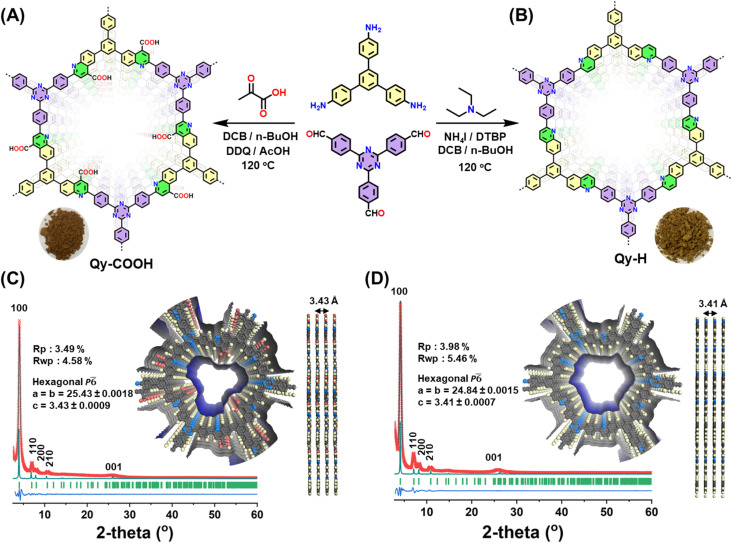 Figure 1
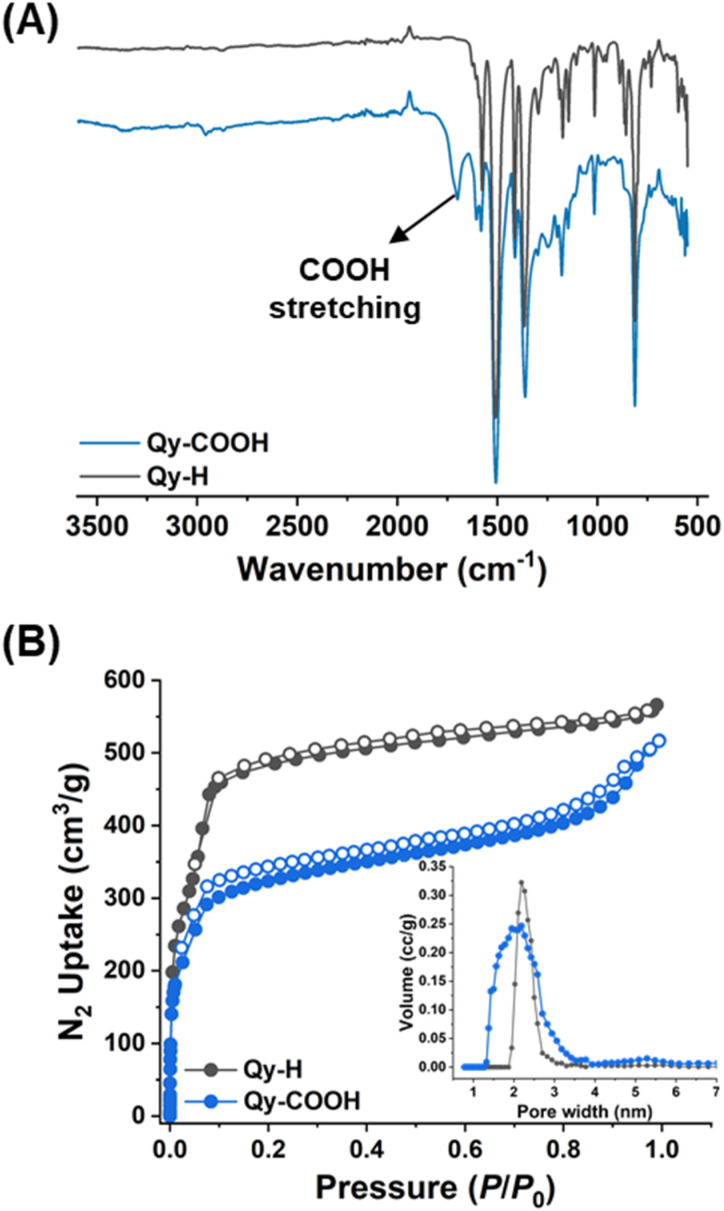 Figure 2
 Figure 3
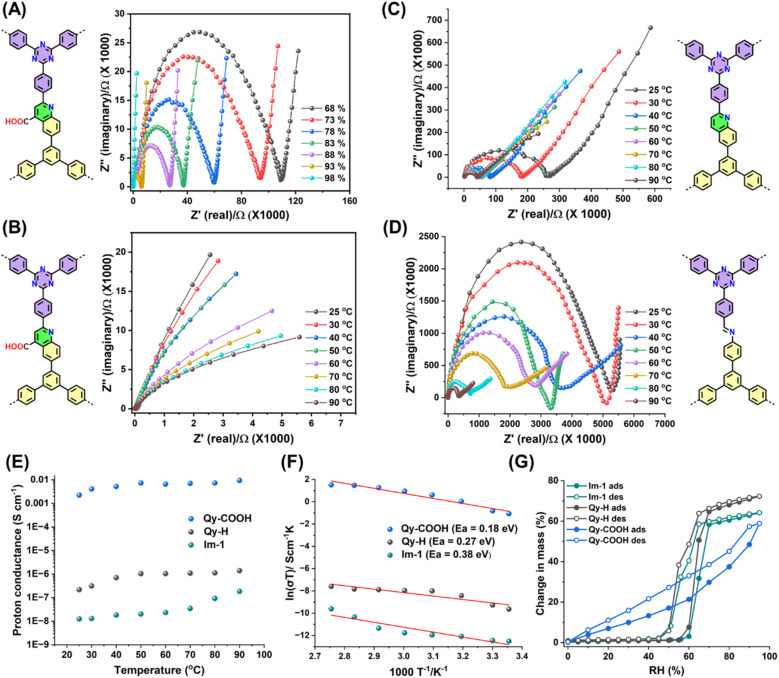 Figure 4
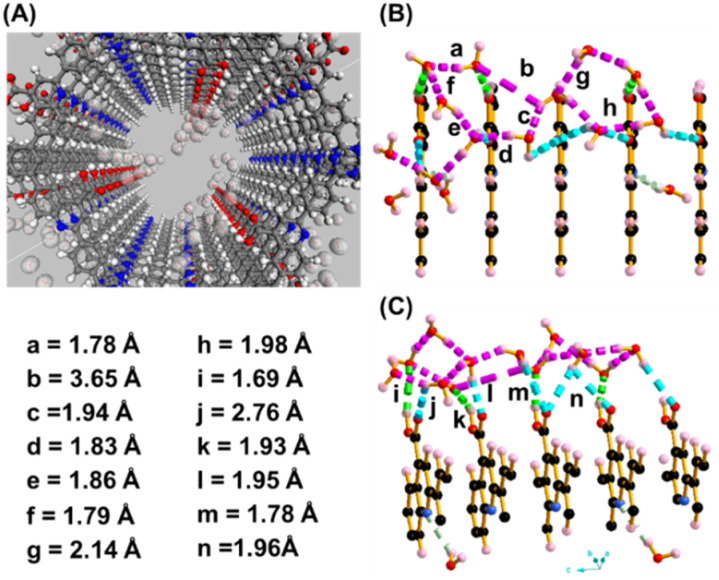 Figure 5
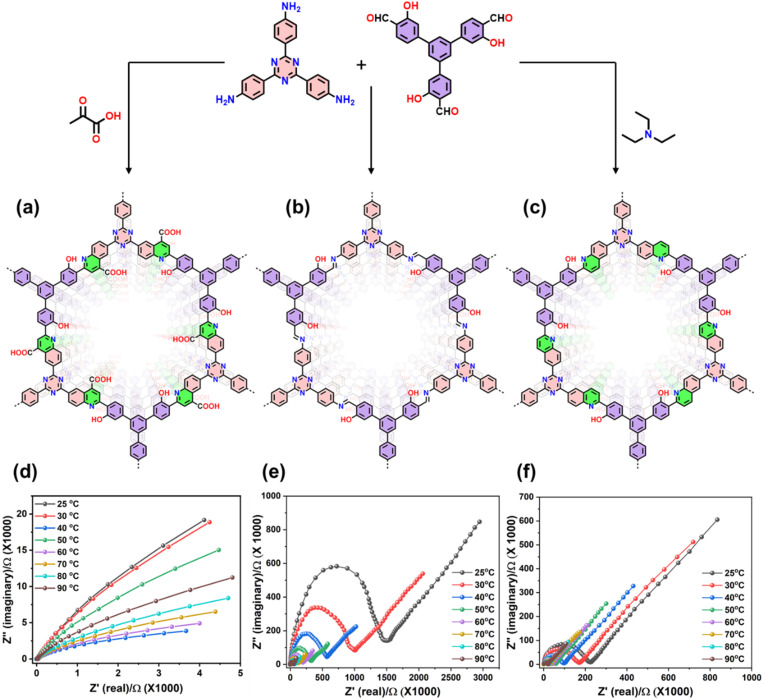 Figure 6
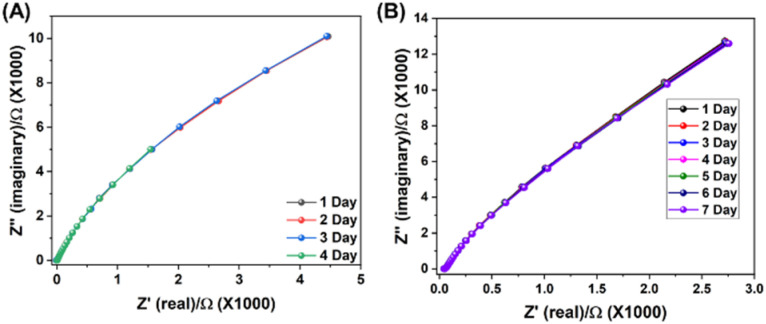 Figure 7
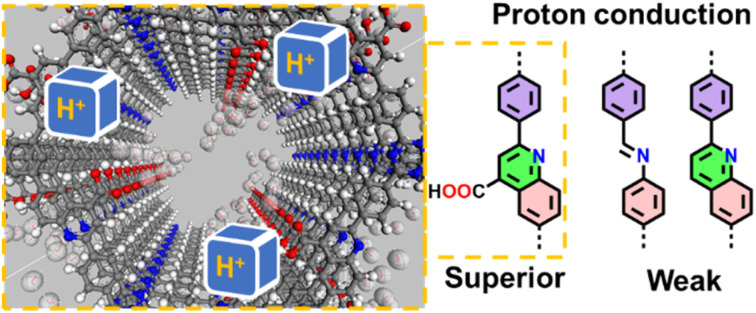 Figure 8
Peer Reviews
No public reviews on file for this paper yet. If you reviewed it on a platform where reviews are public (OpenReview, ICLR, NeurIPS, ICML), you can paste yours below so the community can read it here.
Videos
No videos yet. Explain this paper in a talk, walkthrough, or lecture? Add one.
Taxonomy
TopicsCovalent Organic Framework Applications · CO2 Reduction Techniques and Catalysts · Carbon dioxide utilization in catalysis