Synthesis, Anthelmintic Activity, and Mechanism of Action of 5‑Aryl‑1H‑indoles
Alena Kadlecová, Karolina Dzedulionytė Müldür, Miroslav Peřina, Kristýna Bieleszová, Chao Zhang, Daniel Kováříček, Elora Valderas-García, Dominik Vítek, Miglė Valikonytė, Algirdas Šačkus, Joana Solovjova, Vida Malinauskienė, Karel Doležal, Ondřej Novák, Florian M. W. Grundler

TL;DR
This paper explores new 5-phenyl-1H-indole compounds that show anthelmintic activity against various nematode species with low mammalian toxicity.
Contribution
The study introduces novel 5-phenyl-1H-indole derivatives with anthelmintic properties and proposes a mechanism of action involving mitochondrial complex II inhibition.
Findings
Compounds with 4-chloro, 4-fluoro, and 4-trifluoromethoxy groups effectively inhibit nematode larval motility.
These compounds show reduced potency against plant-parasitic nematodes compared to animal parasites.
Molecular modeling and experiments suggest mitochondrial complex II inhibition as the mechanism of action.
Abstract
Parasitic nematodes are a significant concern in human and veterinary medicine as well as agriculture. In this study, we prepared twenty-seven 5-phenyl-1H-indole derivatives bearing various substituents on the phenyl ring and assessed their efficacy against nematodes. Using Caenorhabditis elegans, we selected the most potent compounds and evaluated their toxicity on selected animal and plant-parasitic nematode species. Compounds featuring 4-chloro, 4-fluoro, and 4-trifluoromethoxy groups on the phenyl ring inhibited the motility of exsheathed L3 larvae of Hemonchus contortus while exhibiting limited cytotoxicity in mammalian cell cultures. These compounds showed similar effects against the plant-parasitic nematodes Heterodera schachtii and Ditylenchus destructor, albeit with reduced potency. We propose that the compounds might act as inhibitors of mitochondrial complex II as inferred…
Genes, proteins, chemicals, diseases, species, mutations and cell lines named across the full text — each resolved to its canonical identifier and authoritative record.
Click any figure to enlarge with its caption.
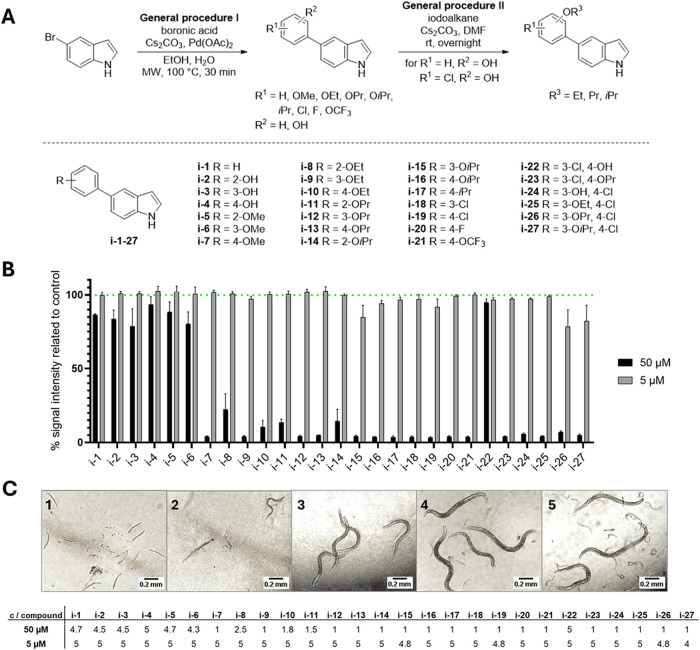 Figure 1
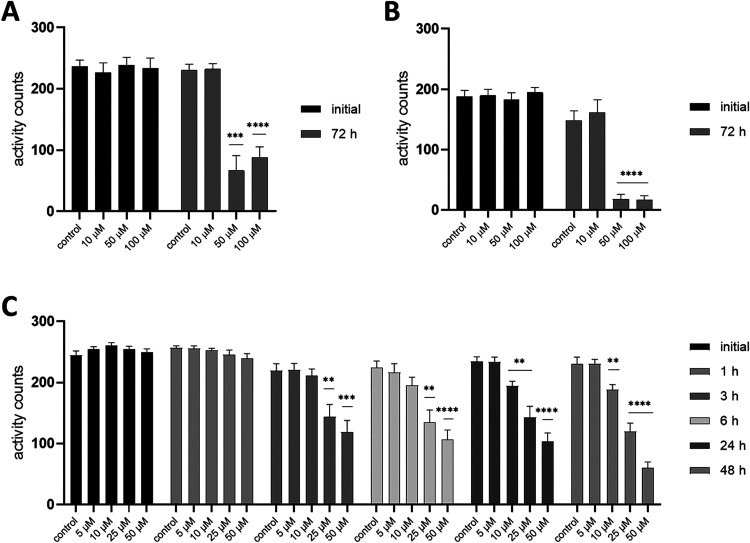 Figure 2
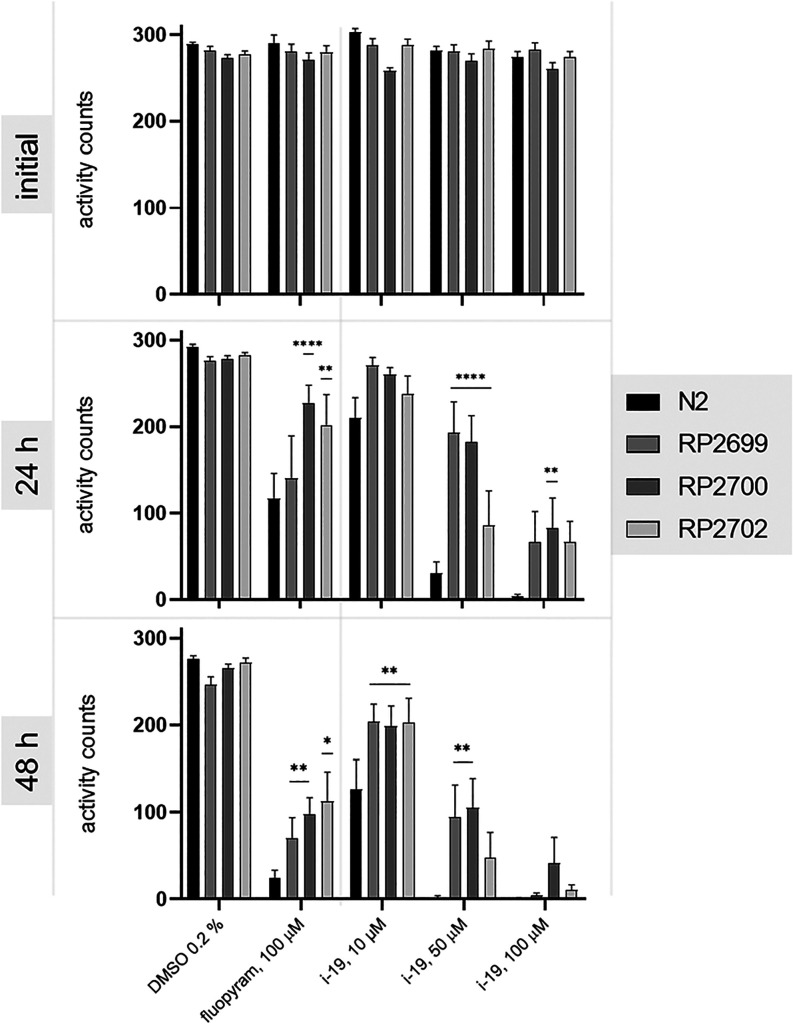 Figure 3
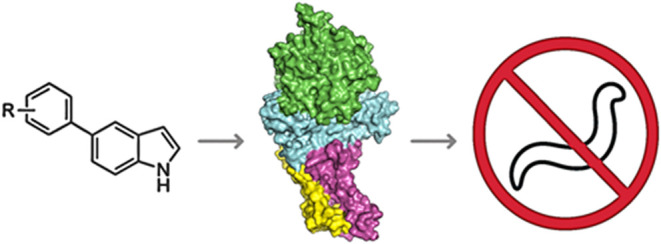 Figure 4
Peer Reviews
No public reviews on file for this paper yet. If you reviewed it on a platform where reviews are public (OpenReview, ICLR, NeurIPS, ICML), you can paste yours below so the community can read it here.
Videos
No videos yet. Explain this paper in a talk, walkthrough, or lecture? Add one.
Taxonomy
TopicsHelminth infection and control · Nematode management and characterization studies · Parasitic Diseases Research and Treatment