Quantifying stent‐induced dose perturbations in intravascular brachytherapy using 3D‐ printed phantoms and film dosimetry
Jessica S. Jung, Lyu Huang, Nicholas Coupera, Yijian Cao, Jenghwa Chang

TL;DR
This study uses 3D-printed phantoms and film dosimetry to measure how stents affect radiation dose delivery in intravascular brachytherapy, finding a 4.5% average dose reduction.
Contribution
A custom 3D-printed stent phantom and film dosimetry are used to quantify stent-induced dose perturbations in IVBT for the first time.
Findings
Stents cause a 4.5% average dose reduction in clinically relevant regions.
The third-order exponential polynomial model fits PDD data well, with R-squared values of 0.999.
Dose discrepancies were statistically significant (p < 0.0001) between stent and no-stent configurations.
Abstract
Coronary artery disease (CAD), the leading cause of death worldwide, is the narrowing of coronary arteries due to atherosclerotic plaque buildup. A common treatment for CAD is percutaneous coronary intervention (PCI), often involving stent placement. However, a common complication or in‐stent restenosis (ISR) can occur in 10%–20% of patients which call for the use of therapies like intravascular brachytherapy (IVBT). IVBT delivers targeted beta radiation, typically from Sr‐90/Y‐90 sources, to inhibit neointimal hyperplasia and reduce restenosis rates. Accurate dose delivery is critical to treatment success, but challenges such as source positioning and dose uniformity persist. Recent advances in 3D printing and radiochromic film dosimetry offer promising tools for more precise dose verification in IVBT, enabling high‐resolution assessment of dose distributions and stent‐induced…
Genes, proteins, chemicals, diseases, species, mutations and cell lines named across the full text — each resolved to its canonical identifier and authoritative record.
Click any figure to enlarge with its caption.
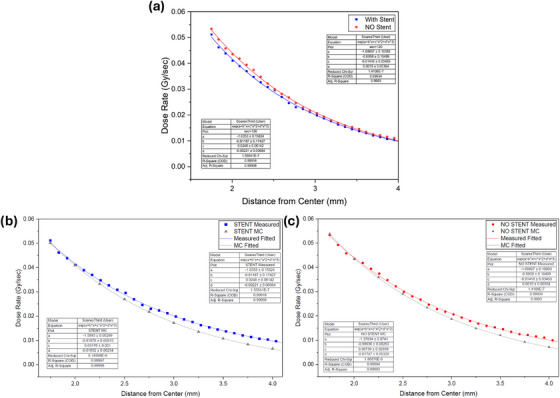 Figure 1
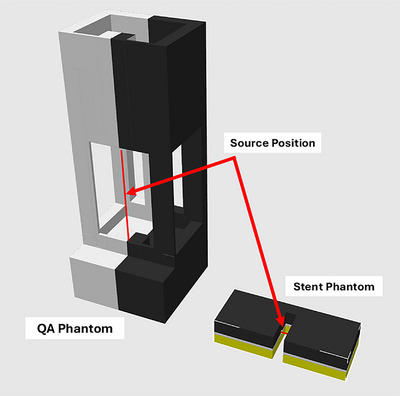 Figure 2
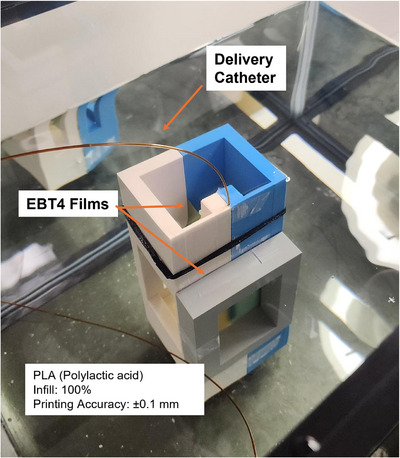 Figure 3
 Figure 4
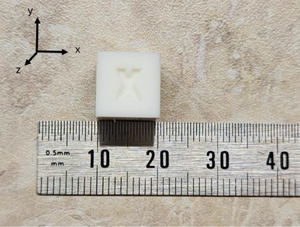 Figure 5
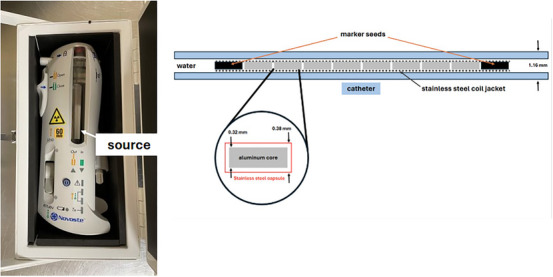 Figure 6
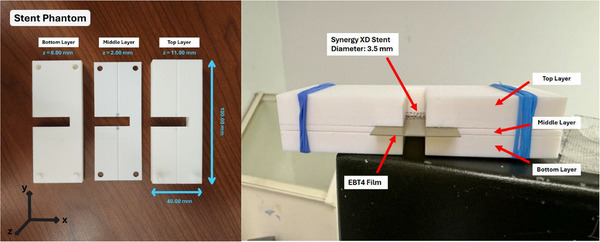 Figure 7
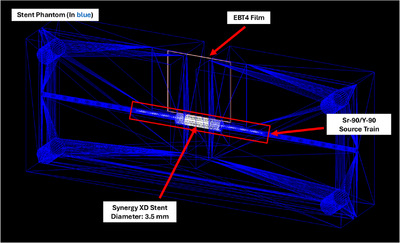 Figure 8
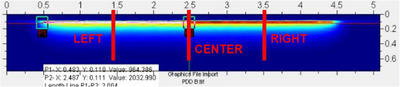 Figure 9
Peer Reviews
No public reviews on file for this paper yet. If you reviewed it on a platform where reviews are public (OpenReview, ICLR, NeurIPS, ICML), you can paste yours below so the community can read it here.
Videos
No videos yet. Explain this paper in a talk, walkthrough, or lecture? Add one.
Taxonomy
TopicsCoronary Interventions and Diagnostics · Advanced Radiotherapy Techniques · Chemotherapy-induced cardiotoxicity and mitigation