Electrically Tunable Friction through Surface Adsorption Layer Restructuring
Yun Zhao, Zhaoran Zhu, Jie Zhang, Erik Weiand, Chao Wang, James P. Ewen, Daniele Dini, Hugh A. Spikes, Janet S.S. Wong

TL;DR
This study shows how electric potential can control friction in lubricants by changing the structure of surfactant layers on metal surfaces.
Contribution
The study reveals that Na+ counterions, not surfactant anions, are key to potential-driven friction modulation in SDS solutions.
Findings
SDS forms hemicylindrical micelles on steel surfaces due to electrostatic and hydrophobic interactions.
Friction increases with negative potential when a critical Na+ concentration is achieved.
Friction modulation depends on the transition from hemicylindrical to hemispherical micelles.
Abstract
Electric-potential-controlled friction, which manipulates the frictional response of lubricants via an applied potential, offers the possibility of on-demand lubrication. Conventional understanding suggests that the applied potential influences the adsorption of surfactant ions on rubbing surfaces, thereby altering friction. This study investigates the effect of applied potential on the tribological behavior of sodium dodecyl sulfate (SDS) aqueous solutions in steel–steel contacts through experiments and molecular simulations. It is shown that SDS, as an anionic surfactant, readily forms hemicylindrical surface micelles due to electrostatic and hydrophobic interactions, achieving high coverage even at low concentrations. Consequently, the adsorbed Na+ counterions are more responsive to the applied potential than the SDS anions. Contrary to the common belief, friction in steel–steel…
Genes, proteins, chemicals, diseases, species, mutations and cell lines named across the full text — each resolved to its canonical identifier and authoritative record.
Click any figure to enlarge with its caption.
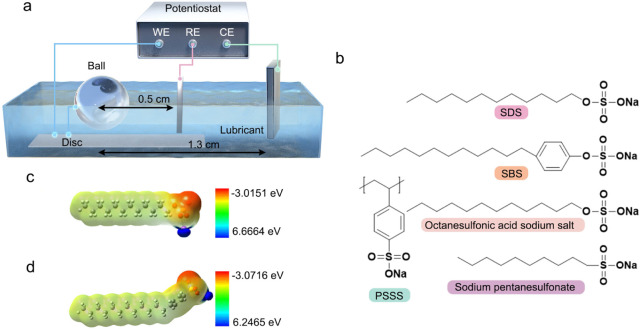 Figure 1
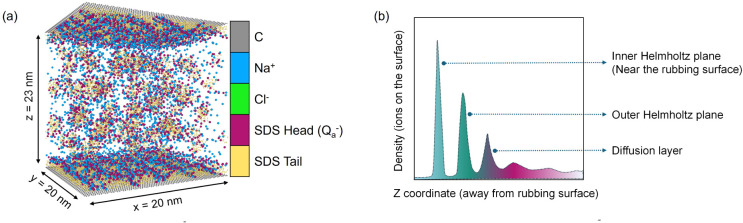 Figure 2
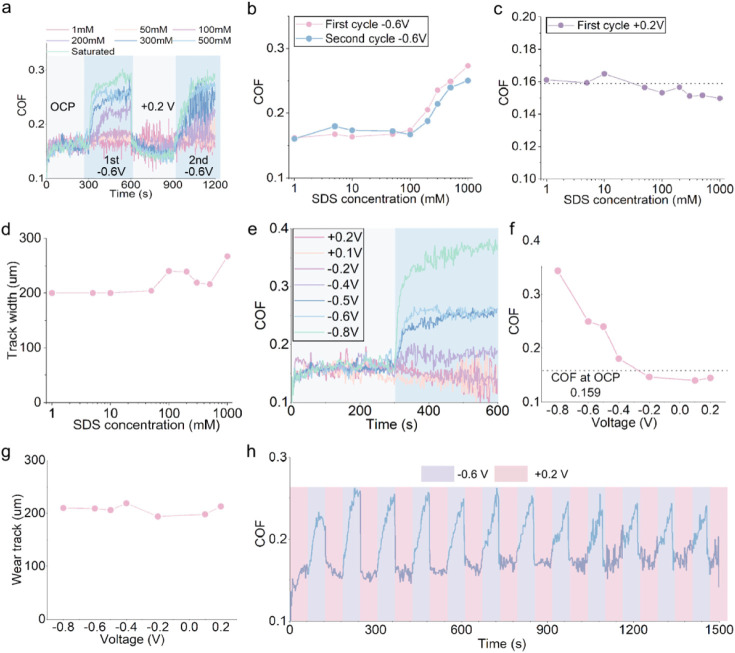 Figure 3
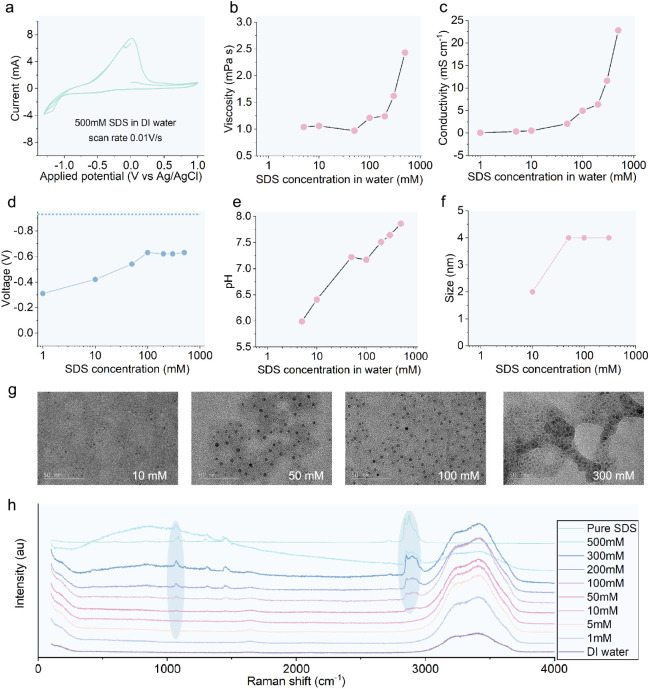 Figure 4
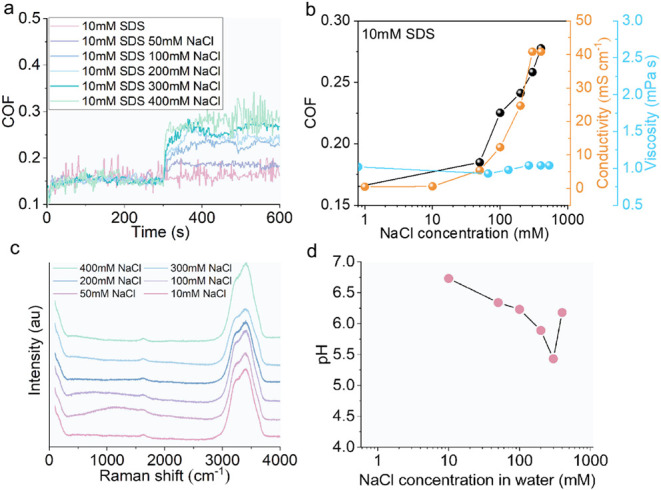 Figure 5
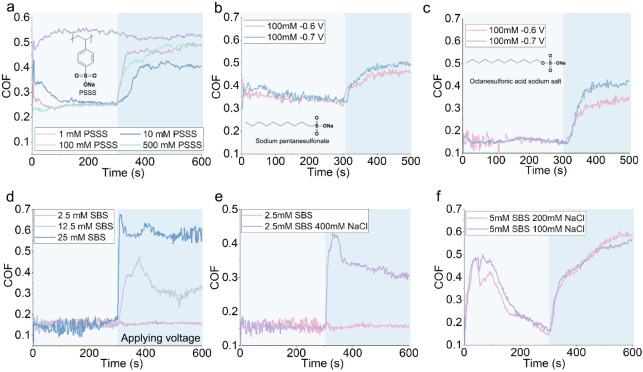 Figure 6
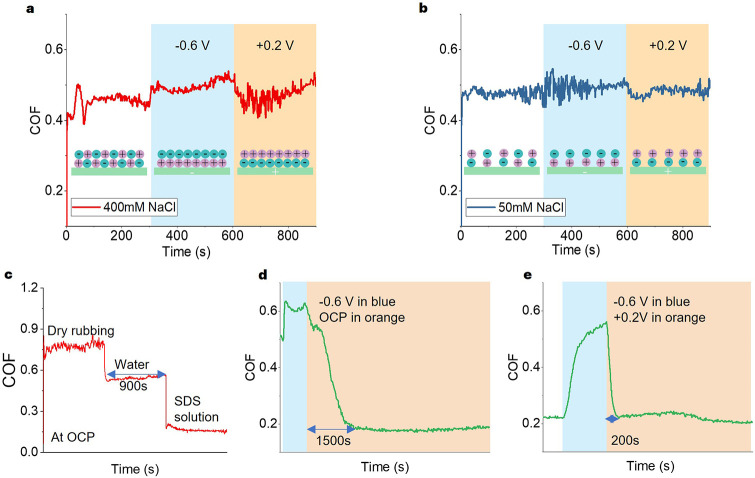 Figure 7
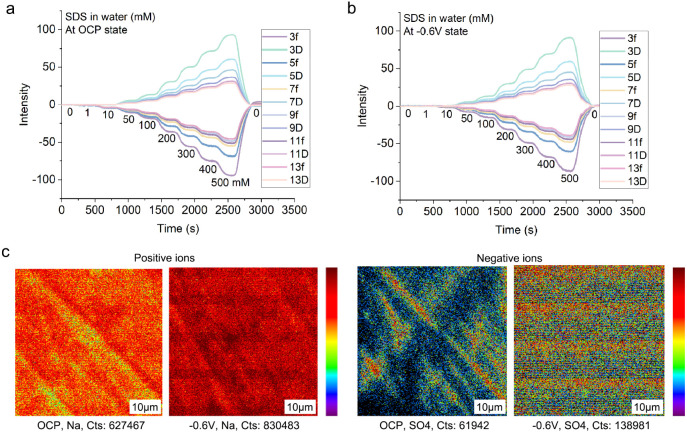 Figure 8
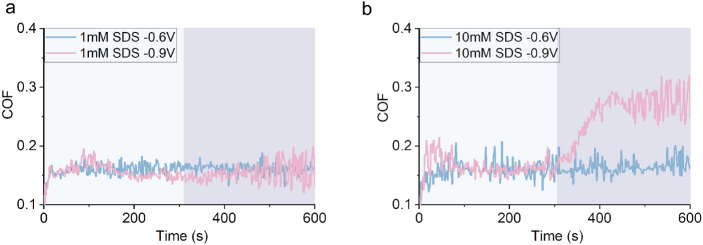 Figure 9
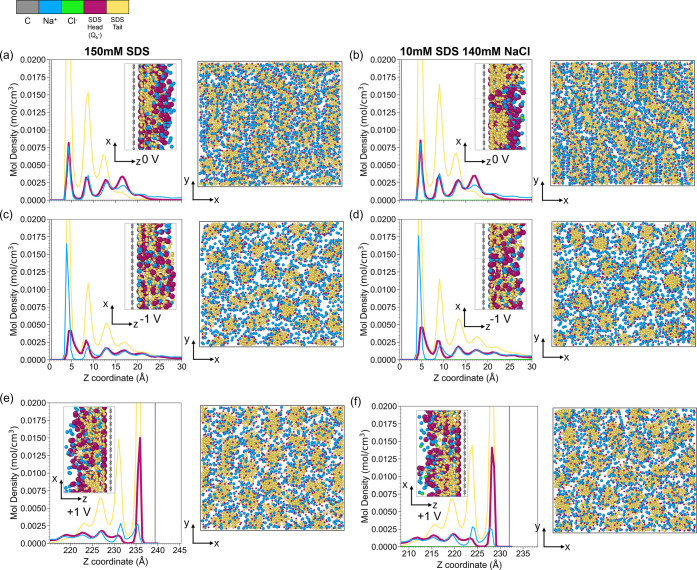 Figure 10
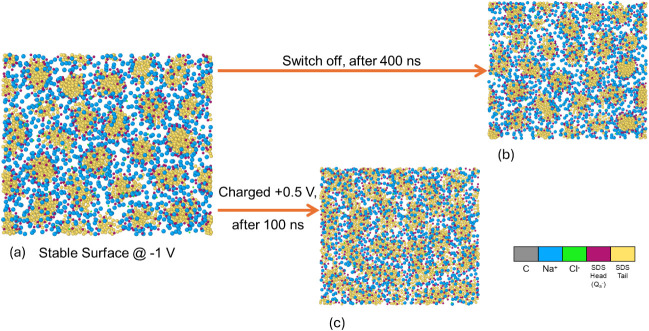 Figure 11
 Figure 12
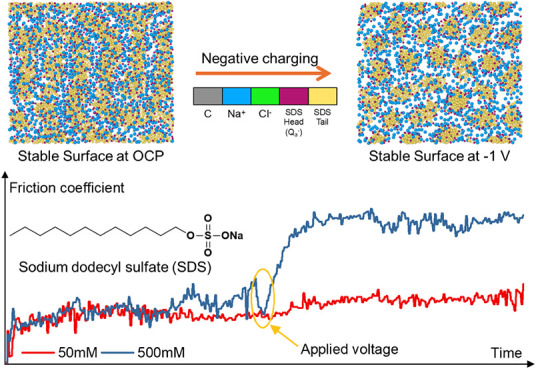 Figure 13
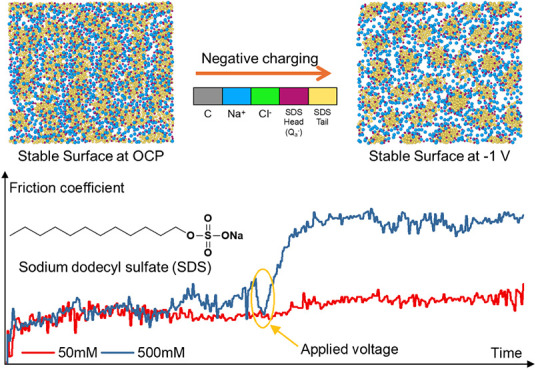 Figure 14
Peer Reviews
No public reviews on file for this paper yet. If you reviewed it on a platform where reviews are public (OpenReview, ICLR, NeurIPS, ICML), you can paste yours below so the community can read it here.
Videos
No videos yet. Explain this paper in a talk, walkthrough, or lecture? Add one.
Taxonomy
TopicsLubricants and Their Additives · Adhesion, Friction, and Surface Interactions · Force Microscopy Techniques and Applications