N2 Generation from Nitric Oxide Coordinated to Iron(III) Porphyrin in Acidic Glycine Buffer
Atsuki Nakagami, Yoshihito Shiota, Kyosuke Fujikawa, Masahito Kodera, Hiroaki Kitagishi

TL;DR
A new method converts nitric oxide to nitrogen gas using iron porphyrin in an acidic glycine solution.
Contribution
A novel N–N bond formation mechanism via glycine's nucleophilic attack on iron(III) nitrosyl complexes is revealed.
Findings
N2 is efficiently generated from NO in acidic glycine buffer with iron(III) porphyrin complexes.
Glycine nucleophilic attack forms a diazo compound that hydrolyzes to release N2.
Isotope labeling and DFT calculations confirm the proposed reaction mechanism.
Abstract
Nitric oxide (NO) was efficiently converted to molecular nitrogen (N2) in an acidic aqueous solution containing iron(III) porphyrin encapsulated in the cyclodextrin (CD) nanocavity. The supramolecular iron(III) porphyrin/CD dimer complexes (hemoCD-P and hemoCD-I), where the iron(III) is axially coordinated by a nitrogenous ligand (pyridine or imidazole) in the linker of the CD dimer, form stable 6-coordinated ferric nitrosyls {FeNO}6 in acidic aqueous solution (pH ∼3). When the solution contained glycine as the buffer component, N2 bubbles were significantly generated within several minutes at room temperature. In this system, a new N–N bond is formed on the iron-porphyrin due to the nucleophilic attack of glycine on the {FeNO}6 complex. The resulting diazo compound, ON–NH–CH2–COOH ⇄ HO–NN–CH2–COOH, was readily hydrolyzed to generate N2 along with a formation of α-hydroxyacid…
Genes, proteins, chemicals, diseases, species, mutations and cell lines named across the full text — each resolved to its canonical identifier and authoritative record.
Click any figure to enlarge with its caption.
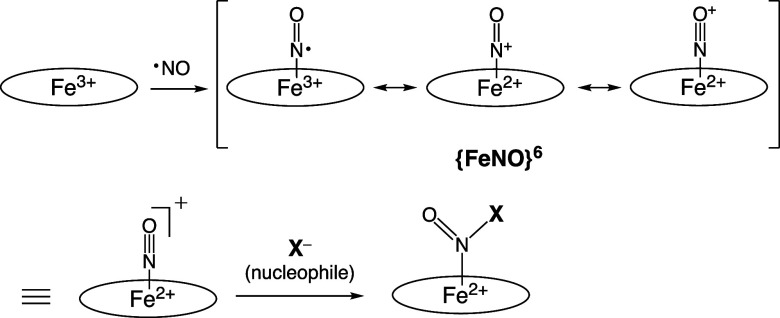 Figure 1
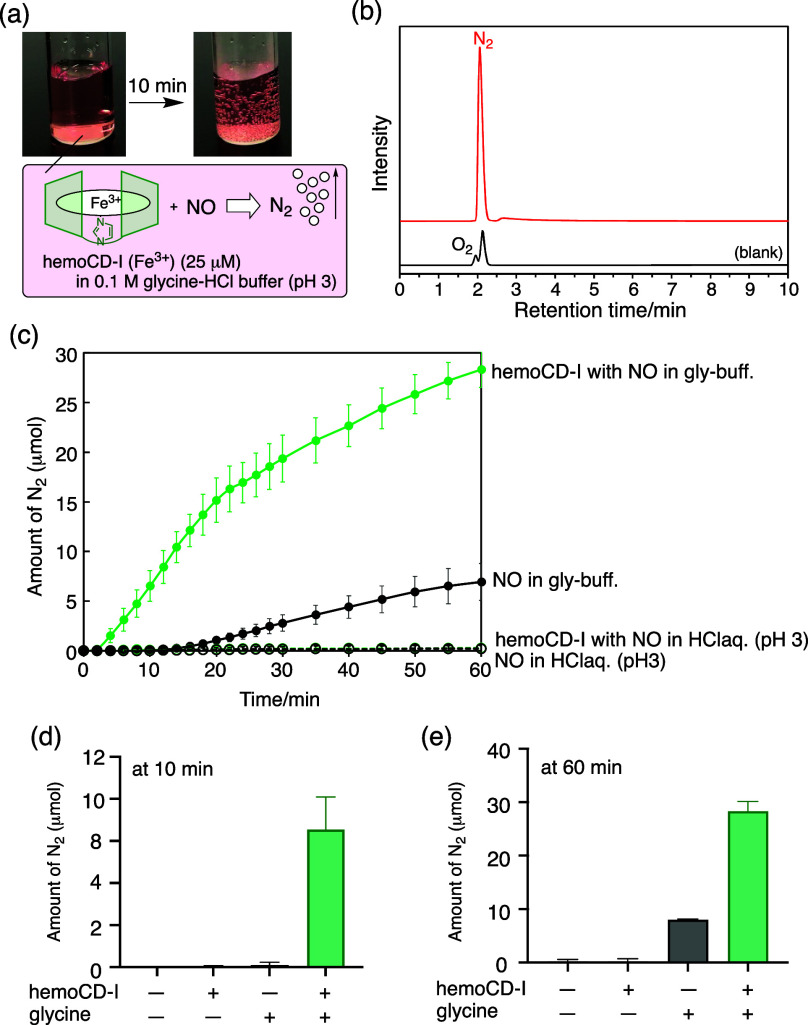 Figure 2
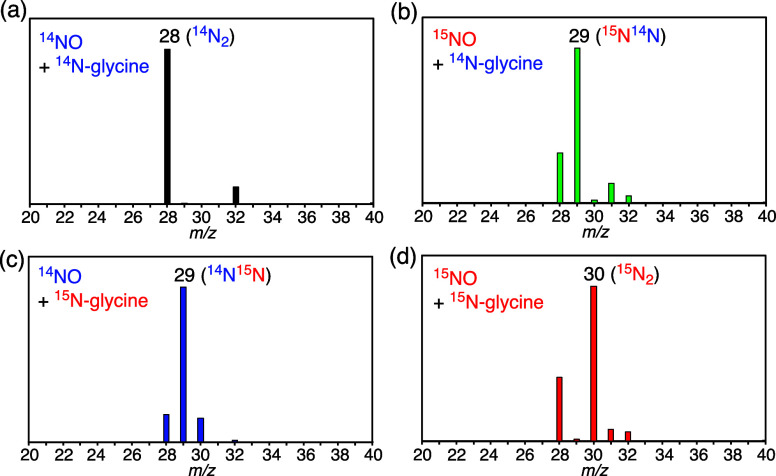 Figure 3
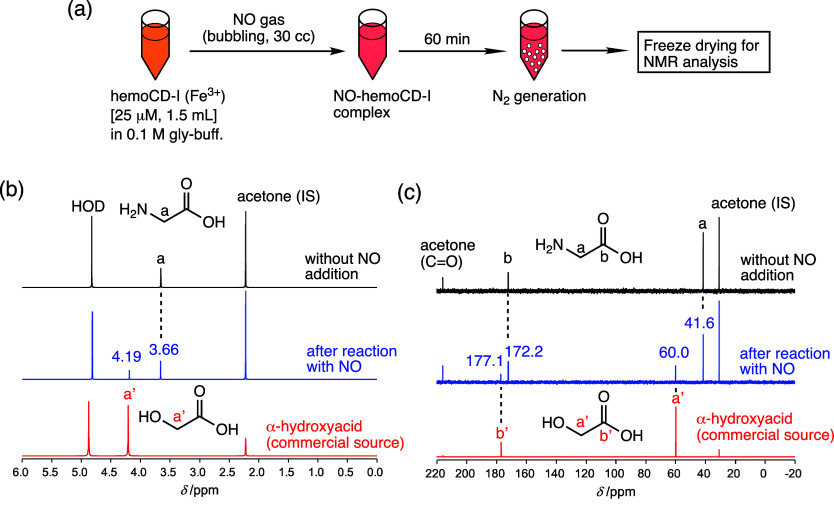 Figure 4
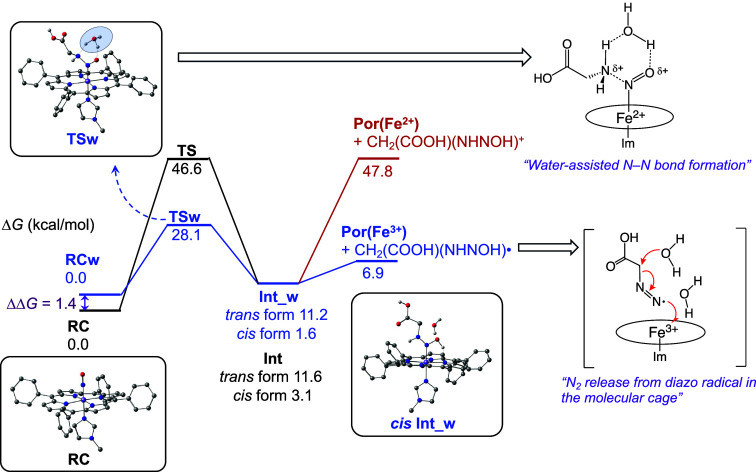 Figure 5
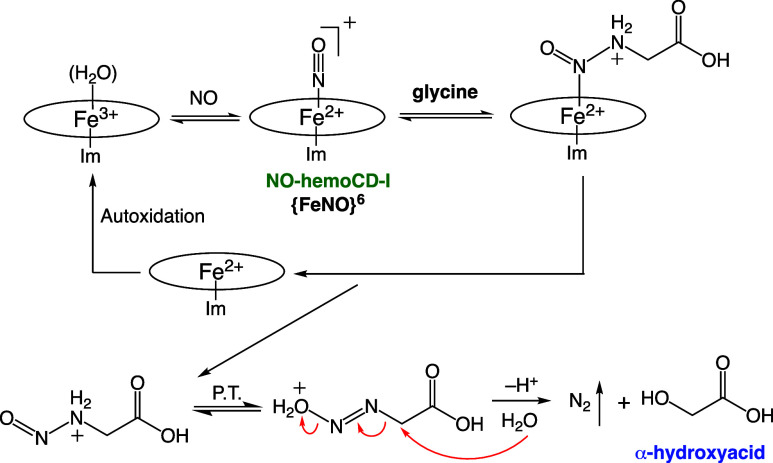 Figure 6
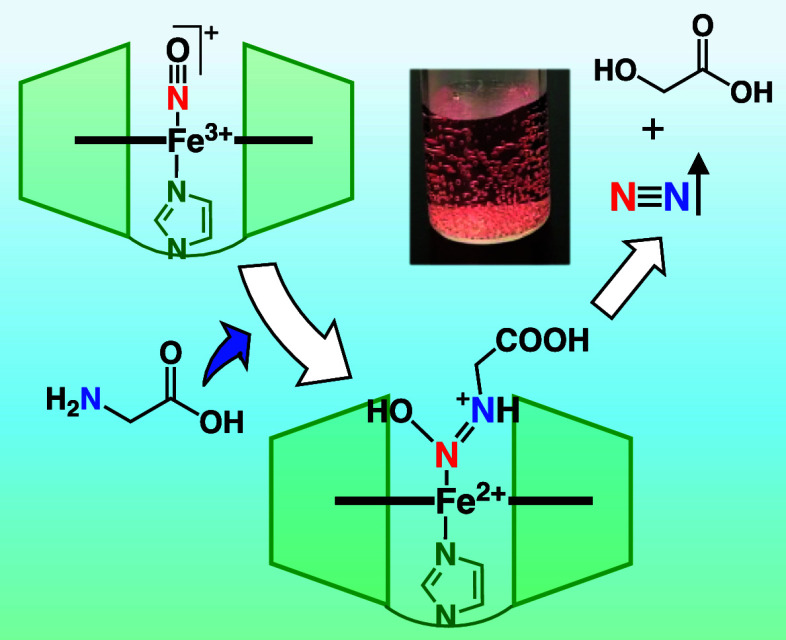 Figure 7
Peer Reviews
No public reviews on file for this paper yet. If you reviewed it on a platform where reviews are public (OpenReview, ICLR, NeurIPS, ICML), you can paste yours below so the community can read it here.
Videos
No videos yet. Explain this paper in a talk, walkthrough, or lecture? Add one.
Taxonomy
TopicsNitric Oxide and Endothelin Effects · Hemoglobin structure and function · Metal-Catalyzed Oxygenation Mechanisms