Nanomaterial Modification of Ultramicroelectrodes Using Design-of-Experiments Principles
Rachel A. Bocking, Thomas M. Dixon, Brenna Parke, Parastoo Hashemi, Richard A. Bourne, Paolo Actis, Robert Menzel

TL;DR
This paper introduces a systematic method using design-of-experiments to improve ultramicroelectrode coatings for better sensing performance.
Contribution
A novel design-of-experiments approach is applied to optimize nanomaterial modification of ultramicroelectrodes.
Findings
DoE-optimized conditions improve coating quality and detection limits in H2O2 sensing.
The method successfully translates to carbon-fiber ultramicroelectrode modification.
The approach identifies tolerances and limiting conditions for broader adoption.
Abstract
Modification of ultramicroelectrode sensors with electroactive nanomaterials is key to enhancing their microscale sensing performance for advanced applications in cellular biology, disease diagnostics, or scanning electrochemical microscopy (SECM). This work employs a modern design-of-experiment (DoE) approach to develop a systematic, multiple-parameter methodology for the development of robust ultramicroelectrode modification protocols. Specifically, platinum ultramicroelectrode sensors are coated with platinum/nanocarbon nanocomposites through electrophoretic deposition (EPD), using 2 k factorial screening designs to systematically investigate the ultramicroelectrode modification process. The steady state current is employed as a quantitative DoE target metric, enabling us to map and model optimum ultramicroelectrode modification conditions. DoE-optimized modification conditions are…
Genes, proteins, chemicals, diseases, species, mutations and cell lines named across the full text — each resolved to its canonical identifier and authoritative record.
Click any figure to enlarge with its caption.
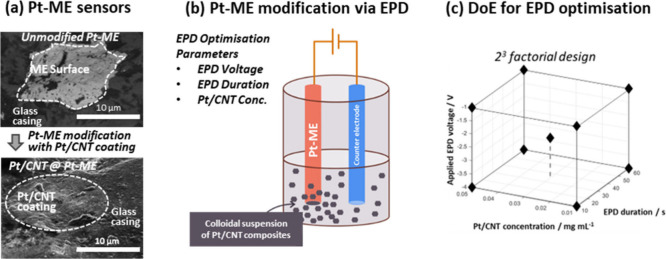 Figure 1
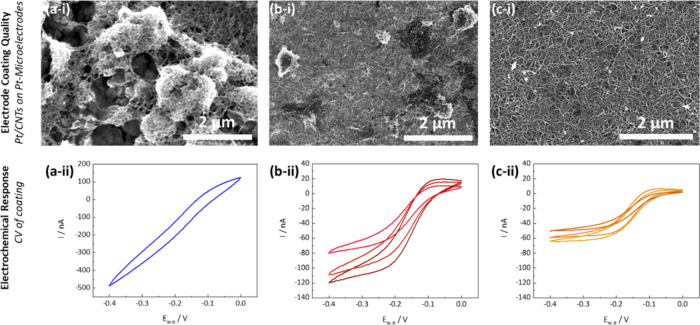 Figure 2
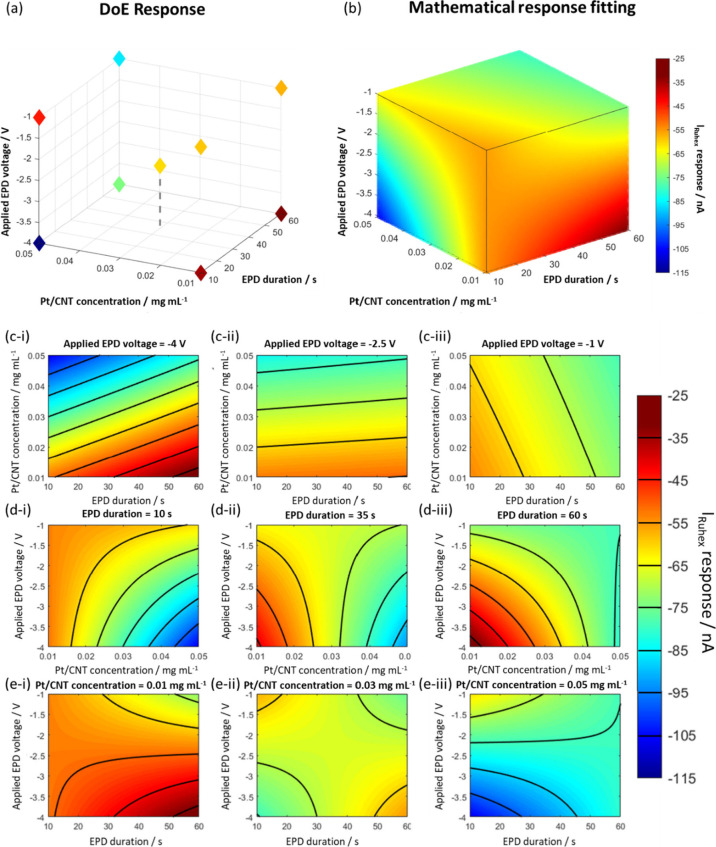 Figure 3
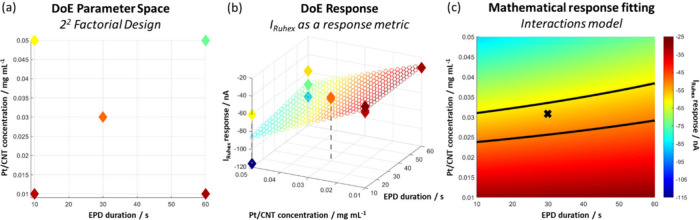 Figure 4
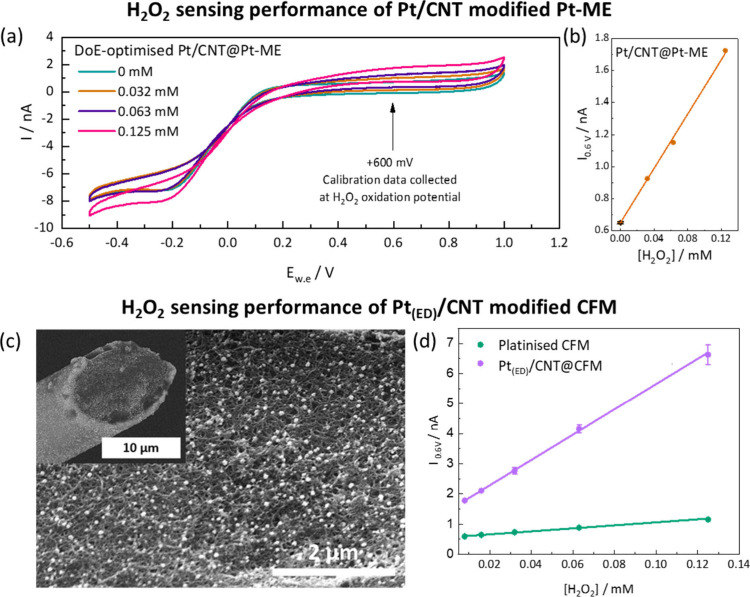 Figure 5
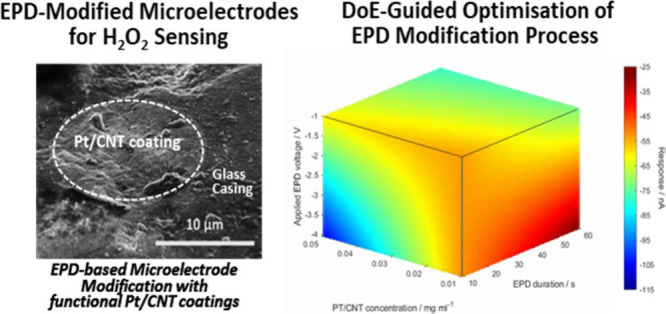 Figure 6
 Figure 7
 Figure 8
 Figure 9
 Figure 10
 Figure 11
 Figure 12
Peer Reviews
No public reviews on file for this paper yet. If you reviewed it on a platform where reviews are public (OpenReview, ICLR, NeurIPS, ICML), you can paste yours below so the community can read it here.
Videos
No videos yet. Explain this paper in a talk, walkthrough, or lecture? Add one.
Taxonomy
TopicsElectrochemical Analysis and Applications · Advanced biosensing and bioanalysis techniques · Electrochemical sensors and biosensors