Engineering Ultraporous and Highly Stable Polyacrylonitrile/Poly(vinyl alcohol) Sponges with High Water Absorption Capacity
Michèle-Louise Regner, Mateus Gruener Lima, Annika Thormann, Rafaela Debastiani, Juliana Martins de Souza e Silva

TL;DR
Researchers created highly absorbent sponges from polyacrylonitrile and polyvinyl alcohol for use in water management and biomedical applications.
Contribution
A novel four-stage process produces ultraporous sponges with exceptional water absorption and stability.
Findings
The sponges achieved a water absorption capacity of up to 16000% of their dry weight.
The wet sponges showed greater elongation and compliance compared to dry sponges.
Microstructural changes during stretching were observed using in situ tensile testing and micro-CT analysis.
Abstract
Ultraporous sponges capable of absorbing large quantities of water-based liquids are of great interest in various fields of research. In this study, ultraporous polyacrylonitrile/poly(vinyl alcohol) (PAN/PVA) sponges with exceptional water absorption capacityup to 16000% of their dry weightwere produced through a four-stage process: electrospinning, short fiber suspension creation, freeze-drying, and PVA cross-linking with different maleic anhydride (MA) concentrations. Characterization by electron microscopy and X-ray microscopy revealed a porosity of 90% and an average fiber thickness of 0.4 μm. Mechanical tests demonstrate that the wet sponge is more compliant and experiences greater elongation than the dry sponge, with failure occurring below 20% strain in dry samples and above 40% when wet. In situ tensile testing in a micro-CT scanner and digital volume correlation analysis…
Genes, proteins, chemicals, diseases, species, mutations and cell lines named across the full text — each resolved to its canonical identifier and authoritative record.
Click any figure to enlarge with its caption.
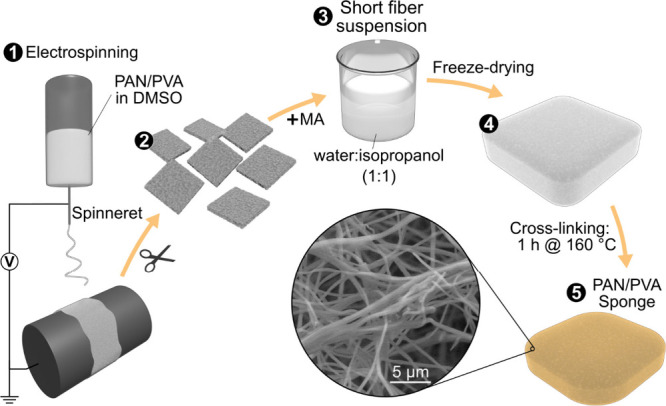 Figure 1
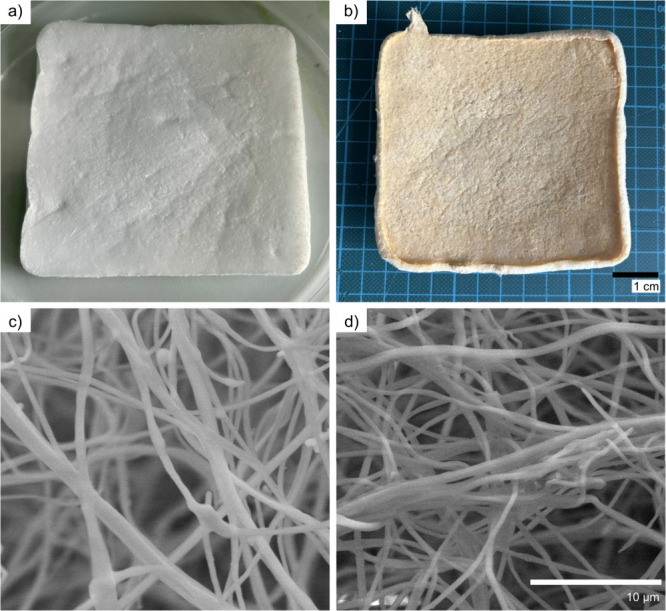 Figure 2
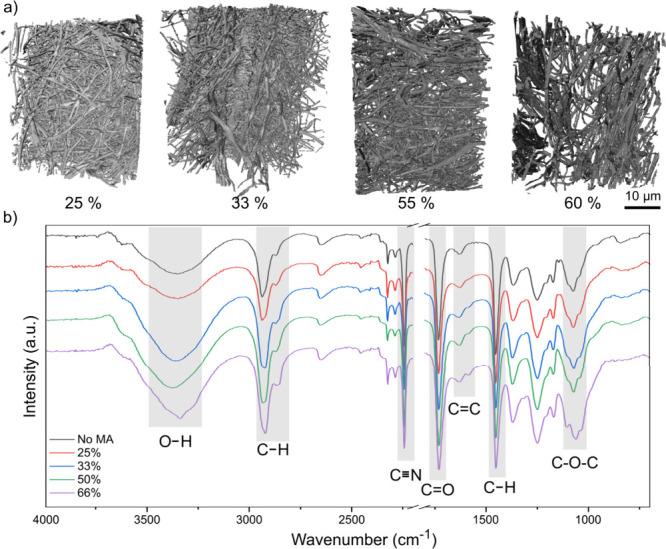 Figure 3
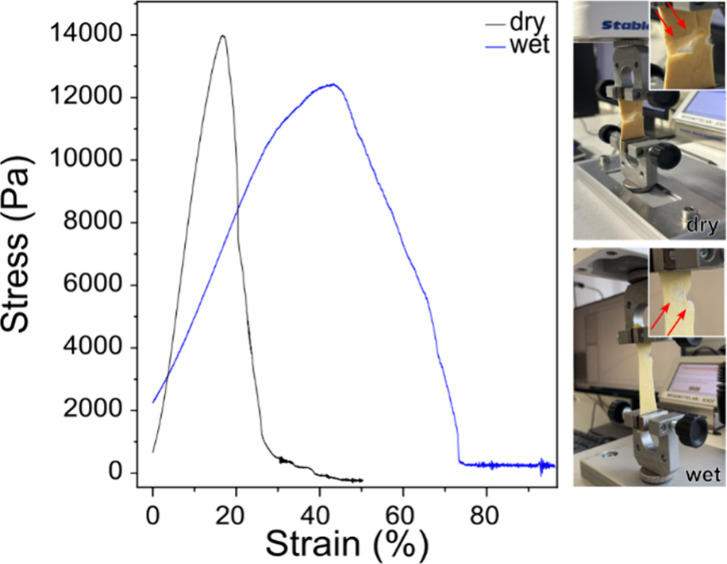 Figure 4
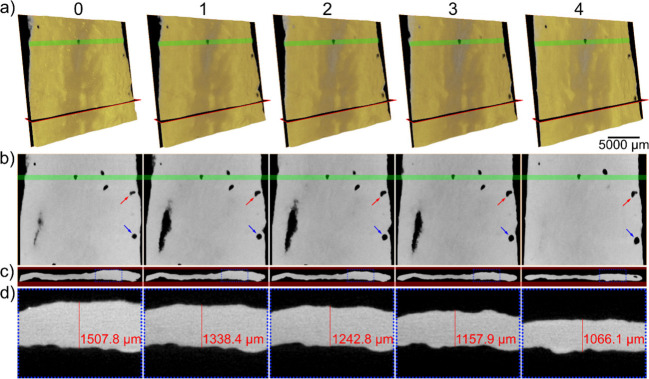 Figure 5
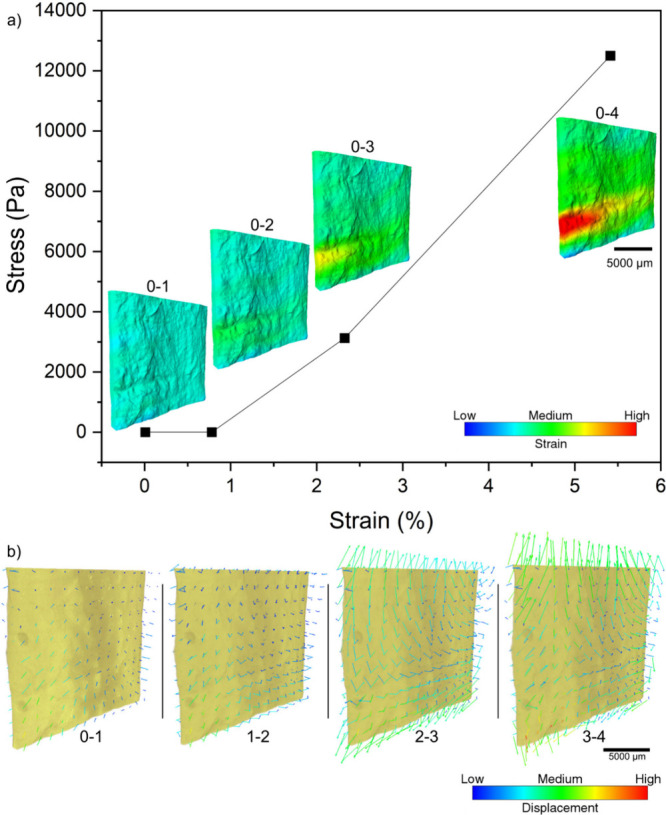 Figure 6
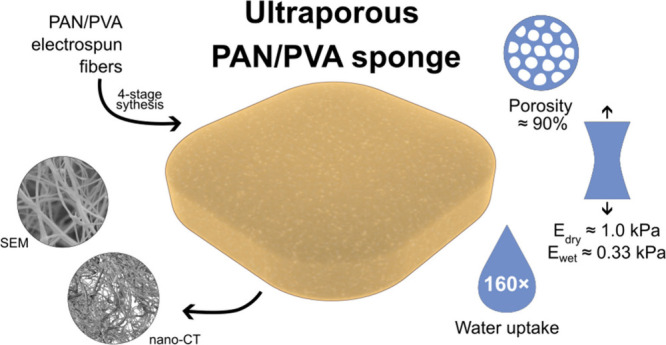 Figure 7
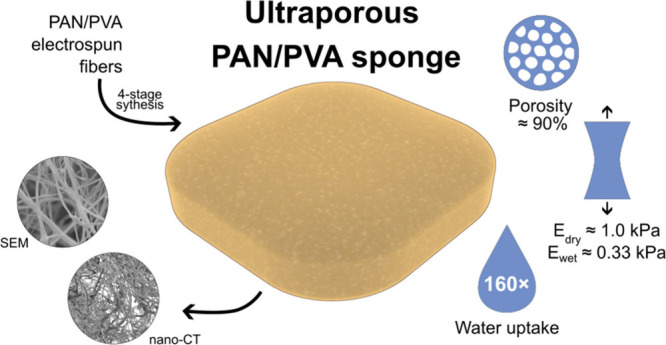 Figure 8
 Figure 9
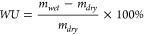 Figure 10
Peer Reviews
No public reviews on file for this paper yet. If you reviewed it on a platform where reviews are public (OpenReview, ICLR, NeurIPS, ICML), you can paste yours below so the community can read it here.
Videos
No videos yet. Explain this paper in a talk, walkthrough, or lecture? Add one.
Taxonomy
TopicsElectrospun Nanofibers in Biomedical Applications · Advanced Cellulose Research Studies · Hydrogels: synthesis, properties, applications