Effects of ambient humidity and surface topography on fingermark recovery from PLA 3D‐printed surfaces
Laura J. Vera Stimpson, Breeshea Robinson, Julie Bramble, Andrew Langley, Diana‐Madalina Suciu

TL;DR
This paper studies how 3D-printed PLA surfaces affect the recovery of latent fingermarks, finding that surface topography and humidity influence detection methods.
Contribution
The study introduces a systematic evaluation of fingermark recovery on 3D-printed PLA surfaces, highlighting the impact of raster lines and development direction.
Findings
Applying powder along the 3D print grain minimizes accumulation and improves ridge detail visibility.
Cyanoacrylate ester fuming enhances ridge continuity on top and side surfaces of 3D-printed objects.
Surface topography from raster lines disrupts ridge transfer, affecting quality grades.
Abstract
The increasing accessibility of 3D printing, made possible by the affordability of equipment and materials, has led to its widespread adoption in both domestic and industrial applications, with polylactic acid (PLA) being a commonly used material. The layer‐by‐layer deposition process in fused deposition modeling creates surface texture variations that significantly influence the development and recovery of latent fingermarks. This study examined the effect of raster lines on fingermark development by depositing latent fingermarks on the X, Y, and Z faces of 3D‐printed PLA objects. Powder development was applied both along and against the 3D print grain. Development against the grain caused excess powder accumulation within raster lines, partially obscuring ridge detail. In contrast, applying powder along the grain minimized accumulation, enabling clearer visualization of ridge…
Genes, proteins, chemicals, diseases, species, mutations and cell lines named across the full text — each resolved to its canonical identifier and authoritative record.
Click any figure to enlarge with its caption.
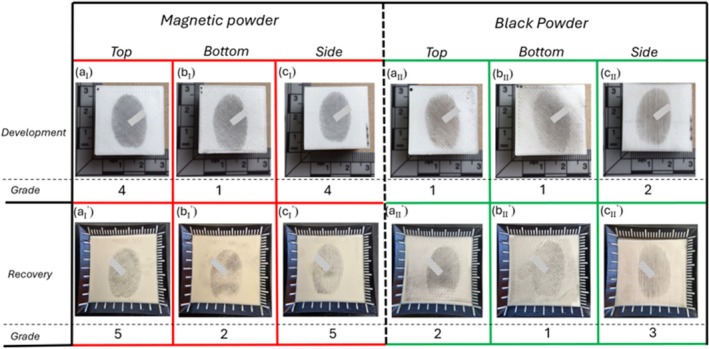 Figure 1
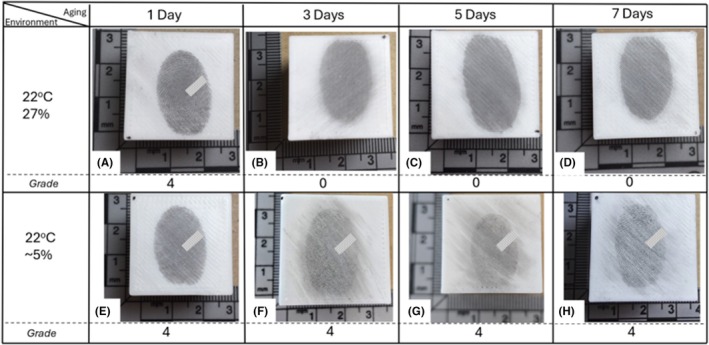 Figure 2
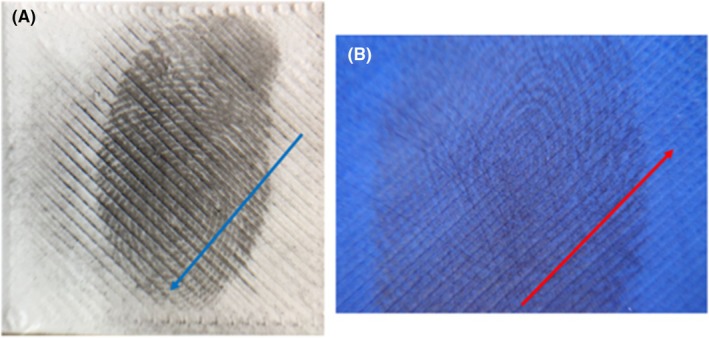 Figure 3
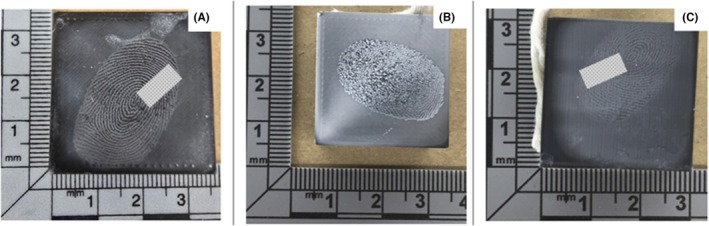 Figure 4
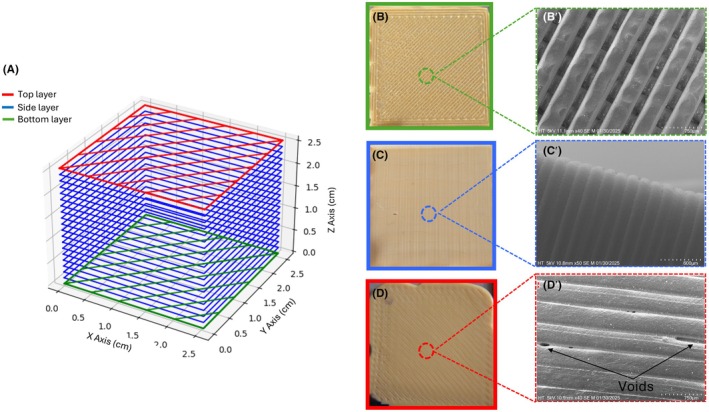 Figure 5
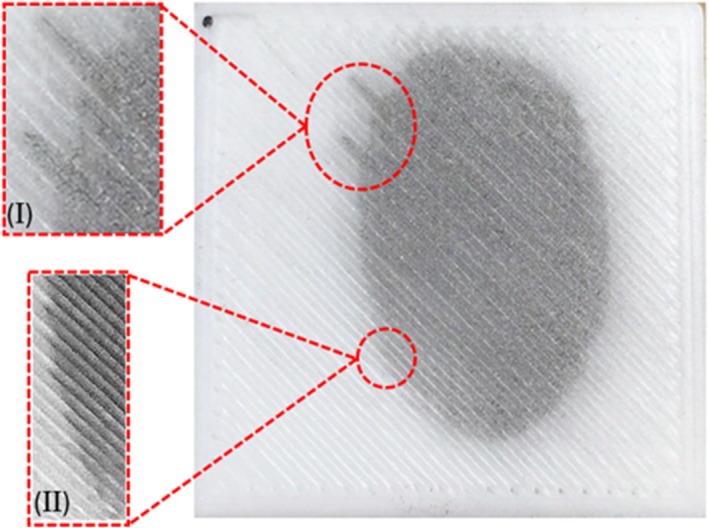 Figure 6
Peer Reviews
No public reviews on file for this paper yet. If you reviewed it on a platform where reviews are public (OpenReview, ICLR, NeurIPS, ICML), you can paste yours below so the community can read it here.
Videos
No videos yet. Explain this paper in a talk, walkthrough, or lecture? Add one.
Taxonomy
TopicsAdditive Manufacturing and 3D Printing Technologies · 3D Printing in Biomedical Research · Dental materials and restorations