Predicting Sleep and Sleep Stage in Children Using Actigraphy and Heartrate via a Long Short-Term Memory Deep Learning Algorithm: A Performance Evaluation
R. Glenn Weaver, James W. White, Olivia Finnegan, Hongpeng Yang, Zifei Zhong, Keagan Kiely, Catherine Jones, Yan Tong, Srihari Nelakuditi, Rahul Ghosal, David E. Brown, Russ Pate, Gregory J. Welk, Massimiliano de Zambotti, Yuan Wang, Sarah Burkart, Elizabeth L. Adams

TL;DR
This study shows that LSTM deep learning can accurately predict sleep and wake states in children using actigraphy and heart rate data, outperforming traditional methods.
Contribution
The novel use of LSTM with actigraphy and heart rate data improves sleep stage prediction in children compared to conventional algorithms.
Findings
LSTM achieved 94.1–95.1% accuracy in sleep versus wake classification across devices.
Heart rate data improved sleep stage prediction but not binary sleep/wake classification.
LSTM outperformed logistic regression and random forest in sleep detection.
Abstract
Children's ambulatory sleep is commonly measured via actigraphy. However, traditional actigraphy measured sleep (e.g., Sadeh algorithm) struggles to predict wake (i.e., specificity, values typically < 70) and cannot predict sleep stages. Long short-term memory (LSTM) is a machine learning algorithm that may address these deficiencies. This study evaluated the agreement of LSTM sleep estimates from actigraphy and heartrate (HR) data with polysomnography (PSG). Children (N = 238, 5–12 years, 52.8% male, 50% Black 31.9% White) participated in an overnight laboratory polysomnography. Participants were referred because of suspected sleep disruptions. Children wore an ActiGraph GT9X accelerometer and two of three consumer wearables (i.e., Apple Watch Series 7, Fitbit Sense, Garmin Vivoactive 4) on their non-dominant wrist during the polysomnogram. LSTM estimated sleep versus wake and sleep…
Genes, proteins, chemicals, diseases, species, mutations and cell lines named across the full text — each resolved to its canonical identifier and authoritative record.
Click any figure to enlarge with its caption.
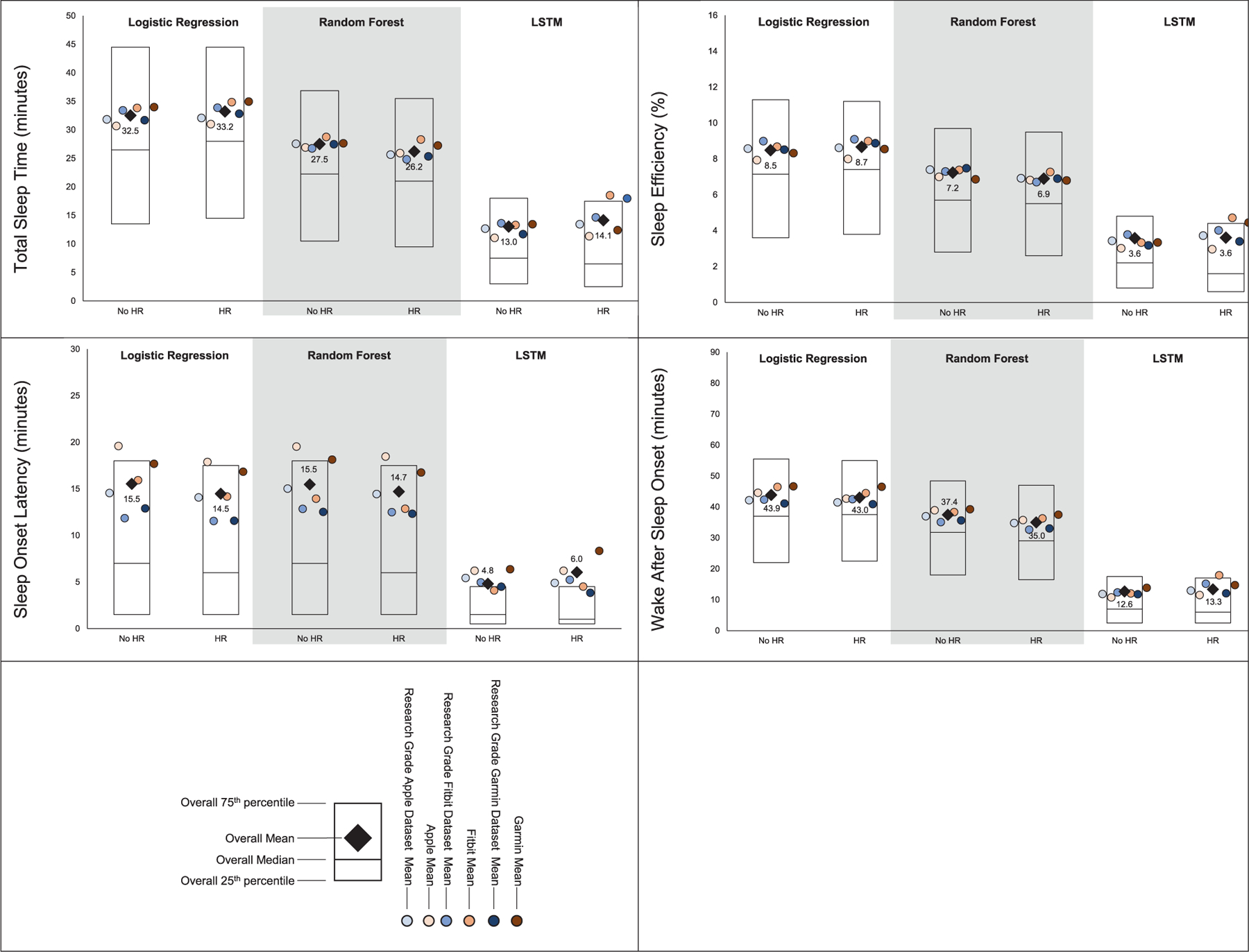 Figure 1
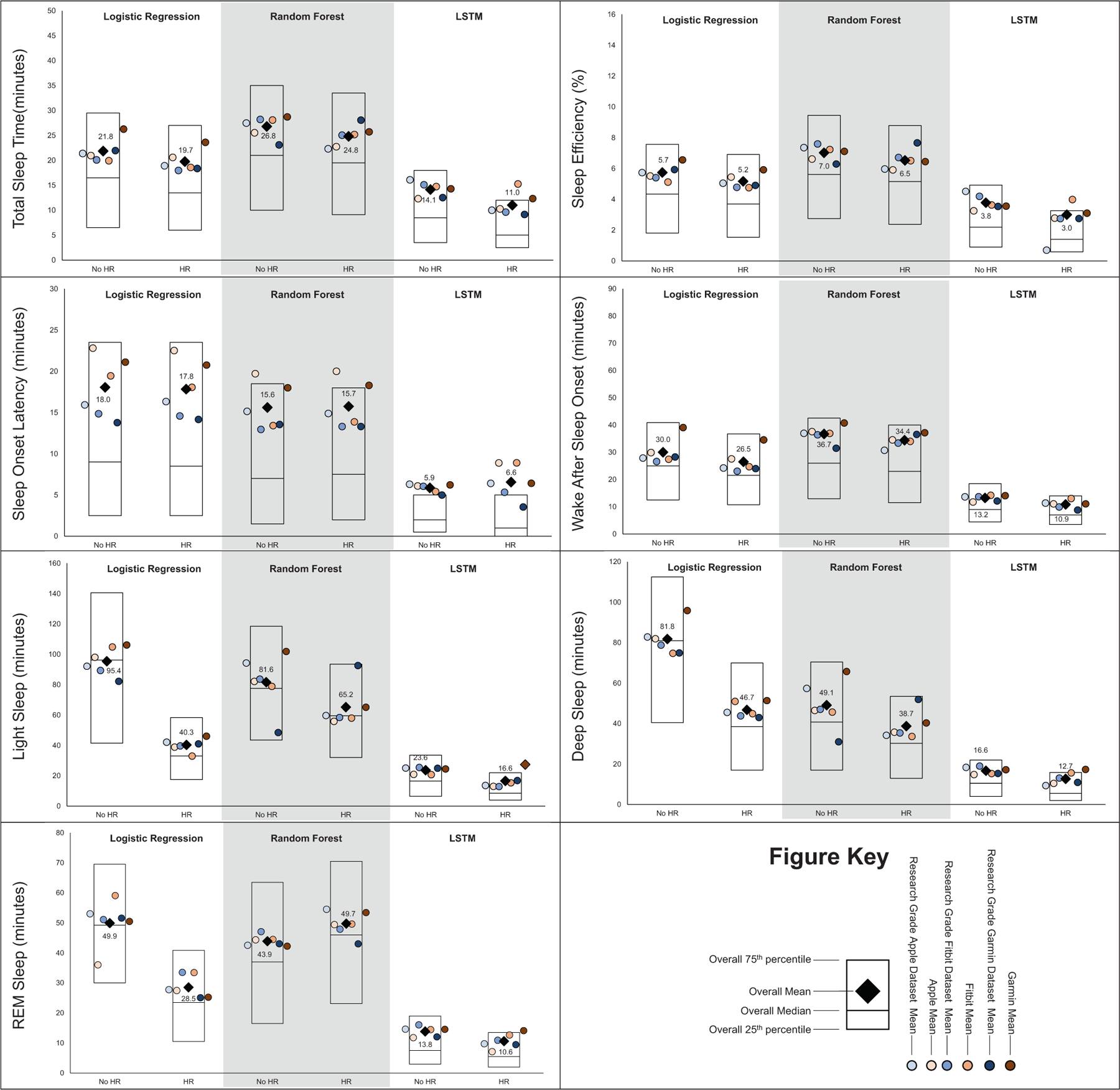 Figure 2
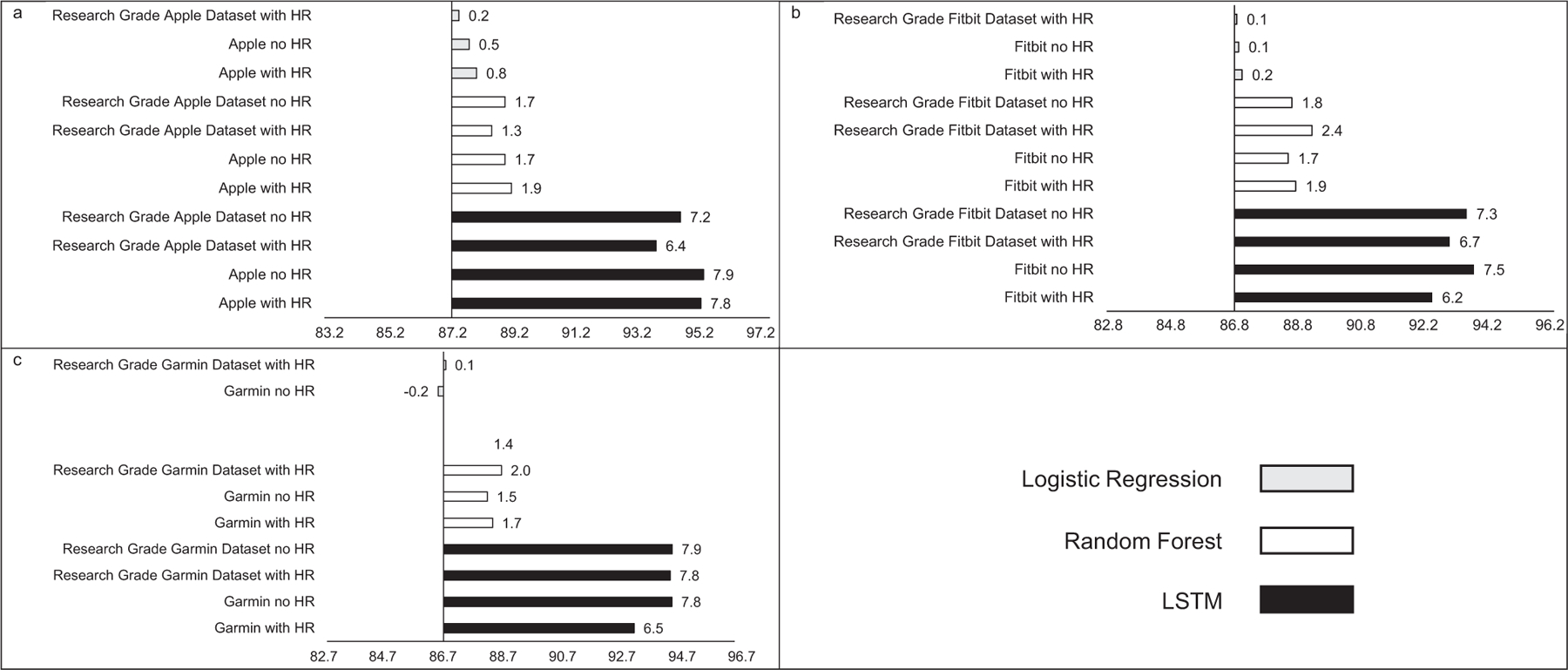 Figure 3
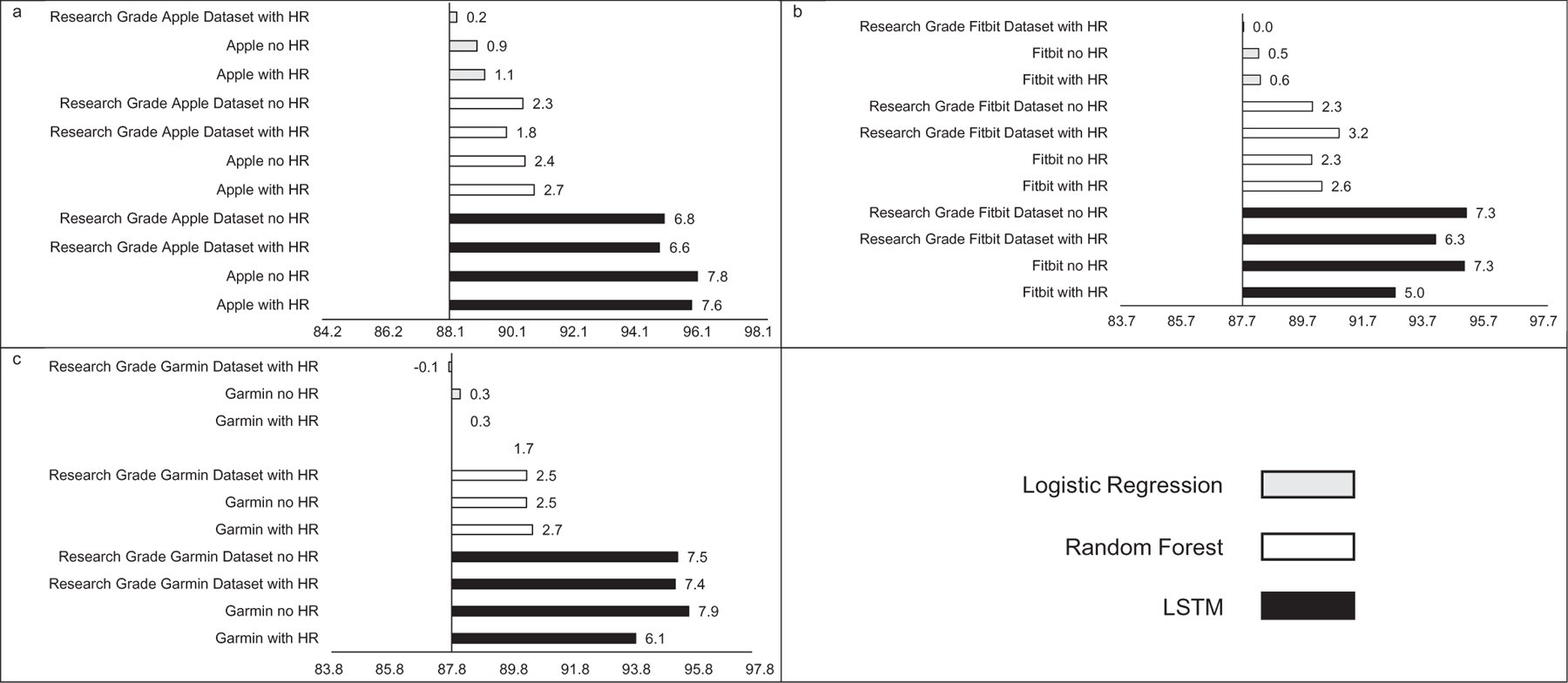 Figure 4
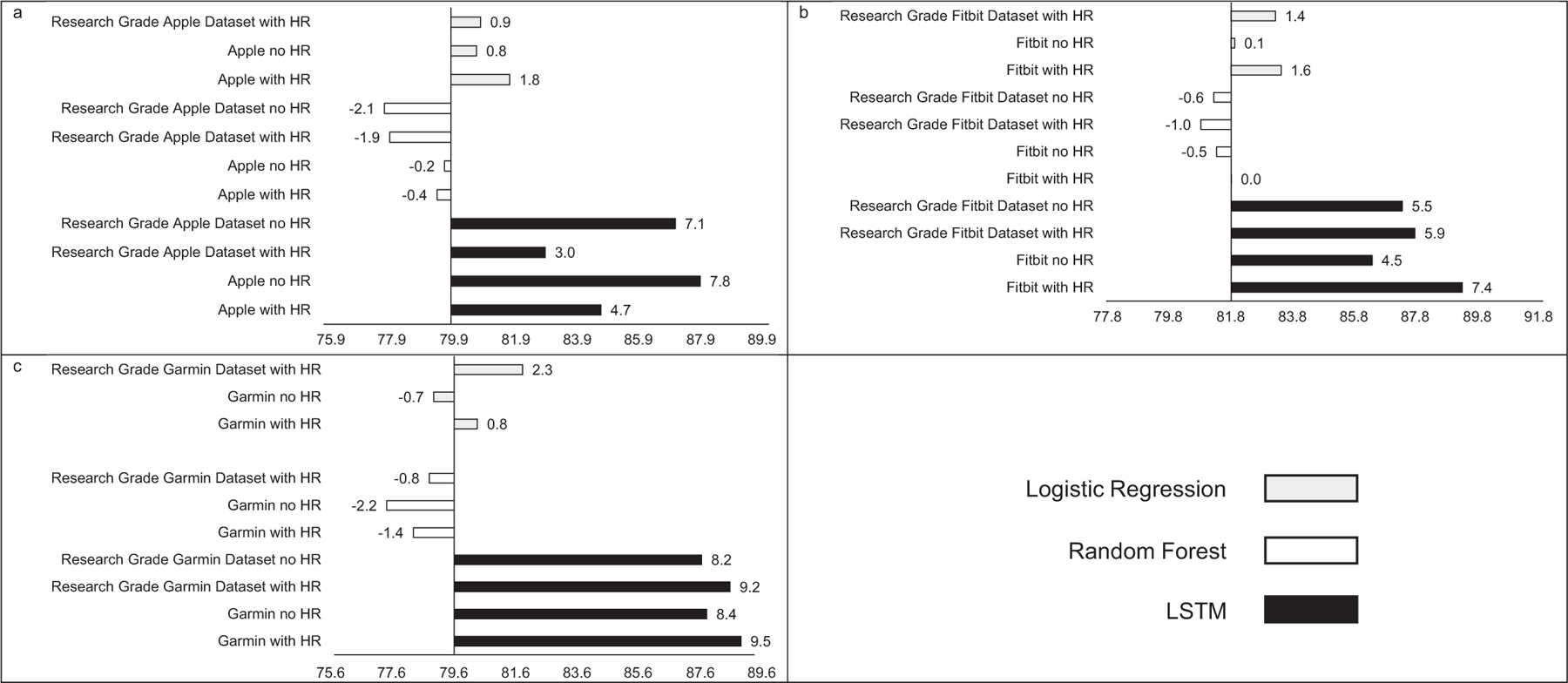 Figure 5
Peer Reviews
No public reviews on file for this paper yet. If you reviewed it on a platform where reviews are public (OpenReview, ICLR, NeurIPS, ICML), you can paste yours below so the community can read it here.
Videos
No videos yet. Explain this paper in a talk, walkthrough, or lecture? Add one.
Taxonomy
TopicsSleep and related disorders · Sleep and Wakefulness Research · Obstructive Sleep Apnea Research