Fetal magnetic resonance imaging diagnosis of pulmonary lymphangiectasia in hypoplastic left heart syndrome: Association with fetal echocardiography and postnatal outcome
Greg Leonard, Alexia Egloff, Gema Priego, Tomas Woodgate, Wendy Norman, Milou PM van Poppel, Johannes Steinweg, Thomas Day, Vita Zidere, Owen Miler, Reza Razavi, John M. Simpson, Trisha Vigneswaran, Kuberan Pushparajah, David F.A. Lloyd

TL;DR
This study explores how fetal MRI can detect lung changes in fetuses with heart defects and how these findings relate to heart function and outcomes after birth.
Contribution
The study introduces a new approach to evaluating fetal MRI and echocardiography in hypoplastic left heart syndrome.
Findings
30% of fetuses showed suspicious or diagnostic features of pulmonary lymphangiectasia on MRI.
Pulmonary venous obstruction on echocardiography was significantly associated with MRI findings of PL.
Neither PL nor PVO predicted the need for early postnatal intervention or survival.
Abstract
Secondary pulmonary lymphangiectasia (PL) is a recognised complication of hypoplastic left heart syndrome (HLHS) with an intact or restrictive atrial septum, associated with poor postnatal outcomes. Fetal MRI has been increasingly used to assess pulmonary abnormalities in HLHS, but the prognostic significance of subtle PL-like changes remains unclear. In this study, we evaluate the relationship between fetal MRI lung findings, echocardiographic markers of pulmonary venous obstruction, and postnatal outcomes. A retrospective analysis of all fetuses with HLHS who underwent fetal MRI between July 2019 and December 2022 was performed. MRI images were reviewed for features of PL and categorised as “normal,” “suspicious,” or “diagnostic” of PL. Pulmonary venous Doppler velocity-time integral (VTI) ratios from the most recent fetal echocardiogram were then compared to MRI findings. Postnatal…
Genes, proteins, chemicals, diseases, species, mutations and cell lines named across the full text — each resolved to its canonical identifier and authoritative record.
Click any figure to enlarge with its caption.
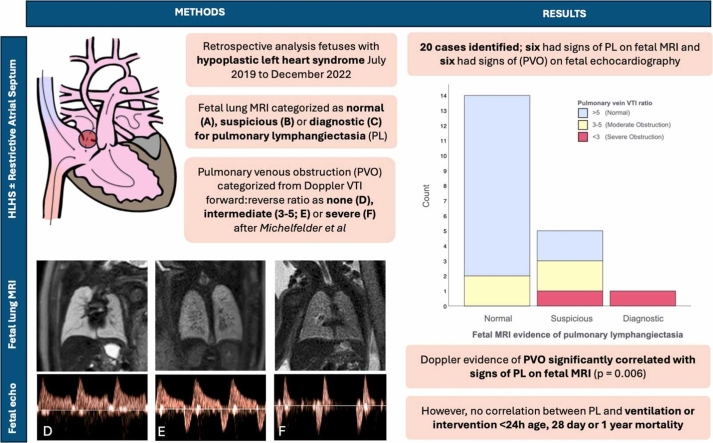 Figure 1
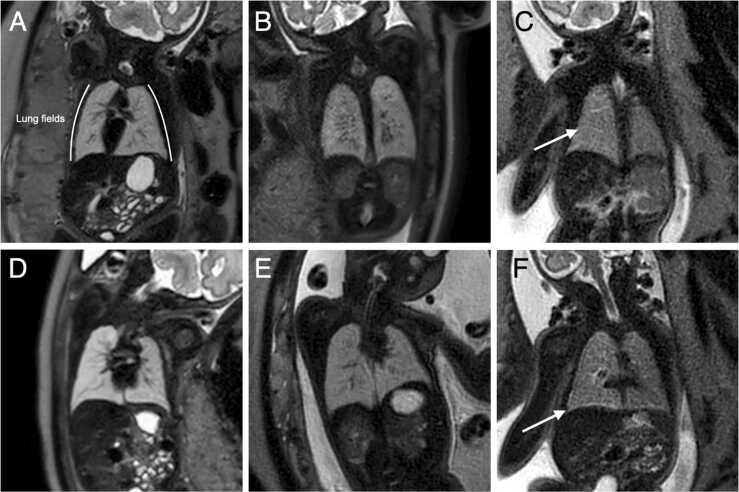 Figure 2
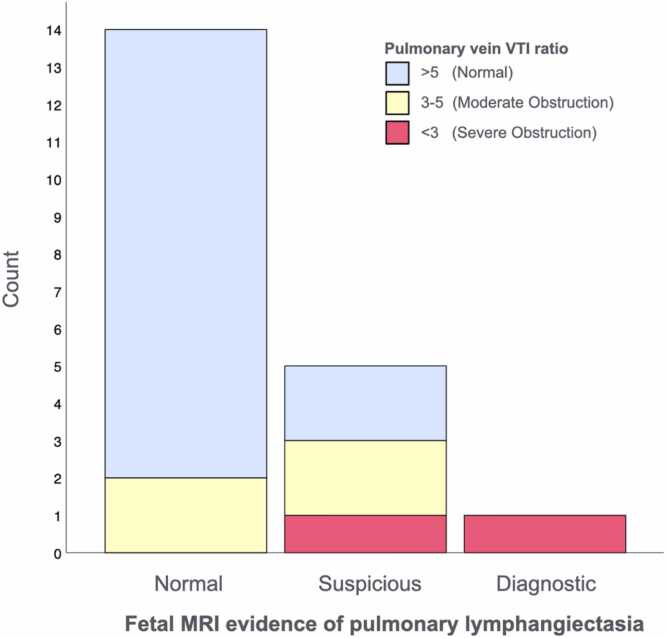 Figure 3
Peer Reviews
No public reviews on file for this paper yet. If you reviewed it on a platform where reviews are public (OpenReview, ICLR, NeurIPS, ICML), you can paste yours below so the community can read it here.
Videos
No videos yet. Explain this paper in a talk, walkthrough, or lecture? Add one.
Taxonomy
TopicsLymphatic Disorders and Treatments · Vascular Malformations and Hemangiomas · Congenital Diaphragmatic Hernia Studies