A comparison of T1ρ with native T1 and T2 mapping for detecting edema in takotsubo cardiomyopathy
Liene Balode, Robert Kelly, David M. Higgins, David Gamble, Dana Dawson, P. James Ross

TL;DR
This study compares T1ρ, T1, and T2 mapping to detect heart muscle swelling in takotsubo cardiomyopathy, finding that T1 and T2 mapping are more effective.
Contribution
The study introduces a direct comparison of T1ρ with established T1 and T2 mapping techniques for edema detection in takotsubo cardiomyopathy.
Findings
T1ρ relaxation times were significantly higher in mid and apical segments during takotsubo baseline scans.
T2 and native T1 relaxation times were elevated in all segments during takotsubo baseline scans compared to follow-up and healthy controls.
Native T1 and T2 mapping showed better sensitivity for detecting edema than T1ρ mapping.
Abstract
The use of parametric T1 mapping and T2 mapping cardiovascular magnetic resonance (CMR) in takotsubo cardiomyopathy has shown elevated native T1 and T2 relaxation times. In addition to native T1 and T2 mapping, a new native image parametric mapping method using T1 relaxation in the rotating frame (T1ρ) has shown potential to assess myocardial tissue characterization. This study aims to compare T1ρ with native T1 and T2 myocardial mapping in takotsubo cardiomyopathy. T1ρ, T2, and native T1 relaxation times were obtained for 51 patients (96% (49/51) female, mean age 69) diagnosed with takotsubo cardiomyopathy and 16 healthy subjects (100% (16/16) female, mean age 41). The baseline scan for the takotsubo cohort was done within 3 weeks after symptom onset, with follow-up scans carried out on average 9 weeks after the baseline scan. Cardiac function and T1ρ, T2, native T1 maps of basal,…
Genes, proteins, chemicals, diseases, species, mutations and cell lines named across the full text — each resolved to its canonical identifier and authoritative record.
Click any figure to enlarge with its caption.
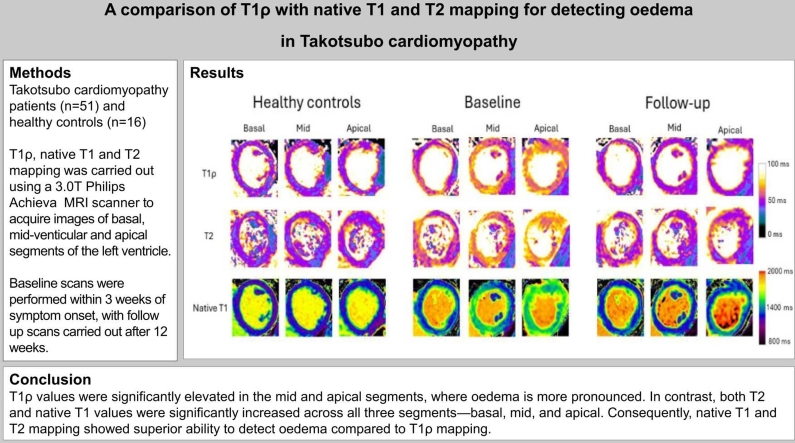 Figure 1
 Figure 2
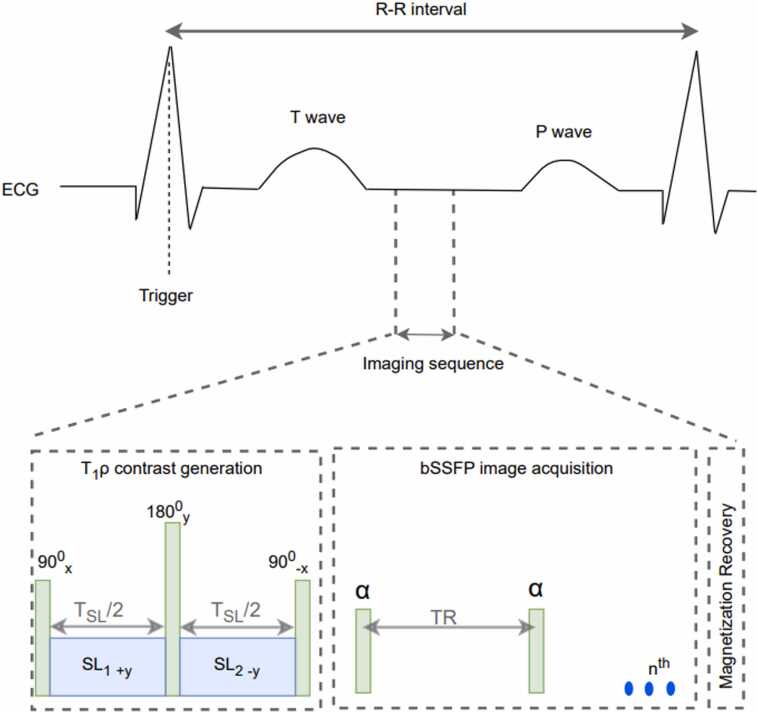 Figure 3
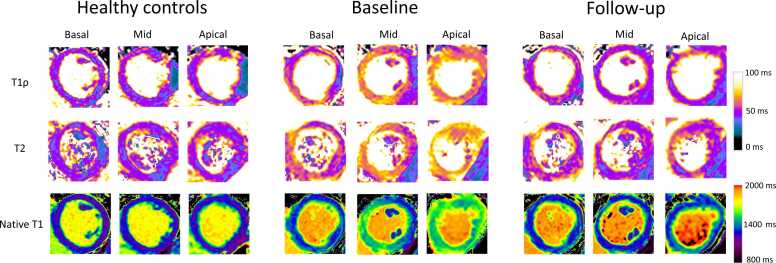 Figure 4
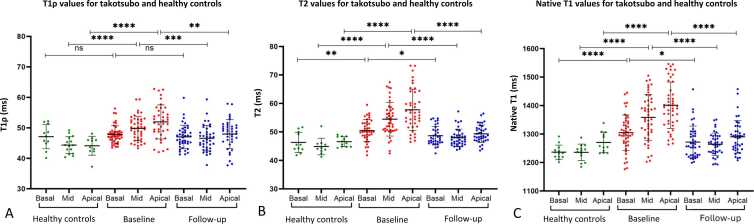 Figure 5
Peer Reviews
No public reviews on file for this paper yet. If you reviewed it on a platform where reviews are public (OpenReview, ICLR, NeurIPS, ICML), you can paste yours below so the community can read it here.
Videos
No videos yet. Explain this paper in a talk, walkthrough, or lecture? Add one.
Taxonomy
TopicsTakotsubo Cardiomyopathy and Associated Phenomena · Cardiac Imaging and Diagnostics · Cardiac Structural Anomalies and Repair