ATAD3 duplications bridge mitochondrial diseases and Aicardi–Goutières syndrome
Pauline Planté‐Bordeneuve, Claire‐Marine Bérat, Sylvain Hanein, Cyril Gitiaux, Brian Sperelakis‐Beedham, Brian Sperelakis‐Beedham, Zahra Assouline, Marie‐Thérèse Abi‐Warde, Rukhshona Abdullazoda, Agnès Guichet, Céline Bris, Aurélien Caux, Marlène Rio, Jérémy Bertrand

TL;DR
A genetic duplication in the ATAD3 gene causes severe mitochondrial disease in newborns, with brain imaging and immune responses similar to a rare neurological condition.
Contribution
The study expands the clinical understanding of ATAD3 duplications and links them to interferonopathies through mitochondrial dysfunction.
Findings
ATAD3 duplications are associated with severe neonatal mitochondrial disease and features resembling Aicardi–Goutières syndrome.
Patients showed elevated cerebrospinal fluid markers of immune activation, suggesting a mitochondrial nucleic acid-triggered interferon response.
Neuroimaging findings included white matter abnormalities and temporal cystic leukoencephalopathy in most patients.
Abstract
A recurrent 68‐kb heterozygous duplication of the ATAD3 locus has been implicated in a mitochondrial disorder characterized by prenatal or neonatal onset and rapidly fatal course with cardiomyopathy, hyperlactataemia, cataract, and encephalopathy. We analysed the clinical, neuroimaging, and molecular spectrum associated with duplication of the ATAD3 gene cluster in nine patients (four males, five females; age range: 3 days–3 years, median: 11 days, mean: 7.8 months, SD: 1 year 1 month). Five patients presented with prenatal signs (intrauterine growth restriction in four of nine and cardiac abnormalities in three of nine) leading to medical termination of pregnancy in one case. All live‐born children presented with neonatal hypotonia, frequently associated with cardiomyopathy (five of eight), cataract or corneal opacities (five of eight), and hyperlactataemia (six of eight). Two patients…
Genes, proteins, chemicals, diseases, species, mutations and cell lines named across the full text — each resolved to its canonical identifier and authoritative record.
Click any figure to enlarge with its caption.
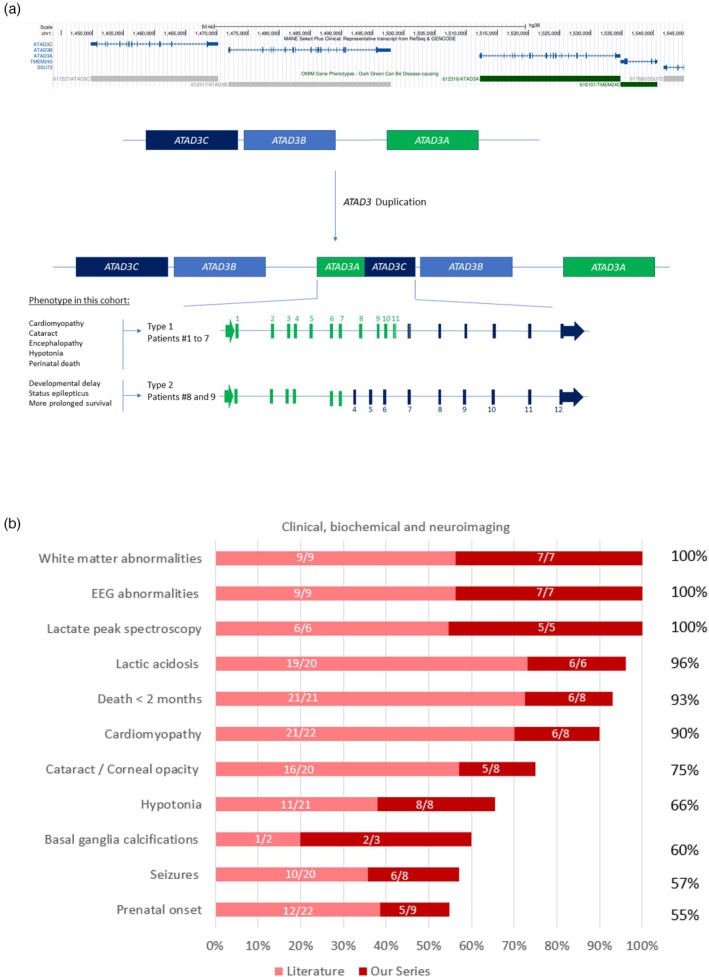 Figure 1
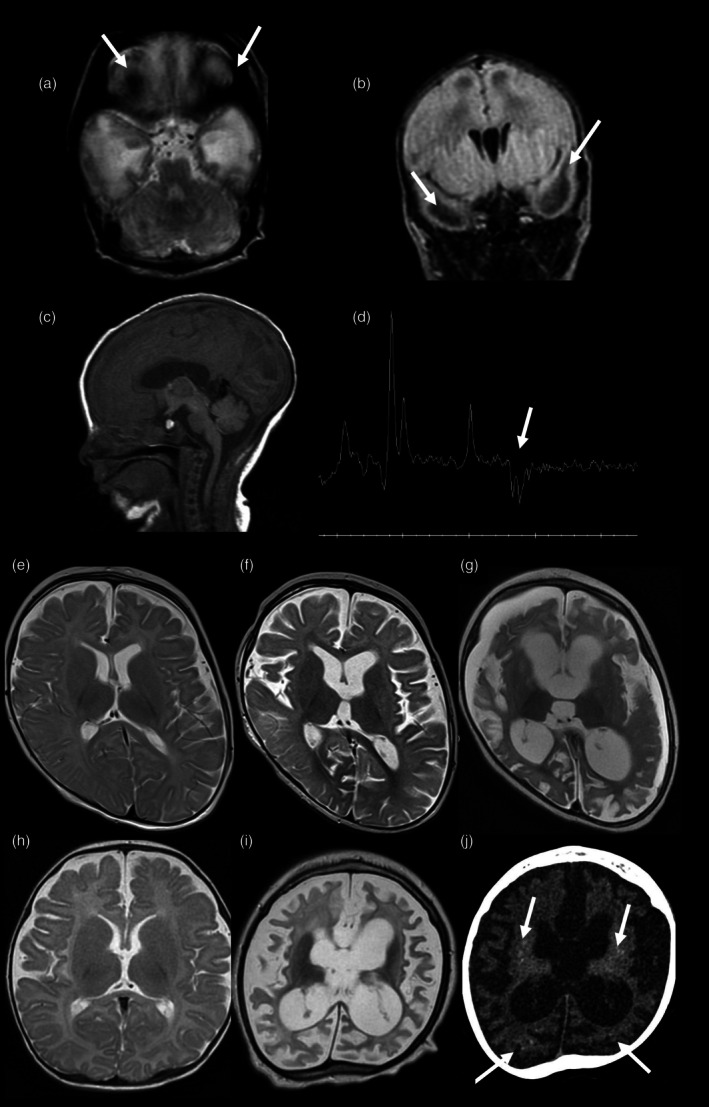 Figure 2
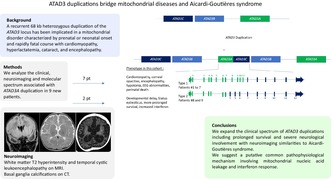 Figure 3
Peer Reviews
No public reviews on file for this paper yet. If you reviewed it on a platform where reviews are public (OpenReview, ICLR, NeurIPS, ICML), you can paste yours below so the community can read it here.
Videos
No videos yet. Explain this paper in a talk, walkthrough, or lecture? Add one.
Taxonomy
TopicsRNA modifications and cancer · Mitochondrial Function and Pathology · Ubiquitin and proteasome pathways