Effectiveness and safety of abobotulinumtoxinA in pediatric lower limb spasticity: A phase IV, prospective, observational, multicenter study
Mark E. Gormley, Edward Dabrowski, Mauricio R. Delgado, Ann Tilton, Asare Christian, Sarah Helen Evans, Anne‐Sophie Grandoulier, Jumaah Goldberg

TL;DR
This study shows that abobotulinumtoxinA is effective and safe for treating lower limb spasticity in children over multiple treatment cycles.
Contribution
Longitudinal assessment of goal attainment and safety of repeated abobotulinumtoxinA injections in pediatric spasticity.
Findings
75.2% of patients achieved their primary goals with abobotulinumtoxinA treatment.
Adverse events were mostly mild to moderate, with a low incidence of treatment-related events.
GAS T-scores were higher in ambulatory compared to non-ambulatory patients.
Abstract
To assess the longitudinal attainment of patient‐centered, function‐related Goal Attainment Scaling Total (GAS T)‐score after repeated abobotulinumtoxinA (AboBoNT‐A) injections over a period of up to 30 months and up to 10 cycles. In this prospective observational study, the investigators' clinical practices recruited patients aged 2 to 17 years with pediatric lower limb spasticity (PLLS). GAS T‐scores were assessed for each injection, and goals could be redefined at each visit; scores of 50 reflected goal achievement. Adverse events were recorded. Of 210 patients in the effectiveness population, 171 had cerebral palsy and 163 were previously treated with a botulinum neurotoxin. Available Gross Motor Function Classification System levels showed that 31.3% (61 out of 195) of patients were non‐ambulatory. Mean (SD) cumulative GAS T‐score was 51.1 (9.3) across the study duration; 75.2%…
Genes, proteins, chemicals, diseases, species, mutations and cell lines named across the full text — each resolved to its canonical identifier and authoritative record.
Click any figure to enlarge with its caption.
 Figure 1
 Figure 2
 Figure 3
 Figure 4
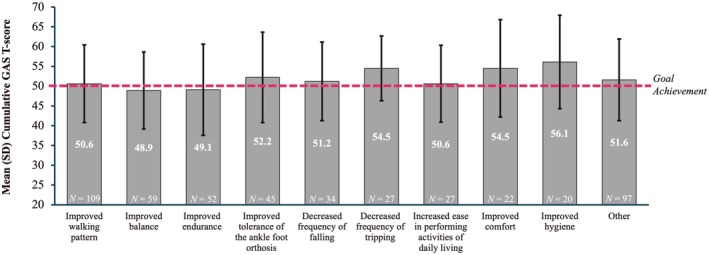 Figure 5
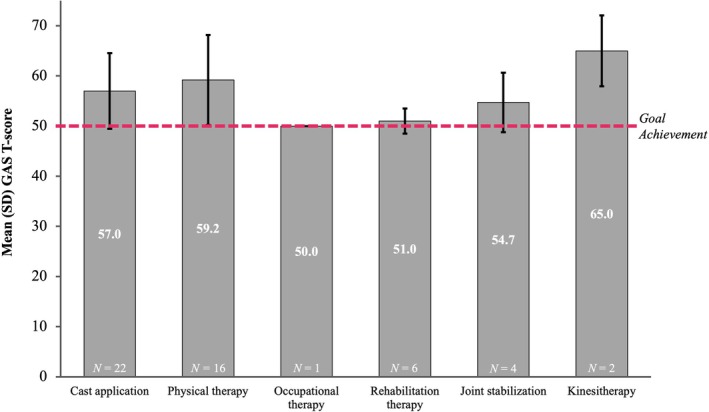 Figure 6
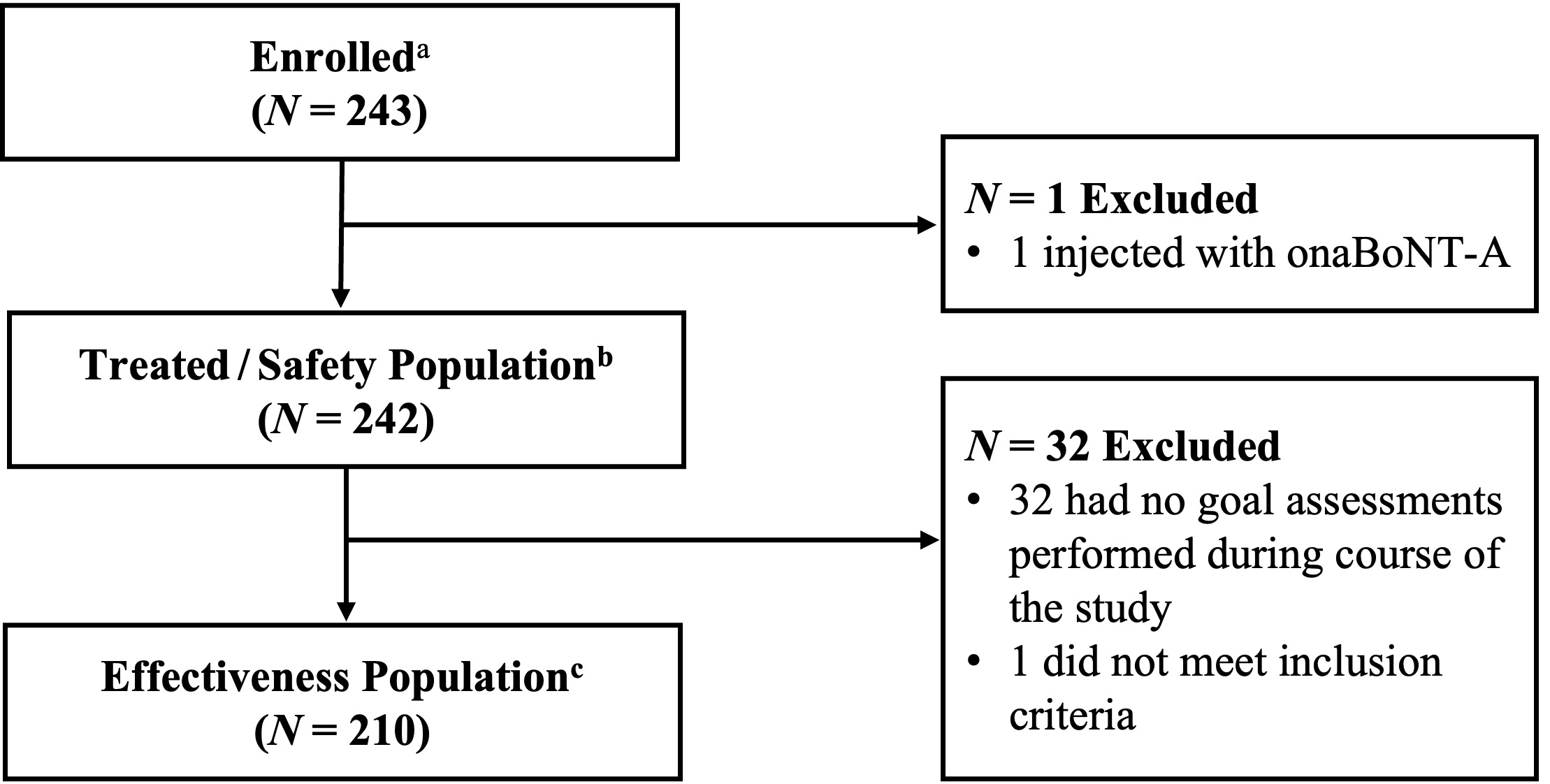 Figure 7
Peer Reviews
No public reviews on file for this paper yet. If you reviewed it on a platform where reviews are public (OpenReview, ICLR, NeurIPS, ICML), you can paste yours below so the community can read it here.
Videos
No videos yet. Explain this paper in a talk, walkthrough, or lecture? Add one.
Taxonomy
TopicsBotulinum Toxin and Related Neurological Disorders · Cerebral Palsy and Movement Disorders · Stroke Rehabilitation and Recovery