Brain lesion extent, growth, and body composition in children with cerebral palsy
Stina Oftedal, Simona Fiori, Kristie L. Bell, Katherine A. Benfer, Leanne Sakzewski, Robert S. Ware, Peter S. W. Davies, Roslyn N. Boyd

TL;DR
This study found that more severe brain lesions in children with cerebral palsy are linked to lower height, weight, and head size, but not to body fat or muscle composition.
Contribution
The study is the first to link brain lesion extent measured by MRI with growth and body composition in children with cerebral palsy.
Findings
Greater brain lesion extent was associated with lower height, weight, and head circumference z-scores.
No significant associations were found between brain lesion extent and fat mass or fat-free mass indices.
The corpus callosum and hemispheric scores showed the strongest associations with growth measures.
Abstract
To investigate the relationship between growth, body composition, and the extent of brain lesion measured using structural magnetic resonance imaging (MRI) in children with cerebral palsy (CP). This prospective population‐based cohort study recorded 359 assessments from 124 children with CP aged 18 months to 13 years (38% female, Gross Motor Function Classification System [GMFCS] levels I = 50, II = 24, III = 17, IV = 12, and V = 21). A neurologist assessed the extent of the brain lesion using a validated semi‐quantitative scale (global, basal ganglia/brainstem, hemispheric and corpus callosum scores). Height (HTZ), weight (WTZ), and head circumference (HDZ) z‐scores were calculated. The Fat Mass Index (FMI) and Fat‐Free Mass Index (FFMI) were determined using a deuterium dilution technique, bioelectrical impedance or dual‐energy X‐ray absorptiometry, and height. Data were analysed…
Genes, proteins, chemicals, diseases, species, mutations and cell lines named across the full text — each resolved to its canonical identifier and authoritative record.
Click any figure to enlarge with its caption.
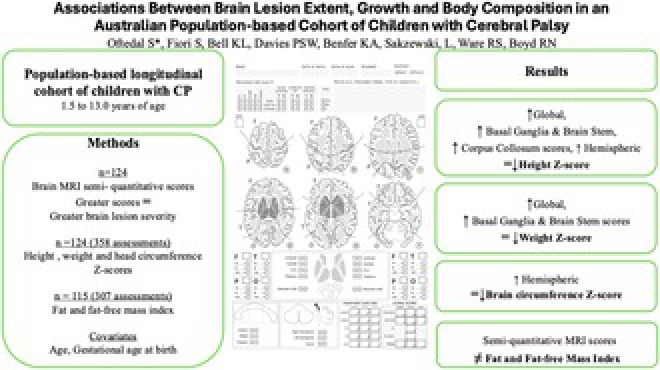 Figure 1
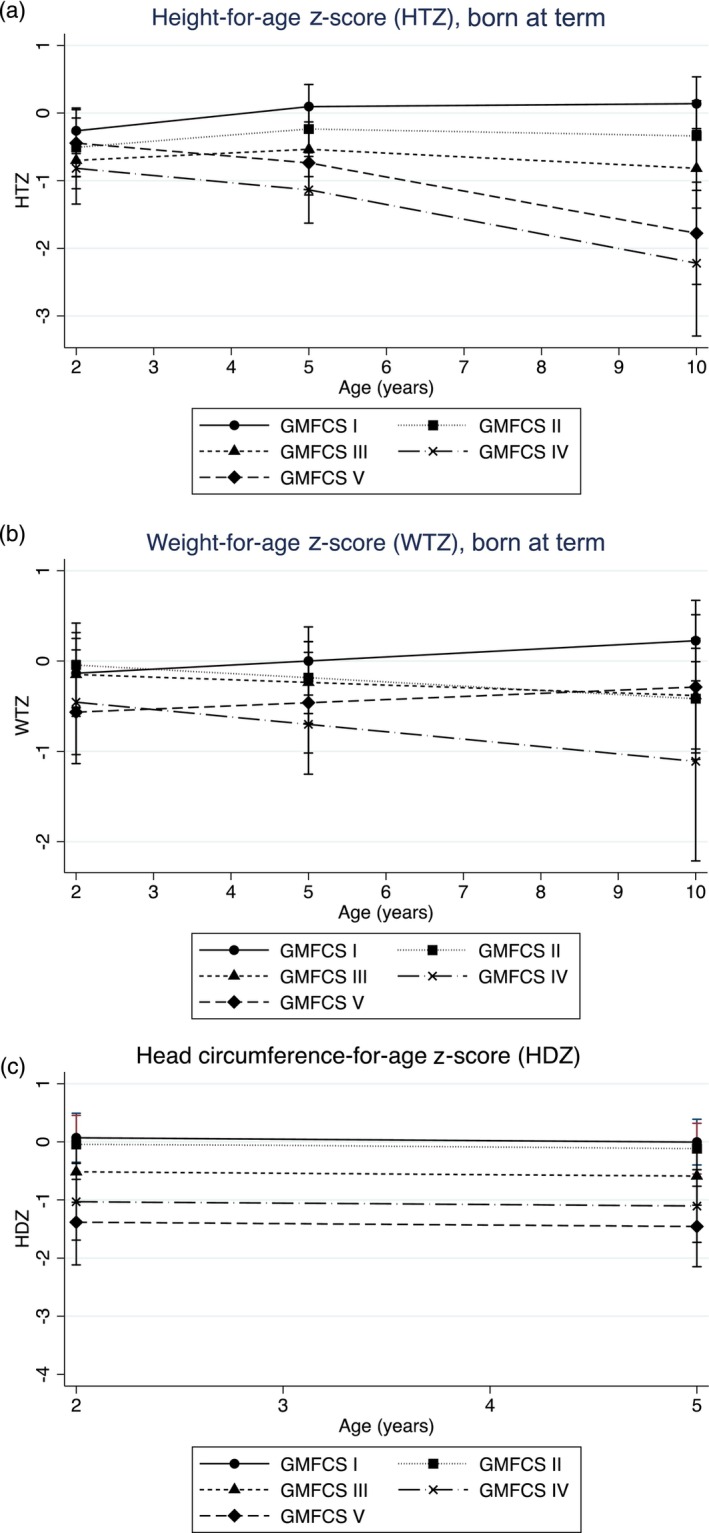 Figure 2
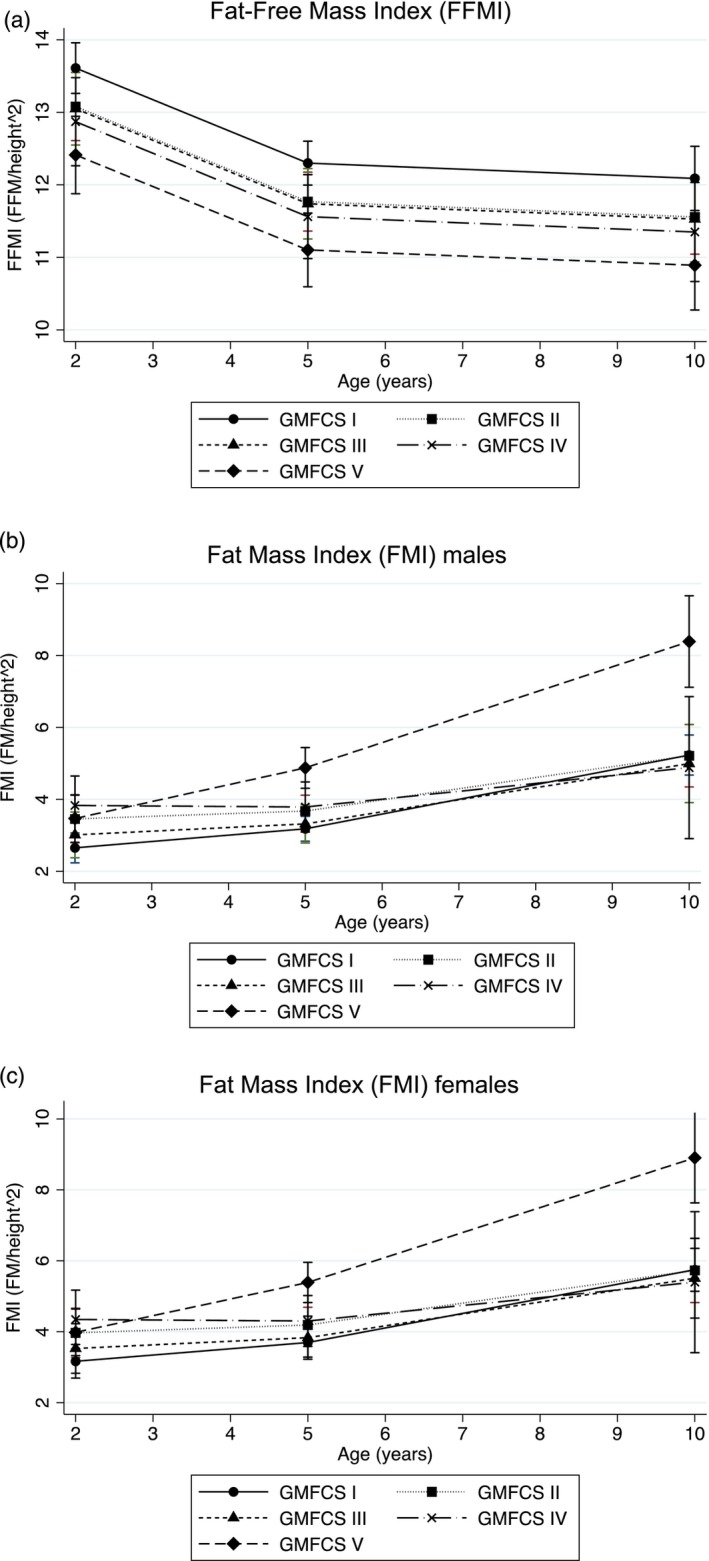 Figure 3
Peer Reviews
No public reviews on file for this paper yet. If you reviewed it on a platform where reviews are public (OpenReview, ICLR, NeurIPS, ICML), you can paste yours below so the community can read it here.
Videos
No videos yet. Explain this paper in a talk, walkthrough, or lecture? Add one.
Taxonomy
TopicsCerebral Palsy and Movement Disorders · Hip disorders and treatments · Neonatal and fetal brain pathology