Psychosocial problems, daily functioning and help-seeking behaviour of international migrant workers in the Netherlands: A qualitative study to inform the adaptation of a scalable stepped-care intervention
Rinske Roos, Anke B. Witteveen, Corrado Barbui, Richard Bryant, Zlata Dontsova, David McDaid, Josep Maria Haro, Kerry R. McGreevy, Roberto Mediavilla, Maria Melchior, Pablo Nicaise, A-La Park, Papoula Petri-Romão, Marianna Purgato, Aurélia Roversi, Annemieke van Straten

TL;DR
This study explores the challenges and help-seeking behaviors of international migrant workers in the Netherlands to adapt a mental health intervention for their specific needs.
Contribution
The study provides a culturally adapted, scalable psychological intervention tailored to the unique context of international migrant workers in the Netherlands.
Findings
International migrant workers face work, housing, and healthcare access issues, exacerbated by the pandemic.
Stigma and fear of job loss hinder help-seeking behaviors among migrant workers.
The intervention was adapted to be context-specific and offered remotely to better serve Polish migrant workers in the Netherlands.
Abstract
International migrant workers (IMWs) may face insecure work and housing, limited access to healthcare and increased risk of psychological problems. Two scalable, evidence-based interventions to support individuals experiencing psychological distress are Doing What Matters in Times of Stress (DWM) and Problem Management Plus (PM+). This study aimed to explore IMWs’ problems, daily functioning and help-seeking behaviour, to inform cultural adaptation of the DWM/PM+ stepped-care intervention in the Netherlands. Following the Design, Implementation, Monitoring, and Evaluation (DIME) model, we conducted various qualitative interviews and a focus group discussion with IMWs (n = 30) and professionals (n = 18). Data were analysed thematically, and findings informed adaptations. Participants described problems related to work, housing, administration, finances, healthcare access and the COVID-19…
Genes, proteins, chemicals, diseases, species, mutations and cell lines named across the full text — each resolved to its canonical identifier and authoritative record.
Click any figure to enlarge with its caption.
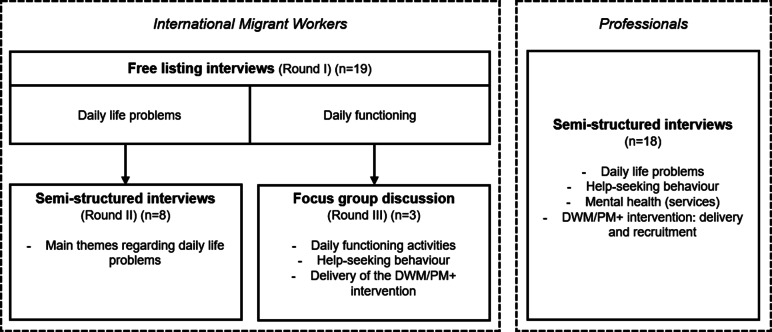 Figure 1
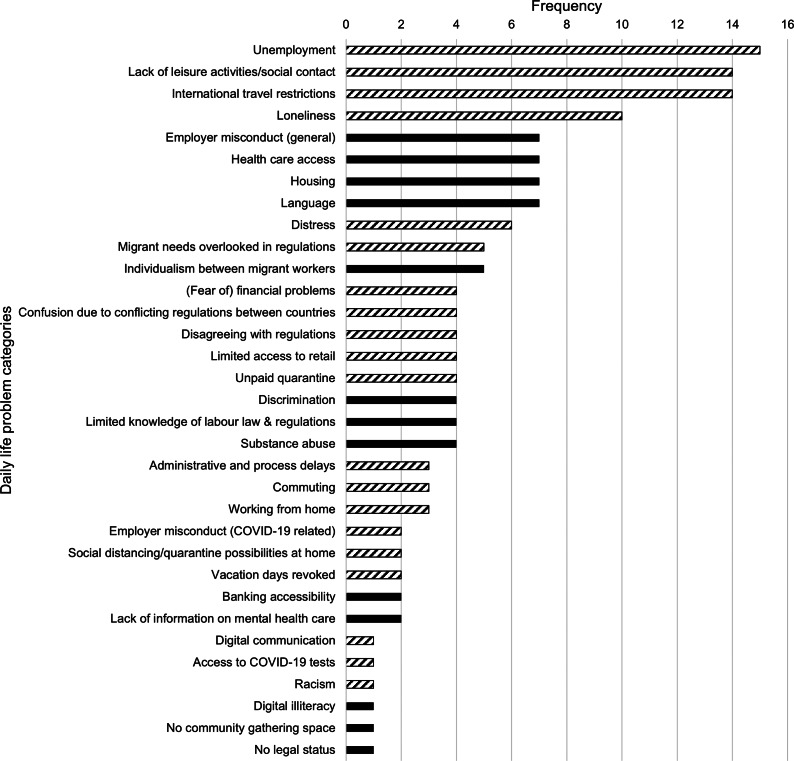 Figure 2
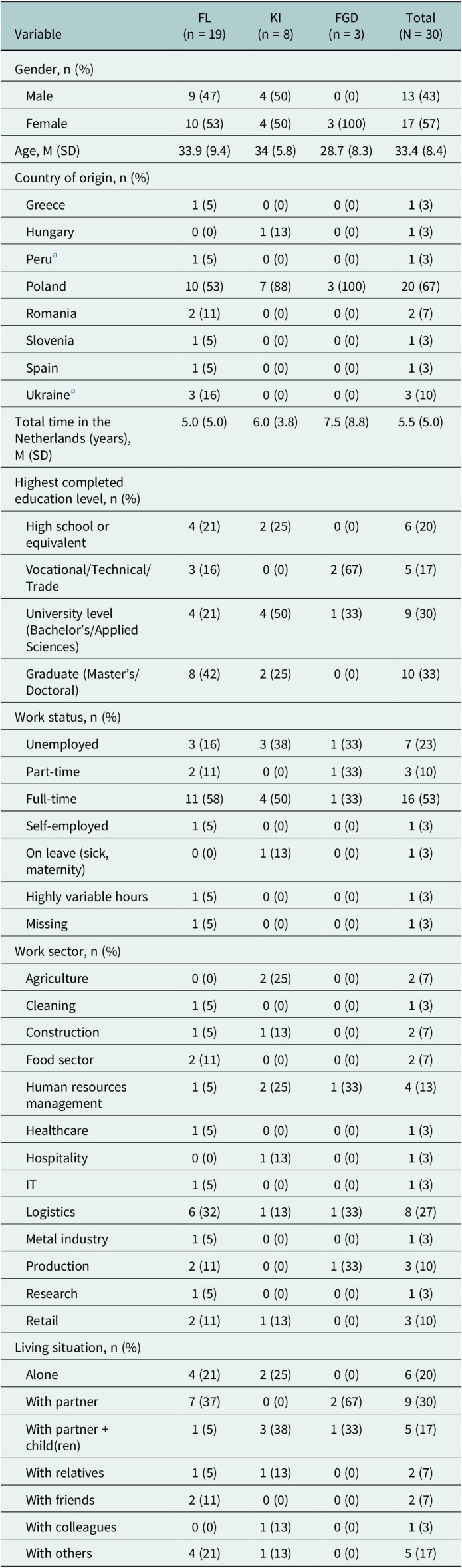 Figure 3
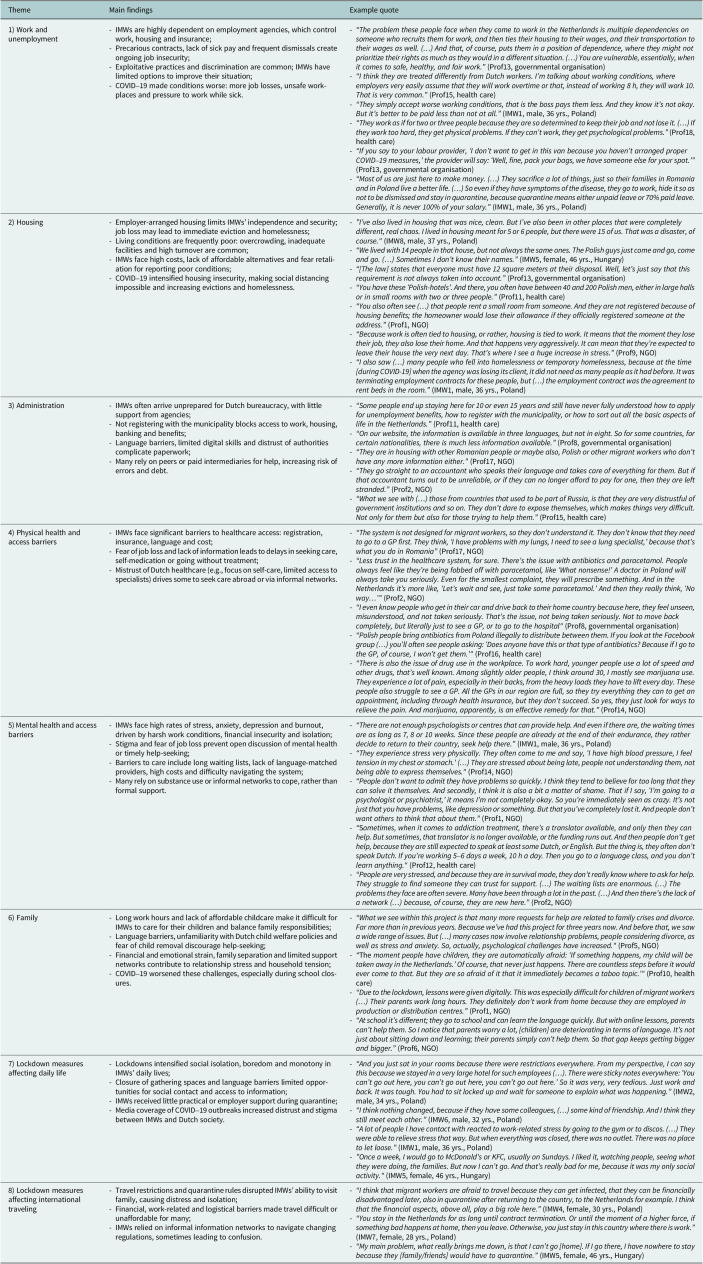 Figure 4
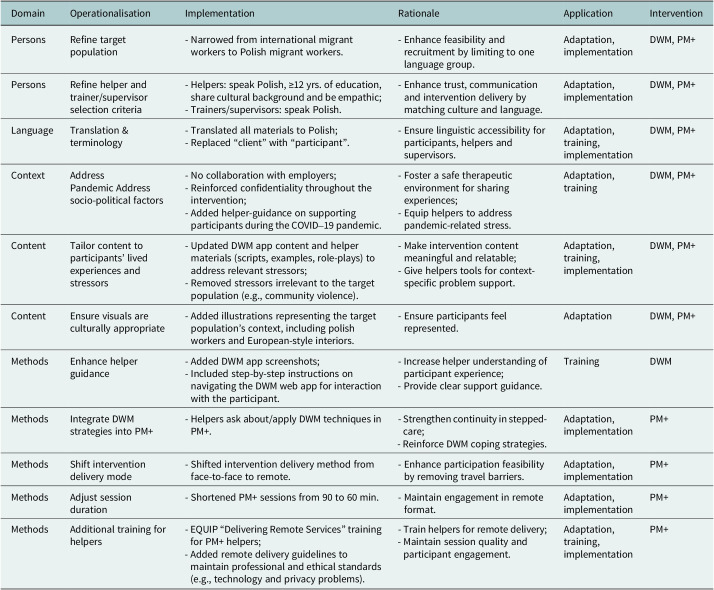 Figure 5
Peer Reviews
No public reviews on file for this paper yet. If you reviewed it on a platform where reviews are public (OpenReview, ICLR, NeurIPS, ICML), you can paste yours below so the community can read it here.
Videos
No videos yet. Explain this paper in a talk, walkthrough, or lecture? Add one.
Taxonomy
TopicsMigration, Health and Trauma · Migration and Labor Dynamics · Employment and Welfare Studies