Host gene expression in the Nasopharynx can discriminate microbiologically confirmed viral and bacterial lower respiratory tract infection
L. Gayani Tillekeratne, Nicholas O’Grady, Maria D. Iglesias-Ussel, Jack Anderson, Alana Brown, Armstrong Obale, Christina Nix, Champica K. Bodinayake, Ajith Nagahawatte, Robert Rolfe, E. Wilbur Woodhouse, Gaya B. Wijayaratne, Senali Weerasinghe, U.H.B.Y. Dilshan, Jayani Gamage

TL;DR
This study shows that gene expression in the nasopharynx can help distinguish between viral and bacterial lower respiratory tract infections.
Contribution
The novel predictive model using nasopharyngeal gene expression improves accuracy in identifying viral versus bacterial infections.
Findings
The novel model achieved an AUC of 0.881 for bacterial infection detection in NP samples.
Validation in external datasets showed AUCs of 0.932 and 0.915 for bacterial infection detection.
Host response in the nasopharynx can effectively distinguish viral from bacterial LRTI.
Abstract
Distinguishing viral versus bacterial lower respiratory tract infection (LRTI) is challenging. We previously developed a rapid, host response-based test (Biomeme HR-B/V assay) using peripheral blood samples to identify viral versus bacterial infection. We assessed the performance of this assay when using nasopharyngeal (NP) samples. Patients with LRTI were enrolled, and a NP swab sample was run using the HR-B/V assay (assessing 24 gene targets) on the FranklinTM platform. The performance of the prior classifier at identifying viral versus bacterial infection was assessed. A novel predictive model was generated for NP samples using the same 24 targets. Results were validated using external datasets with nasal/NP RNA sequence data. Nineteen patients (median age 62 years, 52.1% male) were included. When using the prior HR-B/V classifier on NP samples of 19 patients with LRTI (12 viral, 7…
Genes, proteins, chemicals, diseases, species, mutations and cell lines named across the full text — each resolved to its canonical identifier and authoritative record.
Click any figure to enlarge with its caption.
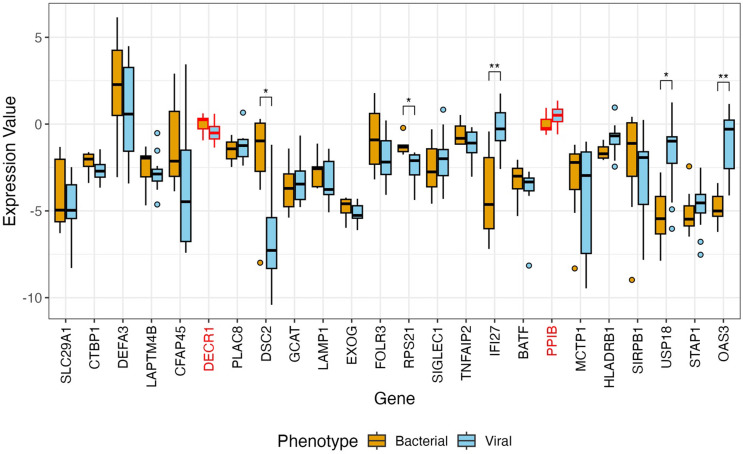 Figure 1
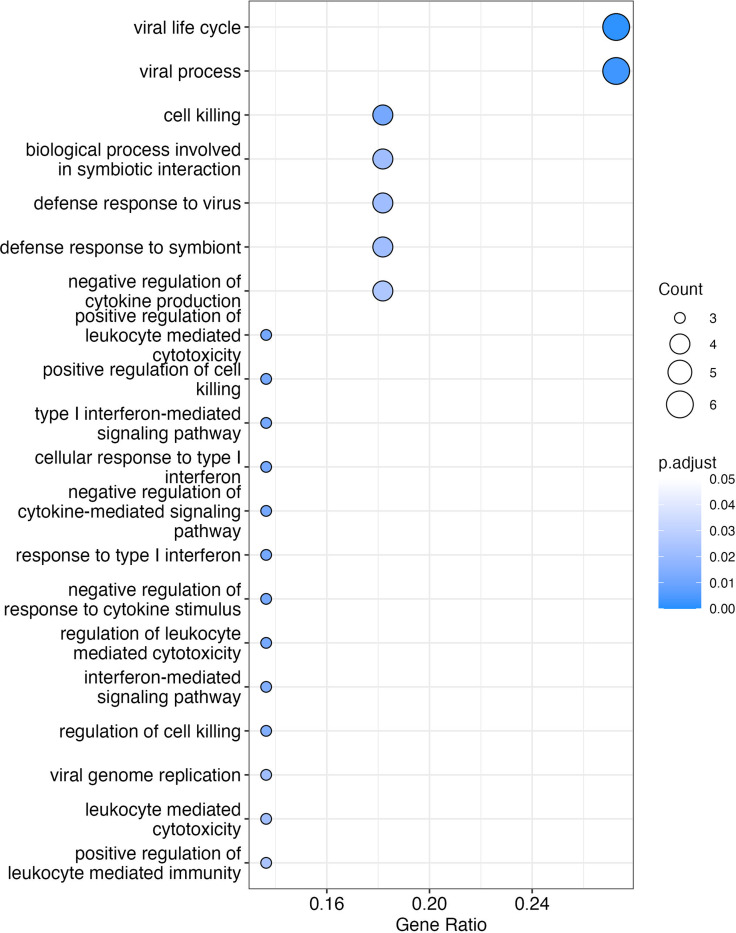 Figure 2
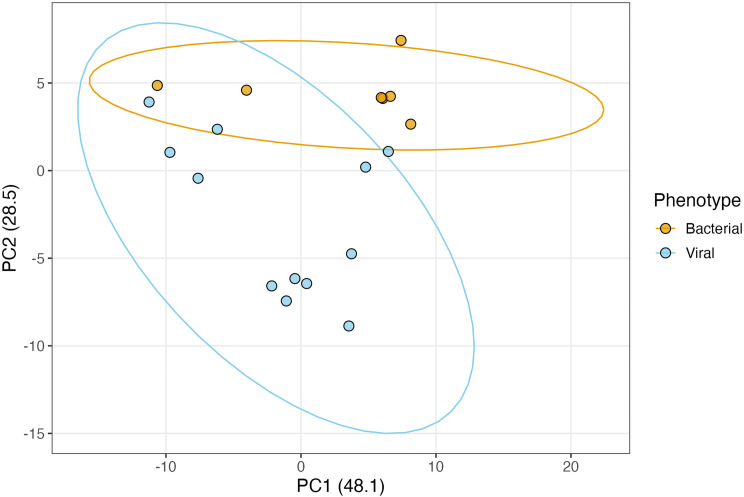 Figure 3
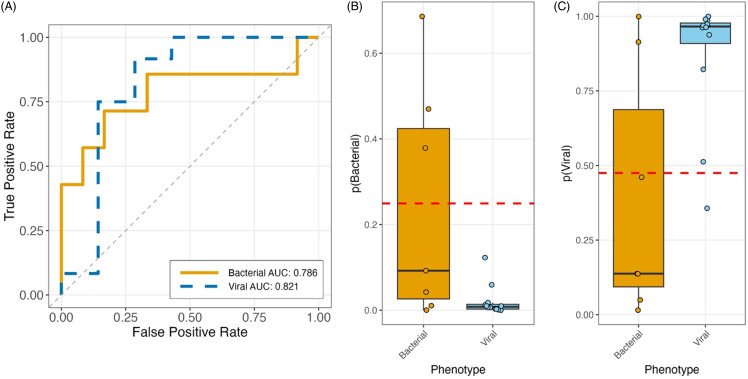 Figure 4
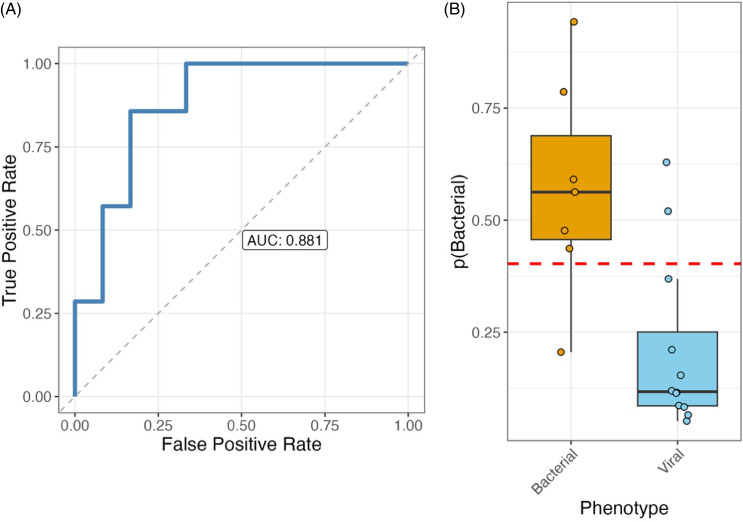 Figure 5
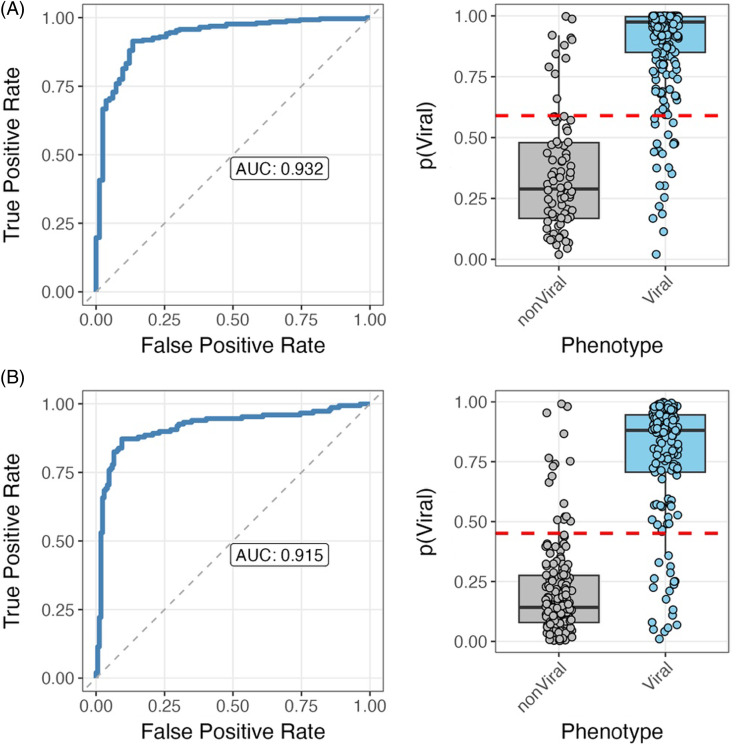 Figure 6
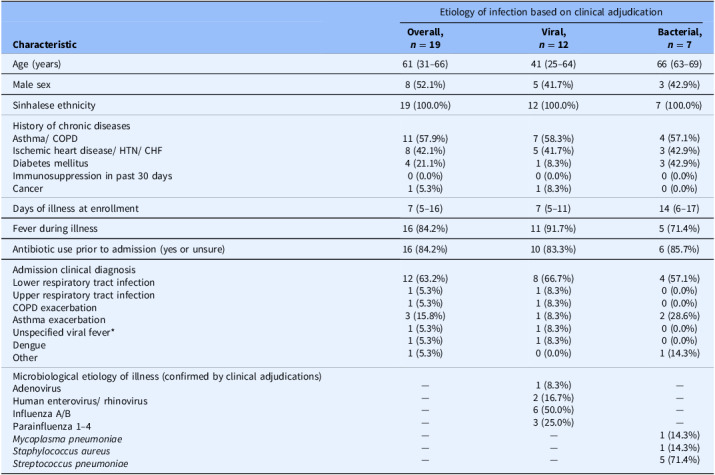 Figure 7
 Figure 8
 Figure 9
Peer Reviews
No public reviews on file for this paper yet. If you reviewed it on a platform where reviews are public (OpenReview, ICLR, NeurIPS, ICML), you can paste yours below so the community can read it here.
Videos
No videos yet. Explain this paper in a talk, walkthrough, or lecture? Add one.
Taxonomy
TopicsRespiratory viral infections research · Pediatric health and respiratory diseases · Pneumonia and Respiratory Infections